Your Search Results

      • Trusted Partner
        Literature & Literary Studies
        July 2022

        Nordic Gothic

        by Maria Holmgren Troy, Johan Hõglund, Yvonne Leffler, Sofia Wijkmark

        Nordic Gothic traces Gothic fiction in the Nordic region from its beginnings in the nineteenth century, with a main focus on the development of Gothic from the 1990s onwards in literature, film, TV and new media. The volume gives an overview of Nordic Gothic fiction in relation to transnational developments and provides a number of case studies and in-depth analyses of individual narratives. It creates an understanding of this under-researched cultural phenomenon by showing how the narratives make visible cultural anxieties haunting the Nordic countries, their welfare systems, identities and ideologies. Nordic Gothic examines how figures from Nordic folklore function as metaphorical expressions of Gothic themes and Nordic settings are explored from perspectives such as ecocriticism and postcolonialism. The book will be of interest to researchers and post- and- undergraduate students in various fields within the Humanities.

      • Trusted Partner
        Humanities & Social Sciences
        March 2017

        Reporting the Raj

        The British Press and India, c.1880–1922

        by Chandrika Kaul

        This book is the first analysis of the dynamics of British press reporting of India and the attempts made by the British Government to manipulate press coverage as part of a strategy of imperial control. The press was an important forum for debate over the future of India and was used by significant groups within the political elite to advance their agendas. Focuses on a period which represented a critical transitional phase in the history of the Raj, witnessing the impact of the First World War, major constitutional reform initiatives, the tragedy of the Amritsar massacre, and the launching of Gandhi's mass movement. Asserts that the War was a watershed in official media manipulation and in the aftermath of the conflict the Government's previously informal and ad hoc attempts to shape press reporting were placed on a more formal basis.

      • Trusted Partner
        September 2022

        Gluttony

        Blow-out

        by Jürgen Dollase

        One of Germany's best-known restaurant critics, Jürgen Dollase knowledgeably traces the ups and downs of our love of food. Following the historical-theological classification of the 'mortal sin' that is gluttony, he illuminates not only the physical and medical but also the so important psychological aspects of food. We learn just why his weight loss self-experiment was not successful in the long term as well as various enlightening facts regarding the fateful role of the discounters. This book is not an appeal for moderation, but a plea for moderate indulgence.

      • Trusted Partner
        Humanities & Social Sciences
        April 2020

        The British political elite and Europe, 1959-1984

        A higher loyalty

        by Bob Nicholls

        This book offers an original interpretation of Britain's relationship with Europe over a 25 year period: 1959-84 and advances the argument that the current problems over EU membership resulted from much earlier political machinations. This evidence based account of the seminal period analyses the applications for EEC membership, the 1975 referendum, and the role of the press. Was the British public misled over the true aims of the European project? How significant was the role of the press in changing public opinion from anti, to pro Common Market membership? Why, after over 40 years since Britain became a member of the European community, does the issue continue to deeply divide not only the political elite, but also the British public? These, and other pertinent questions are answered in this timely book on a subject that remains topical and highly controversial.

      • Trusted Partner
      • Trusted Partner
        Humanities & Social Sciences
        March 2017

        The language of empire

        Myths and metaphors of popular imperialism, 1880-1918

        by Robert Macdonald

        The debate about the Empire dealt in idealism and morality, and both sides employed the language of feeling, and frequently argued their case in dramatic terms. This book opposes two sides of the Empire, first, as it was presented to the public in Britain, and second, as it was experienced or imagined by its subjects abroad. British imperialism was nurtured by such upper middle-class institutions as the public schools, the wardrooms and officers' messes, and the conservative press. The attitudes of 1916 can best be recovered through a reconstruction of a poetics of popular imperialism. The case-study of Rhodesia demonstrates the almost instant application of myth and sign to a contemporary imperial crisis. Rudyard Kipling was acknowledged throughout the English-speaking world not only as a wonderful teller of stories but as the 'singer of Greater Britain', or, as 'the Laureate of Empire'. In the last two decades of the nineteenth century, the Empire gained a beachhead in the classroom, particularly in the coupling of geography and history. The Island Story underlined that stories of heroic soldiers and 'fights for the flag' were easier for teachers to present to children than lessons in morality, or abstractions about liberty and responsible government. The Education Act of 1870 had created a need for standard readers in schools; readers designed to teach boys and girls to be useful citizens. The Indian Mutiny was the supreme test of the imperial conscience, a measure of the morality of the 'master-nation'.

      • Trusted Partner
      • Trusted Partner
        The Arts
        September 2025

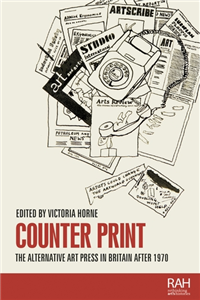
        Counter print

        The alternative art press in Britain after 1970

        by Victoria Horne

        The history of contemporary art is also a history of its newsletters, manifestos, magazines, pamphlets, and journals. Those periodical publications do not simply communicate or record ideas but have worked in exciting ways to shape art's practices, histories and communities. As a new generation of artists, activists and scholars seek to uncover the histories of alternative publishing and artistic networks, this book gathers original archival discoveries while offering methodologies for studying and thinking with those artefacts. As the first essay collection to focus on the periodical art press and the ways we study it, Counter print offers readers an alternative route into the past fifty years of contemporary art, one that is defiantly collaborative, border crossing and disruptive.

      • Trusted Partner
        Humanities & Social Sciences
        June 2025

        The Black Atlantic’s triple burden

        by Adekeye Adebajo

      • Trusted Partner
      • Trusted Partner
        The Arts
        January 2016

        Face: shape and angle

        Helen Muspratt, photographer

        by Jessica Sutcliffe

        Born into a civil service family in India in 1907, Helen Muspratt was a lifelong communist, a member of the Cambridge intellectual milieu of the 1930s, and a working mother at a time when such a role was unusual for women of her class. She was also a pioneering photographer, creating an extraordinary body of work in many different styles and genres. In partnership with Lettice Ramsey she made portraits of many notable figures of the 1930s in the fields of science and culture. Her experimental photography, using techniques such as solarisation and multiple exposure, bears comparison with the innovations of Man Ray and Lee Miller. This book reproduces some of Helen Muspratt's most important photographic images, including documentary records of the Soviet Union and the Welsh valleys. The accompanying text by Jessica Sutcliffe is an intimate and revealing memoir of her mother that offers a fascinating insight into her life, work and politics. ;

      • Trusted Partner
        Literature & Literary Studies
        August 2014

        Making home

        Orphanhood, kinship and cultural memory in contemporary American novels

        by Maria Holmgren Troy, Sharon Monteith, Elizabeth Kella, Nahem Yousaf, Helena Wahlstrom

        Making home explores the figure of the orphan child in a broad selection of contemporary US novels by popular and critically acclaimed authors Barbara Kingsolver, Linda Hogan, Leslie Marmon Silko, Marilynne Robinson, Michael Cunningham, Jonathan Safran Foer, John Irving, Kaye Gibbons, Octavia Butler, Jewelle Gomez and Toni Morrison. The orphan child is a continuous presence in US literature, not only in children's books and nineteenth-century texts, but also in a variety of genres of contemporary fiction for adults. Making home examines the meanings of this figure in the contexts of American literary history, social history and ideologies of family, race and nation. It argues that contemporary orphan characters function as links to literary history and national mythologies, even as they may also serve to critique the limits of literary history, as well as the limits of familial and national belonging.

      • Trusted Partner
      • Trusted Partner
        Humanities & Social Sciences
        July 2023

        Now that's what I call a history of the 1980s

        by Lucy Robinson

      • Trusted Partner
        Humanities & Social Sciences
        September 2025

        Eclipsing the West

        China, India and the forging of a new world

        by Vince Cable

        As the international order begins to crumble, this incisive book asks what the rise of the Asian superstates means for the future. The Western-dominated world we have known for the past three hundred years is coming to an end. As America withdraws from its role as enforcer of the international order, other countries are moving in to fill the void. Among them are two rising Asian 'superstates'. Accounting for almost half of the world's population, China and India have the potential to wield enormous economic and political power. China is already vying with the US for the top spot in the global economy, and on some measures has surpassed it. By the middle of the century India may be number two. How will these countries navigate their growing roles on the world stage? What are the implications for commerce, international law and the fight against climate change? Vince Cable has followed China and India for decades, first as a professional economist and later as a senior government minister. In Eclipsing the West he draws on the latest data and a lifetime of political and economic experience to offer a compelling account of what the rise of the Asian superstates means for the future.

      • Trusted Partner
        Business, Economics & Law
        October 2021

        The pound and the fury

        by Jack Mosse

      • Trusted Partner
        Business, Economics & Law
        July 2016

        Drafting the Irish Free State Constitution

        by Laura Cahillane

      • Trusted Partner
        Literature & Literary Studies
        January 2025

        Dirty books

        by Barry Reay, Nina Attwood

      Subscribe to our

      newsletter