
Humanities & Social Sciences
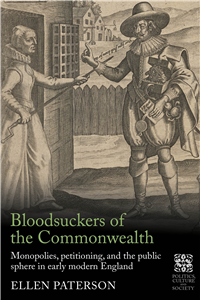
Bloodsuckers of the Commonwealth
Monopolies, petitioning, and the public sphere in early modern England
by Ellen Paterson
Description
This book offers the first in-depth analysis of anti-monopoly petitioning in late-Elizabethan and Jacobean England. Drawing on a range of manuscript petitions, it reveals the centrality of the issues of monopoly and corporatism for the politicisation of a range of subjects between 1590-1625. Both Elizabeth I and James I liberally granted monopolies and charters as a fiscal device. Petitioning emerged as the main way through which subjects protested these intrusions on their trades and livelihoods. Whilst this activity occurred throughout the realm, it was especially pronounced in the city of London. Members of London's livery companies, bodies which held exclusive rights to trade, petitioned for and against monopolies and charters. Bloodsuckers of the Commonwealth offers a fresh perspective on political culture in this well-studied period by arguing that economic policies generated conflicts, contests, and participation in a nascent public sphere.
More Information
Rights Information
Albania, Algeria, Angola, Argentina, Armenia, Australia, Austria, Bahrain, Belgium, Belize, Benin, Bolivia, Bosnia and Herzegovina, Botswana, Brazil, Bulgaria, Burkina Faso, Burundi, Cameroon, Canada, Cape Verde, Central African Republic, Chad, Chile, China, Colombia, Comoros, Congo [DRC], Congo, Republic of the, Costa Rica, Ivory Coast, Croatia, Czech Republic, Denmark, Djibouti, Ecuador, Egypt, El Salvador, Equatorial Guinea, Eritrea, Estonia, Ethiopia, Faroe Islands, Finland, France, French Guiana, Gabon, Gambia, Georgia, Germany, Ghana, Greece, Guatemala, Guinea, Guinea-Bissau, Guyana, Honduras, Hongkong, Hungary, Iceland, India, Indonesia, Iran, Iraq, Ireland, Israel, Italy, Japan, Jordan, Kazakhstan, Kenya, Kuwait, Latvia, Lebanon, Lesotho, Liberia, Libya, Lithuania, Luxembourg, Macau, China, Macedonia [FYROM], Madagascar, Malawi, Malaysia, Mali, Malta, Mauritania, Mauritius, Mayotte, Mexico, Mongolia, Montenegro, Morocco, Mozambique, Namibia, Netherlands, New Zealand, Nicaragua, Niger, Nigeria, Norway, Oman, Pakistan, Panama, Paraguay, Peru, Philippines, Poland, Portugal, Puerto Rico, Qatar, Reunion, Romania, Russia, Rwanda, Saint Helena, Sao Tome and Principe, Saudi Arabia, Senegal, Serbia, Seychelles, Sierra Leone, Singapore, Slovakia, Slovenia, Somalia, South Africa, South Korea, Spain, Sri Lanka, Sudan, Suriname, Swaziland, Sweden, Switzerland, Syria, Taiwan, Tanzania, Thailand, Timor-Leste, Togo, Tokelau, Tunisia, Turkey, Uganda, Ukraine, United Arab Emirates, United Kingdom, United States, Uruguay, Venezuela, Vietnam, Western Sahara, Yemen, Zambia, Zimbabwe, South Sudan, Cyprus, Palestine, Bangladesh, Cambodia, Liechtenstein, Azerbaijan, Jamaica, Kyrgyzstan, Dominican Republic, Myanmar, Monaco
Endorsements
Bloodsuckers of the Commonwealth offers the first in-depth analysis of anti-monopoly petitioning in early modern England. It reveals the centrality of patents of monopoly to the politicisation of subjects at the turn of the seventeenth century. Studies of the political culture of this period have often focused on constitutional conflicts, religious divisions, or the moral dimensions of the Court. This book offers a significant perspective on these well-studied years by showing that monopoly and corporatism were key issues driving participation in a nascent public sphere between 1590 and 1625. Elizabeth I and James I liberally granted letters, patents, and charters to courtiers and companies. Petitioning emerged as the main device through which many subjects protested these intrusions on their trades and livelihoods to local authorities, Parliament, the Council, and the Crown. Others launched campaigns for charters to advance their interests. This book draws on an extensive body of manuscript petitions to analyse the mechanics, rhetoric, and consequences of anti-monopoly petitioning in early modern England, with a particular focus on campaigns in the metropolis. Members of London's livery companies, bodies which held their own exclusive rights to trade, were key petitioners against monopolies and charters which threatened their interests. Bloodsuckers of the Commonwealth paints a lively picture of the alliances, negotiations, and contests triggered by monopolies. It offers an essential study of the themes of monopoly, popular politics, and court and city relations in tandem to show the ways in which monopoly and corporatism triggered participation in the late Elizabethan and Jacobean periods.
Reviews
Bloodsuckers of the Commonwealth offers the first in-depth analysis of anti-monopoly petitioning in early modern England. It reveals the centrality of patents of monopoly to the politicisation of subjects at the turn of the seventeenth century. Studies of the political culture of this period have often focused on constitutional conflicts, religious divisions, or the moral dimensions of the Court. This book offers a significant perspective on these well-studied years by showing that monopoly and corporatism were key issues driving participation in a nascent public sphere between 1590 and 1625. Elizabeth I and James I liberally granted letters, patents, and charters to courtiers and companies. Petitioning emerged as the main device through which many subjects protested these intrusions on their trades and livelihoods to local authorities, Parliament, the Council, and the Crown. Others launched campaigns for charters to advance their interests. This book draws on an extensive body of manuscript petitions to analyse the mechanics, rhetoric, and consequences of anti-monopoly petitioning in early modern England, with a particular focus on campaigns in the metropolis. Members of London's livery companies, bodies which held their own exclusive rights to trade, were key petitioners against monopolies and charters which threatened their interests. Bloodsuckers of the Commonwealth paints a lively picture of the alliances, negotiations, and contests triggered by monopolies. It offers an essential study of the themes of monopoly, popular politics, and court and city relations in tandem to show the ways in which monopoly and corporatism triggered participation in the late Elizabethan and Jacobean periods.
Author Biography
Ellen Paterson is CMRS Career Development Fellow in Early Modern History at Keble College, University of Oxford
 Trusted Partner

Manchester University Press
Manchester University Press is a leading UK publisher known for excellent research in the humanities and social sciences.
View all titlesBibliographic Information
- Publisher Manchester University Press
- Publication Date September 2025
- Orginal LanguageEnglish
- ISBN/Identifier 9781526189080 / 1526189089
- Publication Country or regionUnited Kingdom
- FormatPrint PDF
- Pages280
- ReadershipCollege/higher education; Professional and scholarly
- Publish StatusPublished
- Dimensions234 X 156 mm
- Biblio NotesDerived from Proprietary 6323
- SeriesPolitics, Culture and Society in Early Modern Britain
- Reference Code16840
Thank you for proceeding with this offer.
Manchester University Press has chosen to review this offer before it proceeds.
You will receive an email update that will bring you back to complete the process.
You can also check the status in the My Offers area
Manchester University Press has chosen to review this offer before it proceeds.
You will receive an email update that will bring you back to complete the process.
You can also check the status in the My Offers area

Please wait while the payment is being prepared.
Do not close this window.

(c) Copyright 2026 - Frankfurter Buchmesse GmbH. All Right Reserved