
Humanities & Social Sciences
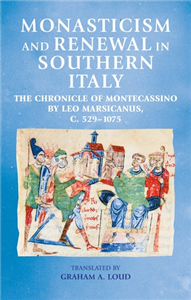
Monasticism and renewal in southern Italy
The Chronicle of Montecassino by Leo Marsicanus, c. 529–1075
by Graham Loud
Description
The chronicle of Leo Marsicanus recounts the history of the abbey of Montecassino from its foundation by St. Benedict in the sixth-century up to 1075. It presents a detailed and compelling story of tribulation and renewal, with the abbey twice destroyed and abandoned in the early Middle Ages and then rebuilt. It concludes with an informative account of the building and dedication of the new abbey church by Abbot Desiderius in 1066-71. The chronicle is also a key source for the more general history of southern Italy in the early Middle Ages, and of the conquest of the region by the Normans during the eleventh century. In addition, Montecassino was one of the great intellectual centres of western Christendom and a major contributor to the reform movement within the Church during the later eleventh century. Leo's chronicle is a crucial witness to that role.
More Information
Rights Information
Albania, Algeria, Angola, Argentina, Armenia, Australia, Austria, Bahrain, Belgium, Belize, Benin, Bolivia, Bosnia and Herzegovina, Botswana, Brazil, Bulgaria, Burkina Faso, Burundi, Cameroon, Canada, Cape Verde, Central African Republic, Chad, Chile, China, Colombia, Comoros, Congo [DRC], Congo, Republic of the, Costa Rica, Ivory Coast, Croatia, Czech Republic, Denmark, Djibouti, Ecuador, Egypt, El Salvador, Equatorial Guinea, Eritrea, Estonia, Ethiopia, Faroe Islands, Finland, France, French Guiana, Gabon, Gambia, Georgia, Germany, Ghana, Greece, Guatemala, Guinea, Guinea-Bissau, Guyana, Honduras, Hongkong, Hungary, Iceland, India, Indonesia, Iran, Iraq, Ireland, Israel, Italy, Japan, Jordan, Kazakhstan, Kenya, Kuwait, Latvia, Lebanon, Lesotho, Liberia, Libya, Lithuania, Luxembourg, Macau, China, Macedonia [FYROM], Madagascar, Malawi, Malaysia, Mali, Malta, Mauritania, Mauritius, Mayotte, Mexico, Mongolia, Montenegro, Morocco, Mozambique, Namibia, Netherlands, New Zealand, Nicaragua, Niger, Nigeria, Norway, Oman, Pakistan, Panama, Paraguay, Peru, Philippines, Poland, Portugal, Puerto Rico, Qatar, Reunion, Romania, Russia, Rwanda, Saint Helena, Sao Tome and Principe, Saudi Arabia, Senegal, Serbia, Seychelles, Sierra Leone, Singapore, Slovakia, Slovenia, Somalia, South Africa, South Korea, Spain, Sri Lanka, Sudan, Suriname, Swaziland, Sweden, Switzerland, Syria, Taiwan, Tanzania, Thailand, Timor-Leste, Togo, Tokelau, Tunisia, Turkey, Uganda, Ukraine, United Arab Emirates, United Kingdom, United States, Uruguay, Venezuela, Vietnam, Western Sahara, Yemen, Zambia, Zimbabwe, South Sudan, Cyprus, Palestine, Bangladesh, Cambodia, Liechtenstein, Azerbaijan, Jamaica, Kyrgyzstan, Dominican Republic, Myanmar, Monaco
Endorsements
The chronicle of Leo Marsicanus is the most detailed source for the history of southern Italy during the early Middle Ages. It was written between c. 1099 and 1103/5 as a history of the abbey of Montecassino from St. Benedict until the author's own time, ending with the construction and dedication of the new abbey church in 1071 and of other churches within the precinct. It tells a story of tribulation and renewal after the abbey's destruction at the hands first of the Lombards c. 580 and then at those of Arab raiders in 883, concluding with a discussion of its 'golden age' under Abbot Desiderius (1058-87). But it also gives a vivid account, written in a clear and engaging style, of the turbulent history of southern Italy from the eighth through to the later eleventh century. It describes the break-up of the duchy of Benevento and the Arab threat in the ninth century, the development of the Lombard principality of Capua and the arrival of the Ottonians in the tenth, and the conquest of the region by the Normans in the eleventh century. Furthermore, Montecassino under Desiderius was both a crucial ally of the papal reformers of the time and one of the most vibrant intellectual centres within Latin Christendom. This is therefore a vital primary source for all those interested in the history of Italy and of the Church in the early to central Middle Ages, and also in the art and architecture of the period.
Reviews
The chronicle of Leo Marsicanus is the most detailed source for the history of southern Italy during the early Middle Ages. It was written between c. 1099 and 1103/5 as a history of the abbey of Montecassino from St. Benedict until the author's own time, ending with the construction and dedication of the new abbey church in 1071 and of other churches within the precinct. It tells a story of tribulation and renewal after the abbey's destruction at the hands first of the Lombards c. 580 and then at those of Arab raiders in 883, concluding with a discussion of its 'golden age' under Abbot Desiderius (1058-87). But it also gives a vivid account, written in a clear and engaging style, of the turbulent history of southern Italy from the eighth through to the later eleventh century. It describes the break-up of the duchy of Benevento and the Arab threat in the ninth century, the development of the Lombard principality of Capua and the arrival of the Ottonians in the tenth, and the conquest of the region by the Normans in the eleventh century. Furthermore, Montecassino under Desiderius was both a crucial ally of the papal reformers of the time and one of the most vibrant intellectual centres within Latin Christendom. This is therefore a vital primary source for all those interested in the history of Italy and of the Church in the early to central Middle Ages, and also in the art and architecture of the period.
Author Biography
Graham A. Loud is Professor of Medieval History at the University of Leeds
 Trusted Partner

Manchester University Press
Manchester University Press is a leading UK publisher known for excellent research in the humanities and social sciences.
View all titlesBibliographic Information
- Publisher Manchester University Press
- Publication Date February 2026
- Orginal LanguageEnglish
- ISBN/Identifier 9781526174178 / 1526174170
- Publication Country or regionUnited Kingdom
- FormatPrint PDF
- Pages392
- ReadershipGeneral/trade
- Publish StatusPublished
- Dimensions216 X 138 mm
- Biblio NotesDerived from Proprietary 5890
- SeriesManchester Medieval Sources
- Reference Code15663
Thank you for proceeding with this offer.
Manchester University Press has chosen to review this offer before it proceeds.
You will receive an email update that will bring you back to complete the process.
You can also check the status in the My Offers area
Manchester University Press has chosen to review this offer before it proceeds.
You will receive an email update that will bring you back to complete the process.
You can also check the status in the My Offers area

Please wait while the payment is being prepared.
Do not close this window.

(c) Copyright 2026 - Frankfurter Buchmesse GmbH. All Right Reserved