
Your Search Results
-

-

Elefanta Editorial
Elefanta Editorial is a Mexican company born in 2011 and based in Mexico City. It publishes fiction, non-fiction, poetry, illustrations and photography.
View Rights Portal
-
Promoted Content

 September 2022
Identity or Not?
by Jean-Pierre Wils (ed.)
Questions of identity trigger controversial and highly emotional discussions in the political and social debate. The positions range from radically emancipatory perspectives to authoritarian and restorative efforts on the far right wing of politics. Liberal democracies are now opening up – slowly – as identity- and gender-sensitive forums. Opposite them are the 'new ethics' of illiberal democracies and totalitarian states that are aimed at ethnic homogeneity and gender uniformity. But that's not to say that there is unity in the liberal settings on the necessary degree of identity politics. Both language and gender politics are deeply controversial. Do we need an 'identity' and, if so, which one or how many? Can the identity debate be extended by means of other concepts?
-
Promoted Content

 Humanities & Social SciencesMarch 2022
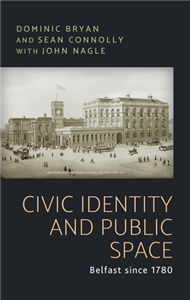
Civic identity and public space
Belfast since 1780
by Dominic Bryan, Sean J. Connolly, John Nagle
Civic identity and public space, focussing on Belfast, and bringing together the work of a historian and two social scientists, offers a new perspective on the sometimes lethal conflicts over parades, flags and other issues that continue to disrupt political life in Northern Ireland. It examines the emergence during the nineteenth century of the concept of public space and the development of new strategies for its regulation, the establishment, the new conditions created by the emergence in 1920 of a Northern Ireland state, of a near monopoly of public space enjoyed by Protestants and unionists, and the break down of that monopoly in more recent decades. Today policy makers and politicians struggle to devise a strategy for the management of public space in a divided city, while endeavouring to promote a new sense of civic identity that will transcend long-standing sectarian and political divisions.
-
 Trusted Partner
 Humanities & Social SciencesJune 2021
Insanity, identity and empire
Immigrants and institutional confinement in Australia and New Zealand, 1873–1910
by Catharine Coleborne
Insanity, identity and empire examines the formation of colonial social identities inside the institutions for the insane in Australia and New Zealand. Taking a large sample of patient records, it pays particular attention to gender, ethnicity and class as categories of analysis, reminding us of the varied journeys of immigrants to the colonies and of how and where they stopped, for different reasons, inside the social institutions of the period. It is about their stories of mobility, how these were told and produced inside institutions for the insane, and how, in the telling, colonial identities were asserted and formed. Having engaged with the structural imperatives of empire and with the varied imperial meanings of gender, sexuality and medicine, historians have considered the movements of travellers, migrants, military bodies and medical personnel, and 'transnational lives'. This book examines an empire-wide discourse of 'madness' as part of this inquiry.
-
Trusted Partner
 MedicineApril 2021
Leprosy and identity in the Middle Ages
From England to the Mediterranean
by Elma Brenner, François-Olivier Touati
For the first time, this volume explores the identities of leprosy sufferers and other people affected by the disease in medieval Europe. The chapters, including contributions by leading voices such as Luke Demaitre, Carole Rawcliffe and Charlotte Roberts, challenge the view that people with leprosy were uniformly excluded and stigmatised. Instead, they reveal the complexity of responses to this disease and the fine line between segregation and integration. Ranging across disciplines, from history to bioarchaeology, Leprosy and identity in the Middle Ages encompasses post-medieval perspectives as well as the attitudes and responses of contemporaries. Subjects include hospital care, diet, sanctity, miraculous healing, diagnosis, iconography and public health regulation. This richly illustrated collection presents previously unpublished archival and material sources from England to the Mediterranean.
-
Trusted Partner
-
Trusted Partner
-
Trusted Partner
 Humanities & Social SciencesJune 2021
Counter-radicalisation policy and the securing of British identity
by Thomas Martin
-
Trusted Partner
 Humanities & Social SciencesMay 2008
The politics of identity and civil society in Britain and Germany
Miners in the Ruhr and South Wales 1890–1926
by Leighton James, Steven Fielding, John Callaghan, Steve Ludlam
This study compares the making and remaking of the political identities of the miners' movements in Britain and Germany. Taking the south Wales and Ruhr coalfields as case studies, it focuses on the public discourse of the trade unions and political parties as it was disseminated in local newspapers, trade union publications, pamphlets and election leaflets. It reveals how the miners' movements used ideas such as class, religion, the 'people' or Volk, socialization and nationalization to construct organizational identities during the turbulent period between 1890 and 1926. These concepts were crucial not only in the formation and self-identity of the miners' trade unions, but also in the way they interacted with employers and the state. They adapted and changed over time as the miners' movements reacted to war, economic depression and increasing industrial conflict. The book contends that these identities were not simply the result of structural factors, but were formed at the juncture where cultural, political and sociological forces intersect. Examining this intersection through discourse analysis and the concept of the 'lifeworld', the book brings together the social world of the miners and the realm of organized politics to advance historical understanding of two of the most important elements in the most powerful labour movements in Europe. ;
-
Trusted Partner
 MedicineApril 2021
Leprosy and identity in the Middle Ages
by Elma Brenner, François-Olivier Touati, David Cantor
-
Trusted Partner
 International relationsSeptember 2005
Naming security - constructing identity
‘Mayan-women’ in Guatemala on the eve of ‘peace’
by Maria Stern
How do people seek security in relation to their sense of 'who they are'? How can one make sense of insecurity at the intersection of competing identity claims? Based on the voices of Mayan women, Stern critically re-considers the connections between security, subjectivity and identity. By engaging in a careful reading of how Mayan women 'speak' security in relation to the different contexts that inform their lives, she explores the multiplicity of both identity and security, and questions the main story of security imbedded in the modern 'paradox of sovereignty.' Her provocative analysis thus raises vital questions about what might constitute 'security', and the 'insecurity' that is its inevitable supplement. Her study also offers an innovative methodology that bridges many different disciplines and substantively develops the method of 'reading' politics as a 'textual practice'. It will be essential reading for students of security, identity politics, feminism, and Latin American studies.
-
Trusted Partner
 History of Art / Art & Design StylesOctober 2016
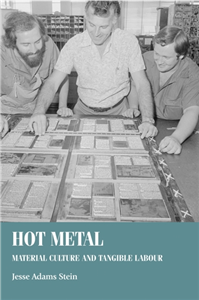
Hot metal
Material culture and tangible labour
by Jesse Stein. Series edited by Bill Sherman, Christopher Breward
The world of work is tightly entwined with the world of things. Hot metal illuminates connections between design, material culture and labour between the 1960s and the 1980s, when the traditional crafts of hot-metal typesetting and letterpress were finally made obsolete with the introduction of computerised technologies. This multidisciplinary history provides an evocative rendering of design culture by exploring an intriguing case: a doggedly traditional Government Printing Office in Australia. It explores the struggles experienced by printers as they engaged in technological retraining, shortly before facing factory closure. Topics explored include spatial memory within oral history, gender-labour tensions, the rise of neoliberalism and the secret making of objects 'on the side'. This book will appeal to researchers in design and social history, labour history, material culture and gender studies. It is an accessible, richly argued text that will benefit students seeking to learn about the nature and erosion of blue-collar work and the history of printing as a craft.
-
Trusted Partner
 Humanities & Social SciencesJune 2013
Islam and identity politics among British-Bangladeshis
A leap of faith
by Ali Riaz
This book probes the causes of and conditions for the preference of the members of the British-Bangladeshi community for a religion-based identity vis-à-vis ethnicity-based identity, and the influence of Islamists in shaping the discourse. The first book-length study to examine identity politics among the Bangladeshi diaspora delves into the micro-level dynamics, the internal and external factors and the role of the state and locates these within the broad framework of Muslim identity and Islamism, citizenship and the future of multiculturalism in Europe. Empirically grounded but enriched with in-depth analysis, and written in an accessible language this study is an invaluable reference for academics, policy makers and community activists. Students and researchers of British politics, ethnic/migration/diaspora studies, cultural studies, and political Islam will find the book extremely useful. ;
-
Trusted Partner
 The ArtsMay 2009
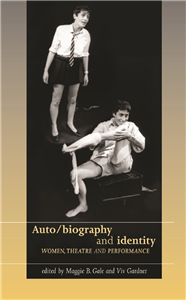
Auto/biography and identity
by Kate Dorney, Maggie B. Gale, Viv Gardner, Maggie B. Gale
This groundbreaking book shows how female performers - one of the first groups of professional women - used and still use autobiography and performance as both a means of expression and control of their private and public selves, the 'face and the mask'. It looks at how a range of women in the theatre - actors, managers, writers and live artists - have done this on the page and on the stage from the late eighteenth-century to the present day, testing the boundaries between gender, theatre and autobiographical form. This paperback edition facilitates connections - between texts and performances, past and present practitioners, professional and private selves, individuals and communities, all of which have in some way renegotiated identity through autobiography and the creative act. 'Auto/biography and identity' is a landmark in theatre history and performance analysis, in gender and cultural theory, and autobiographical studies. ;
-
Trusted Partner
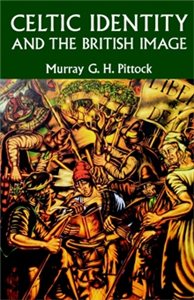 Humanities & Social SciencesDecember 1999
Celtic Identity and the British Image
by Murray Pittock
This work explores the idea of the Celt and the definition of the so-called "Celtic Fringe" over the last 300 years. It is an in-depth study of the literary and cultural representation of Ireland, Scotland and Wales over this period, and is based on a wide-ranging grasp of issues of national identity and state formation. The idea of the Celt and Celticism is once again highly fashionable. Is there such a common Celtic heritage? What is the place of the "Celtic Fringe" in British identity? Pittock begins by assessing the term "Celtic" itself, by questioning its validity, going on to examine its historic uses and heroic notions of Scotland's past. The Celtic Revival of the late 19th century is examined in detail together with its impact on Irish nationalism. Pittock asks how far the "Celtic" experience in Britain can be described as a colonial one, and examines the importance of the Celtic languages in preserving a sense of identity. Contemporary issues such as the literary language of the Troubles in Northern Ireland and the growth of modern Scottish nationalism are also considered. ;
-
Trusted Partner
 Children's & YADecember 2023
QuBuild
A guided approach to asking better scientific questions in primary schools
by Lynne Bianchi, Tina Whittaker
This book brings a new classroom approach for primary teachers to teach the explicit knowledge of scientific question-asking. This is an essential skill when children are involved in finding out about the world around them through science enquiry. Challenging the assumption that because children ask lots of questions in science, this automatically leads to meaningful learning of the enquiry curriculum, QuBuild is important for all children developing as scientific thinkers. It outlines an approach to explicitly plan for, practice and develop the craft of scientific question-asking. Unlock your children's science learning potential by exploring the QuBuild Process.
-
Trusted Partner
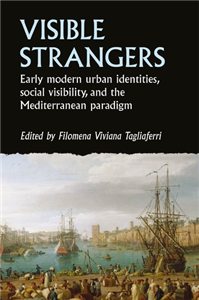 Humanities & Social SciencesSeptember 2025
Visible strangers
Early modern urban identities, social visibility, and the Mediterranean paradigm
by Filomena Viviana Tagliaferri
Visible strangers is a collection of essays on the nature of cultural pluralism in the Mediterranean and the different ways in which this was managed in various cities during the early modern period. The book's nine chapters considers new case studies, where authors offer a diachronic view of the nature of the co-presence of minorities in different urban spaces, investigated through the lens of the fascinating relationship between visibility and identity. The considered case studies cover different areas of the Mediterranean space: the Adriatic, the Ottoman empire between Asia and Africa, the Italian and Iberian peninsulas, the island of Malta, at the centre of the Mare Nostrum and host to many of its influences. The analysis of the way cultural pluralism expressed itself wishes to overcome the bias induced by 'Mediterraneanism', that has led to the Mediterranean as an area of study hardening into a conceptual category.
-
Trusted Partner
 Humanities & Social SciencesOctober 2020
The European Union and its eastern neighbourhood
Europeanisation and its twenty-first-century contradictions
by Mike Mannin, Paul Flenley
This volume is timely in that it explores key issues which are currently at the forefront of the EU's relations with its eastern neighbours. It considers the impact of a more assertive Russia, the significance of Turkey, the limitations of the Eastern Partnership with Belarus and Moldova, the position of a Ukraine in crisis and pulled between Russia and the EU, security and democracy in the South Caucasus. It looks at the contested nature of European identity in areas such as the Balkans. In addition it looks at ways in which the EU's interests and values can be tested in sectors such as trade and migration. The interplay between values, identity and interests and their effect on the interpretation of europeanisation between the EU and its neighbours is a core theme of the volume.
-
Trusted Partner
 Politics & governmentDecember 2009
Citizenship, identity and immigration in the European Union
Between past and future
by Theodora Kostakopoulou
European citizenship, identity and immigration are constitutive issues facing the European polity and have important consequences for domestic political systems. There has been a great deal published about citizenship within the setting of the nation-state and comparative immigration policies, but relatively little has been written on their theorisation in a post-national, post-statist context, such as the EU, and on alternative European institutional designs. Now available in paperback, this volume blends normative political theory with European integration, and develops an original theoretical framework for European Union citizenship, identity and immigration as well as a set of policy proposals for institutional reform. Challenging the conventionally held views in these areas, the author argues that a constructive model of European citizenship and identity is vital to the construction of a democratic, heterogeneous and inclusive European polity. The book will appeal to academics and political actors concerned with issues of European governance as well as to undergraduate and postgraduate students of European politics, European integration, European Union Law, political theory and sociology.
-
Trusted Partner
 Humanities & Social SciencesMarch 2026
Negotiating identity conflicts in a fragmenting world order
by Paul Willem Meerts, Mark Anstey
At every level of human interaction new levels of identity-based tension are in evidence. Contributors to this book explore facets of fragmentation processes within systems of state and interstate organisation, how they influence the use of negotiation, and how negotiation might be used to effect renewed coherence. Following Anstey's (Ch1) introductory chapter framing the nature and shape of fragmentation dynamics, Zartman (Ch 2) argues that the use of negotiation as a process of conflict resolution is deeply shaped by identity groups whose internal coherence is dependent on sustaining a negative identity of others. International relations are no longer solely the realm of experienced diplomats but are shaped as Meerts (Ch3) points out by politicians seeking to be responsive to voting publics rather than wider concerns. Anstey digs into problems of fragmentation (Ch. 4) and Troitskiy (Ch 5) points out how a reluctant acceptance of the power of 'the other' can lead to a form of strategic stability in relations. Anstey and Meerts (Ch 6) point out in their analysis of the Israeli-Palestinian case as an identity conflict turned very bad. Guggenbuhl (Ch 7 ) reveals how structures and processes have been designed within the EU to prevent, contain and regulate conflicts to limit risks of confrontation and fragmentation. Schuessler (Ch 8) to advocates a shift away from a template or roadmap approach to EU membership to a cohesion based on non-dominance. There is still a strong desire on the part of some states, like Northern Macedonia, to become EU members, as reflected in Manton's (Ch 9). Paula Garzon and Frans Schram explain the success of the Colombia Peace Negotiations (Ch 10), while Odigie and da Rocha (Ch 11) analyse the struggle faced by ECOWAS to influence coup leaders in Mali to return to constitutional government and changes of government by constitutional means. Liang (Ch12) discusses how the internet as the modern vehicle of inter-state, inter-group and interpersonal communication has become weaponised. In Ch 13 Anstey draws some lessons from contributions to the compilation.
-
Trusted Partner
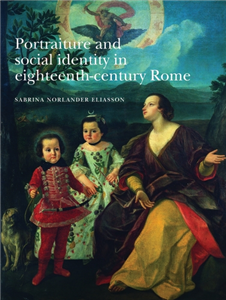 The ArtsNovember 2009
Portraiture and social identity in eighteenth-century Rome
by Sabrina Eliasson
Portraiture and Social Identity in Eighteenth-Century Rome sheds new light on the relationship between portraiture, social affirmation and the myth of Antiquity as it was experienced and elaborated in eighteenth-century Rome. Drawing upon a wealth of unpublished documents and previously unexamined literary texts, it offers new insights and readings into how the experience of the City in terms of abstract or concrete appropriation affected the ways of portraying native or visiting elite sitters. The Grand Tour portrait, usually discussed as a purely British phenomenon, is here put in its original context of production and compared to the portraits of the Romans themselves. Portraiture and social identity in eighteenth-century Rome will become essential reading for anyone with a particular interest in eighteenth-century art and its social use. ;


