Your Search Results

      • Trusted Partner
        Humanities & Social Sciences
        March 2026

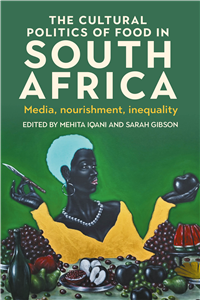
        The cultural politics of food in South Africa

        Media, nourishment, inequality

        by Mehita Iqani, Sarah Gibson

        Food is both a material system of nourishment, necessary for human survival, and a communicative system that signifies multiple meanings across human cultures. This book explores the cultural politics of food in the South African context, bringing together a range of disciplinary perspectives on the links between media, nourishment, and inequality. The chapters all highlight the multiplicity of meanings that food has in South African society. These include historical perspectives on the impact of colonialism, migration and apartheid had on food and foodways in South Africa; sociological interventions on food and society; aesthetic practices in relation to food; and mediated food cultures in South Africa. Taken together, the book critically explores the multiple ways in which food is never just food, and always linked to complex and shifting modalities of meaning and knowledge in the South African context.

      • Trusted Partner
        Humanities & Social Sciences
        March 2017

        Ordering Africa

        Anthropology, European imperialism and the politics of knowledge

        by Helen Tilley, Robert Gordon

        African research played a major role in transforming the discipline of anthropology in the twentieth century. Ethnographic studies, in turn, had significant effects on the way imperial powers in Africa approached subject peoples. Ordering Africa provides the first comparative history of these processes. With essays exploring metropolitan research institutes, Africans as ethnographers, the transnational features of knowledge production, and the relationship between anthropology and colonial administration, this volume both consolidates and extends a range of new research questions focusing on the politics of imperial knowledge. Specific chapters examine French West Africa, the Belgian and French Congo, the Anglo-Egyptian Sudan, Italian Northeast Africa, Kenya, and Equatorial Africa (Gabon) as well as developments in Britain, France, Germany, Italy, and Switzerland. A major collection of essays that will be welcomed by scholars interested in imperial history and the history of Africa.

      • Trusted Partner
        Humanities & Social Sciences
        September 2024

        Settlers at the end of empire

        Race and the politics of migration in South Africa, Rhodesia and the United Kingdom

        by Jean Smith

        Settlers at the end of empire traces the development of racialised migration regimes in South Africa, Rhodesia (present-day Zimbabwe) and the United Kingdom from the Second World War to the end of apartheid in 1994. While South Africa and Rhodesia, like other settler colonies, had a long history of restricting the entry of migrants of colour, in the 1960s under existential threat and after abandoning formal ties with the Commonwealth they began to actively recruit white migrants, the majority of whom were British. At the same time, with the 1962 Commonwealth Immigrants Act, the British government began to implement restrictions aimed at slowing the migration of British subjects of colour. In all three nations, these policies were aimed at the preservation of nations imagined as white, revealing the persistence of the racial ideologies of empire across the era of decolonisation.

      • Trusted Partner
        Business, Economics & Law
        June 2025

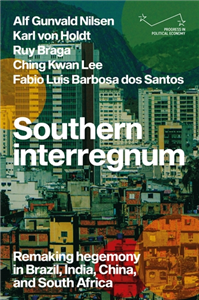
        Southern interregnum

        Remaking hegemony in Brazil, India, China, and South Africa

        by Alf Gunvald Nilsen, Karl von Holdt, Ruy Braga, Ching Kwan Lee, Fabio Luis Barbosa dos Santos

        How do governing elites in the global South attempt to remake hegemony in a conjuncture of durable crisis? This is the question at the core of Southern interregnum, a comparative conjunctural analysis of hegemonic projects in Brazil, India, China, and South Africa. Working with a Gramscian notion of crisis, centred on the interregnum as an enduring period of instability and uncertainty, in which hegemonic authority erodes and competing projects for crisis resolution emerge, the book proposes a novel critical reading of the convulsions that are currently reshaping the political economy of the global South and the world-system. Mapping the variegated trajectories of elite projects to reconcile accumulation and legitimation - and probing the limits of these projects - the book breaks new ground in the study of the contemporary global South.

      • Trusted Partner
        Humanities & Social Sciences
        March 2017

        Travellers in Africa

        British travelogues, 1850-1900

        by Timothy Youngs

        Works of travel have been the subject of increasingly sophisticated studies in recent years. This book undermines the conviction with which nineteenth-century British writers talked about darkest Africa. It places the works of travel within the rapidly developing dynamic of Victorian imperialism. Images of Abyssinia and the means of communicating those images changed in response to social developments in Britain. As bourgeois values became increasingly important in the nineteenth century and technology advanced, the distance between the consumer and the product were justified by the scorn of African ways of eating. The book argues that the ambiguities and ambivalence of the travellers are revealed in their relation to a range of objects and commodities mentioned in narratives. For instance, beads occupy the dual role of currency and commodity. The book deals with Henry Morton Stanley's expedition to relieve Emin Pasha, and attempts to prove that racial representations are in large part determined by the cultural conditions of the traveller's society. By looking at Joseph Conrad's Heart of Darkness, it argues that the text is best read as what it purports to be: a kind of travel narrative. Only when it is seen as such and is regarded in the context of the fin de siecle can one begin to appreciate both the extent and the limitations of Conrad's innovativeness.

      • Trusted Partner
        Humanities & Social Sciences
        February 2020

        The United States in the Indo-Pacific

        by Oliver Turner, Inderjeet Parmar

      • Trusted Partner
        Humanities & Social Sciences
        December 2024

        Iran, Saudi Arabia and the United States

        Power, identity and strategy in the Persian Gulf triangle

        by Luíza Cerioli

        This book offers a nuanced snapshot of the complex geopolitical dynamics in the Persian Gulf, underlining the interaction between Iran, Saudi Arabia, and the US. Examining their interwoven relations since the 1970s, Luíza Cerioli's framework reveals how changes in US-Saudi ties have ripple effects on Iran-US and Iran-Saudi relations and vice versa. Using a historical lens, she explores how enduring US-Saudi connections hinge on order expectations, delves into the cognitive factors shaping US-Iran enmity and traces the source of oscillation in the Saudi-Iran ties. Employing Neoclassical Realism, the book investigates status-seeking, national identities and leadership preferences, offering a deeper understanding of the region's multipolar system. By combining International Relations and Middle East Studies, Cerioli's work contributes to both fields, unravelling the intricate interplay between international structures, regional nuances and agency in shaping Persian Gulf geopolitics.

      • Trusted Partner
        Humanities & Social Sciences
        November 2013

        Britain and Africa Under Blair

        In pursuit of the good state

        by Julia Gallagher

        Africa was a key focus of Britain's foreign policy under Tony Blair. Military intervention in Sierra Leone, increases in aid and debt relief, and grand initiatives such as the Commission for Africa established the continent as a place in which Britain could 'do good'. Britain and Africa under Blair: in pursuit of the good state critically explores Britain's fascination with Africa. It argues that, under New Labour, Africa represented an area of policy that appeared to transcend politics. Gradually, it came to embody an ideal state activity around which politicians, officials and the wider public could coalesce, leaving behind more contentious domestic and international issues. Building on the story of Britain and Africa under Blair, the book, now available in paperback, draws wider conclusions about the role of 'good' and idealism in foreign policy. In particular, it discusses how international relationships provide opportunities to create and pursue ideals, and why they are essential for the well-being of political communities. It argues that state actors project the idea of 'good' onto idealised, distant objects, in order to restore a sense of the 'good state'. The book makes a distinctive and original contribution to debates about the role of ethics in international relations, and will be of particular interest to academics, policy-makers and students of international relations, Africa and British foreign policy, as well as anyone interested in ethics in international affairs. ;

      • Trusted Partner
        Humanities & Social Sciences
        June 2023

        Worrier state

        Risk, anxiety and moral panic in South Africa

        by Nicky Falkof

        Risk, anxiety and moral panic are endemic to contemporary societies and media forms. How do these phenomena manifest in a place like South Africa, which features heightened insecurity, deep inequality and accelerated social change? What happens when cultures of fear intersect with pervasive systems of gender, race and class? Worrier state investigates four case studies in which fear and anxiety appear in radically different ways: the far right myth of 'white genocide'; so-called 'Satanist' murders of young women; an urban legend about township crime; and social theories about safety and goodness in the suburbs. Falkof foregrounds the significance of emotion as a socio-political force, emphasising South Africa's imbrication within globalised conditions of anxiety and thus its fundamental and often-ignored hypermodernity. The book offers a bold and creative perspective on the social roles of fear and emotion in South Africa and thus on everyday life in this complex place.

      • Trusted Partner
        Humanities & Social Sciences
        July 2025

        The adventure

        Violent borders, illegal migration and the uncertain quest for life in Morocco

        by Sébastien Bachelet

        This ethnographic exploration of irregular migration from Western and Central Africa in Morocco deconstructs dehumanising narratives of a "migration crisis" and a "sub-Saharan problem" in politics of migration. The book provides an original focus on how migrants understood and experienced their entrapped mobility. The emic notion of "the adventure" at the heart of this study sheds light on a transformative, epic quest to carve out a better life and future. The book traces how young men from Western and Central Africa sought to assert themselves as agents of their own destinies, despite uncertain, illegalising processes. In steering away from aesthetics of despair and fearmongering narratives, the book brings new insights into inter-disciplinary debates (e.g. illegality, uncertainty, immobility, violence, suffering, transit, etc.). Such focus is essential to draw out the complexity and existential depth of (irregular) migrants' lives, journeys, and stories.

      • Trusted Partner
        Humanities & Social Sciences
        May 2010

        Representing Africa

        Landscape, exploration and empire in Southern Africa, 1780–1870

        by John McAleer, Andrew Thompson, John Mackenzie

        Southern Africa played a varied but vital role in Britain's maritime and imperial stories: it was one of the most intricate pieces in the British imperial strategic jigsaw, and representations of southern African landscape and maritime spaces reflect its multifaceted position. Representing Africa examines the ways in which British travellers, explorers and artists viewed southern Africa in a period of evolving and expanding British interest in the region. Drawing on a wide range of archival sources, contemporary travelogues and visual images, many of which have not previously been published in this context, this book posits landscape as a useful prism through which to view changing British attitudes towards Africa. Richly illustrated, this book will be essential reading for scholars and students interested in British, African, imperial and exploration history, art history, and landscape and environment studies. ;

      • Trusted Partner
        Humanities & Social Sciences
        March 2017

        Representing Africa

        Landscape, exploration and empire in Southern Africa, 1780–1870

        by John McAleer, Andrew Thompson, John M. MacKenzie

        Southern Africa played a varied but vital role in Britain's maritime and imperial stories: it was one of the most intricate pieces in the British imperial strategic jigsaw, and representations of southern African landscape and maritime spaces reflect its multifaceted position. Representing Africa examines the ways in which British travellers, explorers and artists viewed southern Africa in a period of evolving and expanding British interest in the region. Drawing on a wide range of archival sources, contemporary travelogues and visual images, many of which have not previously been published in this context, this book posits landscape as a useful prism through which to view changing British attitudes towards Africa. Richly illustrated, this book will be essential reading for scholars and students interested in British, African, imperial and exploration history, art history, and landscape and environment studies.

      • Trusted Partner
        Humanities & Social Sciences
        February 2017

        Images of Africa

        by Julia Gallagher

      • Trusted Partner
        Humanities & Social Sciences
        March 2017

        Science and society in southern Africa

        by Saul Dubow

        This collection, dealing with case studies drawn from South Africa, Zimbabwe, Mozambique and Mauritius, examines the relationship between scientific claims and practices, and the exercise of colonial power. It challenges conventional views that portray science as a detached mode of reasoning with the capacity to confer benefits in a more or less even-handed manner. That science has the potential to further the collective good is not fundamentally at issue, but science can also be seen as complicit in processes of colonial domination. Not only did science assist in bolstering aspects of colonial power and exploitation, it also possessed a significant ideological component: it offered a means of legitimating colonial authority by counter-poising Western rationality to native superstition and it served to enhance the self-image of colonial or settler elites in important respects. This innovative volume ranges broadly through topics such as statistics, medicine, eugenics, agriculture, entomology and botany.

      • Trusted Partner
      • Trusted Partner
        Humanities & Social Sciences
        July 2018

        The Victorian soldier in Africa

        by Edward Spiers, Andrew Thompson, John M. MacKenzie

        The Victorian soldier in Africa re-examines the campaign experience of British soldiers in Africa during the period, 1874-1902 - the zenith of the Victorian imperial expansion - and does so from the perspective of the regimental soldier. The book utilises an unprecedented number of letters and diaries, written by regimental officers and other ranks, to allow soldiers to speak for themselves about their experience of colonial warfare. The sources demonstrate the adaptability of the British army in fighting in different climates, over demanding terrain and against a diverse array of enemies. They also uncover soldiers' responses to army reforms of the era as well as the response to the introduction of new technologies of war. Moreover, the book provides commentary on soldiers' views of commanding officers and politicians alongside assessment of war correspondents, colonial auxiliaries and African natives in their roles as bearers, allies and enemies. This book reveals new insights on imperial and racial attitudes within the army, on relations between soldiers and the media and the production of information and knowledge from frontline to homefront. It will make fascinating reading for students, academics and enthusiasts in imperial history, Victorian studies, military history and colonial warfare.

      • Trusted Partner
        Teaching, Language & Reference
        July 2022

        Africa 2.0

        by Russell Southwood

      • Trusted Partner
        Humanities & Social Sciences
        August 2021

        The Red and the Black

        The Russian Revolution and the Black Atlantic

        by David Featherstone, Christian Høgsbjerg

        The Russian Revolution of 1917 was not just a world-historical event in its own right, but also struck powerful blows against racism and imperialism, and so inspired many black radicals internationally. This edited collection explores the implications of the creation of the Soviet Union and the Communist International for black and colonial liberation struggles across the African diaspora. It examines the critical intellectual influence of Marxism and Bolshevism on the current of revolutionary 'black internationalism' and analyses how 'Red October' was viewed within the contested articulations of different struggles against racism and colonialism. Challenging European-centred understandings of the Russian Revolution and the global left, The Red and the Black offers new insights on the relations between Communism, various lefts and anti-colonialisms across the Black Atlantic - including Garveyism and various other strands of Pan-Africanism. The volume makes a major and original intellectual contribution by making the relations between the Russian Revolution and the Black Atlantic central to debates on questions relating to racism, resistance and social change.

      Subscribe to our

      newsletter