
Amberley Publishing
Established in 2008,AmberleyPublishingis home of the ever-popular colour local history series Through Time, Amberleyis an independent publisher of books on a rich variety of history and heritage.
View Rights Portal
Established in 2008,AmberleyPublishingis home of the ever-popular colour local history series Through Time, Amberleyis an independent publisher of books on a rich variety of history and heritage.
View Rights Portal
We are an independent illustrated non-fiction publisher based in London, UK and have been in the industry for over 30 years. We publish a growing range of titles under our own Amber Books imprint.
View Rights Portal
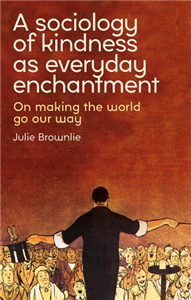
This book asks us to consider how and why the notion of random acts of kindness and the idea of kindness more generally have come to take a hold in many contemporary English-speaking societies. By introducing and mapping the contours of an emergent kindness industry, marshalling empirical research on contemporary framings of everyday kindness and theoretical resources from cultural sociology to the sociology of emotions and relationships, Brownlie makes the case for a critical sociological engagement with the idea of kindness. In doing so, she argues for kindness to be seen as a form of everyday enchantment - one that, like all enchantments, is ultimately ambivalent.


Promoting motivation to change is one of the most important treatment components in psychotherapeutic practice across disorders. Working through ambivalence and ultimatelyincreasing motivation to choose recovery with all its consequences is one of the main goals in treatment. This book presents the current state of knowledge anddescribes practical interventions to promote motivation to change. When dealing with ambivalent issues, an open, therapeutic attitude is recommended, as well as certainstrategies for conducting conversations to avoid reactance and resistance. The main focus of the book is therefore on therapeutic conversation and concrete interventions to clarify and increase motivation to change. For:• medical and psychological psychotherapists• child and adolescent psychotherapists• specialists working in psychiatry, psychotherapy,or psychosomatic medicine• clinical psychologists• psychological counselors• students and teachers in psychotherapeutic training,further training, and continuing education
 Trusted Partner

Hoarding disorder, classified as one of the obsessive-compulsive and related disorders in the DSM-5, presents particular challenges in therapeutic work, including treatment ambivalence and lack of insight of those affected. This evidence-based guide written by leading experts presents the latest knowledge on assessment and treatment of hoarding disorder. The reader gains a thorough grounding in the treatment of choice for hoarding – a specific form of CBT interweaved with psychoeducational, motivational, and harm-reduction approaches to enhance treatment outcome. Rich anecdotes and clinical pearls illuminate the science, and the book also includes information for special client groups, such as older individuals and those who hoard animals. Printable handouts help busy practitioners. This book is essential reading for clinical psychologists, psychiatrists, psychotherapists, and practitioners who work with older populations, as well as students.
Trusted Partner

Works of travel have been the subject of increasingly sophisticated studies in recent years. This book undermines the conviction with which nineteenth-century British writers talked about darkest Africa. It places the works of travel within the rapidly developing dynamic of Victorian imperialism. Images of Abyssinia and the means of communicating those images changed in response to social developments in Britain. As bourgeois values became increasingly important in the nineteenth century and technology advanced, the distance between the consumer and the product were justified by the scorn of African ways of eating. The book argues that the ambiguities and ambivalence of the travellers are revealed in their relation to a range of objects and commodities mentioned in narratives. For instance, beads occupy the dual role of currency and commodity. The book deals with Henry Morton Stanley's expedition to relieve Emin Pasha, and attempts to prove that racial representations are in large part determined by the cultural conditions of the traveller's society. By looking at Joseph Conrad's Heart of Darkness, it argues that the text is best read as what it purports to be: a kind of travel narrative. Only when it is seen as such and is regarded in the context of the fin de siecle can one begin to appreciate both the extent and the limitations of Conrad's innovativeness.
Trusted Partner


In einem Essay über Dostojewskij schreibt Alexej Remisow (1877-1957): »je unwahrscheinlicher die Wirklichkeit, desto wirklicher, desto wahrer ist sie.« In den Jahren 1917-1921, als Die Geräusche der Stadt in Petersburg entstand, spielte die Wirklichkeit verrückt genug. Der Autor antwortete darauf mit einem durch und durch paradoxen Werk: disparat in der Anlage, ambivalent durch die schillernde Verbindung von Dokument und Fiktion.
Trusted Partner
Ob New York, Rom, Wien oder Berlin – immer wenn der Kubaner José Manuel Prieto von einem Taxifahrer gefragt wird, woher er denn sei, hört er ein begeistertes »Ah, Fidel Castro!« Wie kommt es zu diesem vital strahlenden Bild der kubanischen Revolution und Fidel Castros? Hat die Wirklichkeit nicht längst alles Triumphale abgeschabt? In sehr persönlichen, nicht eifernden, eher schmerzvollen kleinen Schritten rekapituliert Prieto Momente der Kindheit, als Politik keine Sache des Urteils war, sichtet die öffentlichen und die intimeren Aspekte Kubas. Dabei meißelt er keine Eindeutigkeiten heraus, er schildert die Dinge vielmehr als unausweichlich komplex und ambivalent.
Trusted Partner
Murky waters challenges the refined image of spa towns in eighteenth-century Britain by unveiling darker and more ambivalent contemporary representations. It reasserts the centrality of health in British spas by looking at disease, the representation of treatment and the social networks of care woven into spa towns. The book explores the great variety of medical and literary discourses on the numerous British spas in the long eighteenth century and offers a rare look at spas beyond Bath. Following the thread of 'murkiness', it explores the underwater culture of spas, from the gender fluidity of users to the local and national political dimensions, as well as the financial risks taken by gamblers and investors. It thus brings a fresh look at mineral waters and a pinch of salt to health-related discourses.
Trusted Partner

Politische Sprachwissenschaft ist der Versuch, die Randbedingungen der sprachwissenschaftlichen Praxis durch eine historische Analyse des Gegenstandsverständnisses und der Methoden zu kontrollieren. Der Terminus ist mehrfach ambivalent: Da sich keine akademische Disziplin »politische Sprachwissenschaft« im Sinne der üblichen gegenstandsbezogenen Revierausgrenzungen etabliert hat, fungiert unter diesem Etikett auch ein Bemühen, das vielleicht besser mit dem Programm einer »Kritik der politischen Sprachwissenschaft« zu umschreiben gewesen wäre. Als solches gehörte es zu den Anstrengungen, die Ende 1960er Jahren mit dem Versuch begannen, aus der einfachen Reproduktion der philologischen Fächer auszubrechen. Nach 1968 war die Fragestellung unter dem Druck der »studentischen Basis« in sprachwissenschaftlichen Lehrveranstaltungen unvermeidlich. Politische Sprachwissenschaft untersucht die Sprachpraxis im Hinblick auf ihre gesellschaftlichen Determinanten.
Trusted Partner
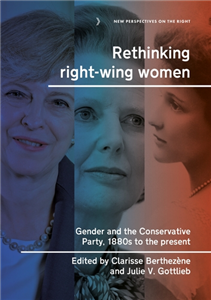
Rethinking Right-Wing Women explores the institutional structures for and the representations, mobilisation, and the political careers of women in the British Conservative Party since the late 19th century. From the Primrose League (est.1883) to Women2Win (est.2005), the party has exploited women's political commitment and their social power from the grass-roots to the heights of the establishment. Yet, although it is the party that extended the equal franchise, had the first woman MP to sit Parliament, and produced the first two women Prime Ministers, the UK Conservative Party has developed political roles for women that jar with feminist and progressive agendas. Conservative women have tended to be more concerned about the fulfilment of women's duties than the realisation of women's rights. This book tackles the ambivalences between women's politicisation and women's emancipation in the history of Britain's most electorally successful and hegemonic political party.
Trusted Partner
Unruly Subjects takes readers to the epicentre of Europe's intensifying border struggles-the Aegean islands in Greece, where thousands of 'undesirable' migrants have been warehoused and violently abandoned in EU-funded refugee camps. Drawing on nearly a decade of research, Ludek Stavinoha reveals the subterranean corners in which resistance brews and solidarity takes hold, tracing migrants' everyday struggles for dignity and their rights, alongside grassroots volunteers who have built vital infrastructures of support. At the heart of the book are the creative, if precarious and ambivalent, solidarities forged between volunteers and refugees, citizens and non-citizens, as they unsettle racialised boundaries and logics of control, in defiance of state-sanctioned violence, criminalisation, and neglect. Urgent and compelling, Unruly Subjects illuminates how people navigate and subvert Europe's increasingly hostile border regime, and the alternative imaginaries of more just futures their struggles embody.
Trusted Partner
Politischer Größenwahn und das Verblassen des amerikanischen Traums, die Fragilität der liberalen Demokratie, aber auch Antisemitismus, Rassismus und Misogynie: Ohne Bezug auf die Schlüsselgefühle der explosiven Moderne lassen sie sich weder verstehen noch einhegen oder bekämpfen. Angst, Enttäuschung, Wut, aber auch Scham oder Liebe – Eva Illouz blickt auf unsere aufgewühlte Zeit aus der Perspektive der Gefühle, die fest in die sozialen Arrangements der westlichen Moderne eingebaut sind und von ihrer Ökonomie, Politik und Kultur intensiv bewirtschaftet werden. Gefühle sind psychologisch relevant, moralisch bedeutsam, politisch wirksam – und hochgradig ambivalent. Das macht die Gegenwart, in der wir leben, so brisant, ja explosiv. In einer meisterlichen Komposition aus soziologischen Analysen, historischen Miniaturen und Lektüren ikonischer Werke der Weltliteratur porträtiert Illouz die Emotionen, die unsere Gesellschaft unter Hochspannung setzen.
Trusted Partner

This book thinks through modernity and its representations by drawing in critical considerations of time and space. It explores the oppositions and enchantments, the contradictions and contentions, and the identities and ambivalences spawned under modernity as constitutive of our worlds. Instead of assuming a straightforward, singular trajectory of the phenomena, it discusses modernity as involving checkered, contingent and contended processes of meaning and power over the past five centuries. Subjects of modernity considers the overlaps yet distinctions between modernity, modernism and modernisation, further imaginatively exploring the relationship between history and anthropology. Critically engaging historical anthropology, subaltern studies, de-colonial understandings, and post-colonial procedures, it at once offers an innovative understanding of cultural identities and imaginatively reassess critical perspectives, from South Asia to Latin America. This book will be of interest to students and scholars of anthropology, history, sociology, post-colonial studies and cultural geography, among other subjects, finding adoption in different courses/seminars across disciplines.
Trusted Partner
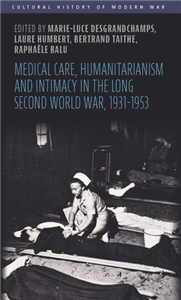
This book offers a micro-global history of humanitarianism and medical care during the 'long' Second World War, which challenges the traditional and Eurocentric chronological boundaries of 1939/1945. It takes as its starting point the Japanese invasion of Manchuria in 1931, which led to the progressive dislocation of the League of Nations, with the Japanese, German and Soviet departures in the 1930s. It ends with the termination of the Korean War in 1953, and the subsequent dismantlement of the first United Coalition and UN Peace enforcement operation. It considers the slow, messy and ambivalent transformation of humanitarian actors' relations to the suffering of distant others through a study of humanitarian encounters, practices, spaces and affects. Paying close attention to a variety of actors, such as French colonial doctors, Swiss ICRC delegates, Egyptian relief workers, Chinese-style physicians, Peruvian and Ecuadorian nurses or American member of the Unitarian Service Committee, the book provides a more holistic story of humanitarianism.
Trusted Partner
Massacres in Early Modern Drama analyses the dynamically ambivalent meanings constructed by the language and action of massacre on the early modern stage. Informed by theories drawn from massacre studies, the monograph challenges orthodoxies about senseless violence, illuminates archaic forms of massacres, and attests to their brutally diverse stage representations. Anchored by the contention that the St Bartholomew's Day Massacre in Paris (1572) was instrumental to early modern understandings of massacre, the book uses this atrocity, and its most famous dramatic depiction - Christopher Marlowe's The Massacre at Paris - as a hook to explore larger concerns about massacre in plays by Robert Greene, George Chapman, John Fletcher, and William Shakespeare. Thus, Massacres in Early Modern Drama considers how early modern drama forms part of a continual cultural process of trying to piece together the contentious and traumatic phenomenon of massacre.
Trusted Partner

Jane Garrity shows how four British women modernists - Dorothy Richardson, Sylvia Townsend Warner, Mary Butts and Virginia Woolf - used experimental literary techniques in order to situate themselves as national subjects. Reading literary texts through the lens of material culture, this book makes a major contribution to the new modernist studies by arguing that women's imaginative work is inseparable from their ambivalent and complicated relation to Britain's imperial history. Drawing on extensive archival research, Garrity takes as her point of departure the ubiquitous maternal and racial link to national identification during the interwar period. Each chapter foregrounds a different range of cultural developments that coincided with the rise of modernism, such as emerging visual techniques, the revival of British neo-medievalism, ethnographic work on primitive mysticism, and nostalgia for English ruralism. By locating both canonical and non-canonical works of female literary modernism within broader cultural discourses, Garrity demonstrates the intersections among nationalism, imperialism, gender and sexuality in the construction of English national culture.
Trusted Partner

Friederike Mayröcker hat keine Zeit. Nicht für Resümee und Erinnerung, nicht fürs ausschweifende Betrachten und Räsonieren und erst recht nicht fürs Geschichtenerzählen. Sie hat noch nicht einmal Zeit für das Leben selbst, sofern es nicht das Schreiben ist. Was zählt, sind allein die Poesie und »die echoartigen Erfindungen« eines fast schon ein Jahrhundert währenden Lebens, die in ihren Schriften aufgehoben sind. Mag dieses Leben im Äußeren den Zumutungen der Endlichkeit aller menschlichen Existenz unterworfen sein – im Inneren und in seiner Transformation in den ewigen Augenblick wird es immer nur reicher an Formen des Erlebens: »(Die Jahre werden immer unglaublicher), die blauen, Schlitze des Himmels, bin sehr ambivalent.« Nach den »études«, den »Fetzchen« und Splittern, schreibt Friederike Mayröcker nun ein »cahier oder Heftchen«, wie sie es nennt; es ist gleichzeitig der zweite Band einer Trilogie. In radikal konzentrierter Sprache und bezwingend schönen Bildern führt sie darin ein Leben vor, das nur einer Maxime folgt: »nicht nur das Geschriebene auch die Existenz musz poetisch sein«.
Trusted Partner

This electronic version has been made available under a Creative Commons (BY-NC-ND) open access license. Race talk is about language use as an anti-racist practice in multicultural city spaces. The book contends that attention to talk reveals the relations of domination and subordination in heterogeneous, ethnically diverse and multilingual contexts, while also helping us to understand how transcultural solidarity might be expressed. Drawing on original ethnographic research conducted on licensed and unlicensed market stalls in in heterogeneous, ethnically diverse and multilingual contexts, this book examines the centrality of multilingual talk to everyday struggles about difference, positionality and entitlement. In these street markets, Neapolitan street vendors work alongside documented and undocumented migrants from Bangladesh, China, Guinea Conakry, Mali, Nigeria and Senegal as part of an ambivalent, cooperative and unequal quest to survive and prosper. As austerity, anti-immigration politics and urban regeneration projects encroached upon the possibilities of street vending, talk across linguistic, cultural, national and religious boundaries underpinned the collective action of street vendors struggling to keep their markets open. The edginess of their multilingual organisation offered useful insights into the kinds of imaginaries that will be needed to overcome the politics of borders, nationalism and radical incommunicability.
Trusted Partner
Politiken der Angst, Spiralen der Enttäuschung, Menschen in Wut. In ihrem neuen Buch blickt Eva Illouz auf unsere aufgewühlte Zeit aus der Perspektive der Gefühle, die sie prägen. Angst, Enttäuschung und Wut, aber auch Scham oder Liebe sind fest in die sozialen Arrangements der westlichen Moderne eingebaut – und werden von ihrer Ökonomie, Politik und Kultur intensiv bewirtschaftet. Sie sind psychologisch relevant, moralisch bedeutsam, politisch wirksam – und hochgradig ambivalent. Das macht die Gegenwart, in der wir leben, so brisant, ja explosiv. Illouz erhellt diese Phänomene in einer meisterlichen Komposition aus soziologischen Analysen, historischen Miniaturen und Lektüren ikonischer Werke der Weltliteratur. In präzisen Porträts der Emotionen, die Gesellschaft unter Hochspannung setzen, beleuchtet sie die Mechanismen ihres Wirkens sowie den Grund ihrer machtvollen Präsenz. Das Verblassen des amerikanischen Traums und die Fragilität der liberalen Demokratie, das Hamsterrad des Kapitalismus und die Konflikte rund um Identität, aber auch Antisemitismus, Rassismus und Misogynie: Ohne Bezug auf die Schlüsselgefühle der explosiven Moderne lassen sie sich weder verstehen noch einhegen oder bekämpfen. Das zeigt dieses so fesselnde wie zeitgemäße Buch.
Trusted Partner
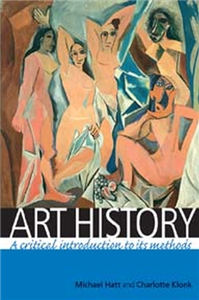
Art History: A critical introduction to its methods provides a lively and stimulating introduction to methodological debates within art history. Offering a lucid account of approaches from Hegel to post-colonialism, the book provides a sense of art history's own history as a discipline from its emergence in the late-eighteenth century to contemporary debates. By explaining the underlying philosophical and political assumptions behind each method, along with clear examples of how these are brought to bear on visual and historical analysis, the authors show that an adherence to a certain method is, in effect, a commitment to a set of beliefs and values. The book makes a strong case for the vitality of the discipline and its methodological centrality to new fields such as visual culture. This book will be of enormous value to undergraduate and graduate students, and also makes its own contributions to ongoing scholarly debates about theory and method. ;
Trusted Partner

This edited volume provides new readings of the life and career of iconic actress Vivien Leigh (1913-67), written by experts from theatre and film studies and curators from the Victoria & Albert Museum, London. The collection uses newly accessible family archives to explore the intensely complex relationship between Vivien Leigh's approach to the craft of acting for stage and screen, and how she shaped, developed and projected her public persona as one of the most talked about and photographed actresses of her era. With key contributors from the UK, France and the US, chapters range from analyses of her work on stage and screen to her collaborations with designers and photographers, an analysis of her fan base, her interior designs and the 'public ownership' of Leigh's celebrity status during her lifetime and beyond.

