
Your Search Results


-
Promoted Content

 Literature & Literary StudiesJuly 2025
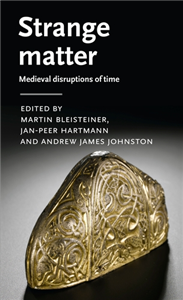
Strange matter
Medieval disruptions of time
by Martin Bleisteiner, Jan-Peer Hartmann, Andrew James Johnston
Medieval and early modern texts reflect a fascination with material objects, from ancient heirlooms to ingenious automata. Often imbued with power or beauty, these objects carry an uncanny sense of otherness, their mysterious origins evoking wonder and suggesting temporal and spatial distance. Acting as repositories of temporal alterity, such artefacts bridge the past and present in profound ways. This volume, featuring contributions from experts in literature and art history, explores how texts from these periods use material objects to engage with temporal otherness. From everyday items to marvellous creations, objects challenge distinctions between human and material, natural and cultural. Whether examining the hybrid status of Hector's body in Lydgate's Troy Book or the temporal agency of humble bubbles, the chapters illuminate the vibrant networks connecting people and objects. By highlighting the 'hybridity' of matter, the book offers fresh insights into Bruno Latour's critique of nature-culture divides.
-
Promoted Content
 Humanities & Social SciencesDecember 2025
Bulletin of the John Rylands Library 101/2
Imaging Heritage Science Initiatives at The John Rylands Research Institute and Library
by Stefan Hanß, James Robinson
The John Rylands Library houses one of the finest collections of rare books, manuscripts and archives in the world. The collections span five millennia, have a global reach and cover a wide range of subjects, including art and archaeology; economic, social, political, religious and military history; literature, drama and music; science and medicine; theology and philosophy; travel and exploration. For over a century, the Bulletin of the John Rylands Library has published research that complements the Library's special collections. An electronic edition of this issue is freely available under a Creative Commons (CC BY-NC-ND) licence.
-
 Trusted Partner
-
Trusted Partner
 FictionJune 2019
This Man and Music
By Anthony Burgess
by Christine Lee Gengaro, Andrew Biswell
This man and music asks two central questions: what can literature contribute to the art of composition, and how can music influence the writer? Anthony Burgess, famed novelist, journalist, and composer, answers these questions and many more. As a person uniquely qualified to look at the interconnectivity of music and literature from both sides, Burgess provides fascinating insights, drawing on his deep knowledge of both disciplines. The book contains eleven interconnected essays that touch on philosophical conundrums of art and adaptation, questions of meaning, and the author's own personal experience. It is a must-read for fans of Burgess who want to understand how music influenced the author's craft of writing. Part autobiography and part literary and musical analysis, This man and music is a unique artefact in the stunning output of a prolific artist.
-
Trusted Partner
 Humanities & Social SciencesSeptember 2001
Railways and culture in Britain
The epitome of modernity
by Ian Carter, Jeffrey Richards
The nineteenth-century's steam railway epitomised modernity's relentlessly onrushing advance. In Railways and culture in Britain Ian Carter delves into the cultural impact of train technology, and how this was represented in British society. Why, for example, did Britain possess no great railway novel? The book's first half tests that assertion by comparing fiction and images by some canonical British figures (Turner, Dickens, Arnold Bennett) with selected French and Russian competitors: Tolstoy, Zola, Monet, Manet. The second half proposes that if high cultural work on the British steam railway is thin, then this does not mean that all British culture ignored this revolutionary artefact. Detailed discussions of comic fiction, crime fiction and cartoons reveal a popular fascination with railways tumbling from vast (and hitherto unexplored) stores of critically overlooked genres. A final chapter contemplates cultural correlations of the steam railway's eclipse. If this was the epitome of modernity, then does the triumph of diesel and electric trains, of cars and planes, signal a decisive shift to postmodernity? ;
-
Trusted Partner
 The ArtsSeptember 2025
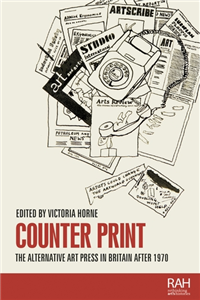
Counter print
The alternative art press in Britain after 1970
by Victoria Horne
The history of contemporary art is also a history of its newsletters, manifestos, magazines, pamphlets, and journals. Those periodical publications do not simply communicate or record ideas but have worked in exciting ways to shape art's practices, histories and communities. As a new generation of artists, activists and scholars seek to uncover the histories of alternative publishing and artistic networks, this book gathers original archival discoveries while offering methodologies for studying and thinking with those artefacts. As the first essay collection to focus on the periodical art press and the ways we study it, Counter print offers readers an alternative route into the past fifty years of contemporary art, one that is defiantly collaborative, border crossing and disruptive.
-
Trusted Partner
 Literature & Literary StudiesMarch 2024
Borrowed objects and the art of poetry
Spolia in Old English verse
by Denis Ferhatovic
This study examines Exeter riddles, Anglo-Saxon biblical poems (Exodus, Andreas, Judith) and Beowulf in order to uncover the poetics of spolia, an imaginative use of recycled fictional artefacts to create sites of metatextual reflection. Old English poetry famously lacks an explicit ars poetica. This book argues that attention to particularly charged moments within texts - especially those concerned with translation, transformation and the layering of various pasts - yields a previously unrecognised means for theorising Anglo-Saxon poetic creativity. Borrowed objects and the art of poetry works at the intersections of materiality and poetics, balancing insights from thing theory and related approaches with close readings of passages from Old English texts.
-
Trusted Partner
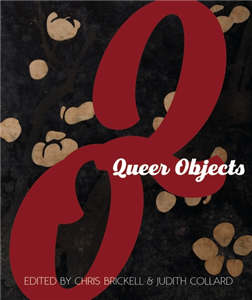 The ArtsSeptember 2019
Queer Objects
by Chris Brickell, Judith Collard
Queer lives give rise to a vast array of objects: the things we fill our houses with, the gifts we share with our friends, the commodities we consume at work and at play, the clothes and accessories we wear, and the analogue and digital technologies we use to communicate with one another. But what makes an object queer? The sixty-three chapters in Queer Objects consider this question in relation to lesbian, gay and transgender communities across time, cultures and space. In this unique international collaboration, well-known and newer writers traverse world history to write about items ranging from ancient Egyptian tomb paintings and Roman artefacts to political placards, snapshots, sex toys and the smartphone. Fabulous, captivating, transgressive.
-
Trusted Partner
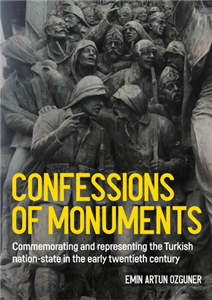 The ArtsJune 2026
Confessions of monuments
Commemorating and representing the Turkish nation-state in the early twentieth century
by Emin Artun Ozguner
Following the dissolution of the Ottoman Empire in the early 1920s, an emerging nation state built a particular relationship with the Ottoman past. In its simultaneous disavowal and inheritance of it, this was the new Republic of Turkey, founded in 1923. Nation-states are areas of ideological contestation. However, they are equally visible and tangible. This is thanks to the making of a new world of artefacts in build or print that represent and commemorate them in many, often contradicting ways through design practices. This book offers a thorough account of this new Turkish material world through the trajectories of commemoration; from public monuments, print media, and festive illumination to temporary and permanent architecture from the onset of the 1908 Young Turk revolution to the demise of Turkey's founding single-party regime in the late 1950s. If objects are silent actors of history, their confessions await.
-
Trusted Partner
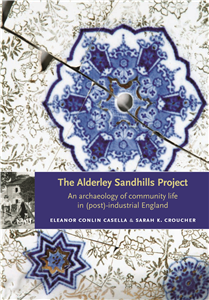 Museums & museologyApril 2010
The Alderley Sandhills Project
An archaeology of community life in (post-) industrial England
by Eleanor Conlin Casella, Sarah K. Croucher
How did the rise of consumer society impact the domestic lives of ordinary workers? Funded by English Heritage, this study offers the first book-length archaeology of a 17th through 20th century household site in Great Britain. Adopting a multi-disciplinary approach, the volume situates the results of traditional archaeological excavations within a broader spectrum of archival sources, family photographs and personal memories of former site residents to consider the dramatic influences of industrialization and subsequent de-industrialisation on the material world of a rural community in the North-West of England. Organised as a series of thematic chapters, the book emphasizes the social nature of household archaeology, drawing the reader from excavated artifacts into domestic spaces, historic events, community identities, and family memories. It will be of interest to a wide range of scholars and students, in addition to those interested in local history, archaeology, and family genealogies.
-
Trusted Partner
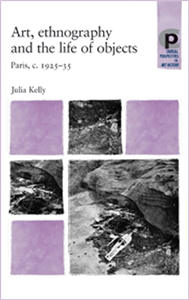 The ArtsJanuary 2012
Art, ethnography and the life of objects
Paris, c.1925–35
by Julia Kelly, Marsha Meskimmon, Shearer West, Tim Barringer
In the 1920s and 1930s, anthropology and ethnography provided new and striking ways of rethinking what art could be and the forms which it could take. This book examines the impact of these emergent disciplines on the artistic avant-garde in Paris. The reception by European artists of objects arriving from colonial territories in the first half of the twentieth century is generally understood through the artistic appropriation of the forms of African or Oceanic sculpture. The author reveals how anthropological approaches to this intriguing material began to affect the ways in which artists, theorists, critics and curators thought about three-dimensional objects and their changing status as 'art', 'artefacts' or 'ethnographic evidence'. This book analyses texts, photographs and art works that cross disciplinary boundaries, through case studies including the Dakar to Djibouti expedition of 1931-33, the Trocadéro Ethnographic Museum, and the two art periodicals Documents and Minotaure. Through its interdisciplinary and contextual approach, it provides an important corrective to histories of modern art and the European avant-garde. ;
-
Trusted Partner
 The ArtsMarch 2006
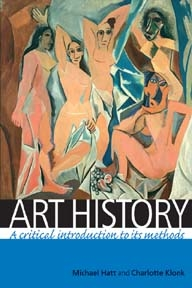
Art history
A critical introduction to its methods
by Michael Hatt, Charlotte Klonk
Art History: A critical introduction to its methods provides a lively and stimulating introduction to methodological debates within art history. Offering a lucid account of approaches from Hegel to post-colonialism, the book provides a sense of art history's own history as a discipline from its emergence in the late-eighteenth century to contemporary debates. By explaining the underlying philosophical and political assumptions behind each method, along with clear examples of how these are brought to bear on visual and historical analysis, the authors show that an adherence to a certain method is, in effect, a commitment to a set of beliefs and values. The book makes a strong case for the vitality of the discipline and its methodological centrality to new fields such as visual culture. This book will be of enormous value to undergraduate and graduate students, and also makes its own contributions to ongoing scholarly debates about theory and method. ;


