
The Arts
Confessions of monuments
Commemorating and representing the Turkish nation-state in the early twentieth century
by Emin Artun Ozguner
Description
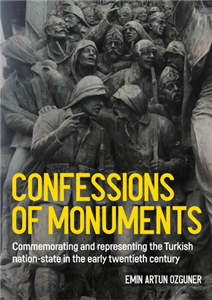
Following the dissolution of the Ottoman Empire in the early 1920s, an emerging nation state built a particular relationship with the Ottoman past. In its simultaneous disavowal and inheritance of it, this was the new Republic of Turkey, founded in 1923. Nation-states are areas of ideological contestation. However, they are equally visible and tangible. This is thanks to the making of a new world of artefacts in build or print that represent and commemorate them in many, often contradicting ways through design practices. This book offers a thorough account of this new Turkish material world through the trajectories of commemoration; from public monuments, print media, and festive illumination to temporary and permanent architecture from the onset of the 1908 Young Turk revolution to the demise of Turkey's founding single-party regime in the late 1950s. If objects are silent actors of history, their confessions await.
More Information
Rights Information
Albania, Algeria, Angola, Argentina, Armenia, Australia, Austria, Bahrain, Belgium, Belize, Benin, Bolivia, Bosnia and Herzegovina, Botswana, Brazil, Bulgaria, Burkina Faso, Burundi, Cameroon, Canada, Cape Verde, Central African Republic, Chad, Chile, China, Colombia, Comoros, Congo [DRC], Congo, Republic of the, Costa Rica, Ivory Coast, Croatia, Czech Republic, Denmark, Djibouti, Ecuador, Egypt, El Salvador, Equatorial Guinea, Eritrea, Estonia, Ethiopia, Faroe Islands, Finland, France, French Guiana, Gabon, Gambia, Georgia, Germany, Ghana, Greece, Guatemala, Guinea, Guinea-Bissau, Guyana, Honduras, Hongkong, Hungary, Iceland, India, Indonesia, Iran, Iraq, Ireland, Israel, Italy, Japan, Jordan, Kazakhstan, Kenya, Kuwait, Latvia, Lebanon, Lesotho, Liberia, Libya, Lithuania, Luxembourg, Macau, China, Macedonia [FYROM], Madagascar, Malawi, Malaysia, Mali, Malta, Mauritania, Mauritius, Mayotte, Mexico, Mongolia, Montenegro, Morocco, Mozambique, Namibia, Netherlands, New Zealand, Nicaragua, Niger, Nigeria, Norway, Oman, Pakistan, Panama, Paraguay, Peru, Philippines, Poland, Portugal, Puerto Rico, Qatar, Reunion, Romania, Russia, Rwanda, Saint Helena, Sao Tome and Principe, Saudi Arabia, Senegal, Serbia, Seychelles, Sierra Leone, Singapore, Slovakia, Slovenia, Somalia, South Africa, South Korea, Spain, Sri Lanka, Sudan, Suriname, Swaziland, Sweden, Switzerland, Syria, Taiwan, Tanzania, Thailand, Timor-Leste, Togo, Tokelau, Tunisia, Turkey, Uganda, Ukraine, United Arab Emirates, United Kingdom, United States, Uruguay, Venezuela, Vietnam, Western Sahara, Yemen, Zambia, Zimbabwe, South Sudan, Cyprus, Palestine, Bangladesh, Cambodia, Liechtenstein, Azerbaijan, Jamaica, Kyrgyzstan, Dominican Republic, Myanmar, Monaco
Endorsements
In 1923, the Republic of Turkey emerged from the wreckage of the Ottoman Empire as a nation state. In the imagination of its reforming bureaucrats, this was to be a drastically new, modern state, but in fact it was in constant negotiation with its past, at times denying it and at others reinterpreting it. Art and design practices were invaluable instruments in these imaginary negotiations with history that aimed to shape society. Painting, sculpture, photography, print culture, and festive illumination were the brick and mortar with which the top-down imaginations of the nation were built and projected to a local and global audience, as much as architectural practice. Confessions of monuments examines this crucial role of artefacts in commemorating and representing a new state, and the experiences of makers, reformers and the public in this process of cultural transformation from empire to national modernity. It proposes that myriad ways of designing the nation allowed a wider community of artists, makers, and thinkers to join the scene of nation-building. It argues that nations are not built in isolation but in negotiation with global modernity and local necessities where design practice plays a central role. It provides an essential contribution to the study of Turkish national modernity and material culture from the level of object histories. It is a significant story of designing a nation starting from the earlier projections of Young Turks with the 1908 constitutional revolution, to the onset of post-war liberalisation in the 1950s.
Reviews
In 1923, the Republic of Turkey emerged from the wreckage of the Ottoman Empire as a nation state. In the imagination of its reforming bureaucrats, this was to be a drastically new, modern state, but in fact it was in constant negotiation with its past, at times denying it and at others reinterpreting it. Art and design practices were invaluable instruments in these imaginary negotiations with history that aimed to shape society. Painting, sculpture, photography, print culture, and festive illumination were the brick and mortar with which the top-down imaginations of the nation were built and projected to a local and global audience, as much as architectural practice. Confessions of monuments examines this crucial role of artefacts in commemorating and representing a new state, and the experiences of makers, reformers and the public in this process of cultural transformation from empire to national modernity. It proposes that myriad ways of designing the nation allowed a wider community of artists, makers, and thinkers to join the scene of nation-building. It argues that nations are not built in isolation but in negotiation with global modernity and local necessities where design practice plays a central role. It provides an essential contribution to the study of Turkish national modernity and material culture from the level of object histories. It is a significant story of designing a nation starting from the earlier projections of Young Turks with the 1908 constitutional revolution, to the onset of post-war liberalisation in the 1950s.
Author Biography
Artun Ozguner is a Senior Lecturer in Contextual and Theoretical Studies at the University for the Creative Arts
 Trusted Partner

Manchester University Press
Manchester University Press is a leading UK publisher known for excellent research in the humanities and social sciences.
View all titlesBibliographic Information
- Publisher Manchester University Press
- Publication Date June 2026
- Orginal LanguageEnglish
- ISBN/Identifier 9781526176233 / 1526176238
- Publication Country or regionUnited Kingdom
- FormatPrint PDF
- Pages264
- ReadershipGeneral/trade; College/higher education; Professional and scholarly
- Publish StatusPublished
- Dimensions240 X 170 mm
- Biblio NotesDerived from Proprietary 6178
- SeriesStudies in Design and Material Culture
- Reference Code16328
Thank you for proceeding with this offer.
Manchester University Press has chosen to review this offer before it proceeds.
You will receive an email update that will bring you back to complete the process.
You can also check the status in the My Offers area
Manchester University Press has chosen to review this offer before it proceeds.
You will receive an email update that will bring you back to complete the process.
You can also check the status in the My Offers area

Please wait while the payment is being prepared.
Do not close this window.

(c) Copyright 2026 - Frankfurter Buchmesse GmbH. All Right Reserved