
Theart Press
Theart Press is a South African publisher specialisingin inspirational books - including poetry, children's books and biography.
View Rights Portal
Theart Press is a South African publisher specialisingin inspirational books - including poetry, children's books and biography.
View Rights Portal
We are a publisher from Germany with a selected list of children's and young adult books.
View Rights Portal

This volume proposes new insights into the uses of classical mythology by Shakespeare and his contemporaries, focusing on interweaving processes in early modern appropriations of myth. Its 11 essays show how early modern writing intertwines diverse myths and plays with variant versions of individual myths that derive from multiple classical sources, as well as medieval, Tudor and early modern retellings and translations. Works discussed include poems and plays by William Shakespeare, Christopher Marlowe and others. Essays concentrate on specific plays including The Merchant of Venice and Dido Queen of Carthage, tracing interactions between myths, chronicles, the Bible and contemporary genres. Mythological figures are considered to demonstrate how the weaving together of sources deconstructs gendered representations. New meanings emerge from these readings, which open up methodological perspectives on multi-textuality, artistic appropriation and cultural hybridity.


Hamlet is Shakespeare's longest play, and is considered among the most powerful and influential works of world literature, with a story capable of "seemingly endless retelling and adaptation by others". The play likely was one of Shakespeare's most popular works during his lifetime, and still ranks among his most performed, topping the performance list of the Royal Shakespeare Company and its predecessors in Stratford-upon-Avon since 1879. It has inspired many other writers—from Johann Wolfgang von Goethe and Charles Dickens to James Joyce and Iris Murdoch—and has been described as "the world's most filmed story after Cinderella"
 Trusted Partner
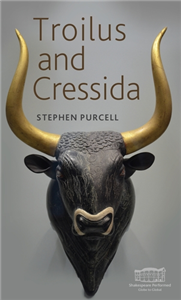
A history of Shakespeare's play in performance, from John Dryden's Restoration adaptation to the rediscovery of the play in the twentieth century. What made this play so relevant to audiences who had lived through the horrors of two world wars and the rise of fascism? Why did it speak so directly to the 'angry young men' of the post-war generation and to the countercultural movements of the 1960s? This book investigates the many ways in which modern directors and actors have found their own world reflected in the play, from anti-war protests and the sexual revolution to feminism and postcolonialism. In doing so, it explores the play's own complexity and its refusal to give easy answers.
Trusted Partner
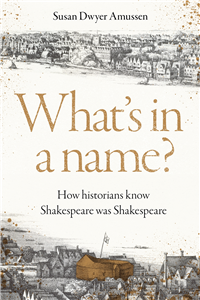
A compelling tour of Shakespeare's England that makes a powerful contribution to the 'authorship question'. How do we know Shakespeare was Shakespeare? Could a glover's son who left school at fifteen really be the author behind such masterpieces as Hamlet, King Lear and The Tempest? Yes! says historian Susan Amussen. She transports readers back to early modern England, to travel the path that carried William Shakespeare from humble origins in Stratford to literary greatness on the London stage. This was a society undergoing rapid change. Grammar schools made education in Latin and Greek available to commoners, while touring players brought the latest dramatic productions to the masses. And in London, a metropolis filled with European visitors, ordinary people had the opportunity to see courtly life up close. No serious historian doubts that Shakespeare was the author of the plays that bear his name. Susan Amussen shares what they know: that Shakespeare's England was a complex and cosmopolitan place, with everything a talented young playwright needed to develop his craft and furnish his imagination.
Trusted Partner
Trusted Partner
 Trusted Partner
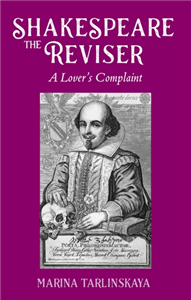
The project researches the difference between a revision vs. a rewriting. The book explores the English poems and plays of the Early New English period, from the sixteenth to the beginning of seventeenth century, with over 50 entries examined. The main material is the poem A Lover's Complaint; the play Double Falsehood by Lewis Theobald; the revised and rewritten post-Restoration plays such as Richard II (revised by Lewis Theobald), and The Fatal Secret (rewritten Webster's The Duchess of Malfi) by Lewis Theobald. An example of authorial revision is Sonnets 2 and 138.
Trusted Partner
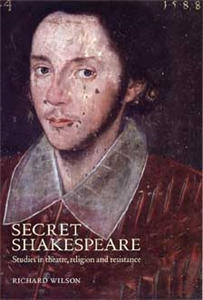
Shakespeare's Catholic context was the most important literary discovery of the last century. No biography of the Bard is now complete without chapters on the paranoia and persecution in which he was educated, or the treason which engulfed his family. Whether to suffer outrageous fortune or take up arms in suicidal resistance was, as Hamlet says, 'the question' that fired Shakespeare's stage. In 'Secret Shakespeare' Richard Wilson asks why the dramatist remained so enigmatic about his own beliefs, and so silent on the atrocities he survived. Shakespeare constructed a drama not of discovery, like his rivals, but of darkness, deferral, evasion and disguise, where, for all his hopes of a 'golden time' of future toleration, 'What's to come' is always unsure. Whether or not 'He died a papist', it is because we can never 'pluck out the heart' of his mystery that Shakespeare's plays retain their unique potential to resist. This is a fascinating work, which will be essential reading for all scholars of Shakespeare and Renaissance studies. ;
Trusted Partner
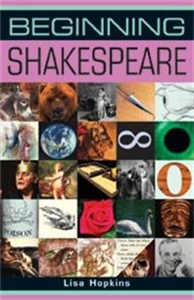
'Beginning Shakespeare' introduces students to the study of Shakespeare, and grounds their understanding of his work in theoretical discourses. After an introductory survey of the dominant approaches of the past, seven chapters examine the major current critical approaches to Shakespeare; psychoanalysis, New Historicism, Cultural Materialism, gender studies, queer theory, postcolonial criticism and performance criticism. A further chapter looks at the growing roles of biography, attribution studies and textual studies. Each chapter analyses the strengths and weaknesses of a particular perspective, allowing students to gain a clear critical purchase on the respective approaches, and to make informed choices between them. Each chapter ends with a list of suggested further reading and interactive exercises based on the key issues raised. An invaluable introduction, essential for anyone studying Shakespeare, 'Beginning Shakespeare' offers students a map of the current critical practices, and a sense of the possibilities for developing their own approaches. ;
Trusted Partner


Adorno trifft Shakespeare – das klingt nach einer unmöglichen Begegnung, und Mißverständnisse scheinen vorprogrammiert. Hier der große Theoretiker der Frankfurter Schule, der Verfechter des Eigensinns der Kunst, dem das Wort »Kunstgenuß« kaum über die Lippen kam und der sein ganzes Leben gegen die kulturindustrielle Barbarisierung der Kunst angeschrieben hat; dort der Superstar des Elisabethanischem Zeitalters, der gewiefte Entrepreneur und stadtbekannte Schriftsteller, dessen Stücke in einem der ersten kommerziellen Theater seiner Zeit ein Massenpublikum in den Bann schlugen. Wahrheit gegen Entertainment. Geist gegen Geld. Geht das überhaupt zusammen?
Trusted Partner
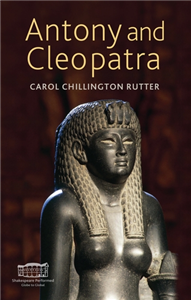
This book writes a performance history of Antony and Cleopatra, Shakespeare's most ambiguous play, from 1606 to the present. It observes the choices that actors, directors, designers, musicians and adapters have made each time they have brought the play's thoughts on power, race, masculinity, regime change, exoticism, love, dotage and delinquency into alignment with a new present. Informed by close attention to theatre records - promptbooks, stage managers' reports, reviews - it offers in-depth analyses of fifteen international productions by (among others) the Royal Shakespeare Company, Citizens Theatre Glasgow, Northern Broadsides, Berliner Ensemble and Toneelgroep Amsterdam. It ends seeing Shakespeare's black Egyptian Queen Cleopatra - whited-out in performance for centuries - restored to the contemporary stage. Written in a lively and accessible style, this book will be of interest to students, academics, actors, directors and general readers alike.
Trusted Partner


Es mag sein, daß William Shakespeare der größte aller Dichter war – doch darüber wird gestritten, seit seine Theaterstücke gespielt und gelesen werden. Manche meinen, er habe gar nicht alle Stücke geschrieben, und andere nehmen an, es habe ihn gar nicht gegeben. Nicht wenige halten ihn tatsächlich für den Größten, für einen wunderbaren Geist, der mit Wörtern und Gestalten spielte. Von seinem Leben ist nicht allzu viel bekannt. Er wurde wahrscheinlich am 23. April 1564 in dem englischen Ort Stratford-upon-Avon geboren. Sein Vater, ein erfolgreicher Händler, amtierte eine Zeitlang als Bürgermeister des Ortes. Seine Mutter stammte aus einem alten Adelsgeschlecht. Er ging in seiner Stadt zur Schule, lernte Lesen, Schreiben, Rechnen, Latein. Wann er nach London ging, weiß man nicht. Er begann zu schreiben, Theater zu spielen und schloß sich bald einer Theatertruppe an, die mit Erfolg in London auftrat und das bekannteste und beste Theaterhaus gründete, das Globe Theatre. Er starb 1616. Peter Härtling hat einige der schönsten Szenen und Lieder aus Shakespeares Dramen zusammengestellt, aus den Tragödien, Komödien und Zauberspielen. Hans Traxler hat die Auswahl mit leiser Ironie illustriert.
Trusted Partner
William Shakespeare wurde vermutlich am 23. April 1564 in Stratford-upon-Avon geboren. Seine schöpferische Sprachkraft und die meisterhafte psychologische Gestaltung seiner Charaktere begründen seine Bedeutung und seinen Ruhm als Dramatiker und Dichter. Werke wie König Johann, Ein Sommernachtstraum, Der Kaufmann von Venedig, oder seine Tragödien Hamlet, Romeo und Julia, Othello oder König Lear markieren Höhepunkte der Weltliteratur und sind von den großen internationalen Bühnen nicht mehr wegzudenken. William Shakespeare verstarb am 23. April 1616 in Stratford-upon-Avon.
Trusted Partner
Trusted Partner
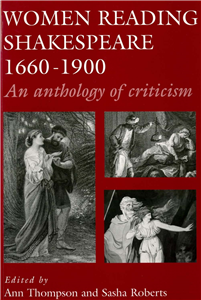
Women reading Shakespeare, 1660-1900 comprehensively rediscovers a lost tradition of women's writing on Shakespeare. Since Margaret Cavendish published the first critical essay on Shakespeare in 1664, women have written as scholars, critics, editors, performers and popularisers of Shakespeare. Many found in Shakespeare criticism the opportunity to raise a wide variety of issues, ranging from the use of women in society, family life, social relations and ethnic difference. In their different ways, women appropriated Shakespeare to their own ends - not always in step with their male contemporaries. Virtually none of this work is available today; it is unread and unknown. This fascinating anthology draws upon extensive new research to collect for the first time in one volume the Shakespeare criticism of some fifty British and American women writing before 1900. It includes the work of both familiar and unknown names and represents the diversity of literary genres used by women: the scholarly article, the periodical essay, book-length studies, personal memoirs, books for children, school editions. The volume also includes previously unknown Shakespeare illustrations by women, and a general introduction to the development of women's criticism of Shakespeare before 1900. ;
Trusted Partner
Massacres in Early Modern Drama analyses the dynamically ambivalent meanings constructed by the language and action of massacre on the early modern stage. Informed by theories drawn from massacre studies, the monograph challenges orthodoxies about senseless violence, illuminates archaic forms of massacres, and attests to their brutally diverse stage representations. Anchored by the contention that the St Bartholomew's Day Massacre in Paris (1572) was instrumental to early modern understandings of massacre, the book uses this atrocity, and its most famous dramatic depiction - Christopher Marlowe's The Massacre at Paris - as a hook to explore larger concerns about massacre in plays by Robert Greene, George Chapman, John Fletcher, and William Shakespeare. Thus, Massacres in Early Modern Drama considers how early modern drama forms part of a continual cultural process of trying to piece together the contentious and traumatic phenomenon of massacre.
Trusted Partner
Trusted Partner

William Shakespeare wurde vermutlich am 23. April 1564 in Stratford-upon-Avon geboren. Seine schöpferische Sprachkraft und die meisterhafte psychologische Gestaltung seiner Charaktere begründen seine Bedeutung und seinen Ruhm als Dramatiker und Dichter. Werke wie König Johann, Ein Sommernachtstraum, Der Kaufmann von Venedig, oder seine Tragödien Hamlet, Romeo und Julia, Othello oder König Lear markieren Höhepunkte der Weltliteratur und sind von den großen internationalen Bühnen nicht mehr wegzudenken. William Shakespeare verstarb am 23. April 1616 in Stratford-upon-Avon. Paul Celan wurde am 23. November 1920 als Paul Antschel als einziger Sohn deutschsprachiger, jüdischer Eltern im damals rumänischen Czernowitz geboren. Nach dem Abitur 1938 begann er ein Medizinstudium in Tours/Frankreich, kehrte jedoch ein Jahr später nach Rumänien, zurück, um dort Romanistik zu studieren. 1942 wurden Celans Eltern deportiert. Im Herbst desselben Jahres starb sein Vater in einem Lager an Typhus, seine Mutter wurde erschossen. Von 1942 bis 1944 musste Celan in verschiedenen rumänischen Arbeitslagern Zwangsarbeit leisten. Von 1945 bis 1947 arbeitete er als Lektor und Übersetzer in Bukarest, erste Gedichte wurden publiziert. Im Juli 1948 zog er nach Paris, wo er bis zu seinem Tod lebte. Im selben Jahr begegnete Celan Ingeborg Bachmann. Dass Ingeborg Bachmann und Paul Celan Ende der vierziger Jahre und Anfang der fünfziger Jahre ein Liebesverhältnis verband, das im Oktober 1957 bis Mai 1958 wieder aufgenommen wurde, wird durch den posthum veröffentlichten Briefwechsel Herzzeit zwischen den beiden bestätigt. Im November 1951 lernte Celan in Paris die Künstlerin Gisèle de Lestrange kennen, die er ein Jahr später heiratete. 1955 kam ihr gemeinsamer Sohn Eric zur Welt. Im Frühjahr 1970 nahm sich Celan in der Seine das Leben.
Trusted Partner
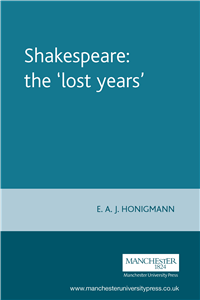
This literary detective story throws light on the problem of what Shakespeare was doing between leaving school and appearing as an actor and playwright in London. Bringing forward historic and documentary evidence, this text argues that Shakespeare worked as a schoolmaster and player for a wealthy Catholic landowner in Lancashire and later for the Earl of Derby. One of the book's conclusions is that Shakespeare was probably a Roman Catholic. Step by step, this story of patronage, recusancy and aspiring talent is pursued through complex family relationships. ;
Trusted Partner
William Shakespeare wurde vermutlich am 23. April 1564 in Stratford-upon-Avon geboren. Seine schöpferische Sprachkraft und die meisterhafte psychologische Gestaltung seiner Charaktere begründen seine Bedeutung und seinen Ruhm als Dramatiker und Dichter. Werke wie König Johann, Ein Sommernachtstraum, Der Kaufmann von Venedig, oder seine Tragödien Hamlet, Romeo und Julia, Othello oder König Lear markieren Höhepunkte der Weltliteratur und sind von den großen internationalen Bühnen nicht mehr wegzudenken. William Shakespeare verstarb am 23. April 1616 in Stratford-upon-Avon. Thomas Brasch, Dichter, Dramatiker, Filmschaffender und Übersetzer, eine der markantesten Figuren der neuen deutschen Literatur, wurde 1945 in Westow/Yorkshire (England) als Sohn jüdischer Emigranten geboren. Bis zu dem Jahr, in dem er die DDR verließ (1976), lebte er in Ostberlin. 1977 erschien sein bekanntestes Buch, der Erzählband Vor den Vätern sterben die Söhne. 2001 ist er in Berlin gestorben.


