Your Search Results

      • Trusted Partner
        Science & Mathematics
        September 2024

        The elephant and the dragon in contemporary life sciences

        A call for decolonising global governance

        by Joy Y. Zhang, Saheli Datta Burton

        This book provides a powerful diagnosis of why the global governance of science struggles in the face of emerging powers. Through unpacking critical events in China and India over the past twenty years, it demonstrates that the 'subversiveness' assumed in the two countries' rise in the life sciences reflects many of the regulatory challenges that are shared worldwide. It points to a decolonial imperative for science governance to be responsive and effective in a cosmopolitan world. By highlighting epistemic injustice within contemporary science, the book extends theories of decolonisation.

      • Trusted Partner
        Humanities & Social Sciences
        September 2020

        Bordering intimacy

        Postcolonial governance and the policing of family

        by Joe Turner

        Bordering intimacy explores the interconnected role of borders and dominant forms of family intimacy in the governance of postcolonial states. Combining a historical investigation with postcolonial, decolonial and black feminist theory, the book reveals how the border policies of the British and other European empires have been reinvented for the twenty-first century through appeals to protect and sustain 'family life' - appeals that serve to justify and obfuscate the continued organisation of racialised violence. The book examines the continuity of colonial rule in numerous areas of contemporary government, including family visa regimes, the policing of 'sham marriages', counterterror strategies, deprivation of citizenship, policing tactics and integration policy.

      • Trusted Partner
        Biography & True Stories
        May 2023

        B. R. Ambedkar

        by Shashi Tharoor

      • Trusted Partner
        The Arts
        August 2026

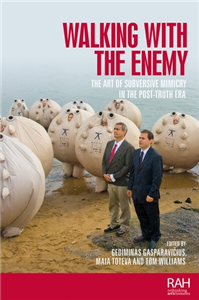
        Walking with the enemy

        The art of subversive mimicry in the post-truth era

        by Gediminas Gasparavicius, Maia Toteva, Tom Williams

        This book is about artists and activists who have embraced mimicry as a subversive tactic. Bringing together the contributions of seventeen writers, it addresses the ways in which artists have responded to power and ideology by imitating its outward forms. These contributors address in particular the current age of fantasy and political deception, and they consider the work of artists who have reacted by using dissimulation and make-believe themselves. Chapters include discussions of mimicry in reference to a number developments and debates: the post-truth era, the neoliberal consensus, the politics of race and gender, online subcultures, and the rise of the new right.

      • Trusted Partner
        Humanities & Social Sciences
        February 2025

        Global counter-terrorism

        by Tahir Abbas, Sylvia I. Bergh, Sagnik Dutta

        This collection aims to inaugurate a new direction in research on counterterrorism by exploring global connections - both in terms of practices and discourses, as well as shared ideas and epistemes - that animate counterterrorism practices. The chapters - grouped under the themes of postcoloniality and coloniality, and entanglements of the transnational and the local, and counterterrorism and right-wing extremism - are attentive to global connections and are mindful of the complexities of global historical processes that constitute the politics of counterterrorism. This book aims to bring together scholars studying counterterrorism in the global North and the global South to explore convergence and divergence in how counterterrorism policies function in a range of national and local contexts.

      • Trusted Partner
        Humanities & Social Sciences
        March 2024

        European cities

        by Noa K. Ha, Giovanni Picker

      • Trusted Partner
      • Trusted Partner
        Humanities & Social Sciences
        January 2021

        Displacement

        by Silvia Pasquetti, Romola Sanyal

      • Trusted Partner
        Teaching, Language & Reference
        June 2025

        Pluriversal sovereignty and the state

        by Ajay Parasram

      • Trusted Partner
      • Trusted Partner
        The Arts
        January 2026

        Decolonizing images

        by Ronnie Close

      • Trusted Partner
      • Trusted Partner
        Teaching, Language & Reference
        April 2025

        Anti-colonial research praxis

        Methods for knowledge justice

        by Caroline Lenette

        How can anti-colonial research methodologies be transformative and achieve knowledge justice? This book brings together an eclectic group of leading scholars from around the world to share methodological knowledge grounded in First Nations and majority-world expertise and wisdom. The authors challenge western-centric and colonial approaches to knowledge production and redefine the possibilities of what we can achieve through social research. First Nations and majority-world perspectives are contextual and unique. They share a common aim of disrupting established beliefs on research methodologies and the unquestioned norms that dictate whose knowledge the academy values. The ten chapters in this edited collection describe how the authors draw on Indigenous knowledge systems, feminist frameworks, and creative methodologies as anti-colonial research praxis. The examples span several disciplines such as development studies, geography, education, sexual and reproductive health, humanitarian studies, and social work. Authors use a reflexive approach to discuss specific factors that shape how they engage in research ethically, to lead readers through a reflection on their own practices and values. The book reimagines social research using an anti-colonial lens and concludes with a collaboratively developed and co-written set of provocations for anti-colonial research praxis that situate this important work in the context of ongoing colonial violence and institutional constraints. This book is an essential guide for researchers and scholars within and beyond the academy on how anti-colonial research praxis can produce meaningful outcomes, especially in violent and troubled times. Cover art courtesy of Tawny Chatmon

      Subscribe to our

      newsletter