
Association des éditeurs des Hauts de France
High quality titles from a selection of French independent publishers
View Rights Portal
High quality titles from a selection of French independent publishers
View Rights Portal
Publishing House specialized in Graphic Novels and cinema books. We've Biographies set in WWII and Spanish Civil War, Fantasy graphic novels and humour
View Rights Portal

The long-awaited prequel to Chronicles of the revolution covers the first twenty years (1377-97) of Richard II's reign. This richly-documented period offers exceptional opportunities and challenges to students, and the editor has selected material from a wide range of sources: well-known English chronicles, foreign chronicles and legal, administrative and financial records. These are arranged chronologically to form a coherent narrative of the reign. Clear and lively commentary and notes enable readers to make the fullest use of each document. The introduction describes the complex domestic and international situation which confronted the young king and offers guidance on the strengths and weaknesses of the reign's leading chronicles. The dramatic and diverse politics of the reign of Richard II make this the ideal special subject and an accessible, affordable, student-friendly documentary history of Richard II's reign has long been needed. This book is designed to fill that gap.
 Trusted Partner

This book focuses on current policy discourse in Higher Education, with special reference to Europe. It discusses globalisation, Lifelong Learning, the EU's Higher Education discourse, this discourse's regional ramifications and alternative practices in Higher Education from both the minority and majority worlds with their different learning traditions and epistemologies. It argues that these alternative practices could well provide the germs for the shape of a public good oriented Higher Education for the future. It theoretically expounds on important elements to consider when engaging Higher Education and communities, discussing the nature of the term 'community' itself. Special reference is accorded to the difference that lies at the core of these ever-changing communities. It then provides an analysis of an 'on the ground project' in University community engagement, before suggesting signposts for further action at the level of policy and provision. This book is relevant to United Nations Sustainable Development Goal 4, Quality education
Trusted Partner
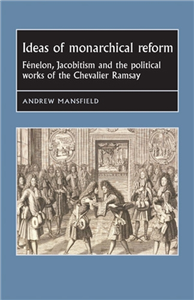
This book examines the political works of Andrew Michael Ramsay (1683-1743) within the context of early eighteenth-century British and French political thought. In the first monograph on Ramsay in English for over sixty years, the author uses Ramsay to engage in a broader evaluation of the political theory in the two countries and the exchange between them. At the beginning of the eighteenth century, Britain and France were on divergent political paths. Yet in the first three decades of that century, the growing impetus of mixed government in Britain influenced the political theory of its long-standing enemy. Shaped by experiences and ideologies of the seventeenth century, thinkers in both states exhibited a desire to produce great change by integrating past wisdom with modern knowledge.
Trusted Partner
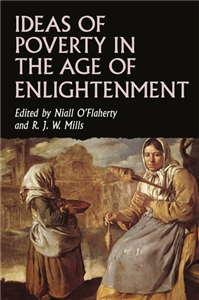
This collection of essays examines the ways in which poverty was conceptualised in the social, political, and religious discourses of eighteenth-century Europe. It brings together experts with a wide range of expertise to offer pathbreaking discussions of how eighteenth-century thinkers thought about the poor. Because the theme of poverty played important roles in many critical issues in European history, it was central to some of the key debates in Enlightenment political thought throughout the period, including the controversies about sovereignty and representation, public and private charity, as well as questions relating to crime and punishment. The book examines some of the most important contributions to these debates, while also ranging beyond the canonical Enlightenment thinkers, to investigate how poverty was conceptualised in the wider intellectual culture, as politicians, administrators and pamphlet writers grappled with the issue.
Trusted Partner
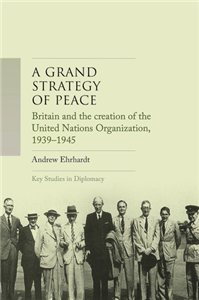
A grand strategy of peace is the first detailed account of Britain's role in the creation of the United Nations Organization during the Second World War. As a work of traditional diplomatic history that brings in elements of intellectual history, the book describes how British officials, diplomats, politicians, and writers - previously seen to be secondary actors to the United States in this period - thought about, planned for, and helped to establish a future international order. While in the present day, many scholars and analysts have returned to the origins of the post- 1945 international system, this book offers an exhaustive account of how the statesmen and more importantly, the officials working below the statesmen, actually conceived of and worked to establish a post-war world order.
Trusted Partner
The double game of music imagines music education as a series of games - each with its own rules, play currency and players - to challenge readers to rethink the significance of music and musical upbringing in shaping social structures. Drawing on their own empirical research and a wide range of international contributions, the authors unravel the intertwining of social positioning and power hierarchies with players beliefs in the pure values and virtues of their games, whether these relate to parenting, children's play, schooling, academic pursuits, musical leisure activities or the television and music industries. In a world where music is often celebrated as an important tool for inclusion and democratisation, this groundbreaking book offers a timely critique, revealing complexities and contradictions that tend to be overlooked by teachers, researchers, politicians and others interested in the powers of music education.
Trusted Partner

Egypt and the rise of fluid authoritarianism focuses on the struggle of the post-2013 political authorities for internal political legitimacy after the crisis following the 2013 coup d'état. It explores the microstructural and macro-systemic dynamics of leadership, power, protests and the authority-making process in political systems. These cannot simply be defined as structural, political, social and economic projections of the authoritarianism of the past, but rather as a rupture with that past. The book offers a complex, ground-breaking socio-political and economic analysis into how the forging of an internal political legitimacy claim has eventually modified the regime in Egypt along the authoritarian spectrum, turning into a fluid autocracy closer to a non-exclusivist personalist regime. This shift had implications that resonated both politically and economically.
Trusted Partner
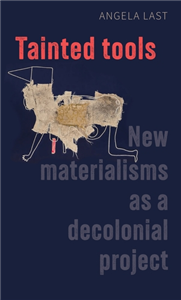
Tainted Tools makes a provocative intervention into the fraught intersection between new materialist and decolonial approaches. Despite a common project of challenging European philosophical and social categories and hierarchies, the discourses are considered incompatible. Most prominently, new materialisms have been accused of harbouring a White vision of the human while disregarding the racist resonances of the 'nonhuman'. The book traces this conflict to an earlier meeting point of new materialist and decolonial projects, which came about through the experimental combination of Marx and Nietzsche. Used to fight fascism, Stalinism and colonialism, this politically contentious fusion gradually became depoliticised, leading to unaddressed tensions today. While the book does not argue for a revival of these early 'new materialisms', it brings their strategies into dialogue with today's new materialisms and decolonial approaches to develop greater theoretical solidarity in times of crisis.
Trusted Partner

Surviving repression tells the story of the Muslim Brotherhood following the 2013 coup d'état in Egypt. The Brotherhood gained legal recognition and quickly rose to power after the 2011 Arab uprisings, but its subsequent removal from office marked the beginning of the harshest repression of its troubled history. Forced into exile, the Brotherhood and its members are now faced with a monumental task as they rebuild this fragmented organisation. Drawing on extensive fieldwork and interviews with current and former members of the Brotherhood, the book explores this new era in the movement's history, emphasising first-hand experiences, perspectives and emotions to better understand how individual responses to repression are affecting the movement as a whole. Surviving repression offers a unique insight into the main strategic, ideological and organizational debates dividing the Brotherhood.
Trusted Partner


— By two renowned authors from the fields of philosophy and education — Julian Nida-Rümelin – a popular talk show guest The debate about the correct school policy has been going on for many years. And there's no end to the bad news regarding the shortage of teachers, poor performance by students at PISA or the lack of suitable equipment in schools. What is being neglected in the discussions about the education policy but is, in fact, a central momentum in its development, is the school's task of conveying democratic values and patterns of action. This is the only way our society's supporting pillars can be strengthened in future generations. In the light of the complex situation, from the authors' point of view it is important to formulate a wake-up call: Democracy education – now!
Trusted Partner
Trusted Partner
The international exhibitions held around the world between 1851 and 1939 were spectacular gestures, which briefly held the attention of the world before disappearing into an abrupt oblivion, of the victims of their planned temporality. Known in Britain as Great Exhibitions, in France as Expositions Universelles and in America as World's Fairs, the genre became a self-perpetuating phenomenon, the extraordinary cultural spawn of industry and empire. Thoroughly in the spirit of the first industrial age, the exhibitions illustrated the relation between money and power, and revelled in the belief that the uncontrolled expression of that power was the quintessence of freedom. Philanthropy found its place on exhibition sites functioning as a conscience to the age although even here morality was inextricably linked to economic efficiency and expansion. Imperial achievement was celebrated to the full at international exhibitions. Nevertheless, most World's Fairs maintained an imperial element and out of this blossomed a vibrant racism. Between 1889 and 1914, the exhibitions became a human showcase, when people from all over the world were brought to sites in order to be seen by others for their gratification and education. In essence, the English national profile fabricated in the closing decades of the nineteenth century was derived from the pre-industrial world. The Fine Arts were an important ingredient in any international exhibition of calibre. This book incorporates comparative work on European and American empire-building, with the chronological focus primarily on the nineteenth and twentieth centuries, when these cultural exchanges were most powerfully at work.
Trusted Partner

The eleventh-century papal reform transformed western European Church and society and permanently altered the relations of Church and State in the west. The reform was inaugurated by Pope Leo IX (1048-54) and given a controversial change of direction by Pope Gregory VII (1073-85). This book contains the earliest biographies of both popes, presented here for the first time in English translation with detailed commentaries. The biographers of Leo IX were inspired by his universally acknowledged sanctity, whereas the biographers of Gregory VII wrote to defend his reputation against the hostility generated by his reforming methods and his conflict with King Henry IV. Also included is a translation of Book to a Friend, written by Bishop Bonizo of Sutri soon after the death of Gregory VII, as well as an extract from the violently anti-Gregorian polemic of Bishop Benzo of Alba (1085) and the short biography of Leo IX composed in the papal curia in the 1090s by Bishop Bruno of Segni. These fascinating narrative sources bear witness to the startling impact of the papal reform and of the 'Investiture Contest', the conflict of empire and papacy that was one of its consequences. An essential collection of translated texts for students of medieval history.
Trusted Partner
 Trusted Partner

Backed by Brazil's wealthy agribusiness groups, a growing evangelical movement, and an emboldened military and police force, Jair Bolsonaro took office in 2019. Driven by the former army captain's brand of controversial, aggressive rhetoric, the divisive presidential campaign saw fake news and misinformation shared with Bolsonaro's tens of millions of social media followers. Bolsonaro promised simple solutions to Brazil's rising violent crime, falling living standards and widespread corruption, but what has emerged is Latin America's most right-wing president since the military dictatorships of the 1970s. Famous for his racist, homophobic and sexist beliefs and his disregard for human rights, the so-called 'Trump of the Tropics' has established a reputation based on his polemical, sensationalist statements. Written by a journalist with decades of experience in the field, Beef, Bible and bullets is a compelling account of the origins of Brazil's unique brand of right-wing populism. Lapper offers the first major assessment of the Bolsonaro government and the growing tensions between extremist and moderate conservatives.
Trusted Partner
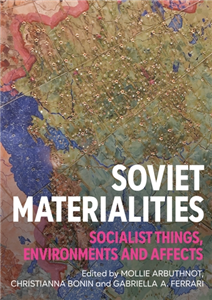
Soviet materialities explores how material transforms our understanding of Soviet culture, from the textures of domestic space in 1960s apartment blocks to Gulag labour on the Moscow canal, and from avant-garde literary theory in the 1920s to conceptual art under perestroika. It starts from the ethos that the material world shapes people and society. Taking a material approach-or a range of material approaches-can therefore illuminate aspects of the cultural production and lived experiences of Soviet socialism that are not reflected in other kinds of historical records. This edited volume brings cutting-edge research by emerging scholars together with the established voices who have broken the ground in this sub-field over the last twenty years and promises to make a major intervention in the study of Soviet history and culture.


This book is a result of the author's search for these facts and truths as a student and farmer and his endeavor as a teacher to present them in a simple manner to others. The object in presenting the book to the general public is the hope that it may be of assistance to farmers, students and teachers, in their search for the fundamental truths and principles of farming.
Trusted Partner

This book is our principal source for the history of the Kingdom of Sicily in the troubled years between the death of its founder, King Roger, in February 1154 and the spring of 1169. It covers the reign of Roger's son, King William I, known to later centuries as 'the Bad', and the minority of the latter's son, William II 'the Good'. The book illustrates the revival of classical learning during the twelfth-century renaissance. It presents a vivid and compelling picture of royal tyranny, rebellion and factional dispute at court. Sicily had historically been ruled by tyrants, and that the rule of the new Norman kings could be seen, for a variety of reasons, as a revival of that classical tyranny. A more balanced view of Sicilian history of the period 1153-1169 has been provided as an appendix to the translation in the section of the contemporary world chronicle ascribed to Archbishop Romuald II of Salerno, who died in April 1181. In particular the chronicle of Romuald enables us to see how the papal schism of 1159 and the simultaneous dispute between the German Emperor Frederick Barbarossa and the north Italian cities affected the destiny of the kingdom of Sicily. In contrast to the shadowy figure of Hugo Falcandus, the putative author of the principal narrative of mid-twelfth-century Sicilian history, Romuald II, Archbishop of Salerno 1153-1181, is well-documented.
Trusted Partner

This book charts the building of 1 Angel Square, the remarkable new head office for The Co-operative Group in Manchester's new NOMA district. Combining text and photographs to illustrate the building from commissioning to completion, Len Grant has interviewed the whole project team - clients, architects, engineers, project managers and builders - and has had unreserved access to document the creation of this already award-winning structure. The design of 1 Angel Square by the architects 3DReid, is currently the UK's highest BREEAM (Building Research Establishment's Environmental Assessment Method) rated office building to date, and it is set to be one of the most sustainable buildings in Europe. 1 Angel Square, the book, is an intimate record of this fascinating building. Some of the impressive facts include: 3,157 internal and external window panels make up the façade; there are 10,500 data and power outlets; it sits on 539 foundation piles, with an average depth of 18 metres below ground; and there are approximately 22km of power cables. This book will be required reading for students of architecture and construction, sustainability studies and urban planning, and for those with an interest in the history of one of the world's great businesses. ;



