Your Search Results

      • Epistola d.o.o.

        Epistola publishing house is a family-owned company founded in 2009. We seek to provide quality reading with variety of themes to enrich the lives of young readers. Our books have distinctively educational purpose, inspiring discussion with parents, teachers or other children. In order to provide the best possible reading and achieve quality, we collaborate with renowned domestic and foreign authors.

        View Rights Portal
      • Epigram Books

        Singapore's largest independent publisher of fiction and non-fiction for all ages. Check out our latest catalogue here: July – December 2018 (PDF.)

        View Rights Portal
      • Trusted Partner
        Science & Mathematics
        September 2024

        The elephant and the dragon in contemporary life sciences

        A call for decolonising global governance

        by Joy Y. Zhang, Saheli Datta Burton

        This book provides a powerful diagnosis of why the global governance of science struggles in the face of emerging powers. Through unpacking critical events in China and India over the past twenty years, it demonstrates that the 'subversiveness' assumed in the two countries' rise in the life sciences reflects many of the regulatory challenges that are shared worldwide. It points to a decolonial imperative for science governance to be responsive and effective in a cosmopolitan world. By highlighting epistemic injustice within contemporary science, the book extends theories of decolonisation.

      • Trusted Partner
        Literature & Literary Studies
        June 2026

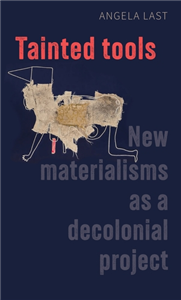
        Tainted tools

        New materialisms as a decolonial project

        by Angela Last

        Tainted Tools makes a provocative intervention into the fraught intersection between new materialist and decolonial approaches. Despite a common project of challenging European philosophical and social categories and hierarchies, the discourses are considered incompatible. Most prominently, new materialisms have been accused of harbouring a White vision of the human while disregarding the racist resonances of the 'nonhuman'. The book traces this conflict to an earlier meeting point of new materialist and decolonial projects, which came about through the experimental combination of Marx and Nietzsche. Used to fight fascism, Stalinism and colonialism, this politically contentious fusion gradually became depoliticised, leading to unaddressed tensions today. While the book does not argue for a revival of these early 'new materialisms', it brings their strategies into dialogue with today's new materialisms and decolonial approaches to develop greater theoretical solidarity in times of crisis.

      • Trusted Partner
        Humanities & Social Sciences
        August 2023

        Critical theory and legal autopoiesis

        The case for societal constitutionalism

        by Gunther Teubner, Diana Göbel

        This volume collects and revises the key essays of Gunther Teubner, one of the world's leading sociologists of law. Written over the past twenty years, these essays examine the 'dark side' of functional differentiation and the prospects of societal constitutionalism as a possible remedy. Teubner's claim is that critical accounts of law and society require reformulation in the light of the sophisticated diagnoses of late modernity in the writings of Niklas Luhmann, Jacques Derrida and select examples of modernist literature. Autopoiesis, deconstruction and other post-foundational epistemological and political realities compel us to confront the fact that fundamental democratic concepts such as law and justice can no longer be based on theories of stringent argumentation or analytical philosophy. We must now approach law in terms of contingency and self-subversion rather than in terms of logical consistency and rational coherence.

      • Trusted Partner
        Philosophy: epistemology & theory of knowledge
        June 2017

        Critical theory and epistemology

        The politics of modern thought and science

        by Anastasia Marinopoulou. Series edited by Darrow Schecter

        This volume in the Critical Theory and Contemporary Society series explores the arguments between critical theory and epistemology in the twentieth and twenty-first centuries. Focusing on the first and second generations of critical theorists and Luhmann's systems theory, the book examines how each approaches epistemology. It opens by looking at twentieth-century epistemology, particularly the concept of lifeworld (Lebenswelt). It then moves on to discuss structuralism, poststructuralism, critical realism, the epistemological problematics of Foucault's writings and the dialectics of systems theory. This unique work takes a comparative look at structuralism and post-structuralism's epistemological theory with special reference to scientific reason. It also investigates Luhmann's works in epistemology. The aim is to explore whether the focal point for epistemology and the sciences remain that social and political interests actually form a concrete point of concern for the sciences as well.

      • Trusted Partner
        Humanities & Social Sciences
        November 2025

        The lure of violence

        The Right and the Edwardian crisis in Britain, 1901–14

        by Alessandro Saluppo

        This book provides a comprehensive examination of conservative and right-wing responses to the Edwardian crisis in Britain (1901-1914). It stresses how the upsurge of right-wing extremism within and outside the Conservative party was accompanied by the crystallization of a culture of violence. The preparation, instigation or threatening of violent acts against all those who appeared to threaten the organic nature and vigour of the national community found expression in a myriad of ultra-nationalist organisations, citizen policing groups, private military associations, and paramilitary formations. The book innovatively reconstructs the belief system and the practices of those right-wing actors, which pursued the goals of military preparedness, "racial regeneration" and imperial unity, while defending the amorphous goals of authority, order and 'national efficiency' against the forces of radicalism and socialism. The book helps to cast light on the bellicose and authoritarian reflexes that traversed British conservatism in the turbulent prewar years.

      • Trusted Partner
      • Trusted Partner
      • Trusted Partner
        Health & Personal Development

        Adolescent Dating Violence

        by Kelli S. Franco / Emily F. Rothman / Jeff R. Temple

        This essential guide empowers professionals to identify, prevent, and treat adolescent dating violence with sensi-tivity and skill. Grounded in the latest research, it offers evidence-based strategies for assessing and intervening with youth aged 10–24 in clinical, school, and correctional settings. A detailed case example illustrates the therapeu-tic process and practical follow-up measures. • Science-based tools for assessment and treatment • School and justice system interventions • Gender-inclusive, intersectional approach

      • Trusted Partner
        Teaching, Language & Reference
        April 2025

        Anti-colonial research praxis

        Methods for knowledge justice

        by Caroline Lenette

        How can anti-colonial research methodologies be transformative and achieve knowledge justice? This book brings together an eclectic group of leading scholars from around the world to share methodological knowledge grounded in First Nations and majority-world expertise and wisdom. The authors challenge western-centric and colonial approaches to knowledge production and redefine the possibilities of what we can achieve through social research. First Nations and majority-world perspectives are contextual and unique. They share a common aim of disrupting established beliefs on research methodologies and the unquestioned norms that dictate whose knowledge the academy values. The ten chapters in this edited collection describe how the authors draw on Indigenous knowledge systems, feminist frameworks, and creative methodologies as anti-colonial research praxis. The examples span several disciplines such as development studies, geography, education, sexual and reproductive health, humanitarian studies, and social work. Authors use a reflexive approach to discuss specific factors that shape how they engage in research ethically, to lead readers through a reflection on their own practices and values. The book reimagines social research using an anti-colonial lens and concludes with a collaboratively developed and co-written set of provocations for anti-colonial research praxis that situate this important work in the context of ongoing colonial violence and institutional constraints. This book is an essential guide for researchers and scholars within and beyond the academy on how anti-colonial research praxis can produce meaningful outcomes, especially in violent and troubled times. Cover art courtesy of Tawny Chatmon

      • Trusted Partner
        November 2013

        Jihadi Violence.

        A study of al-Qaeda's media.

        by Armborst, Andreas

      • Trusted Partner
        Humanities & Social Sciences
        August 2012

        Justifying violence

        Communicative ethics and the use of force in Kosovo

        by Naomi Head, Peter Lawler, Emmanuel Pierre Guittet

        When is the use of force for humanitarian purposes legitimate? The book examines this question through one of the most controversial examples of humanitarian intervention in the post Cold War period: the 1999 NATO intervention in Kosovo. Justifying Violence applies a critical theoretical approach to an interrogation of the communicative practices which underpin claims to legitimacy for the use of force by actors in international politics. Drawing on the theory of communicative ethics, the book develops an innovative conceptual framework which contributes a critical communicative dimension to the question of legitimacy that extends beyond the moral and legal approaches so often applied to the intervention in Kosovo. The empirical application of communicative ethics offers a provocative and nuanced account which contests conventional interpretations of the legitimacy of NATO's intervention. ;

      • Trusted Partner
      • Trusted Partner
        Humanities & Social Sciences
        July 2026

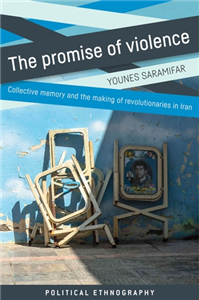
        The promise of violence

        Collective memory and the making of revolutionaries in Iran

        by Younes Saramifar

        Revolutionaries in Iran choose to identify memories of the Iran-Iraq War as their 'collective' memory to mark the war era as the temporal reference in history - the time of times, or sometimes even a time beyond time. Can a sole event and its violence truly become - for some - the all-encompassing, constituting element of history and memory? This book pursues this question and follows revolutionaries in the maze of 'collective' memory to offer a temporal account of the breakdown of happenings - as well as the mending of happenings through the force of remembrance.

      • Trusted Partner
        April 2013

        Oscar Wilde für Boshafte

        by Oscar Wilde, Denis Scheck, Denis Scheck, Christina Schenk, Christina Schenk

        »Bosheit ist ein Mythos, den gute Menschen erfunden haben, um die seltsame Anziehungskraft der anderen zu erklären.« Oscar Wilde

      • Trusted Partner
        December 2007

        Oscar Wilde für Boshafte

        by Oscar Wilde, Denis Scheck, Christina Schenk, Denis Scheck, Christina Schenk

        »Bosheit ist ein Mythos, den gute Menschen erfunden haben, um die seltsame Anziehungskraft der anderen zu erklären.« Oscar Wilde

      • Trusted Partner
        Humanities & Social Sciences
        May 2026

        Sexual violence in racial capitalism

        by Alison Phipps

        Most texts on sexual violence treat capitalism as backdrop or afterthought. In contrast, political economy is the core of this book. Phipps explores the centrality of sexual violence to racial capitalist processes: the enclosure of bodies, the extraction of labour, the expropriation of land and resources, and the disposal of unwanted populations. Importantly, she argues that both sexual violence and sexual fear create social control and surplus value. Through a framework called the coloniality of sexual violence, Phipps conjoins acts of sexual violence and ideas of sexual threat in an analysis of gendered and raced property relations and the split colonial/modern psyche. She argues that fantasies of sexual danger represent the infolded violence of racial capitalism, which is why fear of revolution is often fear of rape. Revolution, however, is always imminent: violence is necessary because power is incomplete.

      • Trusted Partner
        September 1999

        Dynamics of Violence.

        Processes of Escalation and De-Escalation in Violent Group Conflicts.

        by Herausgegeben von Elwert, Georg; Herausgegeben von Feuchtwang, Stephan; Herausgegeben von Neubert, Dieter

      • Trusted Partner
        July 2017

        Dialogue against Violence.

        The Question of Trentino-South Tyrol in the International Context.

        by Herausgegeben von Bernardini, Giovanni; Herausgegeben von Pallaver, Günther

      Subscribe to our

      newsletter