Your Search Results


-
Promoted Content

 Literature: history & criticismSeptember 2001
The Great Exhibition of 1851
by Susan Williams
The Great Exhibition of 1851 has become a touchstone for the nineteenth century. The Crystal Palace produced a commodity world, an imperial spectacle, a picture of capitalism, a liberal dream, a vision of modern life. Historians have saturated the Great Exhibition with meanings. This collection of essays exposes how meaning has been produced around the Great Exhibition. It contains a series of critical readings of the official and popular historical record of the Exhibition. Critics and historians of art, culture, design and literature have been brought together to examine the objects, the images, the documents and the fictions of 1851. Their essays explore the determined use of industrial knowledge, the contested definitions of nation and colony, and the actual control of the space of the Crystal Palace after the Great Exhibition closed. The Great Exhibition of 1851 presents new interpretations of one of the most significant exhibitions in the nineteenth century and will be essential reading for anyone studying cultural history, design history, art history and literature.
-
Promoted Content
 The ArtsApril 2026
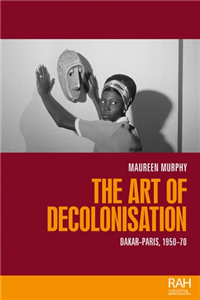
The art of decolonisation
Dakar-Paris, 1950-70
by Maureen Murphy
The art of decolonisation examines how artists challenged colonial legacies and reconfigured power through transnational networks of art and diplomacy. Adopting a global and transhistorical perspective, it explores artistic, political, and institutional relations between France and Senegal during decolonisation and the Cold War. From the emergence of a national modern art in Senegal to contested cultural policies and high-profile exhibitions-such as those featuring Picasso and Soulages in Dakar, or contemporary Senegalese art in Paris-this book traces the circulation of artworks, ideas, and influence across borders. It reveals how visual artists and filmmakers shaped a new artistic geopolitics between 1950 and 1970. Reconsidering the accepted chronology of the 'global turn', The art of decolonisation shows that the roots of global art discourse run deeper than the 1990s, and were already forming during the era of independence struggles.
-
 Trusted Partner
 Humanities & Social SciencesJanuary 2026
Rodrigo Ximenez de Rada’s Minor Histories
by Aymenn Al-Tamimi
This work provides the first complete English translation of works by Toledan archbishop Rodrigo Ximénez de Rada (1170-1247 CE), whose 'Minor Histories' are sequels to his larger 'Gothic History' and thus round off his grand history of Spain project that he began at the request of King Ferdinand III. The 'Minor Histories' include Rodrigo's 'History of the Arabs' that can be considered the first surviving Western monograph focused on Arab and Islamic history and thus occupies a unique position in the medieval Latin corpus of writings. In addition to the translation, this book provides a thorough and accessible introduction to the life and works of Rodrigo, making sense of the context in which he wrote and his historical method. The translations are thoroughly annotated including cross-references to other Latin and Arabic sources for comparison.
-
Trusted Partner
-
Trusted Partner
 The ArtsJuly 2024
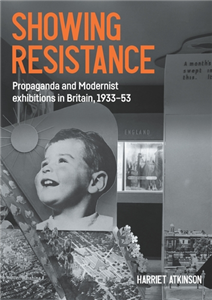
Showing resistance
Propaganda and Modernist exhibitions in Britain, 1933–53
by Harriet Atkinson
This is the first book-length analysis of exhibitions used for propaganda and political interventions in Britain during the two decades from 1933. It analyses how exhibitions were mounted in public places - from station concourses to workers' canteens, empty shops and bombsites - becoming a key tool for public communication. Richly illustrated, the book extends our existing knowledge of the work of a range of prominent artists, architects and designers active in Britain, including Edith Tudor-Hart, Edward McKnight-Kauffer, Paul Nash, F. H. K. Henrion, Misha Black, John Heartfield, Oskar Kokoschka and Erno Goldfinger.
-
Trusted Partner
-
Trusted Partner
-
Trusted Partner
 Humanities & Social SciencesJune 2017
Exhibiting the Empire
Cultures of display and the British Empire
by John McAleer, Andrew Thompson, John M. MacKenzie, John M. MacKenzie
Exhibiting the empire considers how a whole range of cultural products - from paintings, prints, photographs, panoramas and 'popular' texts to ephemera, newspapers and the press, theatre and music, exhibitions, institutions and architecture - were used to record, celebrate and question the development of the British Empire. It represents a significant and original contribution to our understanding of the relationship between culture and empire. Written by leading scholars from a range of disciplinary backgrounds, individual chapters bring fresh perspectives to the interpretation of media, material culture and display, and their interaction with history. Taken together, this collection suggests that the history of empire needs to be, in part at least, a history of display and of reception. This book will be essential reading for scholars and students interested in British history, the history of empire, art history and the history of museums and collecting.
-
Trusted Partner
 Humanities & Social SciencesOctober 2015
Exhibiting the Empire
Cultures of display and the British Empire
by John McAleer, Andrew Thompson, John M. MacKenzie, John Mackenzie
Exhibiting the empire considers how a whole range of cultural products - from paintings, prints, photographs, panoramas and 'popular' texts to ephemera, newspapers and the press, theatre and music, exhibitions, institutions and architecture - were used to record, celebrate and question the development of the British Empire. It represents a significant and original contribution to our understanding of the relationship between culture and empire. Written by leading scholars from a range of disciplinary backgrounds, individual chapters bring fresh perspectives to the interpretation of media, material culture and display, and their interaction with history. Taken together, this collection suggests that the history of empire needs to be, in part at least, a history of display and of reception. This book will be essential reading for scholars and students interested in British history, the history of empire, art history and the history of museums and collecting. ;
-
Trusted Partner
 Humanities & Social SciencesMarch 2017
Exhibiting the Empire
Cultures of display and the British Empire
by John McAleer, John M. MacKenzie
Exhibiting the empire considers how a whole range of cultural products - from paintings, prints, photographs, panoramas and 'popular' texts to ephemera, newspapers and the press, theatre and music, exhibitions, institutions and architecture - were used to record, celebrate and question the development of the British Empire. It represents a significant and original contribution to our understanding of the relationship between culture and empire. Written by leading scholars from a range of disciplinary backgrounds, individual chapters bring fresh perspectives to the interpretation of media, material culture and display, and their interaction with history. Taken together, this collection suggests that the history of empire needs to be, in part at least, a history of display and of reception. This book will be essential reading for scholars and students interested in British history, the history of empire, art history and the history of museums and collecting.
-
Trusted Partner
 Media studiesJune 2014
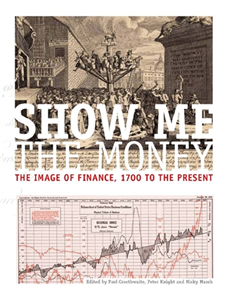
Show me the money
The image of finance, 1700 to the present
by Edited by Paul Crosthwaite, Peter Knight and Nicky Marsh
What does money really stand for? How can the abstractions of high finance be made visible? Show me the money documents how the financial world has been imagined in art, illustration, photography and other visual media over the last three centuries in Britain and the United States. It tells the story of how artists have grappled with the increasingly intangible and self-referential nature of money, from the South Sea Bubble to our current crisis. Show me the money sets out the history and politics of representations of finance through five essays by academic experts and curators, and is interspersed with provocative think pieces by notable public commentators on finance and art. The book, and the exhibition on which it is based, explore a wide range of images, from satirical eighteenth-century prints by William Hogarth and James Gillray to works by celebrated contemporary artists such as Andreas Gursky and Molly Crabapple. It also charts the development of an array of financial visualisations, including stock tickers and charts, newspaper illustrations, bank adverts and electronic trading systems.
-
Trusted Partner
The ArtsJune 2025
The senses in interior design
by John Potvin, Marie-Ève Marchand, Benoit Beaulieu
-
Trusted Partner
 Literature & Literary StudiesJune 2025
The nineteenth-century present
Literature, print culture and historicity
by Koenraad Claes, Elizabeth Ludlow
The Nineteenth-Century Present explores the multiple ways in which history was understood, structured, and reassessed in literary, theological, and political contexts across the nineteenth century. While the scope of the book is wide, ranging from the representations of geological time and ancient history to the writing of the recent past, and covering the work of writers from Walter Scott to G.K. Chesterton, each chapter reveals how present concerns intrude on and shape every view of history. Ultimately, the collection emphasises that issues raised regarding historicity in recent methodological debates were already concerns in the nineteenth century.
-
Trusted Partner
 Humanities & Social SciencesSeptember 2011
Untold Histories
Black people in England and Wales during the period of the British Slave trade, c. 1660–1807
by Kathleen Chater
-
Trusted Partner
 Business, Economics & LawJune 2026
Histories of international legal theories in Japan
From dialogue to conversation
by Maiko Meguro, Yota Negishi
This volume presents the first systematic account of Japanese international legal theory; edited by Japanese scholars, the volume traces thirteen influential scholars and spans over a century. It examines how theorists positioned outside international law's Western centre developed sophisticated frameworks to address tensions between Western modernity and their own experiences. The book's central contribution proposes 'conversation'-continuous engagement that respects differences between legal traditions-as an alternative to 'dialogue', which often reproduces existing hierarchies by assuming all perspectives can be reconciled. Through detailed intellectual biographies across six historical periods, contributors reveal how Japanese scholars strategically employed legal positivism, articulated transcivilizational perspectives, and developed concepts of normative multilateralism. Addressed at scholars of international law, legal theory, and comparative legal traditions, this volume demonstrates that the discipline's future requires genuinely reciprocal exchange where diverse perspectives can coexist productively.
-
Trusted Partner
Humanities & Social SciencesMarch 2017
Ephemeral vistas
by Paul Greenhalgh
The international exhibitions held around the world between 1851 and 1939 were spectacular gestures, which briefly held the attention of the world before disappearing into an abrupt oblivion, of the victims of their planned temporality. Known in Britain as Great Exhibitions, in France as Expositions Universelles and in America as World's Fairs, the genre became a self-perpetuating phenomenon, the extraordinary cultural spawn of industry and empire. Thoroughly in the spirit of the first industrial age, the exhibitions illustrated the relation between money and power, and revelled in the belief that the uncontrolled expression of that power was the quintessence of freedom. Philanthropy found its place on exhibition sites functioning as a conscience to the age although even here morality was inextricably linked to economic efficiency and expansion. Imperial achievement was celebrated to the full at international exhibitions. Nevertheless, most World's Fairs maintained an imperial element and out of this blossomed a vibrant racism. Between 1889 and 1914, the exhibitions became a human showcase, when people from all over the world were brought to sites in order to be seen by others for their gratification and education. In essence, the English national profile fabricated in the closing decades of the nineteenth century was derived from the pre-industrial world. The Fine Arts were an important ingredient in any international exhibition of calibre. This book incorporates comparative work on European and American empire-building, with the chronological focus primarily on the nineteenth and twentieth centuries, when these cultural exchanges were most powerfully at work.
-
Trusted Partner
 Biography & True StoriesFebruary 2025
Unburied
The true story of Hannah Beswick, the Manchester Mummy
by Hannah Priest
The macabre tale of an eighteenth-century woman immortalised in folklore as the 'Manchester Mummy'. In 1835, the Manchester Natural History Society opened the doors of its museum. Taking pride of place in its collection were three mummies: one was Egyptian, one was Peruvian and one was a woman from Cheetham Hill. This is the first time the true story of Hannah Beswick, the so-called 'Manchester Mummy', has been told. Over the years, explanations for the Manchester Mummy have ranged from the chilling - Hannah's fear of being buried alive - to the downright bizarre - the legend of her buried gold - but the truth is more complex. Exploring this fascinating episode from museum history, Unburied sheds light on the Victorian turn to the macabre and changing attitudes to the display of human remains. It debunks the legends and asks what Hannah Beswick can tell us about death and dying, mummies and museums.
-
Trusted Partner
 Humanities & Social SciencesDecember 2025
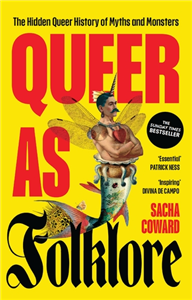
Queer as folklore
The hidden queer history of myths and monsters
by Sacha Coward
A celebration of queer history like you've never seen it before. Queer as folklore travels across centuries and continents to reveal the unsung heroes and villains of storytelling, magic and fantasy. Featuring images from archives, galleries and museums around the world, each chapter investigates the queer history of different mythic and folkloric characters, both old and new. Leaving no headstone unturned, Sacha Coward takes you on a wild ride through the night from ancient Greece to the main stage of RuPaul's Drag Race, visiting cross-dressing pirates, radical fairies and the graves of the 'queerly departed' along the way. Queer communities have often sought refuge in the shadows and created safe spaces in underworlds. But these forgotten narratives tell stories of resilience that deserve to be heard. Join any Pride march and you will see a glorious display of papier-mâché unicorn heads, drag queens in mermaid tails and more fairy wings than you can shake a trident at. These are not just accessories: they are queer symbols with historic roots. To truly understand who queer people are today, we must confront the twisted tales of the past.
-
Trusted Partner
 MedicineJuly 2022
Histories of HIV/AIDS in Western Europe
by Janet Weston, Hannah J. Elizabeth, David Cantor
-
Trusted Partner
The ArtsOctober 2023
Windows for the world
Nineteenth-century stained glass and the international exhibitions, 1851–1900
by Jasmine Allen
Windows for the world explores the display and reception of nineteenth-century British stained glass in a secular exhibition context. International in scope, the book focuses on the global development of stained glass in this period as showcased at, and influenced by, these exhibitions. It recognises those who made and exhibited stained glass and demonstrates the long-lasting impact of the classification and modes of display at these events. A number of exhibits are illustrated in colour and are analysed in relation to stylistic developments, techniques and material innovations, as well as the broader iconographies of nation and empire in the nineteenth century.