
Facultas Verlag
Das facultas Verlagsprogramm umfasst Lehr- und Studienbücher wie auch Forschungs- und Fachliteratur
View Rights Portal
Das facultas Verlagsprogramm umfasst Lehr- und Studienbücher wie auch Forschungs- und Fachliteratur
View Rights Portal Trusted Partner

Hanser Publishers represents a wide range of products and concentrates at the same time on clearly defined target groups: Engineers and Technicians in training and at work in the following fields: Metalworking, Plastics Technology, Electrical engineering and Electronics, Computers, Economy and Management. Our portfolio has a range from Journals, Books, Training Books and electronic media up to seminars and conferences in German and in English language. Additionally Hanser provides information for different branches in the World Wide Web. Hanser Publishers also provides 25 Journals and about 200 new books each year. The whole backlist of books counts up to about 2,000 titles. With this amount of Books and Journals Hanser Publishers is one of the leading Publishing Houses in Germany. Our success mainly derives from the high quality of our products and content, from the expertise of our staff and their ability to identify new trends and products. Our strong and close ties to the industry and leading research institutes are the basis for a close cooperation with our authors. Supported by synergies of our books, journals, seminars and the World Wide Web we are accompanying our authors from their first discover of new technologies in form of an article in one of our journals till the maturity of a technology in form of an uptodate handbook. Characteristic for Hanser Publishers are its numerous cooperations with partners in Germany and other countries. The Journal “Kunststoffe” for example is the official Publication of the VDI-Society, the leading society of engineers in Germany. Our Journal “Qualität und Zuverlässigkeit” is the official publication of the “Deutsche Gesellschaft für Qualität (DGQ)”. Also the Books are made in close cooperation with leading companies, associations and Universities.
View Rights Portal

This unique and exciting collection, inspired by the scholarship of literary critic Stephanie Trigg, offers cutting-edge responses to the writings of Geoffrey Chaucer for the current critical moment. The chapters are linked by the organic and naturally occurring affinities that emerge from Trigg's ongoing legacy; containing diverse methodological approaches and themes, they engage with Chaucer through ecocriticism, medieval literary and historical criticism, and medievalism. The contributors, trailblazing international specialists in their respective fields, honour Trigg's distinctive and energetic mode of enquiry (the symptomatic long history) and intellectual contribution to the humanities. At the same time, their approaches exemplify shifting trends in Chaucer scholarship. Like Chaucer's pilgrims, these scholars speak to and alongside each other, but their essays are also attentive to 'hearing Chaucer speak' then, now and in the future.
 Trusted Partner
Trusted Partner
Trusted Partner
 Trusted Partner
Middle English literature is intimately concerned with sleep and the spaces in which it takes place. In the medieval English imagination, sleep is an embodied and culturally determined act. It is both performed and interpreted by characters and contemporaries, subject to a particular habitus and understood through particular hermeneutic lenses. While illuminating the intersecting medical and moral discourses by which it is shaped, sleep also sheds light on subjects in favour of which it has hitherto been overlooked: what sleep can enable (dreams and dream poetry) or what it can stand in for or supersede (desire and sex). This book argues that sleep mediates thematic concerns and questions in ways that have ethical, affective and oneiric implications. At the same time, it offers important contributions to understanding different Middle English genres: romance, dream vision, drama and fabliau.
Trusted Partner
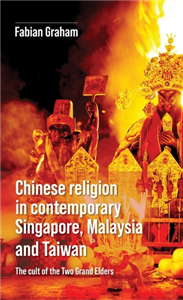
In Singapore and Malaysia, the inversion of Chinese Underworld traditions has meant that Underworld demons are now amongst the most commonly venerated deities in statue form, channelled through their spirit mediums, tang-ki. The Chinese Underworld and its sub-hells are populated by a bureaucracy drawn from the Buddhist, Taoist and vernacular pantheons. Under the watchful eye of Hell's 'enforcers', the lower echelons of demon soldiers impose post-mortal punishments on the souls of the recently deceased for moral transgressions committed during their prior incarnations. Chinese religion in contemporary Singapore, Malaysia and Taiwan offers an ethnography of contemporary Chinese Underworld traditions, where night-time cemetery rituals assist the souls of the dead, exorcised spirits are imprisoned in Guinness bottles, and malicious foetus ghosts are enlisted to strengthen a temple's spirit army. Understanding the religious divergences between Singapore and Malaysia (and their counterparts in Taiwan) through an analysis of socio-political and historical events, Fabian Graham challenges common assumptions about the nature and scope of Chinese vernacular religious beliefs and practices. Graham's innovative approach to alterity allows the reader to listen to first-person dialogues between the author and channelled Underworld deities. Through its alternative methodological and narrative stance, the book intervenes in debates on the interrelation between sociocultural and spiritual worlds, and promotes the destigmatisation of spirit possession and discarnate phenomena in the future study of mystical and religious traditions.
Trusted Partner
Trusted Partner
 Trusted Partner
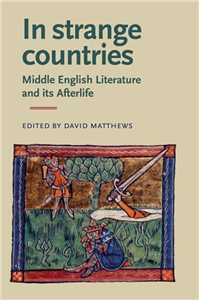
These essays by senior scholars in medieval studies celebrate the career of J.J. Anderson, editor, critic, and co-founder of the Manchester Medieval Literature and Culture series, who taught in medieval studies at the University of Manchester for forty years. The essays are rooted in medieval literature but frequently range beyond the confines of the Middle Ages. They reflect the breadth of Anderson's own scholarly interests, especially in drama and Arthurian literature. There is a particular focus on Sir Gawain and the Green Knight and Pearl, poems which preoccupied him throughout his scholarly life. There are also new reconsiderations of La?amon's Brut, Mirk's Festial, the Passion plays, and the manuscripts of the Pore Caitif. Moving beyond the traditional purview of medieval literature, several contributors trace the afterlives of medieval themes in later literature. These essays include a consideration of the twinned trajectories of the medieval heroes Robin Hood and King Arthur from medieval literature to modern television, a comparison of La?amon's Brut and Tennyson's Idylls of the King, and a recreation of the Bishop Blase procession which took place in industrial Bradford. Contributors are Rosamund Allen, Ralph Elliott, Alexandra Johnston, Stephen Knight, Peter Meredith, Susan Powell, Gillian Rudd, Alan Shelston, and Kalpen Trivedi. ;
Trusted Partner


This bestselling title is a practical handbook on the concept of basic stimulation in nursing and its application for patients suffering from perceptional deficits, developmental delays and mental handicaps. It enables nurses to develop, improve and stabilize physically and mentally handicapped people with impaired perceptional, communicative and motor skills. Target Group: Nurses
Trusted Partner
 Trusted Partner

The first book to tell the shocking story of the AIDS crisis in Soviet Russia. Throughout the 1980s, as the world was grappling with the escalating crisis of AIDS, Soviet Russia continued to deny there was a problem. Arguing that the disease was limited to foreigners and 'immoral' groups, the government failed to take meaningful action, long past the point other countries had begun to recognise the full scale of the threat. In this ground-breaking book, Rustam Alexander tells the story of AIDS in Soviet Russia. Fixated on disinformation, censorship and the persecution of marginalised communities, the Soviet authorities wasted precious time, allowing the epidemic to strike at the very heart of the nation: its children. Yet, despite the government's failure, a number of brave journalists, doctors and nascent gay groups decided to take matters into their own hands and engage in full-fledged AIDS activism. Tracing the political and social response to AIDS in the final years of the Soviet era, Alexander sheds light on the devastating consequences of government inaction. He draws on personal stories, media reports and archival materials to provide a riveting account of the Russian people's fight against AIDS amid the tumultuous transformations of Gorbachev's perestroika.
Trusted Partner

This book explores the Spanish elite's fixation on social and racial 'passing' and 'passers', as represented in a wide range of texts. It examines literary and non-literary works produced in the sixteenth and seventeenth centuries that express the dominant Spaniards' anxiety that socially mobile lowborns, Conversos (converted Jews), and Moriscos (converted Muslims) could impersonate and pass for 'pure' Christians like themselves. Ultimately, this book argues that while conspicuous sociocultural and ethnic difference was certainly perturbing and unsettling, in some ways it was not as threatening to the dominant Spanish identity as the potential discovery of the arbitrariness that separated them from the undesirables of society - and therefore the recognition of fundamental sameness. This fascinating and accessible work will appeal to students of Hispanic studies, European history, cultural studies, Spanish literature and Spanish history.
Trusted Partner
 Trusted Partner

In How to be multiple, Helena de Bres - a twin herself - argues that twinhood is a unique lens for examining our place in the world and how we relate to other people. The way we think about twins offers remarkable insights into some of the deepest questions of our existence, from what is a person? to how should we treat one another? Deftly weaving together literary and cultural history, philosophical enquiry and personal experience, de Bres examines such thorny issues as binary thinking, objectification, romantic love and friendship, revealing the limits of our individualistic perspectives. In this illuminating, entertaining book, wittily illustrated by her twin sister, de Bres ultimately suggests that to consider twinhood is to imagine the possibility of a more interconnected, capacious human future.
Trusted Partner
Migration and social policy in a changing world bridges the generally separate fields of social policy and migration studies. This book traces social policy responses to migration from the Industrial Revolution to today's era of globalisation and large-scale migration. Through case studies from across the globe, the book explores key themes including rural-urban migration, social citizenship, welfare internationalism and diasporic care systems. It examines how migrants are included in or excluded from social citizenship in host societies, and how they become providers of welfare services such as health and social care. Moving beyond a methodological nationalist focus, the book investigates migrant incorporation into welfare states through family networks, faith communities, and other informal welfare structures. It combines migrants' experiences with host societies' immigration politics, institutional perspectives and policies to present a comprehensive analysis of the migration-welfare relationship. This volume fills a gap in academic literature and offers policymakers, practitioners and scholars a framework for understanding the interplay between migration and social policy in our changing world.
Trusted Partner
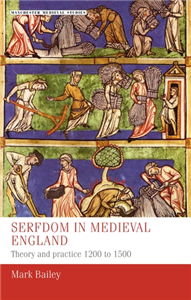
Serfdom was a coercive relationship between a landowner and peasant, which was widespread across medieval and early modern Europe. Itfeatures prominently in major historical debates, such as the origins of capitalism and the divergent pathways of western and eastern Europe to modernity. Scholars have paid particular attention to English serfdom, which is usually portrayed as highly oppressive and a major cause of the Peasants' Revolt in 1381. This comprehensive survey draws on a vast scholarship and new research to show how, in reality, English serfdom was weak, casting new light on the nature of its society and economy when the Black Death struck in 1348-9. The pandemicnow assumesa central role in the rapid decline of serfdom, as illustrated in a case study of the estate of one of England's harshest landowners, St Albans abbey.
Trusted Partner

Using oral histories gathered from trade unionists, this book explores the national steelworkers strike of 1980 and asserts its significance as a key turning point in modern British history. The strike was nominally a response to a 2% pay offer made by British Steel Corporation (BSC), at a time when inflation was 17%, but was generated by the widespread works closures that characterised the British steel industry at this time. The outcome of the strike was a much higher pay increase but no change to the deindustrialisation strategy of BSC and the government. The book explores the strike from the perspective of those who fought it and reveals the short and longer-term consequences it had on the industry, the unions and the workers themselves.
Trusted Partner
Trusted Partner
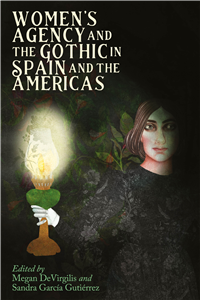
This volume has emerged to fulfill two main purposes: Primarily, to constitute the first collaborative work that traces the relationship between the Gothic and Women in Spain and the Americas, but also, to surpass the term 'Female Gothic,' coined by Ellen Moers, by transferring the focus towards women and their agency as writers, readers and characters. This volume functions as a manifesto per se to open new avenues into understanding how women have interacted with the Gothic between the nineteenth and twenty-first centuries in Spain and the Americas. The question, we determine, is not simply about identity, but rather about agency. We define women's agency as the total capacity of characters, authors and readers to act freely within a social framework in relation to gothic texts. In our exploration of authorship, we reject the claim that the Gothic is a simplistic literary genre, instead sustaining that the plasticity of the Gothic has enabled it to survive for centuries; by shifting from a genre to a mode, it has surpassed literary forms and invaded all kinds of media: from film to music and merchandise such as clothing and pop culture collectables, fostering an authentic goth fandom.



