Your Search Results

      • Publishing House Nova Knjiga

        Nova knjiga insists to create good connection between comercial and elite.We pay close attention to all aspects of the publishing business according to the highest standards and criteria always taking care of the high quality of the translation, covers and textblock.Publishing sectors: fiction, non-fiction, classics, children books. Nova knjiga has a network of own bookstores in biggest towns which covers Montenegrin market. Beside the publishing we have great developed network of wholesale and we are main suppliers of the books in Montenegro. We provide to all companies in Montenegro and region easy way to buy all our editions and editions of other publishing houses.

        View Rights Portal
      • Editora Trinta Zero Nove

        Editora Trinta Zero Nove is an independent press based in Maputo, Mozambique. It was started in 2018. This year the press debuted a kid lit and young adult collections translated from Arabic, Italian and English into Portuguese in print and braille.

        View Rights Portal
      • Trusted Partner
        The Arts
        February 2022

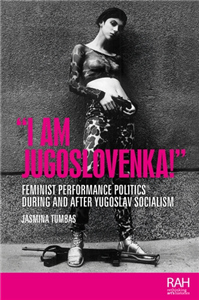
        "I am Jugoslovenka!"

        Feminist performance politics during and after Yugoslav Socialism

        by Jasmina Tumbas, Amelia Jones, Marsha Meskimmon

        "I am Jugoslovenka" argues that queer-feminist artistic and political resistance were paradoxically enabled by socialist Yugoslavia's unique history of patriarchy and women's emancipation. Spanning performance and conceptual art, video works, film and pop music, lesbian activism and press photos of female snipers in the Yugoslav wars, the book analyses feminist resistance in a range of performative actions that manifest the radical embodiment of Yugoslavia's anti-fascist, transnational and feminist legacies. It covers celebrated and lesser-known artists from the 1970s to today, including Marina Abramovic, Sanja Ivekovic, Vlasta Delimar, Tanja Ostojic, Selma Selman and Helena Janecic, along with music legends Lepa Brena and Esma Redzepova. "I am Jugoslovenka" tells a unique story of women's resistance through the intersection of feminism, socialism and nationalism in East European visual culture.

      • Trusted Partner
      • Trusted Partner
        Humanities & Social Sciences
        December 2022

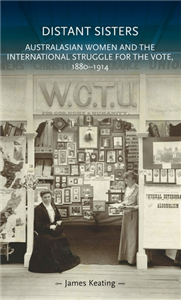
        Distant sisters

        Australasian women and the international struggle for the vote, 1880–1914

        by James Keating

        In the 1890s Australian and New Zealand women became the first in the world to win the vote. Buoyed by their victories, they promised to lead a global struggle for the expansion of women's electoral rights. Charting the common trajectory of the colonial suffrage campaigns, Distant Sisters uncovers the personal and material networks that transformed feminist organising. Considering intimate and institutional connections, well-connected elites and ordinary women, this book argues developments in Auckland, Sydney, and Adelaide-long considered the peripheries of the feminist world-cannot be separated from its glamourous metropoles. Focusing on Antipodean women, simultaneously insiders and outsiders in the emerging international women's movement, and documenting the failures of their expansive vision alongside its successes, this book reveals a more contingent history of international organising and challenges celebratory accounts of fin-de-siècle global connection.

      • Trusted Partner
        The Arts
        December 2024

        Engendering an avant-garde

        The unsettled landscapes of Vancouver photo-conceptualism

        by Leah Modigliani

        Engendering an avant-garde is the first book to comprehensively examine the origins of Vancouver photo-conceptualism in its regional context between 1968 and 1990. Employing discourse analysis of texts written by and about artists, feminist critique and settler-colonial theory, the book discusses the historical transition from artists' creation of 'defeatured landscapes' between 1968-71 to their cinematographic photographs of the late 1970s and the backlash against such work by other artists in the late 1980s. It is the first study to provide a structural account for why the group remains all-male. It accomplishes this by demonstrating that the importation of a European discourse of avant-garde activity, which assumed masculine social privilege and public activity, effectively excluded women artists from membership.

      • Trusted Partner
        The Arts
        November 2020

        Stage rights!

        The Actresses’ Franchise League, activism and politics 1908–58

        by Naomi Paxton

        Stage rights! explores the work and legacy of the first feminist political theatre group of the twentieth century, the Actresses' Franchise League. Formed in 1908 to support the suffrage movement through theatre, the League and its membership opened up new roles for women on stage and off, challenged stereotypes of suffragists and actresses, created new work inspired by the movement and was an integral part of the performative propaganda of the campaign. Introducing new archival material to both suffrage and theatre histories, this book is the first to focus in detail on the Actresses' Franchise League, its membership and its work. The volume is formulated as a historiographically innovative critical biography of the organisation over the fifty years of its activities, and invites a total reassessment of the League within the accepted narratives of the development of political theatre in the UK.

      • Trusted Partner
        Teaching, Language & Reference
        April 2025

        Anti-colonial research praxis

        Methods for knowledge justice

        by Caroline Lenette

        How can anti-colonial research methodologies be transformative and achieve knowledge justice? This book brings together an eclectic group of leading scholars from around the world to share methodological knowledge grounded in First Nations and majority-world expertise and wisdom. The authors challenge western-centric and colonial approaches to knowledge production and redefine the possibilities of what we can achieve through social research. First Nations and majority-world perspectives are contextual and unique. They share a common aim of disrupting established beliefs on research methodologies and the unquestioned norms that dictate whose knowledge the academy values. The ten chapters in this edited collection describe how the authors draw on Indigenous knowledge systems, feminist frameworks, and creative methodologies as anti-colonial research praxis. The examples span several disciplines such as development studies, geography, education, sexual and reproductive health, humanitarian studies, and social work. Authors use a reflexive approach to discuss specific factors that shape how they engage in research ethically, to lead readers through a reflection on their own practices and values. The book reimagines social research using an anti-colonial lens and concludes with a collaboratively developed and co-written set of provocations for anti-colonial research praxis that situate this important work in the context of ongoing colonial violence and institutional constraints. This book is an essential guide for researchers and scholars within and beyond the academy on how anti-colonial research praxis can produce meaningful outcomes, especially in violent and troubled times. Cover art courtesy of Tawny Chatmon

      • Trusted Partner
        Literature & Literary Studies
        November 2022

        Kate Atkinson

        by Armelle Parey

        This timely in-depth study of award-winning Kate Atkinson's work provides a welcome comprehensive overview of the novels, play and short stories. It explores the major themes and aesthetic concerns in her fiction. Combining close analysis and literary contextualisation, it situates her multi-faceted work in terms of a hybridisation of genres and innovative narrative strategies to evoke contemporary issues and well as the past. Chapters offer insights into each major publication (from Behind the Scenes at the Museum to Big Sky, the latest instalment in the Brodie sequence, through the celebrated Life After Life and subsequent re-imaginings of the war) in relation to the key concerns of Atkinson's fiction, including self-narrativisation, history, memory and women's lives.

      • Trusted Partner
        Humanities & Social Sciences
        March 2017

        Gender and imperialism

        by Clare Midgley

        This book marks an important new intervention into a vibrant area of scholarship, creating a dialogue between the histories of imperialism and of women and gender. By engaging critically with both traditional British imperial history and colonial discourse analysis, the essays demonstrate how feminist historians can play a central role in creating new histories of British imperialism. Chronologically, the focus is on the late eighteenth to early twentieth centuries, while geographically the essays range from the Caribbean to Australia and span India, Africa, Ireland and Britain itself. Topics explored include the question of female agency in imperial contexts, the relationships between feminism and nationalism, and questions of sexuality, masculinity and imperial power.

      • Trusted Partner
        The Arts
        July 2025

        Sally Wainwright

        by Kristyn Gorton, Beth Johnson

        The first and only book length study of British screenwriter, director and producer Sally Wainwright. Authors Gorton and Johnson brings together Wainwright's key television series and television films with theoretical work on the concept of emotion and feminist television criticism, exploring Wainwright's contributions to British television through the heroic female characters she creates. The book covers a wide range of theoretical work on melodrama, genre and emotion to explore Wainwright's televisual texts, offering analysis of globally recognised television series such as Happy Valley, Last Tango in Halifax, and Gentleman Jack.

      • Trusted Partner
        The Arts
        September 2024

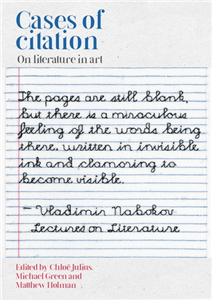
        Cases of citation

        On literature in art

        by Chloe Julius, Michael Green, Matthew Holman

        Cases of citation presents a history of artists who incorporated literary references into their work from the 1960s onwards. Through a series of object-focused chapters that each take up a singular 'case of citation', the collection considers how literary citation emerged as a viable and urgent strategy for artists during this period. It surveys eleven artworks by a diverse group of artists - including David Wojnarowicz, Lis Rhodes, Romare Bearden and Silvia Kolbowski - whose citations draw on works as varied as Karl Marx's Das Kapital and Mary Shelley's Frankenstein. The book also features an interview with pioneering feminist artist Elaine Reichek that discusses her career-long commitment to working with text. Together, the artworks and cited texts are approached from various critical angles, with each author questioning and complicating the ways in which we can 'read' textual citations in art.

      • Trusted Partner
      • Trusted Partner
        June 2020

        Der Feminist

        Roman

        by Iván Repila, Matthias Strobel

        Liebe, Feminismus, für den Helden dieses Buches ist das ab sofort das Gleiche. Er verliebt sich in eine Hardcore-Feministin. Das heißt: in Lichtgeschwindigkeit vom ignoranten Gewohnheitsmacho zum Judith-Butler-Exegeten, mit den entsprechenden Kollateralschäden bei Familie, Freunden und am Arbeitsplatz. Denn für die Gleichberechtigung kämpft er mit wirklich allen zur Verfügung stehenden Mitteln … Ein Roman für alle, die sich einig sind, dass sie Mario Barth scheiße finden, in Sachen Feminismus sonst aber bisweilen nicht weiterwissen. Bevor er sich in Najwa verliebt, hat er keinen blassen Schimmer vom Feminismus. Er ist ein 08/15-Typ mit den üblichen Vorurteilen, blinden Flecken, problematischen Verhaltensweisen. Aber bei ihr geht er in eine harte Schule. Sein Blick auf die Welt verändert sich: Beeinträchtigungen, Ungerechtigkeiten, Diskriminierungen sind plötzlich überall, genau wie die Paradoxien und der Unmut, der ihm entgegenschlägt, sobald er nur wieder irgendwo vom grausamen Patriarchat anfängt. Wie kann er die Frauen in diesem Kampf am besten unterstützen? Ein Wutanfall seiner Mutter bringt ihn auf eine folgenschwere Idee.

      • Trusted Partner
        The Arts
        June 2026

        Cases of citation

        On literature in art

        by Chloë Julius, Michael Green, Matthew Holman

        Cases of citation presents a history of artists who incorporated literary references into their work from the 1960s onwards. Through a series of object-focused chapters that each take up a singular 'case of citation', the collection considers how literary citation emerged as a viable and urgent strategy for artists during this period. It surveys nine artworks by a diverse group of artists - including David Wojnarowicz, Lis Rhodes, Romare Bearden and Silvia Kolbowski - whose citations draw on literary works with authors ranging from Gertrude Stein to Jean Genet. The book also features an interview with pioneering feminist artist Elaine Reichek that discusses her career-long commitment to working with text. Together, the artworks and cited texts are approached from various critical angles, with each author questioning and complicating the ways in which we can 'read' textual citations in art.

      • Trusted Partner
        The Arts
        June 2021

        The new pornographies

        Explicit sex in recent French fiction and film

        by Victoria Best, Martin Crowley

        The turn of the twenty-first century has witnessed the striking advance of pornography into the Western cultural mainstream. Symptomatic of this development has been the use by writers, artists, and film-makers of the imagery and aesthetics of pornography, in works which have, often on this basis, achieved considerable international success. Amongst these artists are a number of French authors and directors - such as Michel Houellebecq, Catherine Breillat, Virginie Despentes, or Catherine Millet - whose work has often been dismissed as trashy or exploitative, but whose use of pornographic material may in fact be indicative of important contemporary concerns. In this study of a very significant trend, the authors explore how the reference to pornography encodes diverse political, cultural, and existential questions, including relations between the sexes, the collapse of avant-garde politics, gay sexualities in the time of AIDS, the anti-feminist backlash, the relation to the body and illness, the place of fantasy, and the sexualisation of children. It will be of interest to undergraduates, graduates, and researchers in the fields of French culture, gender, film and media studies.

      • Trusted Partner
        The Arts
        January 2019

        The new pornographies

        Explicit sex in recent French fiction and film

        by Victoria Best, Martin Crowley

        The turn of the twenty-first century has witnessed the striking advance of pornography into the Western cultural mainstream. Symptomatic of this development has been the use by writers, artists, and film-makers of the imagery and aesthetics of pornography, in works which have, often on this basis, achieved considerable international success. Amongst these artists are a number of French authors and directors - such as Michel Houellebecq, Catherine Breillat, Virginie Despentes, or Catherine Millet - whose work has often been dismissed as trashy or exploitative, but whose use of pornographic material may in fact be indicative of important contemporary concerns. In this, the first study of this significant trend, the authors explore how the reference to pornography encodes diverse political, cultural, and existential questions, including relations between the sexes, the collapse of avant-garde politics, gay sexualities in the time of AIDS, the anti-feminist backlash, the relation to the body and illness, the place of fantasy, and the sexualisation of children. It will be of interest to undergraduates, graduates, and researchers in the fields of French culture, gender, film and media studies.

      • Trusted Partner
        Humanities & Social Sciences
        August 2014

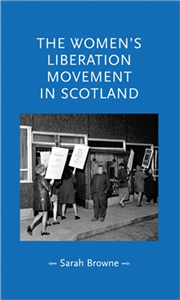
        The women's liberation movement in Scotland

        by Sarah Browne, Pamela Sharpe, Penny Summerfield, Lynn Abrams, Cordelia Beattie

        This is the first book-length account of the women's liberation movement in Scotland, which, using documentary evidence and oral testimony, charts the origins and development of this important social movement of the post-1945 period. In doing so, it reveals the inventiveness and fearlessness of feminist activism, while also pointing towards the importance of considering the movement from the local and grassroots perspectives, presenting a more optimistic account of the enduring legacy of women's liberation. Not only does this book uncover the reach of the WLM but it also considers what case studies of women's liberation can tell us about the ways in which the development of the movement has been portrayed. Previous accounts have tended to equate the fragmentation of the movement with weakness and decline. This book challenges this conclusion, arguing that fragmentation led to a diffusion of feminist ideas into wider society. In the Scottish context, it led to a lively and flourishing feminist culture where activists highlighted important issues such as abortion and violence against women. ;

      • Trusted Partner
        The Arts
        December 2024

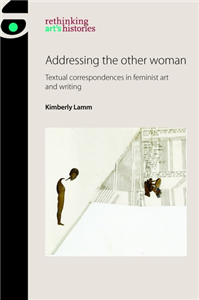
        Addressing the other woman

        Textual correspondences in feminist art and writing

        by Kimberly Lamm

        This book analyses how three artists - Adrian Piper, Nancy Spero and Mary Kelly - worked with the visual dimensions of language in the 1960s and 1970s. These artists used text and images of writing to challenge female stereotypes, addressing viewers and asking them to participate in the project of imagining women beyond familiar words and images of subordination. The book explores this dimension of their work through the concept of 'the other woman', a utopian wish to reach women and correspond with them across similarities and differences. To make the artwork's aspirations more concrete, it places the artists in correspondence with three writers - Angela Davis, Valerie Solanas, and Laura Mulvey - who also addressed the limited range of images through which women are allowed to become visible.

      • Trusted Partner
        Humanities & Social Sciences
        July 2026

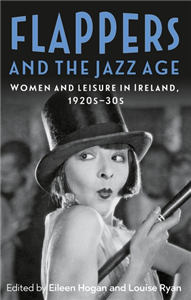
        Flappers and the Jazz Age

        Women and leisure in Ireland, 1920s–30s

        by Eileen Hogan, Louise Ryan

        People's ordinary, everyday lives - and more specifically, their leisure activities - are often obscured within existing academic research on 1920s-30s Ireland. This book seeks to redress that neglect by exploring the relationship between identity, recreation, and culture both North and South of the border, with particular attention to women's lived experiences. Leisurely pursuits during this period were commonly overshadowed by religious influence and the nation-building projects in post-partition Ireland. Nevertheless, there existed alternative spaces, where people enjoyed dancing, singing, listening to music, shopping, glamour, reading magazines, swimming, travelling, and going to the cinema. Such activities reflected international trends beyond national borders. This book documents those activities and spaces through a feminist lens and intersectional analysis of gender, class, religion and rural/urban identities. It brings together multi-disciplinary perspectives including cultural studies, architecture, geography, fashion, and musicology. In so doing, we present new insights and advance understanding of this under-researched aspect of Irish history.

      Subscribe to our

      newsletter