
Studies in Photography
Publishing, books, journals and photographic prints
View Rights Portal

WE HAVE BOOKS IN ENGLISH AND IN PORTUGUESE AND YOU CAN TRANSLATE THEM FOR YOUR LANGUAGE.
View Rights Portal
Sovereignty, catastrophe, Indigeneity examines Indian rule in occupied Jammu and Kashmir through settler/colonial geopolitics. Engaging with settler colonial, decolonial and Indigenous studies, the book explores how European sovereignty was shaped by settler/colonialism. Settler/colonialism was catastrophic for Indigenous worlds and generated the climate crisis. The book explores how India draws on settler/colonialism's catastrophic mechanisms to rule Kashmir, thus fuelling the climate crisis and participating in the geopolitical settler/colonial world order. Sites of analysis include the India China rivalry, Kashmir's political economy, and India's indigenisation of its Hindu sacred geography in Kashmir. Through this exploration, the author argues for asserting Kashmiri resistance as an Indigenous anti-colonial struggle. The intersections between sovereignty, catastrophe, Indigeneity, and ecology, illuminate Kashmir's place in the geopolitical settler/colonial world order. The book contributes to timely debates regarding settler/colonialism and planetary crises.
Environments of power provides unique case studies of environmental inclusion and exclusion across the Americas, Africa, Japan, India, and the South-Pacific. Using more-than-human and Indigenist approaches, chapters focus on Indigenous environmental resistance, marginalisation across social and physical environments, ecology as art, and how local communities are caught up in and resist development and infrastructure projects. The book demonstrates how environments influence which bodies and other matter belong (or not) in certain places.
 Trusted Partner
 Trusted Partner

How can anti-colonial research methodologies be transformative and achieve knowledge justice? This book brings together an eclectic group of leading scholars from around the world to share methodological knowledge grounded in First Nations and majority-world expertise and wisdom. The authors challenge western-centric and colonial approaches to knowledge production and redefine the possibilities of what we can achieve through social research. First Nations and majority-world perspectives are contextual and unique. They share a common aim of disrupting established beliefs on research methodologies and the unquestioned norms that dictate whose knowledge the academy values. The ten chapters in this edited collection describe how the authors draw on Indigenous knowledge systems, feminist frameworks, and creative methodologies as anti-colonial research praxis. The examples span several disciplines such as development studies, geography, education, sexual and reproductive health, humanitarian studies, and social work. Authors use a reflexive approach to discuss specific factors that shape how they engage in research ethically, to lead readers through a reflection on their own practices and values. The book reimagines social research using an anti-colonial lens and concludes with a collaboratively developed and co-written set of provocations for anti-colonial research praxis that situate this important work in the context of ongoing colonial violence and institutional constraints. This book is an essential guide for researchers and scholars within and beyond the academy on how anti-colonial research praxis can produce meaningful outcomes, especially in violent and troubled times. Cover art courtesy of Tawny Chatmon
Trusted Partner
Invoking Empire examines the histories of Canada, South Africa, Australia, and New Zealand during the transitional decades between 1860-1900, when each gained some degree of self-government yet still remained within the sovereignty of the British Empire. It applies the conceptual framework of imperial citizenship to nine case studies of settlers and Indigenous peoples who lived through these decades to make two main arguments. It argues that colonial subjects adapted imperial citizenship to both support and challenge settler sovereignty, revealing the continuing importance of imperial authority in self-governing settler spaces. It also posits that imperial citizenship was rendered inoperable by a combination of factors in both Britian and the colonies, highlighting the contingency of settler colonialism on imperial governmental structures and challenging teleological assumptions that the rise of settler nation states was an inevitable result of settler self-government.
Trusted Partner
Trusted Partner
Air policing was used in many colonial possessions, but its most effective incidence occurred in the crescent of territory from north-eastern Africa, through South-West Arabia, to North West Frontier of India. This book talks about air policing and its role in offering a cheaper means of 'pacification' in the inter-war years. It illuminates the potentialities and limitations of the new aerial technology, and makes important contributions to the history of colonial resistance and its suppression. Air policing was employed in the campaign against Mohammed bin Abdulla Hassan and his Dervish following in Somaliland in early 1920. The book discusses the relationships between air control and the survival of Royal Air Force in Iraq and between air power and indirect imperialism in the Hashemite kingdoms. It discusses Hugh Trenchard's plans to substitute air for naval or coastal forces, and assesses the extent to which barriers of climate and geography continued to limit the exercise of air power. Indigenous responses include being terrified at the mere sight of aircraft to the successful adaptation to air power, which was hardly foreseen by either the opponents or the supporters of air policing. The book examines the ethical debates which were a continuous undercurrent to the stream of argument about repressive air power methods from a political and operational perspective. It compares air policing as practised by other European powers by highlighting the Rif war in Morocco, the Druze revolt in Syria, and Italy's war of reconquest in Libya.
Trusted Partner
Trusted Partner

Rethinking settler colonialism focuses on the long history of contact between indigenous peoples and the white colonial communities who settled in Australia, Aotearoa New Zealand, Canada and South Africa. It interrogates how histories of colonial settlement have been mythologised, narrated and embodied in public culture in the twentieth century (through monuments, exhibitions and images) and charts some of the vociferous challenges to such histories that have emerged over recent years. Despite a shared familiarity with cultural and political institutions, practices and policies amongst the white settler communities, the distinctiveness which marked these constituencies as variously, 'Australian', 'South African', 'Canadian' or 'New Zealander', was fundamentally contingent upon their relationship to and with the various indigenous communities they encountered. In each of these countries these communities were displaced, marginalised and sometimes subjected to attempted genocide through the colonial process. Recently these groups have renewed their claims for greater political representation and autonomy. The essays and artwork in this book insist that an understanding of the political and cultural institutions and practices which shaped settler-colonial societies in the past can provide important insights into how this legacy of unequal rights can be contested in the present. It will be of interest to those studying the effects of colonial powers on indigenous populations, and the legacies of imperial rule in postcolonial societies.
Trusted Partner

With an eye to recovering the experiences of those in frontier zones of contact, Savage Worlds maps a wide range of different encounters between Germans and non-European indigenous peoples in the age of high imperialism. Examining outbreaks of radical violence as well as instances of mutual co-operation, it examines the differing goals and experiences of German explorers, settlers, travellers, merchants, and academics, and how the variety of projects they undertook shaped their relationship with the indigenous peoples they encountered. Examining the multifaceted nature of German interactions with indigenous populations, this volume offers historians and anthropologists clear evidence of the complexity of the colonial frontier and frontier zone encounters. It poses the question of how far Germans were able to overcome their initial belief that, in leaving Europe, they were entering 'savage worlds'.
Trusted Partner
Trusted Partner
Trusted Partner


Seit drei Jahrzehnten untersuchen Queer Studies die Macht geschlechtlicher und sexueller Normen – und wie diese infrage gestellt werden. Sie erforschen die komplexen Zusammenhänge von Sexualität, Geschlecht, Rassismus, Klasse und Nation. Dieser Band versammelt erstmals klassische und neuere Schlüsseltexte der anglophonen Queer Studies in deutscher Sprache, von Judith Butler und Eve Kosofsky Sedgwick bis Jack Halberstam, Cathy Cohen und José Esteban Muñoz. Er führt in die wichtigsten theoretischen Positionen ein, macht mit den zentralen Entwicklungslinien des Diskurses vertraut und präsentiert wegweisende queere Analysen zu Kapitalismus, Migration, Geopolitik, Behinderung, Aktivismus, Kultur und Subkultur.
Trusted Partner

Seit drei Jahrzehnten untersuchen Queer Studies die Macht geschlechtlicher und sexueller Normen – und wie diese infrage gestellt werden. Sie erforschen die komplexen Zusammenhänge von Sexualität, Geschlecht, Rassismus, Klasse und Nation. Dieser Band versammelt klassische und neuere Schlüsseltexte der anglophonen Queer Studies in deutscher Sprache, von Judith Butler und Eve Kosofsky Sedgwick bis Cathy Cohen und José Esteban Muñoz. Er führt in die wichtigsten theoretischen Positionen ein, macht mit den zentralen Entwicklungslinien des Diskurses vertraut und präsentiert wegweisende queere Analysen zu Kapitalismus, Migration, Geopolitik, Behinderung, Aktivismus, Kultur und Subkultur.
Trusted Partner
A moving exploration of the life and work of the celebrated American writer, blending biography and memoir with literary criticism. Since James Baldwin's death in 1987, his writing - including The Fire Next Time, one of the manifestoes of the Civil Rights Movement, and Giovanni's Room, a pioneering work of gay fiction - has only grown in relevance. Douglas Field was introduced to Baldwin's essays and novels by his father, who witnessed the writer's debate with William F. Buckley at Cambridge University in 1965. In Walking in the dark, he embarks on a journey to unravel his life-long fascination and to understand why Baldwin continues to enthral us decades after his death. Tracing Baldwin's footsteps in France, the US and Switzerland, and digging into archives, Field paints an intimate portrait of the writer's life and influence. At the same time, he offers a poignant account of coming to terms with his father's Alzheimer's disease. Interweaving Baldwin's writings on family, illness, memory and place, Walking in the dark is an eloquent testament to the enduring power of great literature to illuminate our paths.
Trusted Partner
Trusted Partner
Trusted Partner
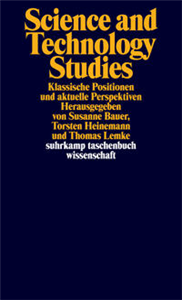
In den vergangenen Jahrzehnten ist mit den Science and Technology Studies (STS) ein Forschungsfeld entstanden, das eine grundlegende Neubestimmung des Verhältnisses von Wissenschaft, Technik und Gesellschaft vornimmt. Der vorliegende Band versammelt erstmals zentrale Texte der STS in deutscher Sprache, u. a. von Bruno Latour, David Bloor, Michel Callon, Donna Harraway oder Karen Barad, und bietet zudem Überblicksdarstellungen aller wichtigen Forschungsgebiete und Theoriepositionen. Entstanden ist so eine grundlegende Einführung in diese innovative Forschungsrichtung, die darüber hinaus auch eine Zwischenbilanz der Entwicklung der STS zieht und aktuelle Herausforderungen und Debatten auslotet.
Trusted Partner
Trusted Partner
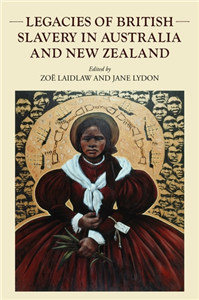
This book investigates the legacies of British slavery beyond Britain, focusing upon the colonisation of Australia and New Zealand, and explores why this history has been overlooked. After August 1833, when the British Parliament abolished slavery in the British Caribbean, Mauritius and the Cape, the former slave-owners were paid compensation for the loss of their 'property'. New research has begun to show that many beneficiaries had ties to other parts of the British Empire, including the settler colonies of Australia, New Zealand, Canada and South Africa. Through a range of case studies, contributors to this collection trace the movement of people, goods, capital, and practices from the Caribbean to the new Australasian settler colonies. Chapters consider a range of places, people and themes to reveal the varied ways that slavery continued to shape imperial relationships, economic networks, and racial labour regimes after 1833.



