
American Diabetes Association
The American Diabetes Association is the world’s largest publisher of titles on diabetes care and treatment, setting the standards of patient care based on the latest research.
View Rights Portal
The American Diabetes Association is the world’s largest publisher of titles on diabetes care and treatment, setting the standards of patient care based on the latest research.
View Rights Portal
Diametric Verlag is an independent publisher founded by Jutta A. Wilke providing high-quality specialized literature focused on women's issues like Women's Health, Gender Medicine and Feminism. All titles are published in German and available in print and digital editions.
View Rights Portal


This book examines the distinctive aspects that insiders and outsiders perceived as characteristic of Irish and Scottish ethnic identities in New Zealand. When, how, and why did Irish and Scots identify themselves and others in ethnic terms? What characteristics did the Irish and the Scots attribute to themselves and what traits did others assign to them? Did these traits change over time and if so how? Contemporary interest surrounding issues of ethnic identities is vibrant. In countries such as New Zealand, descendants of European settlers are seeking their ethnic origins, spurred on in part by factors such as an ongoing interest in indigenous genealogies, the burgeoning appeal of family history societies, and the booming financial benefits of marketing ethnicities abroad. This fascinating book will appeal to scholars and students of the history of empire and the construction of identity in settler communities, as well as those interested in the history of New Zealand.
 Trusted Partner

This book examines the ways in which ideas about children, childhood and Ireland changed together in Irish Protestant writing of the seventeenth and eighteenth centuries. It focuses on different varieties of the child found in the work of a range of Irish Protestant writers, theologians, philosophers, educationalists, politicians and parents from the early seventeenth century up to the outbreak of the 1798 Rebellion. The book is structured around a detailed examination of six 'versions' of the child: the evil child, the vulnerable/innocent child, the political child, the believing child, the enlightened child, and the freakish child. It traces these versions across a wide range of genres (fiction, sermons, political pamphlets, letters, educational treatises, histories, catechisms and children's bibles), showing how concepts of childhood related to debates about Irish nationality, politics and history across these two centuries.
Trusted Partner
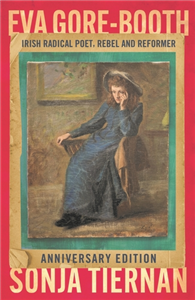
An acclaimed biography of poet, pacifist and political firebrand Eva Gore-Booth. The Irish poet and activist Eva Gore-Booth (1870-1926) led a life defiantly at odds with her aristocratic origins. Choosing to live and work among the poor of Manchester, she campaigned on behalf of barmaids, circus performers, flower sellers and pit-brow lasses, her partner, Esther Roper, at her side. Gore-Booth was tireless in her pursuit of justice. She was a militant pacifist during the First World War, a champion of Irish independence and a pioneering thinker on gender and sexuality. She was also a prolific author, publishing nineteen volumes of poetry and prose that reflect the full force of her radical convictions. Featuring a new preface that situates Gore-Booth's life and work in the context of our current political climate, this biography reclaims her place as a significant figure of Anglo-Irish letters and an unsung hero of LGBT+ history.
Trusted Partner
Through a series of innovative perspectives, this book examines how early modern Irish townspeople experienced the urban world through a range of family and associational ties. Migrants inducted through town citizenship and marriage bonded more closely as sisters or brothers of confraternities and guilds, consolidating parish membership. Civic religion saw the integration of religion with town politics and councils, and monastic charity of the friars' hospitals preceded the era of modern municipal welfare. In circumstances of the alienation of the long-settled Catholic townspeople from the state's religious and political Reformation in the seventeenth century, they drew sustenance from the continuity of institutions such as colleges, fraternities and hospitals and forms of coexistence with Protestant fellow-citizens.
Trusted Partner
This book examines the extent and nature of Irish social and cultural difference. It is a collection of twenty-three short essays written in a clear and accessible manner by human scientists who are international experts in their area. The topics covered include the nature of Irish nationalism and capitalism, the Irish political elite, the differences and similarities of the Irish family, the upsurge in immigration, Northern Ireland, the Irish diaspora, the Irish language, sport, music and many other topics. The book will be bought by those who have an academic and personal interest in Irish Studies. It will be attractive to those who are not familiar with the theories and methods of the human sciences and how they can shine a light on the transformations that have taken place in Ireland. Tom Inglis, the editor of the collection, is a sociologist who has written extensively on Irish culture and society.
Trusted Partner
This book examines the extent and nature of Irish social and cultural difference. It is a collection of twenty-three short essays written in a clear and accessible manner by human scientists who are international experts in their area. The essays cover topics covered include the nature of Irish nationalism and capitalism, the Irish political elite, the differences and similarities of the Irish family, the upsurge in immigration, Northern Ireland, the Irish diaspora, the Irish language, sport, music and many other topics. The book will be bought by those who have an academic and personal interest in Irish Studies. It will be attractive to those who are not familiar with the theories and methods of the human sciences and how they can shine a light on the transformations that have taken place in Ireland. Tom Inglis, the editor of the collection, is a sociologist who has written extensively on Irish culture and society. ;
Trusted Partner
 Trusted Partner

Punjab, 'the pride of British India', attracted the cream of the Indian Civil Service, many of the most influential of whom were Irish. Some of these men, along with Irish viceroys, were inspired by their Irish backgrounds to ensure security of tenure for the Punjabi peasant, besides developing vast irrigation schemes which resulted in the province becoming India's most affluent. But similar inspiration contributed to the severity of measures taken against Indian nationalist dissent, culminating in the Amritsar massacre which so catastrophically transformed politics on the sub-continent. Setting the experiences of Irish public servants in Punjab in the context of the Irish diaspora and of linked agrarian problems in Ireland and India, this book descrides the beneficial effects the Irish had on the prosperity of India's most volatile province. Alongside the baleful contribution of some towards a growing Indian antipathy towards British rule. Links are established between policies pursued by Irishmen of the Victorian era and current happenings on the Pakistan-Afghan border and in Punjab.
Trusted Partner
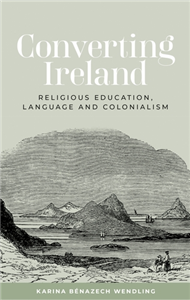
Karina Bénazech Wendling offers a re-assessment of 'souperism'-the long-debated claim that food was used to convert Irish Catholics to Protestantism during the Great Famine. Focusing on the Irish Society for Promoting the Education of the Native Irish through their Own Language, the first group labeled 'soupers' in 1841, she uncovers a more complex picture. Rather than a mere tool of British cultural imperialism, the Society had a deep engagement with the Irish language and Bible translation, while also encouraging religious conversions in the West. The book explores the Society's role in Ireland's religious and political landscape, the rise of Catholic counter-missions, and nationalist resistance. Offering fresh insights into Ireland's religious history and global missionary movements, this book is essential for scholars of Irish studies, interdenominational relations, and education in Ireland.
Trusted Partner
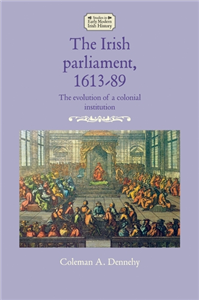
The Irish parliament was both the scene of frequent political battles and an important administrative and legal element of the state machinery of early modern Ireland. This institutional study looks at how parliament dispatched its business on a day-to-day basis. It takes in major areas of responsibility such as creating law, delivering justice, conversing with the executive and administering parliamentary privilege. Its ultimate aim is to present the Irish parliament as one of many such representative assemblies emerging from the feudal state and into the modern world, with a changing set of responsibilities that would inevitably transform the institution and how it saw both itself and the other political assemblies of the day.
Trusted Partner
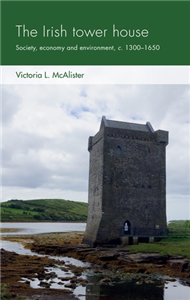
The Irish tower house examines the social role of castles in late-medieval and early modern Ireland. It uses a multidisciplinary methodology to uncover the lived experience of this historic culture, demonstrating the interconnectedness of society, economics and the environment. Of particular interest is the revelation of how concerned pre-modern people were with participation in the economy and the exploitation of the natural environment for economic gain. Material culture can shed light on how individuals shaped spaces around themselves, and tower houses, thanks to their pervasiveness in medieval and modern landscapes, represent a unique resource. Castles are the definitive building of the European Middle Ages, meaning that this book will be of great interest to scholars of both history and archaeology.
Trusted Partner
 Trusted Partner
This innovative study engages critically with existing conceptualisations of diaspora, arguing that if diaspora is to have analytical purchase, it should illuminate a specific angle of migration or migrancy. To reveal the much-needed transformative potential of the concept, the book looks specifically at how diasporas undertake translation and decolonisation. It offers various conceptual tools for investigating diaspora, with a specific focus on diasporas in the Global North and a detailed empirical study of the Kurdish diaspora in Europe. The book also considers the backlash diasporas of colour have faced in the Global North.
Trusted Partner
 Trusted Partner
Trusted Partner
Trusted Partner
 Trusted Partner
Trusted Partner
Trusted Partner
 Trusted Partner
This volume, which explores aspects of the experience of Ireland and Irish people within the British Empire, addresses a central concern of modern Irish scholarship. Much academic writing about Ireland, its history and culture is dominated by the vocabulary of imperialism. Engels described Ireland as England's first colony. Contemporary observers frequently characterise it as having a post-colonial society. Ireland, on the other hand, was also part of the metropolitan core of the Empire and supplied many of its soldiers, settlers and administrators. The paradox that Ireland was both 'imperial' and 'colonial' lies at the heart of this book which includes studies of Irish service in the Empire as well as the impact of imperial concerns in Ireland. Concentrating on the period since the mid-nineteenth century, the scope of the volume is impressively broad. Popular culture, sport and film are investigated, as well as business history and the military and political 'sinews of Empire'. The book will be of particular value to institutions teaching Irish and British history to degree level and the growing number of Irish studies courses being offered in Great Britain and North America.


