Your Search Results

      • GAPSK Language Promotion Council Limited

        GAPSK and YLPSK are the standardized test of Chinese language for children from 3 to 15. From the world- renowned Peking University, GAPSK and YLPSK are certified and approved by the Chinese Ministry of Education as language proficiency measuring tool for children . GAPSK, YLPSK could be conducted on site or completely online. Come join over 100,000 students who taken the tests, contact us at  info@gapsk.org.  Find out more at www.ylpsk.org

        View Rights Portal
      • Peter Lang Group

        Peter Lang Group specializes in the Humanities and Social Sciences, covering the complete publication spectrum from monographs to student coursebooks.

        View Rights Portal
      • Trusted Partner
        Humanities & Social Sciences
        February 2017

        Scottishness and Irishness in New Zealand since 1840

        by Angela McCarthy, Andrew Thompson, John M. MacKenzie

        This book examines the distinctive aspects that insiders and outsiders perceived as characteristic of Irish and Scottish ethnic identities in New Zealand. When, how, and why did Irish and Scots identify themselves and others in ethnic terms? What characteristics did the Irish and the Scots attribute to themselves and what traits did others assign to them? Did these traits change over time and if so how? Contemporary interest surrounding issues of ethnic identities is vibrant. In countries such as New Zealand, descendants of European settlers are seeking their ethnic origins, spurred on in part by factors such as an ongoing interest in indigenous genealogies, the burgeoning appeal of family history societies, and the booming financial benefits of marketing ethnicities abroad. This fascinating book will appeal to scholars and students of the history of empire and the construction of identity in settler communities, as well as those interested in the history of New Zealand.

      • Trusted Partner
        Humanities & Social Sciences
        May 2026

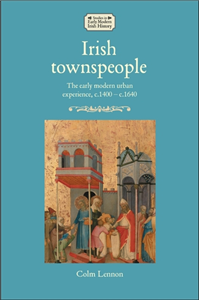
        Irish townspeople

        The early modern urban experience, c.1400–c.1640

        by Colm Lennon

        Through a series of innovative perspectives, this book examines how early modern Irish townspeople experienced the urban world through a range of family and associational ties. Migrants inducted through town citizenship and marriage bonded more closely as sisters or brothers of confraternities and guilds, consolidating parish membership. Civic religion saw the integration of religion with town politics and councils, and monastic charity of the friars' hospitals preceded the era of modern municipal welfare. In circumstances of the alienation of the long-settled Catholic townspeople from the state's religious and political Reformation in the seventeenth century, they drew sustenance from the continuity of institutions such as colleges, fraternities and hospitals and forms of coexistence with Protestant fellow-citizens.

      • Trusted Partner
        Humanities & Social Sciences
        January 2017

        The West must wait

        County Galway and the Irish Free State, 1922–32

        by Una Newell

        The West must wait presents a new perspective on the development of the Irish Free State. It extends the regional historical debate beyond the Irish revolution and raises a series of challenging questions about post-civil war society in Ireland. Through a detailed examination of key local themes - land, poverty, politics, emigration, the status of the Irish language, the influence of radical republicans and the authority of the Catholic Church - it offers a probing analysis of the socio-political realities of life in the new state. This book opens up a new dimension by providing a rural contrast to the Dublin-centred views of Irish politics. Significantly, it reveals the level of deprivation in local Free State society with which the government had to confront in the west. Rigorously researched, it explores the disconnect between the perceptions of what independence would deliver and what was achieved by the incumbent Cumann na nGaedheal administration.

      • Trusted Partner
        Humanities & Social Sciences
        April 2026

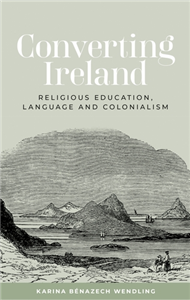
        Converting Ireland

        Religious education, language and colonialism

        by Karina Bénazech Wendling

        Karina Bénazech Wendling offers a re-assessment of 'souperism'-the long-debated claim that food was used to convert Irish Catholics to Protestantism during the Great Famine. Focusing on the Irish Society for Promoting the Education of the Native Irish through their Own Language, the first group labeled 'soupers' in 1841, she uncovers a more complex picture. Rather than a mere tool of British cultural imperialism, the Society had a deep engagement with the Irish language and Bible translation, while also encouraging religious conversions in the West. The book explores the Society's role in Ireland's religious and political landscape, the rise of Catholic counter-missions, and nationalist resistance. Offering fresh insights into Ireland's religious history and global missionary movements, this book is essential for scholars of Irish studies, interdenominational relations, and education in Ireland.

      • Trusted Partner
        Humanities & Social Sciences
        October 2021

        Ireland and the European Union

        Economic, political and social crises

        by Michael Holmes, Kathryn Simpson, Dimitris Papadimitriou, Kathryn Simpson, Paul Tobin

        This book examines how Ireland's relationship with the EU was affected by a succession of crises in both the Republic of Ireland and Northern Ireland. The financial crisis, the Brexit crisis and the migration crisis were not of equal significance on the island of Ireland. The financial crisis was a huge issue for the Republic but not Northern Ireland, Brexit had a major impact in both polities, the migration and populism issues were less controversial, while foreign policy challenges had a minimal impact. The book provides a summary of the main features of each of the crises to be considered, from both the EU and the Irish perspective. Ireland and the European Union is the first volume of its kind to provide a comprehensive analysis on British-Irish relations in the context of Brexit. It assesses the Withdrawal Agreement and Protocol on Ireland/Northern Ireland, the devolution settlement and the 1998 Agreement, as well as the European dimension to Northern Ireland's peace process. The contributors explore a number of policy areas that are central to the understanding of each of the crises and the impact of each for Ireland. Chapters examine issues such as security, migration and taxation as well as protest politics, political parties, the media, public opinion and the economic impact of each of these crises on Ireland's relationship with the EU.

      • Trusted Partner
        Humanities & Social Sciences
        January 2025

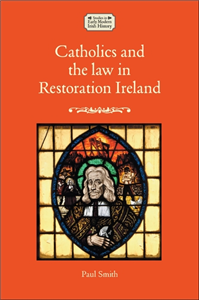
        Catholics and the law in Restoration Ireland

        by Paul Smith

        In 1660 Charles II was restored to the thrones of England, Scotland and Ireland, but his hold on power was precarious. In particular, Ireland was fundamentally unstable - Catholics formed the majority of the population in a country where Protestantism was the established religion, a state of affairs unique in Europe. It was through the law that the restored Stuart monarchy governed its subjects and its colonial dependencies, and this book examines how Catholics engaged with and experienced English common law primarily through the eyes of Catholic clerics and Gaelic poets. It also examines how Catholics engaged with the Courts and the particular challenges they faced as lawyers. The book draws on an extensive body of primary source materials, including Irish-language poetry and little-used archival material relating to elite Catholic families.

      • Trusted Partner
        Humanities & Social Sciences
        February 2017

        Servants of the empire

        The Irish in Punjab 1881–1921

        by Patrick O'Leary, Andrew Thompson, John M. MacKenzie

        Punjab, 'the pride of British India', attracted the cream of the Indian Civil Service, many of the most influential of whom were Irish. Some of these men, along with Irish viceroys, were inspired by their Irish backgrounds to ensure security of tenure for the Punjabi peasant, besides developing vast irrigation schemes which resulted in the province becoming India's most affluent. But similar inspiration contributed to the severity of measures taken against Indian nationalist dissent, culminating in the Amritsar massacre which so catastrophically transformed politics on the sub-continent. Setting the experiences of Irish public servants in Punjab in the context of the Irish diaspora and of linked agrarian problems in Ireland and India, this book descrides the beneficial effects the Irish had on the prosperity of India's most volatile province. Alongside the baleful contribution of some towards a growing Indian antipathy towards British rule. Links are established between policies pursued by Irishmen of the Victorian era and current happenings on the Pakistan-Afghan border and in Punjab.

      • Trusted Partner
        Humanities & Social Sciences
        August 2022

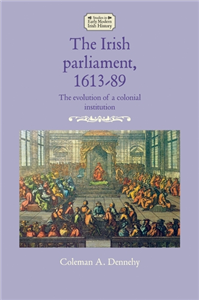
        The Irish parliament, 1613–89

        The evolution of a colonial institution

        by Coleman A. Dennehy

        The Irish parliament was both the scene of frequent political battles and an important administrative and legal element of the state machinery of early modern Ireland. This institutional study looks at how parliament dispatched its business on a day-to-day basis. It takes in major areas of responsibility such as creating law, delivering justice, conversing with the executive and administering parliamentary privilege. Its ultimate aim is to present the Irish parliament as one of many such representative assemblies emerging from the feudal state and into the modern world, with a changing set of responsibilities that would inevitably transform the institution and how it saw both itself and the other political assemblies of the day.

      • Trusted Partner
        Literature & Literary Studies
        March 2009

        Irish Literature Since 1990

        by Michael Parker, Scott Brewster

      • Trusted Partner
        Humanities & Social Sciences
        April 2021

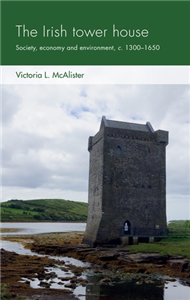
        The Irish tower house

        Society, economy and environment, c. 1300–1650

        by Victoria L. McAlister

        The Irish tower house examines the social role of castles in late-medieval and early modern Ireland. It uses a multidisciplinary methodology to uncover the lived experience of this historic culture, demonstrating the interconnectedness of society, economics and the environment. Of particular interest is the revelation of how concerned pre-modern people were with participation in the economy and the exploitation of the natural environment for economic gain. Material culture can shed light on how individuals shaped spaces around themselves, and tower houses, thanks to their pervasiveness in medieval and modern landscapes, represent a unique resource. Castles are the definitive building of the European Middle Ages, meaning that this book will be of great interest to scholars of both history and archaeology.

      • Trusted Partner
        Cultural studies
        November 2014

        Are the Irish different?

        by Edited by Tom Inglis

        This book examines the extent and nature of Irish social and cultural difference. It is a collection of twenty-three short essays written in a clear and accessible manner by human scientists who are international experts in their area. The topics covered include the nature of Irish nationalism and capitalism, the Irish political elite, the differences and similarities of the Irish family, the upsurge in immigration, Northern Ireland, the Irish diaspora, the Irish language, sport, music and many other topics. The book will be bought by those who have an academic and personal interest in Irish Studies. It will be attractive to those who are not familiar with the theories and methods of the human sciences and how they can shine a light on the transformations that have taken place in Ireland. Tom Inglis, the editor of the collection, is a sociologist who has written extensively on Irish culture and society.

      • Trusted Partner
        Humanities & Social Sciences
        November 2014

        Are the Irish different?

        by Tom Inglis

        This book examines the extent and nature of Irish social and cultural difference. It is a collection of twenty-three short essays written in a clear and accessible manner by human scientists who are international experts in their area. The essays cover topics covered include the nature of Irish nationalism and capitalism, the Irish political elite, the differences and similarities of the Irish family, the upsurge in immigration, Northern Ireland, the Irish diaspora, the Irish language, sport, music and many other topics. The book will be bought by those who have an academic and personal interest in Irish Studies. It will be attractive to those who are not familiar with the theories and methods of the human sciences and how they can shine a light on the transformations that have taken place in Ireland. Tom Inglis, the editor of the collection, is a sociologist who has written extensively on Irish culture and society. ;

      • Trusted Partner
        Humanities & Social Sciences
        April 2025

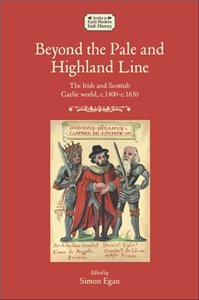
        Beyond the Pale and Highland Line

        The Irish and Scottish Gaelic world

        by Simon Egan

        This book offers important new insights into the history and culture of the Gaelic-speaking world from the mid-fifteenth century through to the reign of James VI and I. Throughout this period, the reach of the English and Scottish crowns within these western regions was limited. The initiative lay with local communities and royal power was contingent upon negotiating with well-established and largely autonomous aristocratic lineages. Moreover, events within this western world could exert a powerful, often unpredictable, influence upon the affairs of the wider archipelago. Using a series of case studies, this collection examines the evolving relationship between Ireland and Scotland in rich detail. It demonstrates how this world interacted with the encroaching English and Scottish states and underlines the importance of paying closer attention to this neglected area of Irish and British history.

      • Trusted Partner
        Humanities & Social Sciences
        March 2014

        The humanities and the Irish university

        Anomalies and opportunities

        by Michael O'Sullivan

        This is the first book-length study of the humanities and the Irish university. Ireland was a deeply religious country throughout the twentieth century but the colleges of its National University never established a religion or theology department. The official first language of Ireland is Irish but the vast majority of teaching in the arts and humanities is in English. These are two of the anomalies that long constrained humanities education in Ireland. This book charts a history of responses to humanities education in the Irish context. Reading the work of John Henry Newman, Padraig Pearse, Sean O Tuama, Denis Donoghue, Declan Kiberd, Richard Kearney and others, it looks for an Irish humanities ethos. It compares humanities models in the US, France and Asia with those in Ireland in light of work by Immanuel Kant, Pierre Bourdieu and Jacques Derrida. It should appeal to those interested in Irish education and history. ;

      • Trusted Partner
      • Trusted Partner
        Humanities & Social Sciences
        August 1998

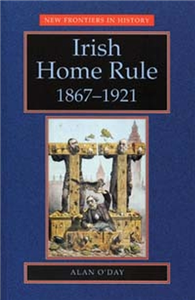
        Irish Home Rule

        by Alan O'Day, Mark Greengrass

        Irish Home Rule considers the pre-eminent issue in British politics during the late nineteenth and early twentieth-centuries. It is the first account to explain the various self-government plans, to place these in context and examine the motives for putting the schemes forward. The book distinguishes between moral and material home rulers, making the point that the first appealed especially to outsiders, some Protestants and the intelligentsia, who saw in self-government a means to reconcile Ireland's antagonistic traditions. In contrast, material home rulers viewed a Dublin Parliament as a forum of Catholic interests. This account appraises the home rule movement from a fresh angle, distinguishing it from the usual division drawn between physical force and constitutional nationalists It maintains that an ideological continuity runs from Young Ireland, the Fenians, the early home rulers including Isaac Butt and Charles Stewart Parnell, to the Gaelic Revivalists to the Men of 1916. These nationalists are distinguishable from material home rulers not on the basis of methods or strategy but by a fundamental ideological cleavage. ;

      • Trusted Partner
        Humanities & Social Sciences
        January 2023

        Democracy and dissent in the Irish Free State

        by Jason Knirck

      • Trusted Partner
        Business, Economics & Law
        July 2016

        Drafting the Irish Free State Constitution

        by Laura Cahillane

      Subscribe to our

      newsletter