
Iron Bridge Publishing
Iron Bridge Publishing is a new independent & hybrid publisher with a mission to spread positive and constructive ideas.
View Rights Portal
Iron Bridge Publishing is a new independent & hybrid publisher with a mission to spread positive and constructive ideas.
View Rights Portal

 Trusted Partner


Jojo and his best friend Charly’s class often do silly things, and then something goes wrong. But nobody would have thought that things could also go wrong in someone’s head. However, everything suddenly changes when Jojo falls over in phys ed and has to go to the hospital. Jojo seems to be afraid of school and then the others make fun of him. Jojo explains to Charly that he has an illness called epilepsy. This means that lots of nerve cells in the brain are silly in the same way all at once – so that, for a short time, some things don’t work for him like they should. Their classmates must be able to understand that, Charly thinks. And then Charly and Jojo have a brilliant idea. This story aims to help children affected by epilepsy to understand their condition better, and should help accompanying adults to explain the different forms of epilepsy in a way that is appropriate for children. For:• children of elementary school age(between 6 and 12 years) who sufferfrom epilepsy• parents and relatives• therapists
Trusted Partner

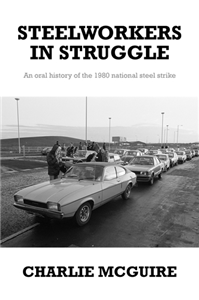
Using oral histories gathered from trade unionists, this book explores the national steelworkers strike of 1980 and asserts its significance as a key turning point in modern British history. The strike was nominally a response to a 2% pay offer made by British Steel Corporation (BSC), at a time when inflation was 17%, but was generated by the widespread works closures that characterised the British steel industry at this time. The outcome of the strike was a much higher pay increase but no change to the deindustrialisation strategy of BSC and the government. The book explores the strike from the perspective of those who fought it and reveals the short and longer-term consequences it had on the industry, the unions and the workers themselves.
Trusted Partner

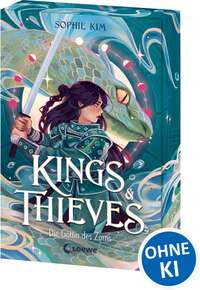
ZWISCHEN RACHE UND VERGEBUNG Seit die Prophezeiung Linas Körper eingenommen und sich selbst zur Göttin des Zorns ernannt hat, führt sie Krieg gegen die Drei Königreiche. An ihrer Seite: die Furcht einflößenden Imugi. Doch König Rui, seine Dokkaebi und selbst die Götter setzen alles daran, sie aufzuhalten. Derweil ist die echte Lina gefangen in ihrem eigenen Kopf. Nur Rui kann sie durch den Faden des Schicksals erreichen. Aber können sie eine Prophezeiung überhaupt stoppen? Und wenn ja, zu welchem Preis? Im fulminanten Abschluss von Sophie Kims Romantasy-Trilogie dreht sich alles um Schicksal, Liebe, Vergebung und die Folgen von Rache und Machtgier. Aus mehreren Perspektiven erleben wir das Geschehen und tauchen tief ein in die koreanische Sagenwelt.
Trusted Partner
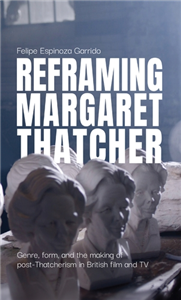
Against the backdrop of Britain's historically anti-Thatcherite films of the 1980s and 1990s, Reframing Margaret Thatcher outlines a decisive shift in the collective imagination of Thatcher. Drawing on genre, trauma, and queer studies, it demonstrates how post-Thatcherite films reflect upon their own entanglement in the polarization of the Thatcher years but also rewrite the clichéd Iron Lady. Chapters on The Iron Lady, This is England, Doomsday, 9 Dead Gay Guys, and the Sherlock TV series investigate various Thatcher imaginations, ranging from Thatcher as a lesbian mob boss, as prime minister in apocalyptic England, to Thatcher as an empty bust. This innovative study shows how the apparent depoliticization of British film makes visible new relations between genre, cinematic form, and imaginations of the past and offers fresh perspectives that both critique and reinterpret Thatcher's enduring impact.
Trusted Partner
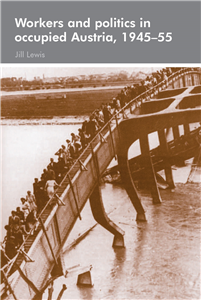
In March 1946 Winston Churchill warned the world about the 'Iron Curtain' that had descended across Europe and behind which now lay, he said, the eight capitals of the ancient states of central and Eastern Europe. In fact, one of these eight, Vienna, escaped absorption into the Soviet bloc. Between 1945 and 1955, Austria and its capital were occupied by the Four (increasingly mutually antagonistic) Allied Powers. During this decade of confusion, insecurity, suspicion and fear, and confronted by poverty and the threat of famine, Austria's political and economic elites joined forces to promote a culture of political unity and harmony from which eventually emerged the Austrian model of corporatism, commonly referred to as the Social Partnership. This book sets the social and economic difficulties that Austria encountered in this crucial decade in their international context and examines how they were contained. The author also discusses the long-term implications of the Austrian culture of consensus, not only for the way in which the country dealt with its recent past, but also for present-day political developments. A remarkable study that will be essential reading for students and scholars of twentieth-century European history. ;
Trusted Partner
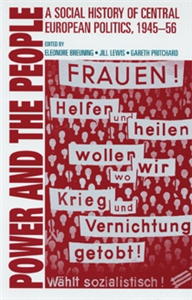
This book covers various aspects of the social history of politics on both sides of the Iron Curtain in the period 1945 to 1956. The contributors come from a range of countries (Austria, Germany, Hungary, Slovakia and the United Kingdom) and comprise a mixture of established historians and younger scholars engaged in pioneering research. The individual chapters are organised into four sections dealing with workers, ethnic and linguistic minorities, youth, and women. In order to enhance the comparative character of the volume, the four chapters contained in each section consider the position of these social groups in, respectively, West Germany, East Germany, Austria, and either Czechoslovakia or Hungary. Major themes include the absence of popular revolutions in the aftermath of World War Two, the re-imposition of social control by post-war elites, the attempt to restore pre-war gender relations, and the failure of Communist parties to win popular support. The chosen time-frame saw most of the decisive developments which set the pattern for the remaining Cold War period and is therefore of key importance for any student of this topic. ;
Trusted Partner
Trusted Partner
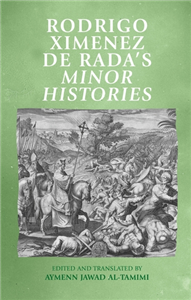
This work provides the first complete English translation of works by Toledan archbishop Rodrigo Ximénez de Rada (1170-1247 CE), whose 'Minor Histories' are sequels to his larger 'Gothic History' and thus round off his grand history of Spain project that he began at the request of King Ferdinand III. The 'Minor Histories' include Rodrigo's 'History of the Arabs' that can be considered the first surviving Western monograph focused on Arab and Islamic history and thus occupies a unique position in the medieval Latin corpus of writings. In addition to the translation, this book provides a thorough and accessible introduction to the life and works of Rodrigo, making sense of the context in which he wrote and his historical method. The translations are thoroughly annotated including cross-references to other Latin and Arabic sources for comparison.
Trusted Partner
Trusted Partner
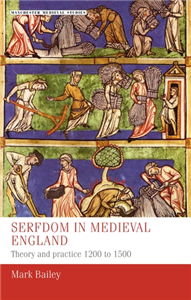
Serfdom was a coercive relationship between a landowner and peasant, which was widespread across medieval and early modern Europe. Itfeatures prominently in major historical debates, such as the origins of capitalism and the divergent pathways of western and eastern Europe to modernity. Scholars have paid particular attention to English serfdom, which is usually portrayed as highly oppressive and a major cause of the Peasants' Revolt in 1381. This comprehensive survey draws on a vast scholarship and new research to show how, in reality, English serfdom was weak, casting new light on the nature of its society and economy when the Black Death struck in 1348-9. The pandemicnow assumesa central role in the rapid decline of serfdom, as illustrated in a case study of the estate of one of England's harshest landowners, St Albans abbey.
Trusted Partner
Trusted Partner

This book is a study of the ambitions, activities and achievements of Methodist missionaries in northern Burma from 1887-1966 and the expulsion of the last missionaries by Ne Win. The story is told through painstaking original research in archives which contain thousands of hitherto unpublished documents and eyewitness accounts meticulously recorded by the Methodist missionaries. This accessible study constitutes a significant contribution to a very little-known area of missionary history. Leigh pulls together the themes of conflict, politics and proselytisation in to a fascinating study of great breadth. The historical nuances of the relationship between religion and governance in Burma are traced in an accessible style. This book will appeal to those teaching or studying colonial and postcolonial history, Burmese politics, and the history of missionary work.
Trusted Partner

The first book in English to deal exclusively with Duras' cinema, including such films as India Song, Le Camion, and Nathalie Granger. Provides a lucid and stimulating introduction to her films, which is accessible to a wide readerhip, both specialist and non-specialist.. Locates the films in their autobiographical as well as social and historical context, making the book broadly interesting to students and teachers in all areas of French Studies.. The book's empahasis on gender issues widens it's appeal to include those working in Women's Studies, Gender Studies and Gay and Lesbian Studies.
Trusted Partner
Trusted Partner
 Trusted Partner
 Trusted Partner
A compelling biography of one of the most celebrated novels in the English language. The fourth and best-known of Virginia Woolf's novels, Mrs Dalloway is a modernist masterpiece that has remained popular since its publication in 1925. Its dual narratives follow a day in the life of wealthy housewife Clarissa Dalloway and shell-shocked war veteran Septimus Warren Smith, capturing their inner worlds with a vividness that has rarely been equalled. Mrs Dalloway: Biography of a novel offers new readers a lively introduction to this enduring classic, while providing Woolf lovers with a wealth of information about the novel's writing, publication and reception. It follows Woolf's process from the first stirrings in her diary through her struggles to create what was quickly recognised as a major advance in prose fiction. It then traces the novel's remarkable legacy to the present day. Woolf wrote in her diary that she wanted her novel 'to give life & death, sanity & insanity. to criticise the social system, & to show it at work, at its most intense.' Mrs Dalloway: Biography of a novel reveals how she achieved this ambition, creating a book that will be read by generations to come.
Trusted Partner

Do dogs belong with humans? Scientific accounts of dogs' 'species story,' in which contemporary dog-human relations are naturalised with reference to dogs' evolutionary becoming, suggest that they do. Dog politics dissects this story. This book offers a rich empirical analysis and critique of the development and consolidation of dogs' species story in science, asking what evidence exists to support it, and what practical consequences, for dogs, follow from it. It explores how this story is woven into broader scientific shifts in understandings of species, animals, and animal behaviours, and how such shifts were informed by and informed transformative political events, including slavery and colonialism, the Second World War and its aftermath, and the emergence of anti-racist movements in the twentieth and twenty-first centuries. The book pays particular attention to how species-thinking bears on 'race,' racism, and individuals.



