Your Search Results

      • Island Press

        Island Press began with a simple idea:knowledge is power—the power to imagine a better future and find ways for getting us there. Founded in 1984, Island Press’ mission is to provide the best ideas and information to those seeking to understand and protect the environment and create solutions to its complex problems. We elevate voices of change, shine a spotlight on crucial issues, and focus attention on sustainable solutions. Our network of authors includes E.O. Wilson, Paul Ehrlich, Sylvia Earle, Gretchen Daily, Jan Gehl, Daniel Pauly, and many others. By working closely with experts like these, Island Press has developed a comprehensive and growing body of knowledge—vital resources for all those working to protect the environment and create healthy communities.

        View Rights Portal
      • Trusted Partner
        June 2025

        Proxy war in Afghanistan

        The politics of state-wrecking

        by Abbas Farasoo

        This book provides a compelling analysis of proxy warfare and its far-reaching implications for statehood, focusing on the conflict in Afghanistan. Introducing the innovative concept of "state-wrecking," it bridges theory and practice to unravel how external support for insurgent actors fuels violence, undermines territorial control and sovereignty, intensifies violence, and dismantles political legitimacy. The work shifts the discourse on proxy wars from the strategies of global powers to the procedural and structural impacts within target states. Grounded in rigorous empirical research, including interviews, archival data, and conflict analysis, the book critically examines the Pakistan-Taliban nexus and the limitations of US-led interventions. By blending a robust theoretical framework with in-depth case studies, it reveals how proxy dynamics shape conflicts, disrupt governance, and challenge international security. This is an essential resource for those seeking to understand the entanglements of modern warfare and the fragility of states under external influence.

      • Trusted Partner
        Humanities & Social Sciences
        December 2024

        Iran, Saudi Arabia and the United States

        Power, identity and strategy in the Persian Gulf triangle

        by Luíza Cerioli

        This book offers a nuanced snapshot of the complex geopolitical dynamics in the Persian Gulf, underlining the interaction between Iran, Saudi Arabia, and the US. Examining their interwoven relations since the 1970s, Luíza Cerioli's framework reveals how changes in US-Saudi ties have ripple effects on Iran-US and Iran-Saudi relations and vice versa. Using a historical lens, she explores how enduring US-Saudi connections hinge on order expectations, delves into the cognitive factors shaping US-Iran enmity and traces the source of oscillation in the Saudi-Iran ties. Employing Neoclassical Realism, the book investigates status-seeking, national identities and leadership preferences, offering a deeper understanding of the region's multipolar system. By combining International Relations and Middle East Studies, Cerioli's work contributes to both fields, unravelling the intricate interplay between international structures, regional nuances and agency in shaping Persian Gulf geopolitics.

      • Trusted Partner
        Humanities & Social Sciences
        July 2026

        The promise of violence

        Collective memory and the making of revolutionaries in Iran

        by Younes Saramifar

        Revolutionaries in Iran choose to identify memories of the Iran-Iraq War as their 'collective' memory to mark the war era as the temporal reference in history - the time of times, or sometimes even a time beyond time. Can a sole event and its violence truly become - for some - the all-encompassing, constituting element of history and memory? This book pursues this question and follows revolutionaries in the maze of 'collective' memory to offer a temporal account of the breakdown of happenings - as well as the mending of happenings through the force of remembrance.

      • Trusted Partner
      • Trusted Partner
        Humanities & Social Sciences
        June 2021

        Understanding Political Islam

        by François Burgat

      • Trusted Partner
        Humanities & Social Sciences
        March 2020

        History, empire, and Islam

        by Vicky Randall, Alan Lester

      • Trusted Partner
        October 2015

        Islam - Zivilisation oder Barbarei?

        by Alexander Flores

        Alles, was Sie über den Islam wissen sollten Die Debatte um den Islam ist immer eine polemische: Salafismus, Scharia, Frauenrechte, Boko Haram, IS – zu allem haben wir eine Meinung. Aber wissen wir denn wirklich, was sich hinter diesen Phänomenen verbirgt? Alexander Flores kann Abhilfe schaffen, denn er widmet sich den Fakten. Flores beschreibt einen Modernismus, der Anfang des 20. Jahrhunderts dem Islam eine weltanschauliche Öffnung ermöglichen sollte; eine Scharia, die über lange Zeit hinweg nicht drakonisches »Gottesrecht« war, sondern Orientierung für eine islamische Lebensführung. Und er erklärt, wie der Koran mit seinen verschiedenen Lesarten instrumentalisiert werden konnte und damit Radikalisierungen ermöglichte, die wir heute mehr denn je zu spüren bekommen.

      • Trusted Partner
        Humanities & Social Sciences
        October 2022

        Saudi Arabia and Iran

        by Simon Mabon, Edward Wastnidge

      • Trusted Partner
        April 2001

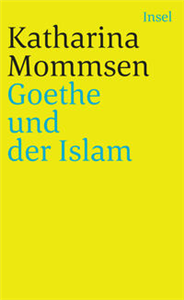
        Goethe und der Islam

        by Katharina Mommsen, Peter Anton Arnim, Peter Anton Arnim

        Katharina Mommsen hat sich intensiv mit dem Einfluß des Islam auf Goethes Leben und Werk auseinandergesetzt und ist dabei zu Ergebnissen gelangt, die dem Leser neue Perspektiven eröffnen.

      • Trusted Partner
        March 1988

        Religiöse Entwicklungen im Islam

        Beobachtet in Marokko und Indonesien

        by Clifford Geertz, Brigitte Luchesi, Bassam Tibi

        Clifford Geertz formuliert zunächst einen allgemeinen Rahmen für die vergleichende Erforschung von Religion und wendet sein anthropologische, soziologische und historische Perspektiven integrierendes Konzept bei der Untersuchung der Entwicklung vermeintlich ein und desselben Glaubenssystems - des Islam - in zwei ziemlich gegensätzlichen Zivilisationen - Indonesien und Marokko - an. Eine Sozialgeschichte der Vorstellungskraft bietet Clifford Geertz für Marokko und Indonesien. Darauf aufbauend formuliert er im letzten Kapitel einige allgemeinere Bemerkungen zur gesellschaftlichen Rolle der Religion.

      • Trusted Partner
        October 2007

        Islam in Europa

        Eine internationale Debatte

        by Thierry Chervel, Anja Seeliger, Thierry Chervel

        Wen soll der Westen unterstützen: gemäßigte Islamisten wie Tariq Ramadan oder islamische Dissidenten wie Ayaan Hirsi Ali? Der französische Philosoph Pascal Bruckner sorgte Anfang 2007 für Aufsehen, als er in einer polemischen Streitschrift den vermeintlichen liberalen Konsens im Umgang mit dem Islam attackierte. Beweglicher und schneller, als das in den traditionellen Medien möglich gewesen wäre, entwickelte sich auf den Seiten der Internetplattformen perlentaucher.de und signandsight.com eine kontroverse Debatte, die den aktuellen Stand der Diskussion um Multikulturalismus in Europa markiert – und darüber hinausweist.

      • Trusted Partner
      • Trusted Partner
        November 2012

        Islam und Moderne. Die neuen Denker

        by Rachid Benzine, Hadiya Gurtmann

        Intellektualität und Frömmigkeit zu vereinbaren, das ist das Ziel einer ganzen Generation muslimischer Denker. Unabdingbare Voraussetzung dafür ist die Entwicklung einer neuen Hermeneutik der Koraninterpretation, zu der muslimische Gelehrte aus zahlreichen Ländern ihren Beitrag leisten und dafür mitunter Kopf und Kragen riskieren. Ihre Namen sind hierzulande noch kaum bekannt, da die wenigsten ihrer Schriften ins Deutsche übersetzt worden sind. Dennoch findet ihr Beitrag zur Versöhnung des Islams mit der Moderne auch in Deutschland hohe Anerkennung: So war zum Beispiel der 2010 verstorbene gebürtige Algerier Mohammed Arkoun, Professor an der Sorbonne in Paris, Fellow am Wissenschaftskolleg zu Berlin, desgleichen der ebenfalls 2010 verstorbene Ägypter Nasr Hamid Abu Said. Andere Vertreter, die Benzine in seinem Buch darstellt, sind Fazlur Rahman, Farid Esack (Südafrika), Abdul Karim Sorush (Iran) und Abdelmajid Charfi (Tunesien). Neben dem leidenschaftlichen Engagement für die Sache, der sich diese neuen Denker verschrieben haben und so zu Hoffnungsträgern für viele Muslime geworden sind, beeindruckt die persönliche Opferbereitschaft, die manchem von ihnen abverlangt wurde. Abu Saids Ehe etwa wurde zwangsgeschieden, er erhielt Morddrohungen und mußte ins niederländische Exil flüchten.

      • Trusted Partner
        Business, Economics & Law
        January 2026

        Capitalism in contemporary Iran

        by Kayhan Valadbaygi

      • Trusted Partner
        Humanities & Social Sciences
        June 2021

        Britain’s rural Muslims

        by Sarah Hackett

      • Trusted Partner
      • Trusted Partner
      • Trusted Partner

      Subscribe to our

      newsletter