
Your Search Results


-
Promoted Content

 March 2026
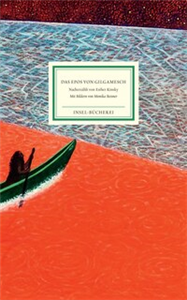
Das Epos von Gilgamesch
Nacherzählt und mit einem Nachwort von Esther Kinsky
by Monika Beisner, Esther Kinsky, Esther Kinsky
Zwischen den Flüssen Euphrat und Tigris in Mesopotamien, dem heutigen Irak, entstand vor rund 3000 Jahren das Gilgamesch-Epos, eine der ältesten Dichtungen der Menschheit. In Keilschrift auf 12 Tontafeln verfasst, die in unzähligen Scherben erhalten sind, ist die Geschichte des Halbgottes Gilgamesch und seines geliebten Freundes Enkidu bis heute nicht vollständig rekonstruiert und entziffert; erst im 19. Jahrhundert gab es eine erste übersetzte Version davon. Der Wunsch nach Unsterblichkeit, die Angst vor dem Tod und das Fortleben der Verstorbenen im Gedenken der Hinterbliebenen bleiben als universelle Erfahrungen über die Jahrtausende hinweg aktuell. In ihrer fesselnden, die Form des Epos aufnehmenden Nacherzählung zeigt Esther Kinsky, wie modern die Gedanken und Einsichten dieser großen Heldenerzählung auch heute noch sind.
-
Promoted Content

 Literature & Literary StudiesSeptember 2020
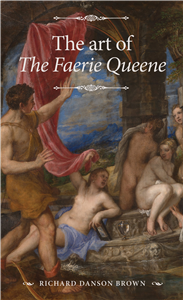
The art of The Faerie Queene
by Richard Danson Brown, Joshua Samuel Reid
The Art of The Faerie Queene is the first book centrally focused on the forms and poetic techniques employed by Spenser. It offers a sharp new perspective on Spenser by rereading The Faerie Queene as poetry which is at once absorbing, demanding and experimental. Instead of the traditional conservative model of Spenser as poet, this book presents the poem as radical, edgy and unconventional, thus proposing new ways of understanding the Elizabethan poetic Renaissance. The book moves from the individual words of the poem to metre, rhyme and stanza form onto its larger structures of canto and book. It will be of particular relevance to undergraduates studying Elizabethan poetry, graduate students and scholars of Renaissance poetry, for whom the formal aspect of the poetry has been a topic of growing relevance in recent years.
-
 Trusted Partner
-
Trusted Partner
 Literature & Literary StudiesJanuary 2019
The art of The Faerie Queene
by J. B. Lethbridge, Richard Brown
The Art of The Faerie Queene is the first book centrally focused on the forms and poetic techniques employed by Spenser. It offers a sharp new perspective on Spenser by rereading The Faerie Queene as poetry which is at once absorbing, demanding and experimental. Instead of the traditional conservative model of Spenser as poet, this book presents the poem as radical, edgy and unconventional, thus proposing new ways of understanding the Elizabethan poetic Renaissance. The book moves from the individual words of the poem to metre, rhyme and stanza form onto its larger structures of canto and book. It will be of particular relevance to undergraduates studying Elizabethan poetry, graduate students and scholars of Renaissance poetry, for whom the formal aspect of the poetry has been a topic of growing relevance in recent years.
-
Trusted Partner
 Literature & Literary StudiesJanuary 2021
The art of The Faerie Queene
by Richard Danson Brown
The Art of The Faerie Queene is the first book centrally focused on the forms and poetic techniques employed by Spenser. It offers a sharp new perspective on Spenser by rereading The Faerie Queene as poetry which is at once absorbing, demanding and experimental. Instead of the traditional conservative model of Spenser as poet, this book presents the poem as radical, edgy and unconventional, thus proposing new ways of understanding the Elizabethan poetic Renaissance. The book moves from the individual words of the poem to metre, rhyme and stanza form onto its larger structures of canto and book. It will be of particular relevance to undergraduates studying Elizabethan poetry, graduate students and scholars of Renaissance poetry, for whom the formal aspect of the poetry has been a topic of growing relevance in recent years.
-
Trusted Partner
 Literature & Literary StudiesJanuary 2021
Language and imagination in the Gawain poems
by J. Anderson
This major new literary study offers a fresh view of the significance of the famous group of fourteenth-century poems, 'Pearl', 'Cleanness', 'Patience' and 'Sir Gawain and the Green Knight'. It is a comprehensive study which puts the poems themselves firmly at its centre, though it is always alert to relevant aspects of their literary and cultural context. John Anderson builds his discussions of the poems' ideas on an examination of the anonymous poet's superb Shakespeare-like language. He finds that the great fourteenth-century struggle, between religious and secular forces for control of men's minds, underlies all the poems. This title is the first in the new Manchester Medieval Literature series, which makes readability a priority. Accordingly, despite its wide range of reference and the radicalism of some of its leading ideas, this book is written in a jargon-free style designed to appeal to specialist, non-specialist and student readers alike.
-
Trusted Partner
 Literary studies: classical, early & medievalMarch 2005
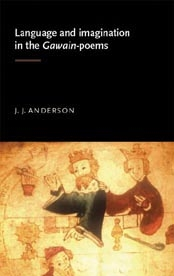
Language and imagination in the Gawain poems
by J. J. Anderson
This major new literary study offers a fresh view of the significance of the famous group of fourteenth-century poems, 'Pearl', 'Cleanness', 'Patience' and 'Sir Gawain and the Green Knight'. It is a comprehensive study which puts the poems themselves firmly at its centre, though it is always alert to relevant aspects of their literary and cultural context. John Anderson builds his discussions of the poems' ideas on an examination of the anonymous poet's superb Shakespeare-like language. He finds that the great fourteenth-century struggle, between religious and secular forces for control of men's minds, underlies all the poems. This title is the first in the new Manchester Medieval Literature series, which makes readability a priority. Accordingly, despite its wide range of reference and the radicalism of some of its leading ideas, this book is written in a jargon-free style designed to appeal to specialist, non-specialist and student readers alike.
-
Trusted Partner
 Literature & Literary StudiesSeptember 2025
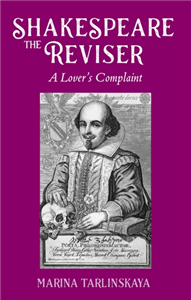
Shakespeare the Reviser
A Lover's Complaint
by Marina Tarlinskaya
The project researches the difference between a revision vs. a rewriting. The book explores the English poems and plays of the Early New English period, from the sixteenth to the beginning of seventeenth century, with over 50 entries examined. The main material is the poem A Lover's Complaint; the play Double Falsehood by Lewis Theobald; the revised and rewritten post-Restoration plays such as Richard II (revised by Lewis Theobald), and The Fatal Secret (rewritten Webster's The Duchess of Malfi) by Lewis Theobald. An example of authorial revision is Sonnets 2 and 138.
-
Trusted Partner
 Literature & Literary StudiesJuly 2009
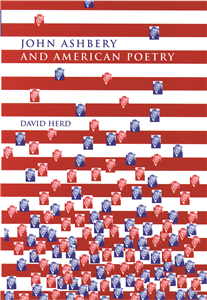
John Ashbery and American Poetry
by David Herd
starting point. David Herd sets out to provide readers with a new critical language through which they can appreciate the beauty and complexity of Ashbery's writing. Presenting the poet in all his forms -avant-garde, nostalgic, sublime and camp - the book argues that the perpetual inventiveness of Ashbery's work has always been underpinned by the poets desire to write the poem fit to cope with its occasion. Tracing Ashbery's development in the light of this idea, and from its origins in the dazzling artistic environment of 1950's New York, the book evaluates his poetry against the aesthetic, literary and historical backgrounds that have informed it. The story of a brilliant career, and a history of the period in which that career has taken shape, John Ashbery and American Poetry provides a compelling account of Ashbery's importance to Twentieth Century Literature. ;
-
Trusted Partner
-
Trusted Partner
 Literature & Literary StudiesMarch 2024
Borrowed objects and the art of poetry
Spolia in Old English verse
by Denis Ferhatovic
This study examines Exeter riddles, Anglo-Saxon biblical poems (Exodus, Andreas, Judith) and Beowulf in order to uncover the poetics of spolia, an imaginative use of recycled fictional artefacts to create sites of metatextual reflection. Old English poetry famously lacks an explicit ars poetica. This book argues that attention to particularly charged moments within texts - especially those concerned with translation, transformation and the layering of various pasts - yields a previously unrecognised means for theorising Anglo-Saxon poetic creativity. Borrowed objects and the art of poetry works at the intersections of materiality and poetics, balancing insights from thing theory and related approaches with close readings of passages from Old English texts.
-
Trusted Partner
 Literature & Literary StudiesApril 2026
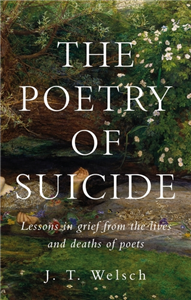
The poetry of suicide
Lessons in grief from the lives and deaths of poets
by J. T. Welsch
A profound exploration of the connection between poetry and suicide. 'Suicides have a special language,' Anne Sexton wrote in her 1964 poem 'Wanting to Die'. But is it a language we can learn to read? In The poetry of suicide, J. T. Welsch interweaves stories of poets who took their own lives with the long history of suicide in his own family, searching for a new way of understanding these difficult deaths. Beginning with Hamlet's 'To be or not to be?', he delves into the work of Dante, Sylvia Plath, Vladimir Mayakovsky and others, asking what it can teach us about suicide's messy reality. Suicide is more like poetry than we realise, Welsch argues. Both are filled with ambiguities, contradictions and unknowable intentions. Both demand and resist interpretation. Recovering the personal dimension often lost in our medicalised public discourse, Welsch finds practical ways of confronting suicide's poem-like difficulties.
-
Trusted Partner

 July 2004
Auschwitz Poems
Gedichte
by Lily Brett, David Rankin, Silvia Morawetz, Silvia Morawetz
Die Beschädigungen und Konflikte einer Holocaust-Überlebenden der zweiten Generation sind das Thema, mit dem sich Lily Brett in ihrem ersten Buch, den preisgekrönten Auschwitz Poems, auseinandersetzt. Es war ihr erster Versuch, die Geschichte ihrer Eltern, die Auschwitz überlebten, aufzuarbeiten.Lily Brett erspürt Bilder und Erlebnisse aus Auschwitz, die sie nie selbst gesehen und die ihr keiner explizit erzählt hat – und schildert sie ähnlich wie ihren New Yorker Alltag: präzise, klar, schonungslos. In sparsamen, konzentrierten Sätzen beschreibt sie das Grauen des Konzentrationslagers, das ihre Eltern nicht aussprechen konnten.
-
Trusted Partner
Literature & Literary StudiesJune 2024
The poems of Elizabeth Siddal in context
by Anne Woolley
A ground breaking new book that considers all Siddal poems with reference to female and primarily male counterparts, adding substantially to knowledge of her work as a writer, and their shared contemporary concerns. Dante Rossetti, Swinburne, Tennyson, Ruskin and Keats were either known to her or a source of influence on the Pre-Raphaelite Brotherhood with which she was associated, and certain of their texts are compared with hers to discuss interplay between erotic and spiritual love, the ballad tradition, nineteenth-century feminism, and the Romantic concept of the conjoined physical and spectral body. Siddal's artwork is used to introduce each chapter, while other Pre-Raphaelite paintings illuminate the texts and further the inter-disciplinary philosophy of the Brotherhood. This important and stimulating book focuses on the intrinsic merit of Siddal's poetics whilst advocating a research method that could have multiple applications elsewhere.
-
Trusted Partner
Literature & Literary StudiesApril 2024
Riddles at work in the early medieval tradition
Words, ideas, interactions
by Megan Cavell, Jennifer Neville
Capitalising on developments in the field over the past decade, Riddles at work provides an up-to-date microcosm of research on the early medieval riddle tradition. The book presents a wide range of traditional and experimental methodologies. The contributors treat the riddles both as individual poems and as parts of a tradition, but, most importantly, they address Latin and Old English riddles side-by-side, bringing together texts that originally developed in conversation with each other but have often been separated by scholarship. Together, the chapters reveal that there is no single, right way to read these texts but rather a multitude of productive paths. This book will appeal to students and scholars of early medieval studies. It contains new as well as established voices, including Jonathan Wilcox, Mercedes Salvador-Bello and Jennifer Neville.
-
Trusted Partner
-
Trusted Partner
 Literature & Literary StudiesJanuary 2019
Pastoral poetry of the English Renaissance
An anthology
by J. B. Lethbridge, Sukanta Chaudhuri
Renaissance pastoral poetry is gaining new interest for its distinctive imaginative vein, its varied allusive content, and the theoretical implications of the genre. This is by far the biggest ever anthology of English Renaissance pastoral poetry, with 277 pieces spanning two centuries. Spenser, Sidney, Jonson and Drayton are amply represented alongside their many contemporaries. There is a wide range of pastoral lyrics, weightier allusive pieces, and translations from classical and vernacular pastoral poetry; also, more unusually, pastoral ballads and poems set in all kinds of prose works. Each piece has been freshly edited from the original sources, with full apparatus and commentary. This book will be complemented by a second volume, to be published in 2017, which includes a book-length introduction, textual notes and analytic indices.
-
Trusted Partner
 Literature & Literary StudiesJune 2015
A Supplement of the Faery Queene
By Ralph Knevet
by J. B. Lethbridge
Ralph Knevet's Supplement of the Faery Queene (1635) is a narrative and allegorical work, which weaves together a complex collection of tales and episodes, featuring knights, ladies, sorcerers, monsters, vertiginous fortresses and deadly battles - a chivalric romp in Spenser's cod medieval style. The poem shadows recent English history, and the major military and political events of the Thirty Years War. But the Supplement is also an ambitiously intertextual poem, weaving together materials from mythic, literary, historical, scientific, theological, and many other kinds of written sources. Its encyclopaedic ambitions combine with Knevet's historical focus to produce an allegorical epic poem of considerable interest and power. This new edition of Knevet's Supplement, the first scholarly text of the poem ever published, situates it in its literary, historical, biographical, and intellectual contexts. An extensive introduction and copious critical commentary, positioned at the back of the book, will enable students and scholars alike to access Knevet's complicated and enigmatic meanings, structures, and allusions. ;
-
Trusted Partner
 Literature & Literary StudiesJanuary 2021
A Supplement of the Faery Queene
By Ralph Knevet
by Christopher Burlinson, J. B. Lethbridge, Andrew Zurcher
Ralph Knevet's Supplement of the Faery Queene (1635) is a narrative and allegorical work, which weaves together a complex collection of tales and episodes, featuring knights, ladies, sorcerers, monsters, vertiginous fortresses and deadly battles - a chivalric romp in Spenser's cod medieval style. The poem shadows recent English history, and the major military and political events of the Thirty Years War. But the Supplement is also an ambitiously intertextual poem, weaving together materials from mythic, literary, historical, scientific, theological, and many other kinds of written sources. Its encyclopaedic ambitions combine with Knevet's historical focus to produce an allegorical epic poem of considerable interest and power. This new edition of Knevet's Supplement, the first scholarly text of the poem ever published, situates it in its literary, historical, biographical, and intellectual contexts. An extensive introduction and copious critical commentary, positioned at the back of the book, will enable students and scholars alike to access Knevet's complicated and enigmatic meanings, structures, and allusions.
-
Trusted Partner
 Humanities & Social SciencesDecember 2025
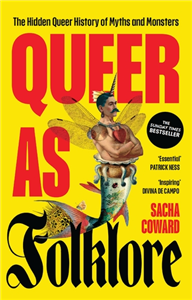
Queer as folklore
The hidden queer history of myths and monsters
by Sacha Coward
A celebration of queer history like you've never seen it before. Queer as folklore travels across centuries and continents to reveal the unsung heroes and villains of storytelling, magic and fantasy. Featuring images from archives, galleries and museums around the world, each chapter investigates the queer history of different mythic and folkloric characters, both old and new. Leaving no headstone unturned, Sacha Coward takes you on a wild ride through the night from ancient Greece to the main stage of RuPaul's Drag Race, visiting cross-dressing pirates, radical fairies and the graves of the 'queerly departed' along the way. Queer communities have often sought refuge in the shadows and created safe spaces in underworlds. But these forgotten narratives tell stories of resilience that deserve to be heard. Join any Pride march and you will see a glorious display of papier-mâché unicorn heads, drag queens in mermaid tails and more fairy wings than you can shake a trident at. These are not just accessories: they are queer symbols with historic roots. To truly understand who queer people are today, we must confront the twisted tales of the past.



