Your Search Results

      • Victorina Press

        Victorina Press was created by  Consuelo Rivera-Fuentes, a Chilean-British writer and academic. We are therefore rooted strongly in Chilean and British cultures. Our mission is to publish inspirational, quality books in the spirit of bibliodiversity, a concept developed by a group of Chilean independent publishers — Editores independientes de Chile. It encourages the celebration of a variety of voices from all over the world and prevents our publishing world from being a monolithic culture. Everyone has a story to tell. We want to be the ones to tell it. Consuelo’s Latin American roots play a huge role in our publishing today, with many of our books being translated into Spanish as stand alone or bilingual publications. Publishing everything from hard-hitting, inspirational memoirs, thrilling YA dystopias, gripping historical fiction, fun early learning, colourful, exciting children's books, literature for the classic shelf, and poetry to entice you, there is one book for every genre!

        View Rights Portal
      • Trusted Partner
        Humanities & Social Sciences
        June 2017

        Stained glass and the Victorian Gothic revival

        by Christopher Breward, Jim Cheshire, Bill Sherman

        Stained glass reached the height of its popularity in the Victorian period. But how did it become so popular and who was involved in this remarkable revival? The enthusiasm for these often exquisite pieces of artwork spread from specialist groups of antiquarians and architects to a much wider section of the Victorian public. By looking at stained glass from the perspective of both glass-painter and patron, and by considering how stained glass was priced, bought and sold, this enlightening study traces the emergence of the market for stained glass in Victorian England. Thus it contains new insights into the Gothic Revival and the relationship between architecture and the decorative arts. Beautifully illustrated with colour plates and black and white illustrations, this book will be valuable to those interested in stained glass and the wider world of Victorian art.

      • Trusted Partner
        Literature & Literary Studies
        October 2009

        Dante and the Victorians

        by Alison Milbank

        In this ground-breaking book, Alison Milbank explains why a comprehension of the Victorian reception of Dante is essential for a full understanding of Victorianism as a whole. Her focus on this much-neglected topic allows her to reconfigure the British nineteenth-century understanding of history, nationalism, aesthetics and gender, and their often strange intersections. The account also builds towards a demonstration that the modernist perpetuation of the Dante obsession reveals an equal continuity with many aspects of Victorianism. The book provides not only an authoritative introduction to these important cultural themes, but also a re-reading of the genealogy of literature in the modern period. Instead of the Victorian realism challenged by Modernist symbolism's attempts to transcend linear time, Milbank offers us a contrary, continuous 'Danteism'. For both the Victorians and the Modernists Dante is the first writer to historicise, fictionalise and humanise the eternal role, and he becomes paradoxically the means by which history, secularised fiction and a positivist humanism could be reconnected to a lost transcendent. Dante and the Victorians provides the first comprehensive account of why the reading of Dante was central to nineteenth-century British language and culture. ;

      • Trusted Partner
        Literature & Literary Studies
        July 2025

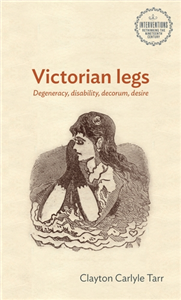
        Victorian legs

        Degeneracy, disability, decorum, desire

        by Clayton Tarr

        Victorian legs is about the science (sometimes spurious) and sexuality (often frivolous) of legs during the Victorian period. The book argues that legs occupy a particularly vexed position in Victorian culture. Strong legs formed the foundation (or the columns) of the civilized subject, but the politics of who could show their legs remained gendered. For the most part, men exhibited and admired, while women concealed and demurred. This book not only joins and advances the lively critical discourse on the Victorian body, but also marks new paths to pursue. While legs made us human, they could also dehumanize.

      • Trusted Partner
        The Arts
        June 2017

        Gothic television

        by Helen Wheatley

        Gothic television is the first full length study of the Gothic released on British and US television. An historical account, the book combines detailed archival research with analyses of key programmes, from Mystery and Imagination and Dark Shadows, to The Woman in White and Twin Peaks, and uncovers an aspect of television drama history which has, until now, remained critically unexplored. While some have seen television as too literal or homely a medium to successfully present Gothic fictions, Gothic television argues that the genre, in its many guises, is, and has always been, well-suited to television as a domestic medium, given the genre's obsessions with haunted houses and troubled families. This book will be of interest to lecturers and students across a number of disciplines including television studies, Gothic studies, and adaptation studies, as well as to the general reader with an interest in the Gothic, and in the history of television drama.

      • Trusted Partner
        Literature & Literary Studies
        July 2022

        Nordic Gothic

        by Maria Holmgren Troy, Johan Hõglund, Yvonne Leffler, Sofia Wijkmark

        Nordic Gothic traces Gothic fiction in the Nordic region from its beginnings in the nineteenth century, with a main focus on the development of Gothic from the 1990s onwards in literature, film, TV and new media. The volume gives an overview of Nordic Gothic fiction in relation to transnational developments and provides a number of case studies and in-depth analyses of individual narratives. It creates an understanding of this under-researched cultural phenomenon by showing how the narratives make visible cultural anxieties haunting the Nordic countries, their welfare systems, identities and ideologies. Nordic Gothic examines how figures from Nordic folklore function as metaphorical expressions of Gothic themes and Nordic settings are explored from perspectives such as ecocriticism and postcolonialism. The book will be of interest to researchers and post- and- undergraduate students in various fields within the Humanities.

      • Trusted Partner
        Literature & Literary Studies
        October 2023

        The penny politics of Victorian popular fiction

        by Rob Breton

        Penny politics offers a new way to read early Victorian popular fiction such as Jack Sheppard, Sweeney Todd, and The Mysteries of London. It locates forms of radical discourse in the popular literature that emerged simultaneously with Brittan's longest and most significant people's movement. It listens for echoes of Chartist fiction in popular fiction. The book rethinks the relationship between the popular and political, understanding that radical politics had popular appeal and that the lines separating a genuine radicalism from commercial success are complicated and never absolute. With archival work into Newgate calendars and Chartist periodicals, as well as media history and culture, it brings together histories of the popular and political so as to rewrite the radical canon.

      • Trusted Partner
        Literature & Literary Studies
        June 2024

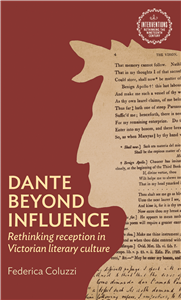
        Dante beyond influence

        by Federica Coluzzi

      • Trusted Partner
        The Arts
        June 2021

        Medieval film

        by Anke Bernau, Bettina Bildhauer

        Medieval film explores theoretical questions about the ideological, artistic, emotional and financial investments inhering in cinematic renditions of the medieval period. What does it mean to create and watch a 'medieval film'? What is a medieval film and why are they successful? This is the first work that attempts to answer these questions, drawing, for instance, on film theory, postcolonial theory, cultural studies and the growing body of work on medievalism. Contributors investigate British, German, Italian, Australian, French, Swedish and American film, exploring topics such translation, temporality, film noir, framing and period film - and find the medieval lurking in inexpected corners. In addition it provides in-depth studies of individual films from different countries including The Birth of a Nation to Nosferatu, and Robin Hood: Prince of Thieves. Medieval Film will be of interest to medievalists working in disciplines including literature, history, to scholars working on film and in cultural studies. It will also be of interest to undergraduates, postgraduates and to an informed enthusiast in film or/and medieval culture.

      • Trusted Partner
        The Arts
        January 2019

        Medieval film

        by Anke Bernau, Bettina Bildhauer

        Medieval film explores theoretical questions about the ideological, artistic, emotional and financial investments inhering in cinematic renditions of the medieval period. What does it mean to create and watch a 'medieval film'? What is a medieval film and why are they successful? This is the first work that attempts to answer these questions, drawing, for instance, on film theory, postcolonial theory, cultural studies and the growing body of work on medievalism. Contributors investigate British, German, Italian, Australian, French, Swedish and American film, exploring topics such translation, temporality, film noir, framing and period film - and find the medieval lurking in unexpected corners. In addition it provides in-depth studies of individual films from different countries including The Birth of a Nation to Nosferatu, and Robin Hood: Prince of Thieves. Medieval film will be of interest to medievalists working in disciplines including literature, history, art history, to scholars working on film and in cultural studies. It will also be of interest to undergraduates, postgraduates and to an informed enthusiast in film or/and medieval culture.

      • Trusted Partner
        Literature & Literary Studies
        December 2025

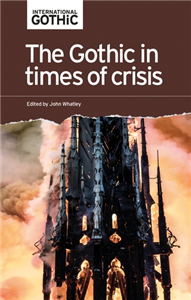
        The Gothic in times of crisis

        by John Whatley

        The Gothic in times of crisis reflects contemporary society, showing how the Gothic modes continually resets its own forms to encompass each new reality, each new apocalypse, each new plague or crisis. This collection expands oncurrent scholarship to show how the Gothic challenges our understanding of both older and recent crises and, in turn, disturbs all genre complacencies to expose and confront the problems and contradictions in what our world has been, has become, or is in danger of becoming. This collection explores Gothic's current relevance to the contestations of ideas and the underlying and visible conflicts it dramatizes across a wide range of media. In various ways, it reveals what happens to Gothic modes now they confront the increasingly Gothic realities of our times, sometimesby recalling earlier crises and ideological contestations leading up to them.

      • Trusted Partner
      • Trusted Partner
        Literature & Literary Studies
        May 2026

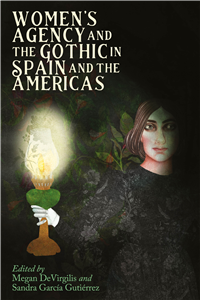
        Women’s Agency and the Gothic in Spain and the Americas

        by Megan DeVirgilis, Sandra García Gutiérrez

        This volume has emerged to fulfill two main purposes: Primarily, to constitute the first collaborative work that traces the relationship between the Gothic and Women in Spain and the Americas, but also, to surpass the term 'Female Gothic,' coined by Ellen Moers, by transferring the focus towards women and their agency as writers, readers and characters. This volume functions as a manifesto per se to open new avenues into understanding how women have interacted with the Gothic between the nineteenth and twenty-first centuries in Spain and the Americas. The question, we determine, is not simply about identity, but rather about agency. We define women's agency as the total capacity of characters, authors and readers to act freely within a social framework in relation to gothic texts. In our exploration of authorship, we reject the claim that the Gothic is a simplistic literary genre, instead sustaining that the plasticity of the Gothic has enabled it to survive for centuries; by shifting from a genre to a mode, it has surpassed literary forms and invaded all kinds of media: from film to music and merchandise such as clothing and pop culture collectables, fostering an authentic goth fandom.

      • Trusted Partner
        Literature & Literary Studies
        March 2004

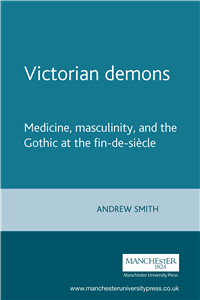
        Victorian demons

        Medicine, masculinity, and the Gothic at the fin-de-siècle

        by Andrew W. M. Smith

        Victorian demons provides the first extensive exploration of largely middle-class masculinities in crisis at the fin de siècle. It analyses how ostensibly controlling models of masculinity became demonised in a variety of literary and medical contexts, revealing the period to be much more ideologically complex than has hitherto been understood, and makes a significant contribution to Gothic scholarship. Andrew Smith demonstrates how a Gothic language of monstrosity, drawn from narratives such as 'The Strange Case of Dr Jekyll and Mr Hyde' and 'Dracula', increasingly influenced a range of medical and cultural contexts, destabilising these apparently dominant masculine scripts. He provides a coherent analysis of a range of examples relating to masculinity drawn from literary, medical, legal and sociological contexts, including Joseph Merrick ('The Elephant Man'), the Whitechapel murders of 1888, Sherlock Holmes's London, the writings and trials of Oscar Wilde, theories of degeneration and medical textbooks on syphilis. ;

      • Trusted Partner
        Humanities & Social Sciences
        May 2023

        Medieval women and urban justice

        Commerce, crime and community in England, 1300–1500

        by Teresa Phipps

        This book provides a detailed analysis of women's involvement in litigation and other legal actions within their local communities in late-medieval England. It draws upon the rich records of three English towns - Nottingham, Chester and Winchester - and their courts to bring to life the experiences of hundreds of women within the systems of local justice. Through comparison of the records of three towns, and of women's roles in different types of legal action, the book reveals the complex ways in which individual women's legal status could vary according to their marital status, different types of plea and the town that they lived in. At this lowest level of medieval law, women's status was malleable, making each woman's experience of justice unique.

      • Trusted Partner
        Literature & Literary Studies
        May 2024

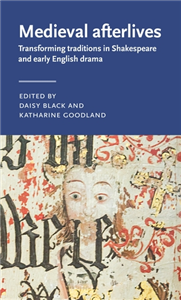
        Medieval afterlives

        Transforming traditions in Shakespeare and early English drama

        by Daisy Black, Katharine Goodland

        A collection of essays which show how early drama traditions were transformed, recycled, re-used and reformed across time to form new relationships with their audiences. Medieval afterlives brings new insight to the ways in which peoples in the sixteenth century understood, manipulated and responded to the history of their performance spaces, stage technologies, characterisation and popular dramatic tropes. In doing so, this volume advocates for a new understanding of sixteenth-seventeenth century theatre makers as highly aware of the medieval traditions that formed their performance practices, and audiences who recognised and appreciated the recycling of these practices between plays.

      • Trusted Partner
        Literature & Literary Studies
        September 2025

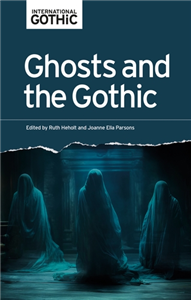
        Ghosts and the Gothic

        by Ruth Heholt, Joanne Ella Parsons

        Ghosts have long been connected with the Gothic, but until now there has not been a book dedicated to the subject. This collection examines ghostly presences (and absences) in both classic and lesser-known Gothic texts from the beginning of the genre to the present in a global context. Arguing that the undead, in the form of ghosts, are intrinsic to the Gothic mode, essays in the collection question the place of manifested spirits. The Gothic has always been 'political', and essays in this collection examine some of the most relevant issues facing us today: from the destruction of the natural environment, to questions of 'freedom', to gender politics.

      • Trusted Partner
        Literature & Literary Studies
        December 2020

        Transfiguring medievalism

        by Cary Howie, Anke Bernau

      • Trusted Partner
        Literature: history & criticism
        February 2017

        The Gothic and death

        by Series edited by Elisabeth Bronfen. Edited by Carol Davison

        The Gothic and death offers the first ever published study devoted to the subject of the Gothic and death across the centuries. It investigates how the multifarious strands of the Gothic and the concepts of death, dying, mourning and memorialisation ('the Death Question') - have intersected and been configured cross-culturally to diverse ends from the mid-eighteenth century to the present day. Drawing on recent scholarship in such fields as Gothic Studies, film theory, Women's and Gender Studies and Thanatology Studies, this interdisciplinary collection of fifteen essays by international scholars combines an attention to socio-historical and cultural contexts with a rigorous close reading of works, both classic and lesser known. This area of enquiry is considered by way of such popular and uncanny figures as corpses, ghosts, zombies and vampires, and across various cultural and literary forms such as Graveyard Poetry, Romantic poetry, Victorian literature, nineteenth-century Italian and Russian literature, Anglo-American film and television, contemporary Young Adult fiction and Bollywood film noir.

      Subscribe to our

      newsletter