
Your Search Results


-
Promoted Content

 Humanities & Social SciencesFebruary 2026
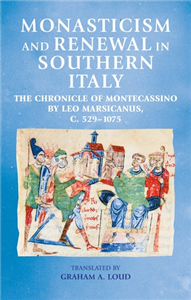
Monasticism and renewal in southern Italy
The Chronicle of Montecassino by Leo Marsicanus, c. 529–1075
by Graham Loud
The chronicle of Leo Marsicanus recounts the history of the abbey of Montecassino from its foundation by St. Benedict in the sixth-century up to 1075. It presents a detailed and compelling story of tribulation and renewal, with the abbey twice destroyed and abandoned in the early Middle Ages and then rebuilt. It concludes with an informative account of the building and dedication of the new abbey church by Abbot Desiderius in 1066-71. The chronicle is also a key source for the more general history of southern Italy in the early Middle Ages, and of the conquest of the region by the Normans during the eleventh century. In addition, Montecassino was one of the great intellectual centres of western Christendom and a major contributor to the reform movement within the Church during the later eleventh century. Leo's chronicle is a crucial witness to that role.
-
Promoted Content
 Humanities & Social SciencesNovember 2023
Rethinking Norman Italy
Studies in honour of Graham A. Loud
by Joanna Drell, Paul Oldfield
This volume on Norman Italy (southern Italy and Sicily, c. 1000-1200) honours and reflects the pioneering scholarship of Graham A. Loud. An international group of scholars reassesses and recasts the paradigm by which Norman Italy has been conventionally understood, addressing varied subjects across four key themes: historiographies, identities and communities, religion and Church, and conquest. The chapters revise and refine our understanding of Norman Italy in the eleventh and twelfth centuries, demonstrating that it was not just a parochial Norman or Mediterranean entity but also an integral player in the medieval mainstream.
-
 Trusted Partner
 Humanities & Social SciencesJune 2021
Rethinking Norman Italy
by Joanna Drell, Paul Oldfield, C. E. Beneš
-
Trusted Partner
-
Trusted Partner

 2024
2024My Italy with Berlusconi
And what has become of it. Essays, conversations, reports
by Michaela Namuth
The political era of media entrepreneur and multi-billionaire Silvio Berlusconi began in 1994. German journalist Michaela Namuth also arrived in Rome at that time. He became prime minister, she became a freelance correspondent for various newspapers. She spent the long period of his government with him. During this time, the populist Berlusconi not only paved the way for a far-right government, he was also an ice-breaker for other right-wing populists in Europe and elsewhere. What else happened during and after Berlusconi's time in power is told in 20 chapters of articles, reports and interviews. The result is a colourful mosaic of contemporary Italy. It is about publishing, design, crime fiction, the mafia, a women's factory, the south and Nutella. Under Berlusconi, the country has changed. Many speak of “Berlusconisation”, by which they mean the gradual weakening of democracy. It is a critical book, but also a declaration of love to a contradictory country whose name still has a special ring to many ears.
-
Trusted Partner
 Literature & Literary StudiesJanuary 2013
The towns of Italy in the later Middle Ages
by Trevor Dean
The towns of Italy in the later middle ages presents over one hundred fascinating documents, carefully selected and coordinated from the richest, most innovative and most documented society of the European Middle Ages. No other English language sourcebook has the same geographical or chronological range. This collection is carefully structured around the crisis of the fourteenth century and arranged in contrasting groups of texts. By connecting documents in translation to recent scholarship and debates, it addresses five key areas of medieval urban history: the physical environment, civic religion, economy, society and politics. Offers students well-translated and effectively contextualised documents along with some guidance to the secondary work of Italian scholars which is largely inaccessible to undergraduate students.
-
Trusted Partner
 The ArtsJanuary 2019
Cinema - Italy
by Stefania Parigi, Des O'Rawe
A journey to the Italian cinema that overturns established views and opens up new perspectives and interpretations. Its itinerary is organized in four stages. The first is an analysis of the theories of Cesare Zavattini on neorealism which overturns widely accepted positions both on Zavattini and on neorealism. The second confronts a key film of the post-war Italian cinema, Roberto Rossellini's Paisà, by examining the nature of its realism. The third is dedicated to Luchino Visconti: to questions of the use of language exemplified in his La terra trema, the use of settings, costume and light as agents of meaning in his Il Gattopardo and Vaghe stelle dell'Orsa. The final voyage of the film is to the physical and symbolic construction of heaven and earth in the work of Pasolini. Particular attention is given to the representation of the body in his last four films: the grotesque and mythical bodies in popular tradition in his Trilogia di vita and the tortured bodies destroyed by the mass media in Salò.
-
Trusted Partner
 Humanities & Social SciencesJune 2022
Internal exile in Fascist Italy
by Piero Garofalo, Elizabeth Leake, Dana Renga
-
Trusted Partner
 The ArtsFebruary 2015
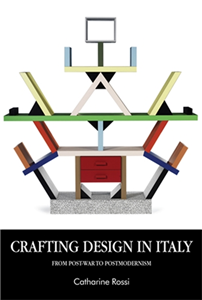
Crafting design in Italy
From post-war to postmodernism
by Catharine Rossi, Christopher Breward, Bill Sherman
Crafting design in Italy is the first book to examine the role that craft played in post-war Italian design, one of the most celebrated design episodes in the twentieth century. Craft was vital to the development of Italian design, and it has been so far overlooked. This book examines the multiple ways craft shaped Italian design from 1945 to the 1980s in the context of bigger socio-economic, cultural and political change; from post-war reconstruction to the economic 'miracle' of the 1960s, to the rise of the countercultural Radical Design movement and advent of postmodernism. It consists of case studies on design areas including product, furniture, fashion, glass and ceramics to bring to light previously unknown makers and objects as well as re-examine design 'icons' such as Gio Ponti's Superleggera chair and Ettore Sottsass's Memphisware. It also offers a model for analysing design and craft's relationship in other contexts, including today. ;
-
Trusted Partner
-
Trusted Partner
 Humanities & Social SciencesApril 2022
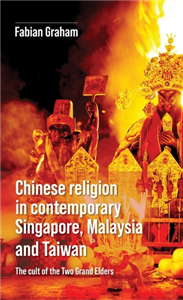
Chinese religion in contemporary Singapore, Malaysia and Taiwan
The cult of the Two Grand Elders
by Fabian Graham
In Singapore and Malaysia, the inversion of Chinese Underworld traditions has meant that Underworld demons are now amongst the most commonly venerated deities in statue form, channelled through their spirit mediums, tang-ki. The Chinese Underworld and its sub-hells are populated by a bureaucracy drawn from the Buddhist, Taoist and vernacular pantheons. Under the watchful eye of Hell's 'enforcers', the lower echelons of demon soldiers impose post-mortal punishments on the souls of the recently deceased for moral transgressions committed during their prior incarnations. Chinese religion in contemporary Singapore, Malaysia and Taiwan offers an ethnography of contemporary Chinese Underworld traditions, where night-time cemetery rituals assist the souls of the dead, exorcised spirits are imprisoned in Guinness bottles, and malicious foetus ghosts are enlisted to strengthen a temple's spirit army. Understanding the religious divergences between Singapore and Malaysia (and their counterparts in Taiwan) through an analysis of socio-political and historical events, Fabian Graham challenges common assumptions about the nature and scope of Chinese vernacular religious beliefs and practices. Graham's innovative approach to alterity allows the reader to listen to first-person dialogues between the author and channelled Underworld deities. Through its alternative methodological and narrative stance, the book intervenes in debates on the interrelation between sociocultural and spiritual worlds, and promotes the destigmatisation of spirit possession and discarnate phenomena in the future study of mystical and religious traditions.
-
Trusted Partner
 Literature & Literary StudiesMay 2000
The towns of Italy in the later Middle Ages
by Rosemary Horrox, Trevor Dean, Simon Maclean
The towns of Italy in the later middle ages presents over one hundred fascinating documents, carefully selected and coordinated from the richest, most innovative and most documented society of the European Middle Ages. No other English language sourcebook has the same geographical or chronological range. This collection is carefully structured around the crisis of the fourteenth century and arranged in contrasting groups of texts. By connecting documents in translation to recent scholarship and debates, it addresses five key areas of medieval urban history: the physical environment, civic religion, economy, society and politics. Offers students well-translated and effectively contextualised documents along with some guidance to the secondary work of Italian scholars which is largely inaccessible to undergraduate students. ;
-
Trusted Partner

 FictionOctober 2020
Once upon a time in Italy
by Fulvio, Luca Di
Rome in 1860 - with the exciting age of the Risorgimento as an atmospheric backdropLuca Di Fulvio's new novel is a powerful emotional epic about solidarity, self-discovery, homeland, family, love, and life dreams. The story begins in 1860, with the plot set mainly in Rome during the last phase of the Italian unification movement, the Risorgimento. Luca Di Fulvio creates a highly emotional, mentally cinematic epic with strong, distinctive characters. An orphan boy who wants to use his camera to change the way people see the world. A circus girl with a burning interest in politics. A countess who gives the gift of freedom to others. Three people whom fate brings to Rome in 1870, the pulsating heart of Italy on its path to becoming a nation state. As their paths cross in the midst of this city of promise, their dreams seem to be interwoven with magical bands. But the dazzling city of Rome presents the three with unexpected challenges. One day, when a dramatic event shakes the Eternal City, they are threatened with losing everything they hold dear. A highly emotional epic about three unforgettable characters, and a visually stunning story about new beginnings, the power of love, and a great longing for security in a world where one person stands up for the other. Bursting with life, deeply moving, and full of hope - Luca Di Fulvio's stories are like journeys that you wish would never end Three people and their dream of a better world The new novel by SPIEGEL bestselling author Luca Di Fulvio Set in Rome in 1860 against the atmospheric backdrop of the Italian unification movement
-
Trusted Partner
 Humanities & Social SciencesMarch 2017
The French empire at War, 1940–1945
by Martin Thomas
The French empire at war draws on original research in France and Britain to investigate the history of the divided French empire - the Vichy and the Free French empires - during the Second World War. What emerges is a fascinating story. While it is clear that both the Vichy and Free French colonial authorities were only rarely masters of their own destiny during the war, preservation of limited imperial control served them both in different ways. The Vichy government exploited the empire in an effort to withstand German-Italian pressure for concessions in metropolitan France and it was key to its claim to be more than the mouthpiece of a defeated nation. For Free France too, the empire acquired a political and symbolic importance which far outweighed its material significance to the Gaullist war effort. As the war progressed, the Vichy empire lost ground to that of the Free French, something which has often been attributed to the attraction of the Gaullist mystique and the spirit of resistance in the colonies. In this radical new interpretation, Thomas argues that it was neither of these. The course of the war itself, and the initiatives of the major combatant powers, played the greatest part in the rise of the Gaullist empire and the demise of Vichy colonial control.
-
Trusted Partner
 Humanities & Social SciencesApril 2026
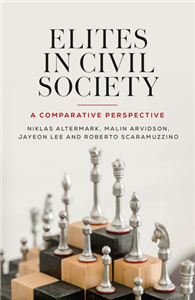
Elites in civil society
A comparative perspective
by Niklas Altermark, Malin Arvidson, Jayeon Lee, Roberto Scaramuzzino
Where civil society is often seen as a driving force for equality, this book addresses a challenging topic: civil society elites. Drawing on a comprehensive study of Italy, Poland, Sweden, and the UK, this ground-breaking research investigates the often-overlooked power structures within civil society. By combining elite studies with civil society research, the book uncovers how a distinct civil society elite emerges and how it interacts with leaders in politics and business. The findings reveal a fascinating paradox. While this elite may be a powerful engine for social change, its integration into wider power circles risks reproducing the very inequalities it seeks to dismantle. By exploring how this elite can become disconnected from its grassroots, the book provides essential insights into the future of civil society and its democratic promise.
-
Trusted Partner
 Literature & Literary StudiesJanuary 2013
The lives of Thomas Becket
by Michael Staunton
This collection tells the story of Thomas Becket's turbulent life, violent death and extraordinary posthumous acclaim in the words of his contemporaries. The only modern collection from the twelfth-century Lives of Thomas Becket in English and features all his major biographers, including many previously untranslated extracts. Providing both a valuable glimpse of the late twelfth-century world, and an insight into the minds of those who witnessed the events. By using contemporary sources, this book is the most accessible way to study this central episode in medieval history. Thomas Becket features prominently in most medieval core courses. This book allows the subject to be taught as never before, and is highly suitable as a set text.
-
Trusted Partner
 Humanities & Social SciencesAugust 2026
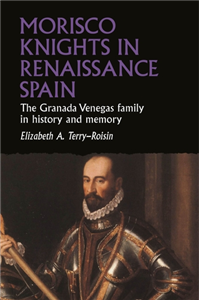
Morisco knights in Renaissance Spain
The Granada Venegas family in history and memory
by Elizabeth Terry-Roisin
How does a Morisco enter the Spanish nobility? This book reveals the cultural strategies through which a family of converts from Islam to Christianity overcame limpieza de sangre laws, rose in social status, avoided King Philip III's Morisco expulsions of 1609-14, and achieved a noble title. Drawing on archival sources from both Spain and Italy to re-create the original family archive, this book follows the Granada Venegas family from Granada, to Madrid, to the dusty Andalucían town of Campotéjar, of which they became Marquises, and finally to Italy. Their descendants would serve as Doges of Genoa in the eighteenth century.
-
Trusted Partner
 Humanities & Social SciencesFebruary 2026
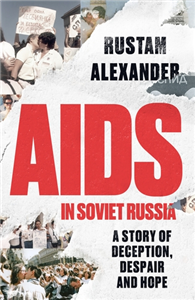
AIDS in Soviet Russia
A story of deception, despair and hope
by Rustam Alexander
The first book to tell the shocking story of the AIDS crisis in Soviet Russia. Throughout the 1980s, as the world was grappling with the escalating crisis of AIDS, Soviet Russia continued to deny there was a problem. Arguing that the disease was limited to foreigners and 'immoral' groups, the government failed to take meaningful action, long past the point other countries had begun to recognise the full scale of the threat. In this ground-breaking book, Rustam Alexander tells the story of AIDS in Soviet Russia. Fixated on disinformation, censorship and the persecution of marginalised communities, the Soviet authorities wasted precious time, allowing the epidemic to strike at the very heart of the nation: its children. Yet, despite the government's failure, a number of brave journalists, doctors and nascent gay groups decided to take matters into their own hands and engage in full-fledged AIDS activism. Tracing the political and social response to AIDS in the final years of the Soviet era, Alexander sheds light on the devastating consequences of government inaction. He draws on personal stories, media reports and archival materials to provide a riveting account of the Russian people's fight against AIDS amid the tumultuous transformations of Gorbachev's perestroika.
-
Trusted Partner
-
Trusted Partner
 Humanities & Social SciencesMarch 2017
Britain in China
by Robert Bickers
This is a study of Britain's presence in China both at its peak, and during its inter-war dissolution in the face of assertive Chinese nationalism and declining British diplomatic support. Using archival materials from China and records in Britain and the United States, the author paints a portrait of the traders, missionaries, businessmen, diplomats and settlers who constituted "Britain-in-China", challenging our understanding of British imperialism there. Bickers argues that the British presence in China was dominated by urban settlers whose primary allegiance lay not with any grand imperial design, but with their own communities and precarious livelihoods. This brought them into conflict not only with the Chinese population, but with the British imperial government. The book also analyzes the formation and maintenance of settler identities, and then investigates how the British state and its allies brought an end to the reign of freelance, settler imperialism on the China coast. At the same time, other British sectors, missionary and business, renegotiated their own relationship with their Chinese markets and the Chinese state and distanced themselves from the settler British.



