Your Search Results

      • University of Philippines Press (UP Press)

        The University of the Philippines Press (or the U.P. Press) is the official publishing house for all constituent units of the U.P. system, and is the first university press in the country. It is mandated to encourage, publish, and disseminate scholarly, creative, and scientific works that represent distinct contributions to knowledge in various academic disciplines, which commercial publishers would not ordinarily undertake to publish.

        View Rights Portal
      • Phileas Fogg Agency

        Agency representing picture books projects, Foreign rights for publishers of picture books, representation of portfolios, contract consultancies.

        View Rights Portal
      • Trusted Partner
        Humanities & Social Sciences
        April 2022

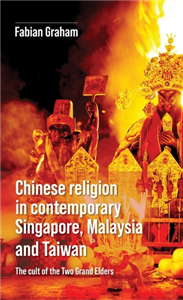
        Chinese religion in contemporary Singapore, Malaysia and Taiwan

        The cult of the Two Grand Elders

        by Fabian Graham

        In Singapore and Malaysia, the inversion of Chinese Underworld traditions has meant that Underworld demons are now amongst the most commonly venerated deities in statue form, channelled through their spirit mediums, tang-ki. The Chinese Underworld and its sub-hells are populated by a bureaucracy drawn from the Buddhist, Taoist and vernacular pantheons. Under the watchful eye of Hell's 'enforcers', the lower echelons of demon soldiers impose post-mortal punishments on the souls of the recently deceased for moral transgressions committed during their prior incarnations. Chinese religion in contemporary Singapore, Malaysia and Taiwan offers an ethnography of contemporary Chinese Underworld traditions, where night-time cemetery rituals assist the souls of the dead, exorcised spirits are imprisoned in Guinness bottles, and malicious foetus ghosts are enlisted to strengthen a temple's spirit army. Understanding the religious divergences between Singapore and Malaysia (and their counterparts in Taiwan) through an analysis of socio-political and historical events, Fabian Graham challenges common assumptions about the nature and scope of Chinese vernacular religious beliefs and practices. Graham's innovative approach to alterity allows the reader to listen to first-person dialogues between the author and channelled Underworld deities. Through its alternative methodological and narrative stance, the book intervenes in debates on the interrelation between sociocultural and spiritual worlds, and promotes the destigmatisation of spirit possession and discarnate phenomena in the future study of mystical and religious traditions.

      • Trusted Partner
      • Trusted Partner
      • Trusted Partner
        Humanities & Social Sciences
        February 2026

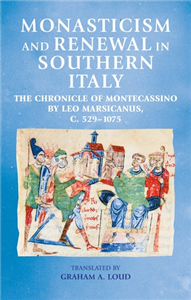
        Monasticism and renewal in southern Italy

        The Chronicle of Montecassino by Leo Marsicanus, c. 529–1075

        by Graham Loud

        The chronicle of Leo Marsicanus recounts the history of the abbey of Montecassino from its foundation by St. Benedict in the sixth-century up to 1075. It presents a detailed and compelling story of tribulation and renewal, with the abbey twice destroyed and abandoned in the early Middle Ages and then rebuilt. It concludes with an informative account of the building and dedication of the new abbey church by Abbot Desiderius in 1066-71. The chronicle is also a key source for the more general history of southern Italy in the early Middle Ages, and of the conquest of the region by the Normans during the eleventh century. In addition, Montecassino was one of the great intellectual centres of western Christendom and a major contributor to the reform movement within the Church during the later eleventh century. Leo's chronicle is a crucial witness to that role.

      • Trusted Partner
        Humanities & Social Sciences
        March 2017

        Migrant races

        Empire,Identity and K.S. Ranjitsinhji

        by Andrew Thompson, John M. MacKenzie, Satadru Sen

        This book is a study of mobility, image and identity in colonial India and imperial Britain in the late nineteenth and early twentieth centuries. It is a model for studies of migrant figures like K.S. Ranjitsinhji who emerged during the imperial period. Ranjitsinhji is an important figure in the history of modern India and the British empire because he was recognized as a great athlete and described as such. The book focuses on four aspects of Ranjitsinhji's life as a colonial subject: race, money, loyalty and gender. It touches upon Ranjitsinhji's career as a cricketer in the race section. The issue of money gave Indian critics of Ranjitsinhji's regime the language they needed to condemn his personal and administrative priorities, and to portray him as self-indulgent. Ranjitsinhji lived his life as a player of multiple gender roles: sometimes serially, and on occasion simultaneously. His status as a "prince" - while not entirely fake - was fragile enough to be unreliable, and he worked hard to reinforce it even as he constructed his Englishness. Any Indian attempt to transcend race, culture, climate and political place by imitating an English institution and its product must be an unnatural act of insurgency. The disdain for colonial politics that was manifest in the "small rebellions" at the end of the world war converged with the colonized/Indian identity that was evident at the League of Nations. Between the war and his death, it is clear, Ranjitsinhji moved to maximize his autonomy in Nawanagar.

      • Trusted Partner
        Literature & Literary Studies
        November 2011

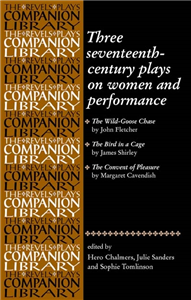
        Three seventeenth-century plays on women and performance

        by Paul Edmondson, Hero Chalmers, Julie Sanders, Sophie Tomlinson, Martin White

        This is a ground-breaking edition of three seventeenth-century plays that all engage in diverse and exciting ways with questions of gender and performance. The collection, edited by three pioneering scholars of elite female culture and early modern drama, makes the texts of three much-discussed plays - John Fletcher's The Wild-Goose Chase, James Shirley's The Bird in a Cage and Margaret Cavendish's The Convent of Pleasure - available together in a full scholarly edition for the first time. The Wild Goose Chase (1621) and The Bird in a Cage (1633) were both performed in the commercial London theatres in the Jacobean and Caroline periods respectively. The Convent of Pleasure (1668) is a so-called 'closet' drama, designed primarily for reading but drawing on a tradition of aristocratic theatricals. In a wide-ranging co-authored introduction to the volume, the editors explore the concerns of these playtexts in relation to contemporary debates surrounding popular festivity and anti-theatricalism, as well as the agency of elite female culture in the Stuart period and the emergence of the professional female actor in the Restoration. The volume will be an invaluable teaching and research tool for students and scholars of early modern drama, women's writing and performance studies more generally, as well as providing a rich sourcebook for the reader interested in seventeenth-century theatrical culture. ;

      • Trusted Partner
      • Trusted Partner
        2024

        My Italy with Berlusconi

        And what has become of it. Essays, conversations, reports

        by Michaela Namuth

        The political era of media entrepreneur and multi-billionaire Silvio Berlusconi began in 1994. German journalist Michaela Namuth also arrived in Rome at that time. He became prime minister, she became a freelance correspondent for various newspapers. She spent the long period of his government with him. During this time, the populist Berlusconi not only paved the way for a far-right government, he was also an ice-breaker for other right-wing populists in Europe and elsewhere. What else happened during and after Berlusconi's time in power is told in 20 chapters of articles, reports and interviews. The result is a colourful mosaic of contemporary Italy. It is about publishing, design, crime fiction, the mafia, a women's factory, the south and Nutella. Under Berlusconi, the country has changed. Many speak of “Berlusconisation”, by which they mean the gradual weakening of democracy. It is a critical book, but also a declaration of love to a contradictory country whose name still has a special ring to many ears.

      • Trusted Partner
      • Trusted Partner
        Fiction
        September 2017

        A Vision of Battlements

        by Anthony Burgess

        by Andrew Biswell, Paul Wake

        A Vision of Battlements is the first novel by the writer and composer Anthony Burgess, who was born in Manchester in 1917. Set in Gibraltar during the Second World War, the book follows the fortunes of Richard Ennis, an army sergeant and incipient composer who dreams of composing great music and building a new cultural world after the end of the war. Following the example of his literary hero, James Joyce, Burgess takes the structure of his book from Virgil's Aeneid. The result is, like Joyce's Ulysses, a comic rewriting of a classical epic, whose critique of the Army and the postwar settlement is sharp and assured. The Irwell Edition is the first publication of Burgess's forgotten masterpiece since 1965. This new edition includes an introduction and notes by Andrew Biswell, author of a prize-winning biography of Anthony Burgess.

      • Trusted Partner
      • Trusted Partner
        Humanities & Social Sciences
        November 2023

        Rethinking Norman Italy

        Studies in honour of Graham A. Loud

        by Joanna Drell, Paul Oldfield

        This volume on Norman Italy (southern Italy and Sicily, c. 1000-1200) honours and reflects the pioneering scholarship of Graham A. Loud. An international group of scholars reassesses and recasts the paradigm by which Norman Italy has been conventionally understood, addressing varied subjects across four key themes: historiographies, identities and communities, religion and Church, and conquest. The chapters revise and refine our understanding of Norman Italy in the eleventh and twelfth centuries, demonstrating that it was not just a parochial Norman or Mediterranean entity but also an integral player in the medieval mainstream.

      • Trusted Partner
        Humanities & Social Sciences
        June 2021

        Acts of supremacy

        by J. Bratton, Richard Cave, Brendan Gregory, Michael Pickering

        Imperialist discourse interacted with regional and class discourses. Imperialism's incorporation of Welsh, Scots and Irish identities, was both necessary to its own success and one of its most powerful functions in terms of the control of British society. Most cultures have a place for the concept of heroism, and for the heroic figure in narrative fiction; stage heroes are part of the drama's definition of self, the exploration and understanding of personal identity. Theatrical and quasi-theatrical presentations, whether in music hall, clubroom, Shakespeare Memorial Theatre or the streets and ceremonial spaces of the capital, contributed to that much-discussed national mood. This book examines the theatre as the locus for nineteenth century discourses of power and the use of stereotype in productions of the Shakespearean history canon. It discusses the development of the working class and naval hero myth of Jack Tar, the portrayal of Ireland and the Irish, and the portrayal of British India on the spectacular exhibition stage. The racial implications of the ubiquitous black-face minstrelsy are focused upon. The ideology cluster which made up the imperial mindset had the capacity to re-arrange and re-interpret history and to influence the portrayal of the tragic or comic potential of personal dilemmas. Though the British may have prided themselves on having preceded America in the abolition of slavery and thus outpacing Brother Jonathan in humanitarian philanthropy, abnegation of hierarchisation and the acceptance of equality of status between black and white ethnic groups was not part of that achievement.

      • Trusted Partner
        The Arts
        May 2016

        Scottish cinema

        by Christopher Meir

      • Trusted Partner
      • Trusted Partner
        The Arts
        January 2019

        Cinema - Italy

        by Stefania Parigi, Des O'Rawe

        A journey to the Italian cinema that overturns established views and opens up new perspectives and interpretations. Its itinerary is organized in four stages. The first is an analysis of the theories of Cesare Zavattini on neorealism which overturns widely accepted positions both on Zavattini and on neorealism. The second confronts a key film of the post-war Italian cinema, Roberto Rossellini's Paisà, by examining the nature of its realism. The third is dedicated to Luchino Visconti: to questions of the use of language exemplified in his La terra trema, the use of settings, costume and light as agents of meaning in his Il Gattopardo and Vaghe stelle dell'Orsa. The final voyage of the film is to the physical and symbolic construction of heaven and earth in the work of Pasolini. Particular attention is given to the representation of the body in his last four films: the grotesque and mythical bodies in popular tradition in his Trilogia di vita and the tortured bodies destroyed by the mass media in Salò.

      • Trusted Partner
        June 2009

        Max Frisch. Citoyen

        by Max Frisch, Matthias Gunten

        »Wir riefen Gastarbeiter, und es kamen Menschen.« Mit Sätzen wie diesem griff Max Frisch immer wieder in das öffentliche Leben der Schweiz ein. Als politischer Intellektueller war er auch in anderen Ländern ein gefragter Gesprächspartner: Er diskutierte mit Henry Kissinger über den Krieg in Vietnam, war 1977 in der Nacht, in der die »Landshut« gestürmt wurde, bei Helmut Schmidt in Bonn. Dem Citoyen, dem engagierten Bürger Max Frisch hat Matthias von Gunten sein Porträt gewidmet. Zu Wort kommt, neben Kissinger und Schmidt sowie Schriftstellerkollegen wie Christa Wolf, Günter Grass und Peter Bichsel, auch der Autor Max Frisch selbst – seine Tagebucheinträge und Reden werden gelesen von Reto Hänny. »Solche Stimmen fehlen heute in der Schweiz«, sagte von Gunten dazu der Neuen Zürcher Zeitung. Man möchte ergänzen: und anderswo.

      • Trusted Partner
        Humanities & Social Sciences
        January 2026

        At home with the poor

        by Joseph Harley

      Subscribe to our

      newsletter