
Rachel Amphlett
USA Today bestselling author Rachel Amphlett is the creator of over 25 crime thrillers. Rachel’s titles are available for consideration to all parties interested in licensing IP.
View Rights Portal
USA Today bestselling author Rachel Amphlett is the creator of over 25 crime thrillers. Rachel’s titles are available for consideration to all parties interested in licensing IP.
View Rights Portal

Most texts on sexual violence treat capitalism as backdrop or afterthought. In contrast, political economy is the core of this book. Phipps explores the centrality of sexual violence to racial capitalist processes: the enclosure of bodies, the extraction of labour, the expropriation of land and resources, and the disposal of unwanted populations. Importantly, she argues that both sexual violence and sexual fear create social control and surplus value. Through a framework called the coloniality of sexual violence, Phipps conjoins acts of sexual violence and ideas of sexual threat in an analysis of gendered and raced property relations and the split colonial/modern psyche. She argues that fantasies of sexual danger represent the infolded violence of racial capitalism, which is why fear of revolution is often fear of rape. Revolution, however, is always imminent: violence is necessary because power is incomplete.
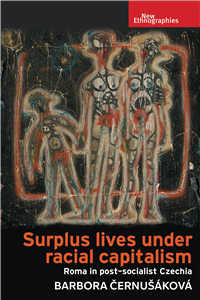
Surplus lives under racial capitalism is a critical contribution to the study of racial capitalism. It theorises the link between political economy, anti-Roma racism and modern forms of white supremacy in East Central Europe. The book shows how the introduction of capitalism in the 1990s overlapped with the rise of racialised disposability of Roma workers. Since then, their surplusing recurrently comes into sharp relief during the time of crisis. Surplus lives under racial capitalism is built on an investigation of how race and class structure the Czech labour regime and how they form a single site of struggle. One which binds workers across racialised divisions as surplusing continuously expands.
 Trusted Partner

Islamophobia is one of the most misunderstood and pernicious forms of racism in Britain. But how do those committed to challenging Islamophobia understand it? And what does this mean for their practices 'on the ground'? Islamophobia, anti-racism and the British left combines first-hand accounts from activists and community workers across two British cities with sociological theory, critically interrogating Islamophobia's relationship to 'race', racial capitalism and other modalities of racism. Setting this discussion against some of the most pertinent political shifts in Britain in recent years - from the resurgence of left nationalism to Black Lives Matter - the book assesses the limits of recent attempts to think about and tackle Islamophobia, and considers the possibilities of an alternative approach from and for the anti-racist left.
Trusted Partner

Tadeusz Kowalik lived through ten decades and three economic and political systems in Poland. He combined his academic study of economic ideas with his socialist ideals of building a fairer and more just society. This book covers the intellectual and political work of Kowalik, within the context of modern Polish history. Kowalik was part of a Polish School of critical left-wing political economists, that included Michal Kalecki and Oskar Lange. Kowalik contributed to the body of work produced by this group, which included his interpretation of their work. Kowalik participated in some of the most momentous events in post-war Polish history, helping to organise a group of intellectuals to advise the shipyard workers at the Gdansk shipyards in 1980. He became a vehement opponent of Poland's neoliberal form of capitalism and left a body of work that illuminates our understanding of capitalism and socialism today.
Trusted Partner
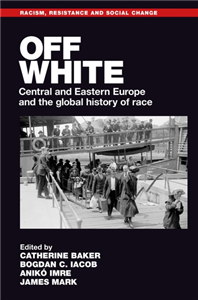
This volume foregrounds racial difference as a key to an alternative history of the Central and Eastern European region, which revolves around the role of whiteness as the unacknowledged foundation of semi-peripheral nation-states and national identities, and of the region's current status as a global stronghold of unapologetic white, Christian nationalisms. Contributions address the pivotal role of whiteness in international diplomacy, geographical exploration, media cultures, music, intellectual discourses, academic theories, everyday language and banal nationalism's many avenues of expressions. The book offers new paradigms for understanding the relationships among racial capitalism, populism, economic peripherality and race.
Trusted Partner
Trusted Partner
Trusted Partner
Trusted Partner

Why has China's 'transition' to a market economy not catalysed corresponding political transformation? In an era of deepening synergy between authoritarian politics and capitalist economics, this book offers a novel perspective on this central dilemma of contemporary Chinese development, shedding light on how the Chinese Communist Party achieved rapid economic growth while preserving political stability. Drawing on extensive fieldwork and over sixty interviews with policymakers, bankers and former party and state officials, the book delves into the role of China's state-owned banking system since 1989, showing how political control over capital has been central to the country's experience of capitalist development. It challenges existing state-market paradigms of political economy and reveals the Eurocentric assumptions underpinning liberal perspectives towards Chinese authoritarian resilience.
Trusted Partner

This book explores how fishers make the sea productive through their labour, using technologies ranging from wooden boats to digital GPS plotters to create familiar places in a seemingly hostile environment. It shows how their lives are affected by capitalist forces in the markets they sell to, forces that shape even the relations between fishers on the same boat. Fishers frequently have to make impossible choices between safe seamanship and staying afloat economically, and the book describes the human impact of the high rate of deaths in the fishing industry. The book makes a unique contribution to understanding human-environment relations, examining the places fishers create and name at sea, as well as technologies and navigation practices. It combines phenomenology and political economy to offer new approaches for analyses of human-environment relations and technologies. It contributes to the social studies of fisheries through an analysis of how deeply fishing practices and social relations are shaped by political economy. It will be read in universities by social scientists and anthropologists and also by those with an interest in maritime Scotland.
Trusted Partner

Speculative endeavours contributes to an emerging field of scholarship that focuses on alternative forms of knowledge production and speculation in nineteenth century US-American society. It sheds light on unofficial knowledges such as insider information, rumour, gossip, slander, emphasising how knowledges excluded by institutional discourses and authorities form a core part of the developing market economy. Ranging from the Early Republic to the Gilded Age, contributions analyse entanglements of financial, cultural, and social capital. They focus on social actors who differ from the newly minted ideal of the (free, white, male) entrepreneurial individual. The speculative endeavours discussed include illicit communications located in slave quarters and domestic spaces, communal interventions into a commercialised print market, debates on immigrant fiduciary and legal competency, and disciplinary techniques of pecuniary pedagogy. Taken together they offer unprecedented interdisciplinary insights into an emerging age of capital.
Trusted Partner
Trusted Partner
Trusted Partner

Digital technologies promise efficiency and comfort, but the smoothness of platform services relies on the hidden social labour of those who keep the gig economy running. This book presents a comparative ethnography of young men making a living through digital technologies: selling mobile airtime in Abidjan, Côte d'Ivoire, and app-based delivery riders in Berlin, Germany. These case studies explore the significance of symbolic capital in urban youth's social existence and organisation of livelihood in the digital economy, and the technological mechanisms producing a new form of urban precarity. Globalized urban precarity in Berlin and Abidjan puts forward an original comparative approach to develop a global urban sociology for the digital era. It provides an innovative analytical toolbox that decentres discussions of precarity from the standard of a normal employment contract. With its focus on symbolic capital, the ethnography shows the consequences of the proliferating gig economy for status struggles among urban youth, and carefully embeds the densification of software and services into the socio-material relations on which these new urban infrastructures are built.
Trusted Partner
 Trusted Partner
 Trusted Partner
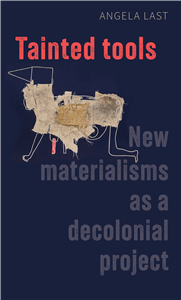
Tainted Tools makes a provocative intervention into the fraught intersection between new materialist and decolonial approaches. Despite a common project of challenging European philosophical and social categories and hierarchies, the discourses are considered incompatible. Most prominently, new materialisms have been accused of harbouring a White vision of the human while disregarding the racist resonances of the 'nonhuman'. The book traces this conflict to an earlier meeting point of new materialist and decolonial projects, which came about through the experimental combination of Marx and Nietzsche. Used to fight fascism, Stalinism and colonialism, this politically contentious fusion gradually became depoliticised, leading to unaddressed tensions today. While the book does not argue for a revival of these early 'new materialisms', it brings their strategies into dialogue with today's new materialisms and decolonial approaches to develop greater theoretical solidarity in times of crisis.
Trusted Partner
Trusted Partner
 Trusted Partner



