PHI Learning Pvt. Ltd.
Leading Indian academic publisher with 58 years' experience in higher education textbooks in print and digital format.
View Rights Portal
Leading Indian academic publisher with 58 years' experience in higher education textbooks in print and digital format.
View Rights Portal
Learnetic is an innovative educational digital publisher, content developer and eLearning technology provider. We are a technology-based company with over 20 years of experience operating in international educational publishing business. We offer a complete suite of advanced software applications supporting all stages of ePublishing, providing our partners with professional Authoring Tools, eLearning Platforms and ready-made interactive learning content.
View Rights Portal

Revolutionäres Vorbild, Internationalist und Kosmopolit, Theoretiker, Philosoph, Schriftsteller, Politiker, Liebhaber, Ehemann, Vater, Jude, Feind und verfolgtes Opfer. Leo Trotzki, einer der bedeutendsten politischen Führer der ersten Hälfte des 20. Jahrhunderts, war von schillernder Gestalt. Der 1879 in der Südukraine als Lew Dawidowitsch Bronstein geborene hat den Grundstein zur Gründung der Sowjetunion gelegt, und wird doch immer wieder unterschlagen, wenn die führenden Köpfe der russischen Revolution genannt werden. Zusammen mit Lenin stand er, der Gründer der Roten Armee, 1917 an der Spitze der Oktoberrevolution. Als Volkskommissar war er unter anderem verantwortlich für das Kriegs- und Verlagswesen. Trotzki war nicht nur politischer Führer, sondern auch produktiver Schriftsteller und begnadeter Redner. Fragen nach Kultur und Alltagsleben waren ihm ebenso wichtig wie Politik und Geschichte. Der Aufstieg der Stalinfraktion nach Lenins Tod 1924 führte zu seinem Ausschluß aus den politischen Führungspositionen und schließlich zu seiner Verbannung 1929. Im Jahr 1940 wurde Trotzki in Mexiko-City von einem GPU-Agenten mit einem Eispickel erschlagen. Robert Service, Professor für Russische Geschichte und Spezialist für Russische Revolutionsgeschichte, hat viele Jahre unveröffentlichtes Archivmaterial gesichtet und mit seiner packenden Biographie nicht nur das Bild eines der brillantesten politischen Köpfe der Revolution gezeichnet, sondern sich – unparteiisch und unverfälscht – auch mit der überfälligen Debatte um das Verhältnis zwischen Trotzki und Stalin auseinandergesetzt.
 Trusted Partner

 Trusted Partner
 Trusted Partner
 Trusted Partner


What is it like to live next door to a British Army base? England's military heartland provides an eye-opening account of the sprawling military presence on Salisbury Plain, drawing on a wide range of voices from both sides of the divide. Targeted for expansion under government plans to reorganise the UK's global defence estate, the Salisbury 'super garrison' offers a unique opportunity to explore the impact of the military footprint in a particular place. But this is no ordinary environment: as well as being the world-famous site of Stonehenge, the grasslands of Salisbury Plain are home to rare plants and wildlife. How does the army take responsibility for conserving this unique landscape as it trains young men and women to use lethal weapons? Are its claims that its presence is a positive for the environment anything more than propaganda? This book investigates these questions against the backdrop of a historic landscape inscribed with the legacy of perpetual war.
Trusted Partner

A considered investigation of a long-standing army base's impact on the British countryside. What is it like to live next door to a British Army base? Beyond the barracks provides an eye-opening account of the sprawling military presence on Salisbury Plain, drawing on a wide range of voices from both sides of the divide. Targeted for expansion under government plans to reorganise the UK's global defence estate, the Salisbury 'super garrison' offers a unique opportunity to explore the impact of the military footprint in a particular place. But this is no ordinary environment: as well as being the world-famous site of Stonehenge, the grasslands of Salisbury Plain are home to rare plants and wildlife. How does the army take responsibility for conserving this unique landscape as it trains young men and women to use lethal weapons? Are its claims that its presence is a positive for the environment anything more than propaganda? Beyond the barracks investigates these questions against the backdrop of a historic landscape inscribed with the legacy of perpetual war.
Trusted Partner

Postmodern, postcolonial and post-truth are broadly used terms. But where do they come from? When and why did the habit of interpreting the world in post-terms emerge? And who exactly were the 'post boys' responsible for this? Post-everything examines why post-Christian, post-industrial and post-bourgeois were terms that resonated, not only among academics, but also in the popular press. It delves into the historical roots of postmodern and poststructuralist, while also subjecting more recent post-constructions (posthumanist, postfeminist) to critical scrutiny. This study is the first to offer a comprehensive history of post-concepts. In tracing how these concepts found their way into a broad range of genres and disciplines, Post-everything contributes to a rapprochement between the history of the humanities and the history of the social sciences.
Trusted Partner
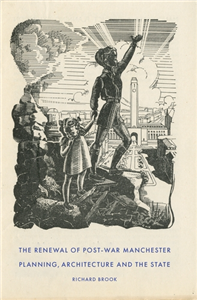
A compelling account of the project to transform post-war Manchester, revealing the clash between utopian vision and compromised reality. Urban renewal in Britain was thrilling in its vision, yet partial and incomplete in its implementation. For the first time, this deep study of a renewal city reveals the complex networks of actors behind physical change and stagnation in post-war Britain. Using the nested scales of region, city and case-study sites, the book explores the relationships between Whitehall legislation, its interpretation by local government planning officers and the on-the-ground impact through urban architectural projects. Each chapter highlights the connections between policy goals, global narratives and the design and construction of cities. The Cold War, decolonialisation, rising consumerism and the oil crisis all feature in a richly illustrated account of architecture and planning in post-war Manchester.
Trusted Partner
Trusted Partner


Make it simple! The pharmacy can do more than just provide medicines. In this book, two smart authors show what ideas are out there for pharmacy services and how they can be offered. This involves much more than just the pharmaceutical services that are paid for. Digitalisation makes many things possible. Optimised operational processes, broad knowledge and skills become further services that offer good opportunities for the on-site pharmacy. Here you can read about • what contemporary services are available, how they can be introduced, and what they should cost, • why telemedicine and appointment booking software can be helpful strategies, and • how pharmacies can effectively counter the mail-order trade. From the content: pharmaceutical counselling in and outside the pharmacy on health topics, prevention and medicinal products, services for specific target groups, distributing and blistering, vaccination, determination of physiological values and much more.
Trusted Partner
 Trusted Partner
 Trusted Partner
 Trusted Partner

Punjab, 'the pride of British India', attracted the cream of the Indian Civil Service, many of the most influential of whom were Irish. Some of these men, along with Irish viceroys, were inspired by their Irish backgrounds to ensure security of tenure for the Punjabi peasant, besides developing vast irrigation schemes which resulted in the province becoming India's most affluent. But similar inspiration contributed to the severity of measures taken against Indian nationalist dissent, culminating in the Amritsar massacre which so catastrophically transformed politics on the sub-continent. Setting the experiences of Irish public servants in Punjab in the context of the Irish diaspora and of linked agrarian problems in Ireland and India, this book descrides the beneficial effects the Irish had on the prosperity of India's most volatile province. Alongside the baleful contribution of some towards a growing Indian antipathy towards British rule. Links are established between policies pursued by Irishmen of the Victorian era and current happenings on the Pakistan-Afghan border and in Punjab.
Trusted Partner
 Trusted Partner
Trusted Partner
Trusted Partner
Trusted Partner
Trusted Partner

Based on a wide range of original sources, including folktales, anthropological studies, court statements, poetry and speeches, this book sheds new light on the struggle of people of African descent for full and equal citizenship in the post-emancipation British Caribbean. It examines the messages that African-Jamaican women were given about their place and roles from within and outside their own community, the extent to which these messages intersected with class and colour ideologies, and African-Jamaican women's attempts to realise these ideals of femininity amidst various constraints. Incorporating the full realm of African-Jamaican women's experiences, exploring not just their sexuality and reproduction but also their roles as labourers, citizens and freedom fighters, the book also links shifting gender ideologies to citizenship, race and nation. Essential reading for undergraduates and graduates interested in gender within the British Caribbean during the critical transformative period between 1865 and 1938, it will also interest political scientists and other scholars working on questions of nationalism, transnationalism and the gendered nature of citizenship. ;
Trusted Partner

This book is available as an open access ebook under a CC-BY-NC-ND licence. At a time when payment is claiming a greater place than ever before within the NHS, this book provides the first in-depth investigation of the workings, scale and meaning of payment in British hospitals before the NHS. There were only three decades in British history when it was the norm for patients to pay the hospital; those between the end of the First World War and the establishment of the National Health Service in 1948. Payment played an important part in redefining rather than abandoning medical philanthropy, based on class divisions and the notion of financial contribution as a civic duty. With new insights on the scope of private medicine and the workings of the means test in the hospital, as well as the civic, consumer and charitable meanings associated with paying the hospital, Gosling offers a fresh perspective on healthcare before the NHS and welfare before the welfare state.