
Bookonomics Asia
The portal to connect with Malaysian content.
View Rights Portal

Established in 1944,the University of South Carolina Press is one of the oldest and most distinguished publishing houses in the South. With well over 1,000 books available in print and digital formats, and publishing approximately fifty new books annually, the Press enhances and expands the scholarly reputation and worldwide visibility of the University of South Carolina.In helping the University fulfill its mission of research and teaching and outreach, the Press publishes a wide range of critically acclaimed works in the following subjects: Southern History, African American Studies, Civil Rights, and South Carolina. In addition, the Press publishes long-running scholarly series in Literary Studies and Rhetoric/Communication. Our editorial profile aligns with several of the institutional strengths of the University and underscores the Press’s mission to serve teachers and learners and readers in the academy and the broader culture, both in North America and around the globe.
View Rights Portal
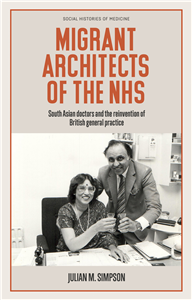
Migrant architects of the NHS draws on forty-five oral history interviews and extensive archival research to offer a radical reappraisal of how the National Health Service was made. It tells the story of migrant South Asian doctors who became general practitioners in the NHS. Imperial legacies, professional discrimination and an exodus of UK-trained doctors combined to direct these doctors towards work as GPs in some of the most deprived parts of the UK. In some areas, they made up over half of the general practitioner workforce. The NHS was structurally dependent on them and they shaped British society and medicine through their agency. Aimed at students and academics with interests in the history of immigration, immigration studies, the history of medicine, South Asian studies and oral history. It will also be of interest to anyone who wants to know more about how Empire and migration have contributed to making Britain what it is today.

 Trusted Partner
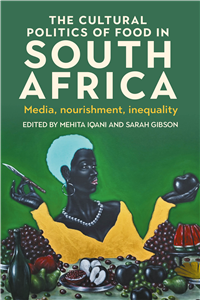
Food is both a material system of nourishment, necessary for human survival, and a communicative system that signifies multiple meanings across human cultures. This book explores the cultural politics of food in the South African context, bringing together a range of disciplinary perspectives on the links between media, nourishment, and inequality. The chapters all highlight the multiplicity of meanings that food has in South African society. These include historical perspectives on the impact of colonialism, migration and apartheid had on food and foodways in South Africa; sociological interventions on food and society; aesthetic practices in relation to food; and mediated food cultures in South Africa. Taken together, the book critically explores the multiple ways in which food is never just food, and always linked to complex and shifting modalities of meaning and knowledge in the South African context.
Trusted Partner
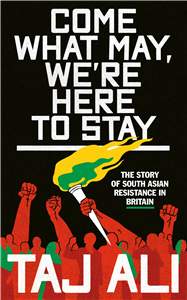
As British South Asians reel from the riots of summer 2025, this book tells the inspirational story of how the community organised against racism in the past and how it continues to fight in the present. British South Asians have a long tradition of radical political activism. The 1970s and 1980s saw the community grappling with prejudice in the workplace and violence in the streets. But this history is deeper than you might think, from students agitating for independence at the heart of the British Empire to seafarers organising global strikes on the eve of the Second World War. In Come what may, we're here to stay, Taj Ali reveals how successive generations fought for rights, dignity and a sense of belonging while actively shaping the country they now call home. He shows that British South Asian political life has often been defined less by religious difference than by shared commitments to anti-imperialism and anti-racism. In pursuit of these goals, alliances have been forged with other movements, from Irish republicanism to Black Power. As racism rears its ugly head again, Come what may, we're here to stay asks: are we are doomed to repeat the past or will we learn from our mistakes and build a better world together?
Trusted Partner
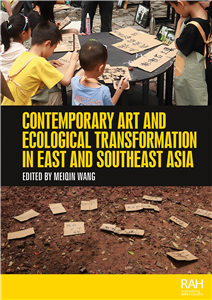
This anthology, presenting new research from fourteen scholars, delves into the interplay between contemporary art and ecological concerns in East and Southeast Asia. Focused on the concept of artistic remediation, the book unravels the diverse capacities of art to combat systemic anthropogenic destruction to the environment and ecology. At its core, the book articulates the ongoing ecological transformation in art and art history that embraces a paradigm shift in human-nature relationships, emphasizing interconnectedness of all life forms of the Earth. Bridging art studies, activism, and environmental studies, the book examines how artistic practices in the region have engaged with ecocritical reflection, biodiversity advocacy, sustainable practices, and environmental justice, among others. Providing a platform for critical and timely analysis of artistic interventions in the face of existential crises, the book acknowledges diverse voices of scholars who have situated their scholarship in the cultural and artistic specificities of various societies, locales, and communities in the region.
Trusted Partner
Trusted Partner
How do governing elites in the global South attempt to remake hegemony in a conjuncture of durable crisis? This is the question at the core of Southern interregnum, a comparative conjunctural analysis of hegemonic projects in Brazil, India, China, and South Africa. Working with a Gramscian notion of crisis, centred on the interregnum as an enduring period of instability and uncertainty, in which hegemonic authority erodes and competing projects for crisis resolution emerge, the book proposes a novel critical reading of the convulsions that are currently reshaping the political economy of the global South and the world-system. Mapping the variegated trajectories of elite projects to reconcile accumulation and legitimation - and probing the limits of these projects - the book breaks new ground in the study of the contemporary global South.
Trusted Partner

Borders and conflict in South Asia is the first full-length study of the 1947 drawing of the Indo-Pakistani boundary in Punjab. Using the Radcliffe commission as a window onto the decolonization and independence of India and Pakistan, and examining the competing interests, both internal and international, that influenced the actions of the various major players, it highlights British efforts to maintain a grip on India even as the decolonization process spun out of control. Drawing on extensive archival research in India, Pakistan, and Britain, combined with innovative use of cartographic sources, the book paints a vivid picture of both the partition process and the Radcliffe line's impact on Punjab. This book will be vital reading for scholars and students of colonialism, decolonization, partition, and borderlands studies, while providing anyone interested in South Asia's independence with a highly readable account of one of its most controversial episodes.
Trusted Partner

The South African War was a catalyst in the creation of modern South Africa and was a major international event which had profound implications for British rule in other parts of their colonial empire. This was South Africa's own 'Great War' - the largest conflict waged by the British in the century between the Napoleonic Wars and the First World War. It shaped political discourse among South Africa's various communities and moulded the outlook of a generation of imperial administrators, soldiers and anti-colonial activists. The war launched South Africa as a moral issue of global significance, involving leading humanitarians, foreign 'pro-Boer' volunteers as well as pro-imperial contingents from various dominions and colonies of settlement, and would later find echoes in the campaign against apartheid. This volume includes a historiographical review of a century of writing on the war. It examines South Africa's place in the imperial structure and reappraises its impact on imperial defence and the political identities of Africans, Asians, Boer commandos and Cape Afrikaners. An analysis of the role of the media and the effects of the war on nationalists in India, Ireland and the Dominions is also included. The South African War reappraised will be of particular interest to students of imperialism, modern South Africa, nationalism and the media.
Trusted Partner
The history of contemporary art is also a history of its newsletters, manifestos, magazines, pamphlets, and journals. Those periodical publications do not simply communicate or record ideas but have worked in exciting ways to shape art's practices, histories and communities. As a new generation of artists, activists and scholars seek to uncover the histories of alternative publishing and artistic networks, this book gathers original archival discoveries while offering methodologies for studying and thinking with those artefacts. As the first essay collection to focus on the periodical art press and the ways we study it, Counter print offers readers an alternative route into the past fifty years of contemporary art, one that is defiantly collaborative, border crossing and disruptive.
Trusted Partner
Trusted Partner
 Trusted Partner
The Carolingian South turns the Frankish world upside down by taking as its subject the lands of the Carolingian empire south of the Loire and the Alps. It assembles an international group of scholars from different disciplines to examine how the Carolingians defined and were defined by this region. This book asks how Carolingian power was created and negotiated in the south. It views the Frankish empire from the perspective of the Christian and Muslim polities of the Mediterranean, while also following the movement of people and ideas through the endlessly fascinating world that they made.
Trusted Partner
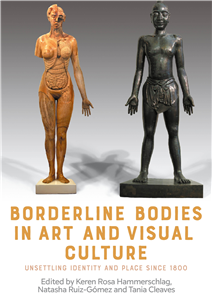
Borderline bodies offers original interpretations of visual representations of human bodies as bounded and unbounded, fortified and permeable, mobile and static-subject to borders and able to traverse and challenge them. It also takes as its focus images and objects that might be considered 'borderline' because they sit at the intersection of disciplines or sit outside accepted notions of what constitutes serious 'art.' By mapping the ways human bodies traverse borders and straddle-even dismantle-categories, this volume's essays approach afresh the relationship of bodies to traditional modes of representation, especially in art and medicine, and encourage us to think anew about how we understand the relationship between human corporeality, identity and place. Critical transdisciplinary and transnational analyses of objects and images from a range of geographies shed new light on the themes of: bodies and identity; typologies of the body; racialised bodies; 'normal' and 'abnormal' bodies; encounters between bodies; bodies in transition; bodies and mobility; and the bounded and unbounded human body. The outcome is a fresh approach to depictions of the human body produced for the purposes of artistic and medical education, aesthetic edification, and scientific and professional advancement, which disrupts assumptions about the normative human body perpetuated through Western image-making traditions.
Trusted Partner
 Trusted Partner
Aid for Dominance addresses the analytic weaknesses of mainstream analysis of foreign aid, which often focuses on its material dimensions. The book underscores the constitutive relationship between foreign aid as a material resource and the diplomatic discourses and practices that constitute complex bilateral relations between donor and recipient states. Written by two leading scholars of contemporary United States and Chinese foreign policies in the Global South, Aid for Dominance offers a pioneering, theoretically conscious, and empirically rich account of the two great powers' grand strategies in the global development sector. By deploying a multidisciplinary and comparative analysis, this book draws from a wide range of evidentiary materials from primary sources, including data from fieldwork interviews, government documents, local and international newspapers, speeches by high-ranking government officials and diplomats, and secondary data from scholarly publications and policy papers.
Trusted Partner
The 1990s were the decade of transition from white rule to black rule in South Africa. In the political sphere the transition was dramatic. In the economic sphere less so, yet the effects were and are likely to be far more far reaching. It is the economic impacts which are likely to determine the future of the country. With the exception of the diamond-rich Botswana, all the countries of Africa which underwent the transition from white to black rule experienced economic decline. Is this to be the fate of South Africa? How was and is South Africa's historical role as the world's leading gold producer affected by the transition? Why did some economic policies succeed and others fail? This book, by leading authorities in the field, attempts to answer these and other related questions. ;
Trusted Partner
With original case studies of a more than a dozen countries, Monarchies and decolonisation in Asia offers new perspectives on how both European monarchs who reigned over Asian colonies and Asian royal houses adapted to decolonisation. As colonies became independent states (and European countries, and other colonial powers, lost their overseas empires), monarchies faced the challenges of decolonisation, republicanism and radicalism. These studies place dynasties - both European and 'native' - at the centre of debate about decolonisation and the form of government of new states, from the sovereigns of Britain, the Netherlands and Japan to the maharajas of India, the sultans of the East Indies and the 'white rajahs' of Sarawak. It provides new understanding of the history of decolonisation and of the history of modern monarchy.
Trusted Partner
Risk, anxiety and moral panic are endemic to contemporary societies and media forms. How do these phenomena manifest in a place like South Africa, which features heightened insecurity, deep inequality and accelerated social change? What happens when cultures of fear intersect with pervasive systems of gender, race and class? Worrier state investigates four case studies in which fear and anxiety appear in radically different ways: the far right myth of 'white genocide'; so-called 'Satanist' murders of young women; an urban legend about township crime; and social theories about safety and goodness in the suburbs. Falkof foregrounds the significance of emotion as a socio-political force, emphasising South Africa's imbrication within globalised conditions of anxiety and thus its fundamental and often-ignored hypermodernity. The book offers a bold and creative perspective on the social roles of fear and emotion in South Africa and thus on everyday life in this complex place.
Trusted Partner
The five Nordic countries - Denmark, Finland, Iceland, Norway and Sweden - frequently attract attention as examples of a 'Nordic model'. The meanings of the term vary, but especially since the global financial crisis of 2008-9 the Nordic countries have often been portrayed positively, as examples of economic dynamism, innovation and social equality. Studies of these images of the Nordic countries and Nordic region and their international circulations are now a well-established field of research. This volume explores how the Nordic model has been shaped by global entanglements, in exchange not only with Western Europe and North America, but also with the Global South. Drawing on selected case studies, the volume offers new perspectives on the meanings of the Nordic model and Nordic exceptionalism in a global context during the half century since c. 1970.


