
Your Search Results


-
Promoted Content

 MedicineNovember 2019
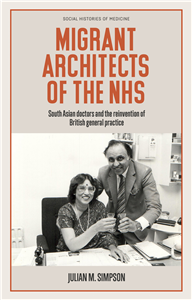
Migrant architects of the NHS
South Asian doctors and the reinvention of British general practice (1940s-1980s)
by Julian Simpson, Keir Waddington
Migrant architects of the NHS draws on forty-five oral history interviews and extensive archival research to offer a radical reappraisal of how the National Health Service was made. It tells the story of migrant South Asian doctors who became general practitioners in the NHS. Imperial legacies, professional discrimination and an exodus of UK-trained doctors combined to direct these doctors towards work as GPs in some of the most deprived parts of the UK. In some areas, they made up over half of the general practitioner workforce. The NHS was structurally dependent on them and they shaped British society and medicine through their agency. Aimed at students and academics with interests in the history of immigration, immigration studies, the history of medicine, South Asian studies and oral history. It will also be of interest to anyone who wants to know more about how Empire and migration have contributed to making Britain what it is today.
-
Promoted Content
 Humanities & Social SciencesSeptember 2026
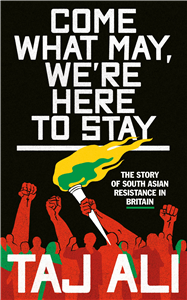
Come what may, we're here to stay
The story of South Asian resistance in Britain
by Taj Ali
As British South Asians reel from the riots of summer 2025, this book tells the inspirational story of how the community organised against racism in the past and how it continues to fight in the present. British South Asians have a long tradition of radical political activism. The 1970s and 1980s saw the community grappling with prejudice in the workplace and violence in the streets. But this history is deeper than you might think, from students agitating for independence at the heart of the British Empire to seafarers organising global strikes on the eve of the Second World War. In Come what may, we're here to stay, Taj Ali reveals how successive generations fought for rights, dignity and a sense of belonging while actively shaping the country they now call home. He shows that British South Asian political life has often been defined less by religious difference than by shared commitments to anti-imperialism and anti-racism. In pursuit of these goals, alliances have been forged with other movements, from Irish republicanism to Black Power. As racism rears its ugly head again, Come what may, we're here to stay asks: are we are doomed to repeat the past or will we learn from our mistakes and build a better world together?
-
 Trusted Partner
 Literature & Literary StudiesJune 2025
Resistance and its discontents in South Asian women's fiction
by Maryam Mirza
-
Trusted Partner
 Humanities & Social SciencesMarch 2026
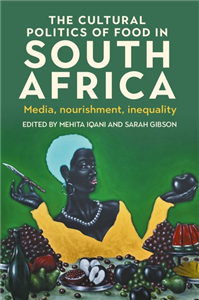
The cultural politics of food in South Africa
Media, nourishment, inequality
by Mehita Iqani, Sarah Gibson
Food is both a material system of nourishment, necessary for human survival, and a communicative system that signifies multiple meanings across human cultures. This book explores the cultural politics of food in the South African context, bringing together a range of disciplinary perspectives on the links between media, nourishment, and inequality. The chapters all highlight the multiplicity of meanings that food has in South African society. These include historical perspectives on the impact of colonialism, migration and apartheid had on food and foodways in South Africa; sociological interventions on food and society; aesthetic practices in relation to food; and mediated food cultures in South Africa. Taken together, the book critically explores the multiple ways in which food is never just food, and always linked to complex and shifting modalities of meaning and knowledge in the South African context.
-
Trusted Partner
-
Trusted Partner
 Humanities & Social SciencesMarch 2017
The South African War reappraised
by Andrew Thompson, John M. MacKenzie
The South African War was a catalyst in the creation of modern South Africa and was a major international event which had profound implications for British rule in other parts of their colonial empire. This was South Africa's own 'Great War' - the largest conflict waged by the British in the century between the Napoleonic Wars and the First World War. It shaped political discourse among South Africa's various communities and moulded the outlook of a generation of imperial administrators, soldiers and anti-colonial activists. The war launched South Africa as a moral issue of global significance, involving leading humanitarians, foreign 'pro-Boer' volunteers as well as pro-imperial contingents from various dominions and colonies of settlement, and would later find echoes in the campaign against apartheid. This volume includes a historiographical review of a century of writing on the war. It examines South Africa's place in the imperial structure and reappraises its impact on imperial defence and the political identities of Africans, Asians, Boer commandos and Cape Afrikaners. An analysis of the role of the media and the effects of the war on nationalists in India, Ireland and the Dominions is also included. The South African War reappraised will be of particular interest to students of imperialism, modern South Africa, nationalism and the media.
-
Trusted Partner
 Business, Economics & LawJune 2025
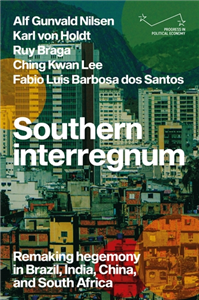
Southern interregnum
Remaking hegemony in Brazil, India, China, and South Africa
by Alf Gunvald Nilsen, Karl von Holdt, Ruy Braga, Ching Kwan Lee, Fabio Luis Barbosa dos Santos
How do governing elites in the global South attempt to remake hegemony in a conjuncture of durable crisis? This is the question at the core of Southern interregnum, a comparative conjunctural analysis of hegemonic projects in Brazil, India, China, and South Africa. Working with a Gramscian notion of crisis, centred on the interregnum as an enduring period of instability and uncertainty, in which hegemonic authority erodes and competing projects for crisis resolution emerge, the book proposes a novel critical reading of the convulsions that are currently reshaping the political economy of the global South and the world-system. Mapping the variegated trajectories of elite projects to reconcile accumulation and legitimation - and probing the limits of these projects - the book breaks new ground in the study of the contemporary global South.
-
Trusted Partner
 Humanities & Social SciencesMarch 2026
Globalising the Nordic Model
From exceptionalism to entanglement
by Mary Hilson
The five Nordic countries - Denmark, Finland, Iceland, Norway and Sweden - frequently attract attention as examples of a 'Nordic model'. The meanings of the term vary, but especially since the global financial crisis of 2008-9 the Nordic countries have often been portrayed positively, as examples of economic dynamism, innovation and social equality. Studies of these images of the Nordic countries and Nordic region and their international circulations are now a well-established field of research. This volume explores how the Nordic model has been shaped by global entanglements, in exchange not only with Western Europe and North America, but also with the Global South. Drawing on selected case studies, the volume offers new perspectives on the meanings of the Nordic model and Nordic exceptionalism in a global context during the half century since c. 1970.
-
Trusted Partner
 Humanities & Social SciencesMarch 2017
Borders and conflict in South Asia
The Radcliffe Boundary Commission and the partition of Punjab
by Lucy Chester
Borders and conflict in South Asia is the first full-length study of the 1947 drawing of the Indo-Pakistani boundary in Punjab. Using the Radcliffe commission as a window onto the decolonization and independence of India and Pakistan, and examining the competing interests, both internal and international, that influenced the actions of the various major players, it highlights British efforts to maintain a grip on India even as the decolonization process spun out of control. Drawing on extensive archival research in India, Pakistan, and Britain, combined with innovative use of cartographic sources, the book paints a vivid picture of both the partition process and the Radcliffe line's impact on Punjab. This book will be vital reading for scholars and students of colonialism, decolonization, partition, and borderlands studies, while providing anyone interested in South Asia's independence with a highly readable account of one of its most controversial episodes.
-
Trusted Partner
 January 1993
South Asian Archaeology 1991
Proceedings of the eleventh International Conference of the Association of South Asian Archaeologists in Western Europe held in Berlin 1-5 July 1991
by Herausgegeben von Gail, Adalbert J.; Herausgegeben von Mevissen, Gerd J. R.; Überarbeitet von Zehmke, Britta
-
Trusted Partner
 Humanities & Social SciencesNovember 2016
Postcolonial minorities in Britain and France
by Shailja Sharma
-
Trusted Partner
 Humanities & Social SciencesMay 2026
The Carolingian South
by Sam Ottewill-Soulsby, Graeme Ward
The Carolingian South turns the Frankish world upside down by taking as its subject the lands of the Carolingian empire south of the Loire and the Alps. It assembles an international group of scholars from different disciplines to examine how the Carolingians defined and were defined by this region. This book asks how Carolingian power was created and negotiated in the south. It views the Frankish empire from the perspective of the Christian and Muslim polities of the Mediterranean, while also following the movement of people and ideas through the endlessly fascinating world that they made.
-
Trusted Partner
 Humanities & Social SciencesJanuary 2026
United States and Chinese foreign assistance and diplomacy
Aid for dominance
by Salvador Santino Regilme, Obert Hodzi
Aid for Dominance addresses the analytic weaknesses of mainstream analysis of foreign aid, which often focuses on its material dimensions. The book underscores the constitutive relationship between foreign aid as a material resource and the diplomatic discourses and practices that constitute complex bilateral relations between donor and recipient states. Written by two leading scholars of contemporary United States and Chinese foreign policies in the Global South, Aid for Dominance offers a pioneering, theoretically conscious, and empirically rich account of the two great powers' grand strategies in the global development sector. By deploying a multidisciplinary and comparative analysis, this book draws from a wide range of evidentiary materials from primary sources, including data from fieldwork interviews, government documents, local and international newspapers, speeches by high-ranking government officials and diplomats, and secondary data from scholarly publications and policy papers.
-
Trusted Partner
 Business, Economics & LawJuly 2010
South African economy and policy, 1990-2000
An economy in transition
by Stuart Jones, Robert W. Vivian
The 1990s were the decade of transition from white rule to black rule in South Africa. In the political sphere the transition was dramatic. In the economic sphere less so, yet the effects were and are likely to be far more far reaching. It is the economic impacts which are likely to determine the future of the country. With the exception of the diamond-rich Botswana, all the countries of Africa which underwent the transition from white to black rule experienced economic decline. Is this to be the fate of South Africa? How was and is South Africa's historical role as the world's leading gold producer affected by the transition? Why did some economic policies succeed and others fail? This book, by leading authorities in the field, attempts to answer these and other related questions. ;
-
Trusted Partner
Humanities & Social SciencesApril 2023
Monarchies and decolonisation in Asia
by Robert Aldrich, Cindy McCreery
With original case studies of a more than a dozen countries, Monarchies and decolonisation in Asia offers new perspectives on how both European monarchs who reigned over Asian colonies and Asian royal houses adapted to decolonisation. As colonies became independent states (and European countries, and other colonial powers, lost their overseas empires), monarchies faced the challenges of decolonisation, republicanism and radicalism. These studies place dynasties - both European and 'native' - at the centre of debate about decolonisation and the form of government of new states, from the sovereigns of Britain, the Netherlands and Japan to the maharajas of India, the sultans of the East Indies and the 'white rajahs' of Sarawak. It provides new understanding of the history of decolonisation and of the history of modern monarchy.
-
Trusted Partner
-
Trusted Partner
 Humanities & Social SciencesFebruary 2025
Global counter-terrorism
by Tahir Abbas, Sylvia I. Bergh, Sagnik Dutta
This collection aims to inaugurate a new direction in research on counterterrorism by exploring global connections - both in terms of practices and discourses, as well as shared ideas and epistemes - that animate counterterrorism practices. The chapters - grouped under the themes of postcoloniality and coloniality, and entanglements of the transnational and the local, and counterterrorism and right-wing extremism - are attentive to global connections and are mindful of the complexities of global historical processes that constitute the politics of counterterrorism. This book aims to bring together scholars studying counterterrorism in the global North and the global South to explore convergence and divergence in how counterterrorism policies function in a range of national and local contexts.
-
Trusted Partner
 Humanities & Social SciencesJuly 2025
Formulating development
How Nestlé shaped the aid industry
by Lola Wilhelm
In the 1970s, Nestlé became a lightning rod for criticism against the food industry's negative impacts on humans and their environment, especially in the Global South. But what has so far eluded historical scrutiny is that the picture was more nuanced. This book tells the exclusive story of how the Swiss food giant, and more broadly corporate capitalism, have shaped the aid industry since the late nineteenth century. It follows Nestlé's bid for a share of the humanitarian market brokered by the Red Cross in wartime Europe, of its clinical trials in Swiss and Senegalese maternities, and of its agricultural modernisation schemes in Mexico, India, and the Ivory Coast. Based on extensive research in the firm's own historical archives and the records of national and international aid agencies, the volume interrogates the legacies of this long history for international development today.
-
Trusted Partner
 Humanities & Social SciencesMarch 2023
Socialist republic
Remaking the British left in 1980s Sheffield
by Daisy Payling
Socialist republic is a timely account of 1980s left-wing politics in South Yorkshire. It explores how Sheffield City Council set out to renew the British Left. Through careful analysis of the Council's agenda and how it interacted with trade unions, women's groups, lesbian and gay rights groups and acted on issues such as peace, environmentalism, anti-apartheid and anti-racism, the book draws out the complexities involved in building a broad-based politics which aimed unite class and identity politics. Running counter to 1980s narratives dominated by Thatcherism, the book examines the persistence of social democracy locally, demonstrating how grassroots local histories can enrich our understanding of political developments on a national and international level. The book is essential reading for students, scholars, and activists with an interest in left-wing politics and history.
-
Trusted Partner
 Humanities & Social SciencesOctober 2025
Gender, empire and citizenship
British women and the South African War
by Eliza Riedi
When the South African War broke out in 1899 British middle-class women, already well-integrated into party politics and public life, were quick to respond. Women across a wide political spectrum, from jingo imperialists to 'pro-Boers', actively engaged in public debates over the war through meetings, speeches, petitions, electioneering, and the press. From the start pacifist women made important contributions to the anti-war movement, later providing vital backing for Emily Hobhouse's campaign to reform the concentration camps. Women imperialists supported the war effort through military philanthropy and imperial propaganda. Under Millicent Garrett Fawcett the government-appointed Ladies' Committee transformed the camps, while hundreds of British women were recruited as camps teachers and nurses. Fundamentally shaped by ideologies of gender and race, women's responses to this imperial war continued to influence women's public action and discourses of citizenship into the First World War.


