
Thekla Verlag
We are a publisher from Germany with a selected list of children's and young adult books.
View Rights Portal
We are a publisher from Germany with a selected list of children's and young adult books.
View Rights Portal
Theart Press is a South African publisher specialisingin inspirational books - including poetry, children's books and biography.
View Rights Portal

The forgotten legacy of religious Jewish anarchism, and the adventures and ideas of its key figures, finally comes to light in this book. Set in the decades surrounding both world wars, No masters but God identifies a loosely connected group of rabbis and traditionalist thinkers who explicitly appealed to anarchist ideas in articulating the meaning of the Torah, traditional practice, Jewish life and the mission of modern Jewry. Full of archival discoveries and first translations from Yiddish and Hebrew, it explores anarcho-Judaism in its variety through the works of Yaakov Meir Zalkind, Yitshak Nahman Steinberg, Yehudah Leyb Don-Yahiya, Avraham Yehudah Heyn, Natan Hofshi, Shmuel Alexandrov, Yehudah Ashlag and Aaron Shmuel Tamaret. With this ground-breaking account, Hayyim Rothman traces a complicated story about the modern entanglement of religion and anarchism, pacifism and Zionism, prophetic anti-authoritarianism and mystical antinomianism.
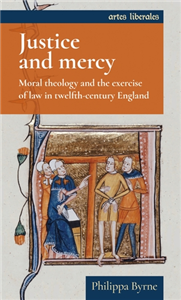
This book examines one of the most fundamental issues in twelfth-century English politics: justice. It demonstrates that during the foundational period for the common law, the question of judgement and judicial ethics was a topic of heated debate - a common problem with multiple different answers. How to be a judge, and how to judge well, was a concern shared by humble and high, keeping both kings and parish priests awake at night. Using theological texts, sermons, legal treatises and letter collections, the book explores how moralists attempted to provide guidance for uncertain judges. It argues that mercy was always the most difficult challenge for a judge, fitting uncomfortably within the law and of disputed value. Shining a new light on English legal history, Justice and mercy reveals the moral dilemmas created by the establishment of the common law.
 Trusted Partner

The John Rylands Library houses one of the finest collections of rare books, manuscripts and archives in the world. The collections span five millennia, have a global reach and cover a wide range of subjects, including art and archaeology; economic, social, political, religious and military history; literature, drama and music; science and medicine; theology and philosophy; travel and exploration. For over a century, the Bulletin of the John Rylands Library has published research that complements the Library's special collections. An electronic edition of this issue is freely available under a Creative Commons (CC BY-NC-ND) licence.
Trusted Partner
The John Rylands Library houses one of the finest collections of rare books, manuscripts and archives in the world. The collections span five millennia, have a global reach and cover a wide range of subjects, including art and archaeology; economic, social, political, religious and military history; literature, drama and music; science and medicine; theology and philosophy; travel and exploration. For over a century, the Bulletin of the John Rylands Library has published research that complements the Library's special collections. An electronic edition of this issue is freely available under a Creative Commons (CC BY-NC-ND) licence.
Trusted Partner
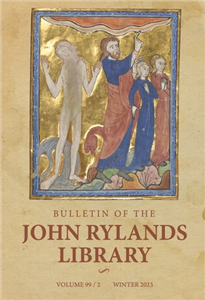
The John Rylands Library houses one of the finest collections of rare books, manuscripts and archives in the world. The collections span five millennia and cover a wide range of subjects, including art and archaeology; economic, social, political, religious and military history; literature, drama and music; science and medicine; theology and philosophy; travel and exploration. For over a century, the Bulletin of the John Rylands Library has published research that complements the Library's special collections. The editors invite the submission of articles in these fields and welcome discussion of in-progress projects.
Trusted Partner
Trusted Partner
 Trusted Partner

Punjab, 'the pride of British India', attracted the cream of the Indian Civil Service, many of the most influential of whom were Irish. Some of these men, along with Irish viceroys, were inspired by their Irish backgrounds to ensure security of tenure for the Punjabi peasant, besides developing vast irrigation schemes which resulted in the province becoming India's most affluent. But similar inspiration contributed to the severity of measures taken against Indian nationalist dissent, culminating in the Amritsar massacre which so catastrophically transformed politics on the sub-continent. Setting the experiences of Irish public servants in Punjab in the context of the Irish diaspora and of linked agrarian problems in Ireland and India, this book descrides the beneficial effects the Irish had on the prosperity of India's most volatile province. Alongside the baleful contribution of some towards a growing Indian antipathy towards British rule. Links are established between policies pursued by Irishmen of the Victorian era and current happenings on the Pakistan-Afghan border and in Punjab.
Trusted Partner
Trusted Partner
Trusted Partner
 Trusted Partner
The John Rylands Library houses one of the finest collections of rare books, manuscripts and archives in the world. The collections span five millennia, have a global reach and cover a wide range of subjects, including art and archaeology; economic, social, political, religious and military history; literature, drama and music; science and medicine; theology and philosophy; travel and exploration. For over a century, the Bulletin of the John Rylands Library has published research that complements the Library's special collections.
Trusted Partner
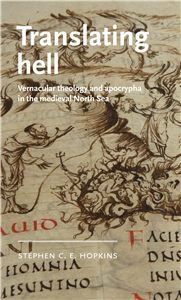
In the Middle Ages, hell was useful because it was vaguely defined. Canonical scriptures scarcely mention hell, leaving much to the imaginations of early Christians, who used it to sort out who belonged within the faith. This book explores how hell became a place for literary experiments with local challenges in theology and identity. Following the reception and transformations of two popular hell apocrypha, it argues that they served as this role because of their liminal textual authority. As noncanonical scriptures, apocrypha afforded medieval writers space to revise their hells (since they were not actually scripture), while also encouraging readers to revere those experiments as valid (since they seemed like scripture). The book brings together adaptations from early medieval England, Iceland, Ireland, and Wales, placing the early vernacular theologies of the North Sea in comparative conversation.
Trusted Partner
 Trusted Partner
Imperial power, both formal and informal, and research in the natural sciences were closely dependent in the nineteenth century. This book examines a portion of the mass-produced juvenile literature, focusing on the cluster of ideas connected with Britain's role in the maintenance of order and the spread of civilization. It discusses the political economy of Western ecological systems, and the consequences of their extension to the colonial periphery, particularly in forms of forest conservation. Progress and consumerism were major constituents of the consensus that helped stabilise the late Victorian society, but consumerism only works if it can deliver the goods. From 1842 onwards, almost all major episodes of coordinated popular resistance to colonial rule in India were preceded by phases of vigorous resistance to colonial forest control. By the late 1840s, a limited number of professional positions were available for geologists in British imperial service, but imperial geology had a longer pedigree. Modern imperialism or 'municipal imperialism' offers a broader framework for understanding the origins, long duration and persistent support for overseas expansion which transcended the rise and fall of cabinets or international realignments in the 1800s. Although medical scientists began to discern and control the microbiological causes of tropical ills after the mid-nineteenth century, the claims for climatic causation did not undergo a corresponding decline. Arthur Pearson's Pearson's Magazine was patriotic, militaristic and devoted to royalty. The book explores how science emerged as an important feature of the development policies of the Colonial Office (CO) of the colonial empire.
Trusted Partner


Nach seinen sprachphilosophischen Arbeiten ('Sprechakte', stw 458; 'Ausdruck und Bedeutung', stw 349) hat John R. Searle mit 'Intentionalität' eine Untersuchung zu einem Kernstück der Philosophie des Geistes vorgelegt, die in einem engen thematischen Zusammenhang mit den früheren Arbeiten steht. Intentionalität ist nach Searles Auffassung die Basis sprachlicher Bedeutung. In seiner Theorie der Intentionalität geht es um die begrifflichen Eigenschaften intentionaler Zustände (auf die Frage nach ihrem ontologischen Status geht er ausführlicher ein in 'Geist, Hirn und Wissenschaft', stw 591). Zwei Aspekte stehen dabei im Vordergrund der Untersuchung: die Logik der Repräsentation und der Kausalität intentionaler Zustände. Doch Searle entwickelt in dieser Arbeit nicht nur eine Theorie der Intentionalität und des Zusammenhangs zwischen sprachlichem und geistigem Inhalt. In einem vornehmlich kritischen Teil setzt er sich ausführlich mit konkurrierenden Auffassungen aus dem Bereich der analytischen Philosophie auseinander, insbesondere mit derzeit sehr einflußreichen 'nicht-deskriptivistischen' Theorien des Bezugs, wie sie von S. Kripke, H. Putnam, K. Donnellan, T. Burge und D. Kaplan vertreten und angeregt wurden.
Trusted Partner

Der Band versammelt nicht nur Texte aus Byrons Werk, in denen das Bildnis des modernen Künstlers als Lord Byron eindringlich zum Ausdruck kommt, darunter besonders Tagebücher und Briefe, sondern auch Zeugnisse, die den Mythos »des wunderbarsten zu eigner Qual geborenen Talents« (Goethe) dokumentieren, also die Kultgestalt Europas, zu der dieser Dichter sich selbst gemacht hat und die als »Byronismus« seine Wirkung bestimmt bis heute.
Trusted Partner
Research on soldier settlement has to be set within the wider history of emigration and immigration. This book examines two parallel but complementary themes: the settlement of British soldiers in the overseas or 'white' dominions, Australia, Canada, New Zealand and South Africa, between 1915 and 1930. One must place soldier settlement within the larger context of imperial migration prior to 1914 in order to elicit the changes in attitude and policy which occurred after the armistice. The book discusses the changes to Anglo-dominion relations that were consequent upon the incorporation of British ex-service personnel into several overseas soldier settlement programmes, and unravels the responses of the dominion governments to such programmes. For instance, Canadians and Australians complained about the number of ex-imperials who arrived physically unfit and unable to undertake employment of any kind. The First World War made the British government to commit itself to a free passage scheme for its ex-service personnel between 1914 and 1922. The efforts of men such as L. S. Amery who attempted to establish a landed imperial yeomanry overseas is described. Anglicisation was revived in South Africa after the second Anglo-Boer War, and politicisation of the country's soldier settlement was an integral part of the larger debate on British immigration to South Africa. The Australian experience of resettling ex-servicemen on the land after World War I came at a great social and financial cost, and New Zealand's disappointing results demonstrated the nation's vulnerability to outside economic factors.
Trusted Partner
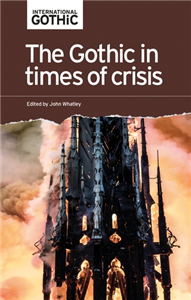
The Gothic in times of crisis reflects contemporary society, showing how the Gothic modes continually resets its own forms to encompass each new reality, each new apocalypse, each new plague or crisis. This collection expands oncurrent scholarship to show how the Gothic challenges our understanding of both older and recent crises and, in turn, disturbs all genre complacencies to expose and confront the problems and contradictions in what our world has been, has become, or is in danger of becoming. This collection explores Gothic's current relevance to the contestations of ideas and the underlying and visible conflicts it dramatizes across a wide range of media. In various ways, it reveals what happens to Gothic modes now they confront the increasingly Gothic realities of our times, sometimesby recalling earlier crises and ideological contestations leading up to them.
Trusted Partner



