
Water Environment Federation
Water Environment Federation (WEF)publishes a variety of technical publications, including newsletters,manuals of practice and other books, magazines, and journals.
View Rights Portal
Water Environment Federation (WEF)publishes a variety of technical publications, including newsletters,manuals of practice and other books, magazines, and journals.
View Rights Portal

When the South African War broke out in 1899 British middle-class women, already well-integrated into party politics and public life, were quick to respond. Women across a wide political spectrum, from jingo imperialists to 'pro-Boers', actively engaged in public debates over the war through meetings, speeches, petitions, electioneering, and the press. From the start pacifist women made important contributions to the anti-war movement, later providing vital backing for Emily Hobhouse's campaign to reform the concentration camps. Women imperialists supported the war effort through military philanthropy and imperial propaganda. Under Millicent Garrett Fawcett the government-appointed Ladies' Committee transformed the camps, while hundreds of British women were recruited as camps teachers and nurses. Fundamentally shaped by ideologies of gender and race, women's responses to this imperial war continued to influence women's public action and discourses of citizenship into the First World War.

How do feminist movements develop and organise in ethno-nationally divided societies? How does this challenge our understandings of contemporary fourth wave feminism? Women's Troubles sets out to answer these questions using rich empirical data and analysis in an examination of feminist activism after the Northern Irish peace agreement. Utilising feminist frameworks and debates on movement building, policymaking, abortion rights, gender-based violence and the UN women, peace and security agenda, Claire Pierson interrogates the opportunities and challenges in articulating a feminist voice and creating feminist spaces in the conflict transformational politics and society. Capturing the complexities of contemporary feminist movement building in a divided society, Women's Troubles contributes to ongoing analysis of contemporary global feminisms.
 Trusted Partner
 Trusted Partner

Richard Wainwright, the Liberals and Liberal Democrats: Unfinished Business now available in paperback, offers new research on familiar themes involving loyalties of politics, faith and locality. Richard Wainwright was a Liberal MP for seventeen years during the Party's recovery, but his life tells us about much more than this. Wainwright grew up in prosperity, but learned from voluntary work about poverty; he refused to fight in World War Two, but saw war at its cruellest; he joined the Liberal Party when most had given up on it, but gave his fortune to it; lost a by-election but caused the only Labour loss in Harold Wilson's landslide of 1966. He then played a key role in the fall of Jeremy Thorpe, the Lib-Lab Pact and the formation of the SDP-Liberal Alliance and the Liberal Democrats; he represented a unique Yorkshire constituency which reflected his pride and hope for society; and though he gave his life to the battle to be in the Commons, he refused a seat in the Lords. Richard Wainwright's story is central to the story of the Liberal Party and sheds light on the reasons for its survival and the state of its prospects. At the same time this book is a parable of politics for anyone who wants to represent an apparently lost cause, who wants to motivate people who have been neglected, and who wants to follow their convictions at the highest level. ;
Trusted Partner
This volume has emerged to fulfill two main purposes: Primarily, to constitute the first collaborative work that traces the relationship between the Gothic and Women in Spain and the Americas, but also, to surpass the term 'Female Gothic,' coined by Ellen Moers, by transferring the focus towards women and their agency as writers, readers and characters. This volume functions as a manifesto per se to open new avenues into understanding how women have interacted with the Gothic between the nineteenth and twenty-first centuries in Spain and the Americas. The question, we determine, is not simply about identity, but rather about agency. We define women's agency as the total capacity of characters, authors and readers to act freely within a social framework in relation to gothic texts. In our exploration of authorship, we reject the claim that the Gothic is a simplistic literary genre, instead sustaining that the plasticity of the Gothic has enabled it to survive for centuries; by shifting from a genre to a mode, it has surpassed literary forms and invaded all kinds of media: from film to music and merchandise such as clothing and pop culture collectables, fostering an authentic goth fandom.
Trusted Partner

This book is the first analysis of political defections over a long time span. It investigates all the Liberal/Liberal Democrat MPs and former MPs who defected from the party between the elections of December 1910 and May 2010 - around one sixth of all those elected - as well as the smaller number of inward defectors. Each of the 122 defections was an expert judgment on the state of the party at a specific date. The research investigates the timing and reasons for all the defections and reveals long-term trends and underlying causes and apportions responsibility between leaders for them. The author finds some significant differences which distinguished defectors from loyalists and draws wider conclusions about the underlying factors which lead MPs to defect. This book will be of interest to students and lecturers of British politics and anyone interested in the relationship between British political parties in the last century. ;
Trusted Partner

This book provides the most comprehensive analysis of the post-war political thought of the Liberals and Liberal Democrats to date. The rationale of the book stems from a belief that contemporary debate over the party's future ideological direction can only be fully appreciated by placing it within a broader historical context. The book begins by outlining the three dominant ideological traditions within the Liberals and Liberal Democrats - namely, classical liberalism, the 'centre' and social liberalism. The main ideas, policies and personalities associated with each tradition are evaluated. Leading experts in the field then examine a range of themes and issues including constitutional reform, decentralization, political economy, social morality, internationalism and political strategy. The final section consists of three commentaries from different ideological perspectives written by leading Liberal Democrat MPs - Vincent Cable, David Howarth and Steve Webb. In adopting a new approach to the Liberals and Liberal Democrats and in combining expert analysis with political commentary, this book will be of interest to students and the general reader alike. ;
Trusted Partner
Trusted Partner
 Trusted Partner
This volume of essays from a selection of distinguished international scholars is the first of its kind to explore in depth the emotional dimensions of liberal writing in Britain over the long nineteenth century. Addressing liberal writing in the public sphere rather than high political or parliamentary liberalism, it comprises a clear, context-setting introduction and eleven substantive chapters. The chapters analyse key texts and figures from the 1790s through to the 1920s and offer several different approaches to the central concern with the emotions and liberalism. These include examining the place of the emotions in the 'good life'; the social and political function of the emotions; emotional rhetoric in liberal writing; and liberal theories of the emotions. Both individually and as a collection, the essays provide an essential foundation for further scholarly work in this emerging field.
Trusted Partner

Political realism has recently moved to the centre of debates in contemporary political theory. In this monograph, Matt Sleat presents the first comprehensive overview of the resurgence of interest in realist political theory and develops a unique and original defence of liberal politics in realist terms. Through explorations of the work of a diverse range of thinkers, including Bernard Williams, John Rawls, Raymond Geuss, Judith Shklar, John Gray, Carl Schmitt and Max Weber, the author advances a theory of liberal realism that is consistent with the realist emphasis on disagreement and conflict yet still recognisably liberal in its concern with respecting individuals' freedom and constraining political power. The result is a unique contribution to the ongoing debates surrounding realism and an original and timely re-imagining of liberal theory for the twenty-first century. This provocative work will be of interest to students and all concerned with the possibility of realising liberalism and its moral aspirations in today's world. ;
Trusted Partner
 Trusted Partner

This book explores the development, character, and legacy of the ideology of liberal internationalism in late nineteenth and early twentieth-century Britain. Liberal internationalism provided a powerful way of theorising and imagining international relations, and it dominated well-informed political discourse at a time when Britain was the most powerful country in the world. Its proponents focused on securing progress, generating order and enacting justice in international affairs. Liberal internationalism united a diverse group of intellectuals and public figures, and it left a lasting legacy in the twentieth century. This book elucidates the roots, trajectory, and diversity of liberal internationalism, focusing in particular on three intellectual languages - international law, philosophy and history - through which it was promulgated. Finally, it traces the impact of these ideas across the defining moment of the First World War. The liberal internationalist vision of the late-nineteenth century remained popular well into the twentieth century and forms an important backdrop to the development of the academic study of International Relations in Britain. ;
Trusted Partner
The moral problem of authority is the challenge of reconciling legitimate authority (the right to rule) with the demands of freedom and rationality. In this book, I argue that authority can have legitimacy, but when it does it generates a moral dilemma, where the obligation to obey comes at some cost to freedom and reason. Hence, not only do I depart from the views of those who insist that authority can never have legitimacy, but also those who maintain that insofar as authority is legitimate it simply satisfies the demands of freedom or rationality. My focus here will be on both what it is that justifies authority (in particular focusing on membership, and the goods of membership) as well what type of reason an authoritative directive is, how it can come into conflict with others reasons, and how those conflicts are resolved.
Trusted Partner
This book analyses the international phenomenon of private peace entrepreneurs. These are private citizens with no official authority who initiate channels of communication with official representatives from the other side of a conflict in order to promote a conflict resolution process. It combines theoretical discussion with historical analysis, examining four cases from different conflicts: Norman Cousins and Suzanne Massie in the Cold War, Brendan Duddy in the Northern Ireland conflict and Uri Avnery in the Israeli-Palestinian conflict. The book defines the phenomenon, examines the resources and activities of private peace entrepreneurs and their impact on the official diplomacy, and examines the conditions under which they can play an effective role in peace-making processes. This book is relevant to United Nations Sustainable Development Goal 16, Peace, justice and strong institutions.
Trusted Partner


Vladimir Putin has been ruling Russia for 25 years. There is no end in sight to his dictatorship. He relies on repression at home and is waging a war of destruction against a neighbouring country. The conflict with the West has long become a systemic conflict between an illiberal-autocratic ideology and liberal-democratic principles. Nothing will change as long as Putin remains in power. Nevertheless, as far as can be ascertained under unfree conditions, the majority of the population seems to be supporting Putin. Does this mean that too many people in Russia do not want democracy or peace? Will everything remain the same after Putin? Or is there a chance that Russia will eventually take a different, more democratic path? Whatever the outcome of the war in Ukraine, Russia is not going to disappear. We will still have to deal with our big neighbour in the east. This makes it all the more important to focus on longer-term developments. As a recognised expert on Russian history and society, the author outlines what the post-Putin era might look like. His in-depth analysis makes it clear that Russia is partly Putin, but Putin is not everything about Russia.
Trusted Partner
Trusted Partner
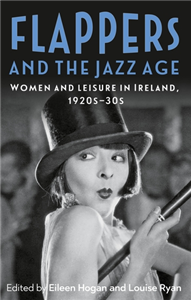
People's ordinary, everyday lives - and more specifically, their leisure activities - are often obscured within existing academic research on 1920s-30s Ireland. This book seeks to redress that neglect by exploring the relationship between identity, recreation, and culture both North and South of the border, with particular attention to women's lived experiences. Leisurely pursuits during this period were commonly overshadowed by religious influence and the nation-building projects in post-partition Ireland. Nevertheless, there existed alternative spaces, where people enjoyed dancing, singing, listening to music, shopping, glamour, reading magazines, swimming, travelling, and going to the cinema. Such activities reflected international trends beyond national borders. This book documents those activities and spaces through a feminist lens and intersectional analysis of gender, class, religion and rural/urban identities. It brings together multi-disciplinary perspectives including cultural studies, architecture, geography, fashion, and musicology. In so doing, we present new insights and advance understanding of this under-researched aspect of Irish history.
Trusted Partner


This book discusses a new type of therapy that can help people with autism to be less overburdened, let go of recurrent thoughts, and get better at recognizing physical signs of stress. Mindfulness includes meditation techniques that are derived from Buddhism and that do not require much communication or insight in thoughts and feelings. This is especially beneficial for people with autism, for whom communication and social interaction can be a challenge. After a clear introduction to what mindfulness is, each chapter of this book offers a meditation exercise. For each meditation exercise useful tips and tricks are given, as well as potential pitfalls that relate directly to autism. Mindfulness for adults with autism is the first treatment for adults with autism that has proven to be effective. Because of its readability and the beautiful illustrations, this book is highly recommended for both therapists and people with autism.
Trusted Partner
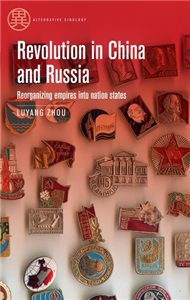
Most scholars believe that China's nationality policy, like that of other socialist states, imitated the Soviet nationality model, a system which has been termed an "affirmative action empire." This book offers two contributions to the literature which run counter to this convention. First, it argues that the People's Republic of China (PRC) and the Soviet Union (USSR) were different; while the PRC was aimed to build an ideal-typical nation-state, the USSR was an open union of nation-states that was only temporarily confined to a physical territory. Second, while scholars who have noted this difference attribute it to contextual factors, such as ethnic structure, geopolitical status, and Russia's intervention into the Chinese Revolution, this book contends that context shaped the Sino-Soviet difference, yet it did not determine it. Rather, there was significant leeway between the implications of the contextual factors, and what the policy-designers ultimately established. This book probes who held agency, and how these individuals bridged this gap.

