Your Search Results

      • Trusted Partner
        Humanities & Social Sciences
        September 2008

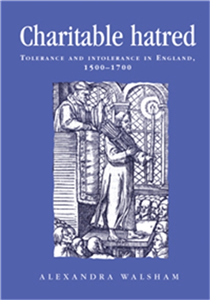
        Charitable hatred

        Tolerance and intolerance in England, 1500–1700

        by Alexandra Walsham, Peter Lake, Anthony Milton, Jason Peacey, Alexandra Gajda

        Charitable Hatred offers a challenging new perspective on religious tolerance and intolerance in early modern England. Setting aside traditional models charting a linear progress from persecution to toleration, it emphasises instead the complex interplay between these two impulses in the sixteenth and seventeenth centuries. The book examines the intellectual assumptions that underpinned attitudes towards religious minorities and the institutional structures and legal mechanisms by which they were both repressed and accommodated. It also explores the social realities of prejudice and forbearance, hostility and harmony at the level of the neighbourhood and parish. Simultaneously, it surveys the range of ways in which dissenting churches and groups responded and adapted to official and popular intolerance, investigating how the experience of suffering helped to forge sectarian identities. In analysing the consequences of the advancing pluralism of English society in the wake of the Reformation, this study illuminates the cultural processes that shaped and complicated the conditions of coexistence before and after the Act of Toleration of 1689. ;

      • Trusted Partner
        2025

        Among Neighbours

        The strangest relationship of our lives

        by Bernd Imgrund

        There are many things in life that we are (more or less) free to choose: our circle of friends, our workplace, our place of residence. However, we have to take some communities as they come: We cannot choose our family or our neighbours, for example. Why this does not only lead to the much-vaunted idyllic sense of belonging and what tensions forced social relationships can cause: This is the subject of this fascinating collection of essays by Bernd Imgrund. It sheds light on a piece of social history that we all know from our own experience: who hasn't had an argument with their immediate neighbour or made fun of the residents of the neighbouring district? But it is by no means only negative aspects that characterise neighbourly relations. Pride in one's neighbourhood, help within a village community: the many advantages of a social community, its importance and its representation in art and literature have also found their way into this book.

      • Trusted Partner
        The Arts
        March 2006

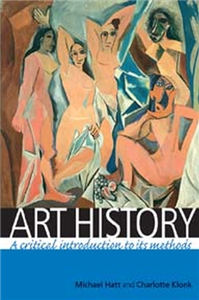
        Art history

        A critical introduction to its methods

        by Michael Hatt, Charlotte Klonk

        Art History: A critical introduction to its methods provides a lively and stimulating introduction to methodological debates within art history. Offering a lucid account of approaches from Hegel to post-colonialism, the book provides a sense of art history's own history as a discipline from its emergence in the late-eighteenth century to contemporary debates. By explaining the underlying philosophical and political assumptions behind each method, along with clear examples of how these are brought to bear on visual and historical analysis, the authors show that an adherence to a certain method is, in effect, a commitment to a set of beliefs and values. The book makes a strong case for the vitality of the discipline and its methodological centrality to new fields such as visual culture. This book will be of enormous value to undergraduate and graduate students, and also makes its own contributions to ongoing scholarly debates about theory and method. ;

      Subscribe to our

      newsletter