De Vecchi/DVE - Confidential Concepts International Ltd.
We are from De Vecchi Ediciones / DVE, a publishing house with about 4000 titles in Spanish.
View Rights Portal
We are from De Vecchi Ediciones / DVE, a publishing house with about 4000 titles in Spanish.
View Rights Portal
Der Concadora Verlag steht für inspirierende Medien und Veranstaltungen zu den Themen Mindful Leadership, Organisationsbezogenes Transformationsmanagement, Kommunikation und Mediation für Führungskräfte, BeraterInnen und MediatorInnen. Ein Schwerpunkt unserer Veröffentlichungen sind Medien zum Konfliktmanagement und zur systemischen Mediation.
View Rights Portal
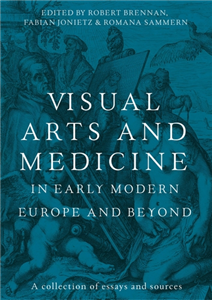
This book opens up new perspectives on the relationship between art, medicine, and science in late-medieval and early modern Europe. Looking beyond the traditional nexus of art, anatomy, and optics, the volume sheds light on a broader array of connections between artists and physicians: collaborations between painters and doctors on colour charts, handwork skills common to sculptors and surgeons, the transmission of art theory through medical texts long before the emergence of art writing itself as an independent genre, and the kinship of medical diagnosis with early modes of connoisseurship. Reconfiguring the histories of art, medicine, and science, the book also traverses conventional boundaries between physical and mental health, religious and medical modes of healing, menial and exalted forms of knowledge and labour, as well as vernacular and scientific understandings of human difference, including gender, race, and neurodiversity.
 Trusted Partner
Trusted Partner
Trusted Partner
Trusted Partner
Trusted Partner
Trusted Partner
Trusted Partner
Trusted Partner
Trusted Partner

In the late eighteenth-century, elite British women had an unprecedented opportunity to travel. Taking travel home uncovers the souvenir culture these women developed around the texts and objects they brought back with them to realise their ambitions in the arenas of connoisseurship, friendship and science. Key characters include forty-three-year-old Hester Piozzi (Thrale), who honeymooned in Italy; thirty-one-year-old Anna Miller, who accompanied her husband on a Grand Tour; Dorothy Richardson, who undertook various tours of England from the ages of twelve to fifty-two; and the sisters Katherine and Martha Wilmot, who travelled to Russia in their late twenties. The supreme tourist of the book, the political salon hostess Lady Elizabeth Holland, travelled to many countries with her husband, including Paris, where she met Napoleon, and Spain during the Peninsular War. Using a methodology informed by literary and design theory, art history, material culture studies and tourism studies, the book examines a wide range of objects, from painted fans "of the ruins of Rome for a sequin apiece" and the Pope's "bless'd beads", to lava from Vesuvius and pieces of Stonehenge. It argues that the rise of the souvenir is representative of female agency, as women used their souvenirs to form spaces in which they could create and control their own travel narratives.
Trusted Partner
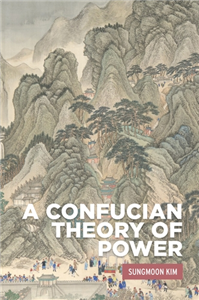
In the book's lead essay, Sungmoon Kim offers a comprehensive analysis of Confucian power. Through a blend of philosophical, political, and historical analysis, Kim challenges the dominant idea that Confucianism is primarily centred on virtue ethics. Instead, he argues that Confucianism perceives power through the prism of responsibility. Kim not only traces this perspective throughout history but also demonstrates its relevance to contemporary society. He contrasts this Confucian perspective with Western political theory's view of power as control. Political theorists and philosophers will offer essay responses to Sungmoon Kim's provocation, offering a dialogue approach to provide a comprehensive analysis of the Confucian conception of power.
Trusted Partner

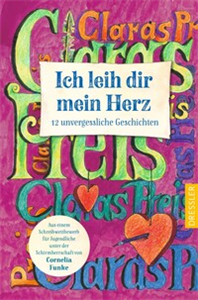
Einzigartige Kurzgeschichten von jungen Talenten – inspirierend und berührend Unter der Schirmherrschaft von Cornelia Funke fand 2022 zum ersten Mal der Kurzgeschichtenwettbewerb „Claras Preis" statt. Ein einmaliger Schreibwettbewerb für junge, aufstrebende Schriftsteller*innen im Alter von 13 bis 17 Jahren. Dieses wunderbare Buch versammelt die zwölf Geschichten, die die Herzen der Jury erobert haben. Die preisgekrönten Kurzgeschichten sind von einer beeindruckenden Qualität: Ihre eindrücklichen, berührenden und humorvollen Texte werden literaturinteressierte Leser*innen ab 12 Jahren inspirieren und begeistern! Ich leih dir mein Herz. 12 unvergessliche Geschichten: Cornelia Funkes Talentschmiede Inspirierend: Die 12 besten Kurzgeschichten des Schreibwettbewerbs „Claras Preis“ für junge Talente, unter der Schirmherrschaft von Cornelia Funke. Herausragend: Die prämierten Geschichten überzeugen durch Qualität, Emotionalität und Humor. Junge Talente: Die Preisträger*innen im Alter von 13 bis 17 Jahren begeistern mit ihren eindrucksvollen Texten. Die international erfolgreichste deutsche Kinder- und Jugendbuchautorin Cornelia Funke hat mit "Claras Preis" eine neue Plattform geschaffen, die junge Schriftsteller*innen ermutigt, ihre Stimme zu finden und zu teilen. Der Erlös des Buches unterstützt einen guten Zweck und kommt der Charité in Berlin zugute.
Trusted Partner
Trusted Partner
 Trusted Partner
Trusted Partner
Trusted Partner

 Trusted Partner
 Trusted Partner

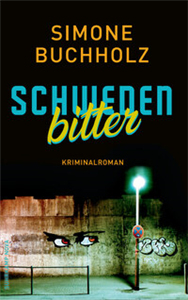
Hamburg Wilhelmsburg – »Problemstadtteil«: Ein amerikanisches Ehepaar wird tot aufgefunden, sie waren die letzten Mieter in einer alten Villa. Staatsanwältin Chastity Riley nimmt sich mit ihrem Team der Sache an und stößt schnell an Grenzen: Immobilienhaie, Baubehörde – undurchdringlicher Sumpf. Und dann ist da auch noch dieser Husten, der Chastity seit Wochen plagt. Doch nichts, wirklich gar nichts kann sie davon abhalten, selbst im dichtesten Novembernebel klare Verhältnisse zu schaffen. Im Hamburger Süden schreitet die Gentrifizierung voran. Aber würden die Spekulanten und Immobilienhaie, die sie antreiben, wirklich so weit gehen, ein altes Ehepaar zu Tode zu prügeln? Tatsache ist: Das Ganze sieht nach einer Botschaft aus. Und die verstockten Beamten von der Baubehörde scheinen lieber auf Tauchstation gehen zu wollen.Privat sieht Chastity Rileys Leben ähnlich verfahren aus: Ihr Freund Klatsche rutscht gefährlich nah an das Milieu heran, aus dem er sich eigentlich fernhalten wollte, ihre Freundin Carla ist ungewollt schwanger und ein neuer Kollege macht Chastity mächtig nervös. Zu allem Überfluss funkt auch noch Ex-Kommissar Faller als Privatermittler in ihrem Fall dazwischen. Doch vielleicht ist das gar nicht so schlecht …
Trusted Partner
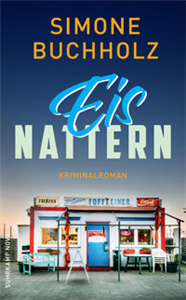
Jahresende, die Welt scheint stillzustehen und nur noch auf Weihnachten zu warten. Selbst vor Sankt Pauli haben die blinkenden Lichter und goldenen Engel nicht haltgemacht. Doch all dem anheimelnden Geblinke und Geklingel zum Trotz scheint es jemand auf die Obdachlosen im Kiez abgesehen zu haben. Und wenn Staatsanwältin Chastity Riley bei etwas keine Gnade kennt, dann wenn auf die schwächsten der Gesellschaft eingeprügelt wird. Chastity Riley wurde zu Zwangsurlaub verdonnert. Ziellos streift sie durch Sankt Pauli, damit die Zeit vergeht, doch die Zeit will nicht vergehen. Auch Weihnachten will nicht einfach an ihr vorüberziehen, sondern drängt sich an jeder Ecke mit aller Macht auf. Als Chastity Zuflucht in den dunklen Ecken sucht, stößt sie dort auf einen brutal zusammengeschlagenen Obdachlosen. Und kurz darauf schon wieder. Die Fälle lassen sie nicht los und, Urlaub hin, Urlaub her, sie beginnt zu ermitteln. Die Spuren führen – wortwörtlich – in den Hamburger Untergrund und zu allen Formen menschlicher Verwahrlosung. Und als Chastity glaubt, dass es schlimmer nicht geht, steht plötzlich ihre lang verschollene Mutter vor der Tür …
Trusted Partner
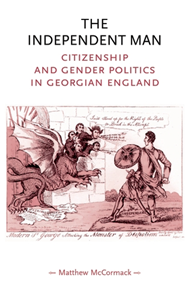
'Independence' was an important ideal for men in Georgian England. In this period, however, the word meant much more than simply the virtues of self-sufficiency and impartiality. Most people believed that obligations absolutely compromised freedom and conscience, whereas 'independence' was associated with manly virtue and physical vigour. Fundamentally, the political world was thought to consist of 'independent men', exercising their consciences and standing up for the general good. As such, Georgians thought about political action and masculine virtue very differently to the ways in which we do today. In study, newly available in paperback, Matthew McCormack establishes the links between the histories of masculinity and politics, highlighting the centrality of 'manly' ideals in the political world and - conversely - the role of politics in the operation of gender ideology. ;
Trusted Partner
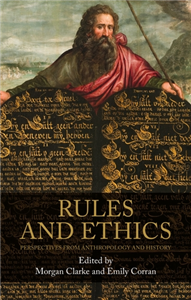
This book investigates the pronounced enthusiasm that many traditions display for codes of ethics characterised by a multitude of rules. Recent anthropological interest in ethics and historical explorations of 'self-fashioning' have led to extensive study of the virtuous self, but existing scholarship tends to pass over the kind of morality that involves legalistic reasoning. Rules and ethics corrects that omission by demonstrating the importance of rules in everyday moral life in a variety of contexts. In a nutshell, it argues that legalistic moral rules are not necessarily an obstruction to a rounded ethical self, but can be an integral part of it. An extended introduction first sets out the theoretical basis for studies of ethical systems that are characterised by detailed rules. This is followed by a series of empirical studies of rule-oriented moral traditions in a comparative perspective.
Trusted Partner
Trusted Partner
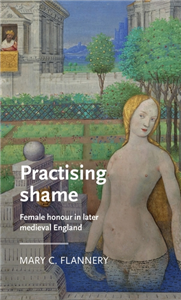
Practicing shame investigates how the literature of medieval England encouraged women to safeguard their honour by cultivating hypervigilance against the possibility of sexual shame. A combination of inward reflection and outward comportment, this practice of 'shamefastness' was believed to reinforce women's chastity of mind and body, and to communicate that chastity to others by means of conventional gestures. The book uncovers the paradoxes and complications that emerged from these emotional practices, as well as the ways in which they were satirised and reappropriated by male authors. Working at the intersection of literary studies, gender studies and the history of emotions, it transforms our understanding of the ethical construction of femininity in the past and provides a new framework for thinking about honourable womanhood now and in the years to come.