
Your Search Results


-
Promoted Content
-
Promoted Content

 Humanities & Social SciencesFebruary 2023
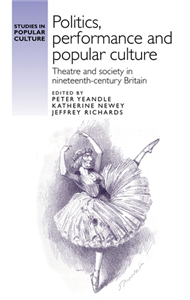
Politics, performance and popular culture
Theatre and society in nineteenth-century Britain
by Peter Yeandle, Katherine Newey, Jeffrey Richards
This collection brings together studies of popular performance and politics across the nineteenth century, offering a fresh perspective from an archivally grounded research base. It works with the concept that politics is performative and performance is political. The book is organised into three parts in dialogue regarding specific approaches to popular performance and politics. Part I offers a series of conceptual studies using popular culture as an analytical category for social and political history. Part II explores the ways that performance represents and constructs contemporary ideologies of race, nation and empire. Part III investigates the performance techniques of specific politicians - including Robert Peel, Keir Hardie and Henry Hyndman - and analyses the performative elements of collective movements.
-
 Trusted Partner
 MedicineNovember 2024
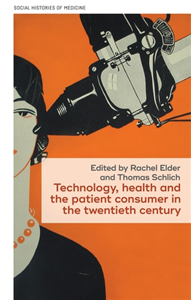
Technology, health and the patient consumer in the twentieth century
by Rachel Elder, Thomas Schlich
Technology and consumerism are two characteristic phenomena in the history medicine and healthcare, yet the connections between them are rarely explored by scholars. In this edited volume, the authors address this disconnect, noting the ways in which a variety of technologies have shaped patients' roles as consumers since the early twentieth century. Chapters examine key issues, such as the changing nature of patient information and choice, patients' assessment of risk and reward, and matters of patient role and of patient demand as they relate to new and changing technologies. They simultaneously investigate how differences in access to care and in outcomes across various patient groups have been influenced by the advent of new technologies and consumer-based approaches to health. The volume spans the twentieth and twenty-first centuries, spotlights an array of medical technologies and health products, and draws on examples from across the United States and United Kingdom.
-
Trusted Partner
 Humanities & Social SciencesMarch 2026
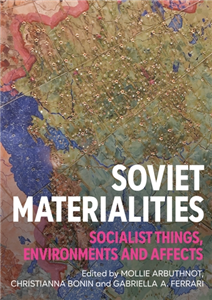
Soviet materialities
Socialist things, environments and affects
by Mollie Arbuthnot, Christianna Bonin, Gabriella Ferrari
Soviet materialities explores how material transforms our understanding of Soviet culture, from the textures of domestic space in 1960s apartment blocks to Gulag labour on the Moscow canal, and from avant-garde literary theory in the 1920s to conceptual art under perestroika. It starts from the ethos that the material world shapes people and society. Taking a material approach-or a range of material approaches-can therefore illuminate aspects of the cultural production and lived experiences of Soviet socialism that are not reflected in other kinds of historical records. This edited volume brings cutting-edge research by emerging scholars together with the established voices who have broken the ground in this sub-field over the last twenty years and promises to make a major intervention in the study of Soviet history and culture.
-
Trusted Partner
 Humanities & Social SciencesDecember 2024
British culture after empire
Race, decolonisation and migration since 1945
by Josh Doble, Liam Liburd, Emma Parker
British culture after Empire is the first collection of its kind to explore the intertwined social, cultural and political aftermath of empire in Britain from 1945 up to and beyond the Brexit referendum of 2016, combining approaches from the fields of history, English and cultural studies. Against those who would deny, downplay or attempt to forget Britain's imperial legacy, the various contributions expose and explore how the British Empire and the consequences of its end continue to shape Britain at the local, national and international level. As an important and urgent intervention in a field of increasing relevance within and beyond the academy, the book offers fresh perspectives on the colonial hangovers in post-colonial Britain from up-and-coming as well as established scholars.
-
Trusted Partner
 The ArtsSeptember 2009
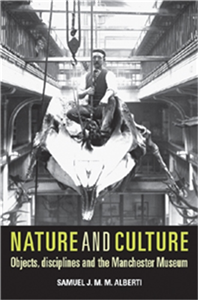
Nature and culture
Objects, disciplines and the Manchester Museum
by Samuel J. M. M. Alberti
This is a vital new work; the first to take the University of Manchester's Museum as its subject. By setting the museum in its cultural and intellectual contexts, Nature and culture explores twentieth-century collecting and display, and the status of the object in the modern world. Beginning with the origins of the Manchester Museum, accounting for its development as an internationally renowned university museum, and concluding at its major expansion at the turn of the millennium, this book casts new light on the history of museums. How did objects become knowledge? Who encountered museum objects on their way to museums? What happened to collections within the museum? How did visitors use and respond to objects? In answering these questions, Nature and culture illuminates not only the history of one institution, but also contributes to wider discussions in the history of science, cultural history and museology. ;
-
Trusted Partner
 Humanities & Social SciencesMarch 2017
The harem, slavery and British imperial culture
Anglo-Muslim relations in the late nineteenth century
by Diane Robinson-Dunn
This book focuses on British efforts to suppress the traffic in female slaves destined for Egyptian harems during the late-nineteenth century. It considers this campaign in relation to gender debates in England, and examines the ways in which the assumptions and dominant imperialist discourses of these abolitionists were challenged by the newly-established Muslim communities in England, as well as by English people who converted to or were sympathetic with Islam. While previous scholars have treated antislavery activity in Egypt first and foremost as an extension of earlier efforts to abolish plantation slavery in the New World, this book considers it in terms of encounters with Islam during a period which it argues marked a new departure in Anglo-Muslim relations. This approach illuminates the role of Islam in the creation of English national identities within the global cultural system of the British Empire. This book would appeal to those with an interest in British imperial history; Islam; gender, feminism, and women's studies; slavery and race; the formation of national identities; global processes; Orientalism; and Middle Eastern studies.
-
Trusted Partner
 Humanities & Social SciencesMay 2000
Smoking in British popular culture 1800–2000
by Matthew Hilton, Jeffrey Richards
A concise history of smoking in British popular culture from the early nineteenth century to the present day.. Provides the historical backdrop to the current debates about the politics of tobacco and health, demonstrating that both pro- and anti-smokers have consistently failed to understand the position of smoking within popular culture.. Important themes explored include: the importance of consumption to constructions of masculinity and femininity, the role of the state in the official regulation of the 'minor vices', the morality of consumption and the position of scientific knowledge within popular culture.. Traces the production, promotion and consumption of tobacco as well as outlining the arguments that have variously opposed this ever-controversial drug.. Genuinely interdisciplinary, combining elements of social, cultural and economic history whilst contributing to debates in sociology and cultural studies, the anthropology of material culture, design history, medical history and public health policy. ;
-
Trusted Partner
-
Trusted Partner
-
Trusted Partner
 Industrial / commercial art & designApril 2017
History through material culture
by Series edited by Simon Trafford, Leonie Hannan, Sarah Longair
History through material culture is a unique, step-by-step guide for students and researchers who wish to use objects as historical sources. Responding to the significant, scholarly interest in historical material culture studies, this book makes clear how students and researchers ready to use these rich material sources can make important, valuable and original contributions to history. Written by two experienced museum practitioners and historians, the book recognises the theoretical and practical challenges of this approach and offers clear advice on methods to get the best out of material culture research. With a focus on the early modern and modern periods, this volume draws on examples from across the world and demonstrates how to use material culture to answer a range of enquiries, including social, economic, gender, cultural and global history.
-
Trusted Partner
 Literature & Literary StudiesFebruary 2000
Feminism, femininity and popular culture
by Joanne Hollows
Accessible, introductory student guide which identifies key feminist approaches to popular culture from the 1960s to the present.. The only introduction to both feminist cultural studies and feminism and popular culture published in the UK.. Presents its information in a reader friendly series of case studies on: women's film romantic fiction soap opera consumption and material culture fashion and beauty proactices youth culture and popular music. Will appeal to students across a wide range of disciplines as a variety of popular cultural forms are discussed. ;
-
Trusted Partner
 Teaching, Language & ReferenceJanuary 2019
Global humanitarianism and media culture
by Michael Lawrence, Rachel Tavernor, Bertrand Taithe
-
Trusted Partner
 Humanities & Social SciencesJuly 2020
Victorian literary culture and ancient Egypt
by Eleanor Dobson
-
Trusted Partner

 2019
2019History of the Throw-Away Society
The drawback of consumption
by Wolfgang König
Sooner or later everything is thrown away. In the consumer society, however, usable and serviceable products that may be as good as new are also thrown away. Such behaviour is the result of a long-term process that has developed over a period of one-and-a-half centuries. The change was led by the USA, and the Federal Republic of Germany followed. It started at the turn of the last century with personal hygiene: articles such as toilet paper, sanitary towels, nappies and paper handkerchiefs. After the Second World War, a large number of other disposable articles were soon added, such as paper cups and plastic dishes, nylon stockings and pens, razor blades, beverage cans and much more besides. Wolfgang König shows how business and consumers have together made throwing things away perfectly normal – and discusses how the throwaway society may be overcome.
-
Trusted Partner
 Humanities & Social SciencesJune 2024
Pandemic culture
by Ben Walmsley, Abigail Gilmore, Dave O'Brien
-
Trusted Partner
 Humanities & Social SciencesMarch 2026
The cultural politics of food in South Africa
Media, nourishment, inequality
by Mehita Iqani, Sarah Gibson
Food is both a material system of nourishment, necessary for human survival, and a communicative system that signifies multiple meanings across human cultures. This book explores the cultural politics of food in the South African context, bringing together a range of disciplinary perspectives on the links between media, nourishment, and inequality. The chapters all highlight the multiplicity of meanings that food has in South African society. These include historical perspectives on the impact of colonialism, migration and apartheid had on food and foodways in South Africa; sociological interventions on food and society; aesthetic practices in relation to food; and mediated food cultures in South Africa. Taken together, the book critically explores the multiple ways in which food is never just food, and always linked to complex and shifting modalities of meaning and knowledge in the South African context.
-
Trusted Partner
 Humanities & Social SciencesJanuary 2006
Gentry culture in late-medieval England
by Raluca Radulescu, Steve Rigby, Alison Truelove
Essays in this fascinating and important collection examine the lifestyles and attitudes of the gentry in late medieval England. They consider the emergence of the gentry as a group distinct from the nobility, and explore the various available routes to gentility. Through surveys of the gentry's military background, administrative and political roles, social behaviour, and education, the reader is provided with an overview of how the group's culture evolved, and how it was disseminated. Studies of the gentry's literacy, creation and use of literature, cultural networks, religious activities and their experiences of music and the visual arts more directly address the practice and expression of this culture, exploring the extent to which the gentry's activities were different from those of the wider population. Joining the editors in contributing essays to this collection is an impressive array of eminent scholars, all specialists in their respective fields: Christine Carpenter, Peter Fleming, Maurice Keen, Philippa Maddern, Nicholas Orme, Tim Shaw, Thomas Tolley and Deborah Youngs. As a whole, the book offers a broad view of gentry culture that explores, reassesses, and sometimes even challenges the idea that members of the gentry cultivated their own distinctive cultural identity. It will appeal to students looking for a comprehensive introduction to late medieval gentry culture, as well as to researchers interested in gentry studies more generally. ;
-
Trusted Partner
 The ArtsAugust 2007
The public culture of the Victorian middle class
Ritual and authority in the English industrial city 1840–1914
by Simon Gunn
The public culture of the Victorian middle class looks at the creation of a distinctive 'high' culture in the industrial cities of Birmingham, Leeds and Manchester in the mid-nineteenth century and its incipient decline from the 1880s. The history of urban bourgeois culture has been relatively unexplored and under-theorised compared to popular culture. This volume therefore represents a significant contribution both to the study of middle-class cultural forms and to an understanding of the relationship between culture and power. In particular, it argues for the importance of ritualised modes of social behaviour in understanding the construction of authority in the nineteenth-century city. As well as many original arguments, the book provides a clear and useful overview of the public cultures of Victorian 'respectability'. The book will be of interest to scholars and students in the areas of social history, cultural history, urban history, cultural studies, urban studies and the sociology of culture. ;
-
Trusted Partner
 Humanities & Social SciencesJune 2020
Gentry culture and the politics of religion
by Richard Cust, Peter Lake



