
Dominique et compagnie
Livres Canada Books
View Rights Portal

The moral problem of authority is the challenge of reconciling legitimate authority (the right to rule) with the demands of freedom and rationality. In this book, I argue that authority can have legitimacy, but when it does it generates a moral dilemma, where the obligation to obey comes at some cost to freedom and reason. Hence, not only do I depart from the views of those who insist that authority can never have legitimacy, but also those who maintain that insofar as authority is legitimate it simply satisfies the demands of freedom or rationality. My focus here will be on both what it is that justifies authority (in particular focusing on membership, and the goods of membership) as well what type of reason an authoritative directive is, how it can come into conflict with others reasons, and how those conflicts are resolved.

The age of steam was the age of Britain's global maritime dominance, the age of enormous ocean liners and human mastery over the seas. The world seemed to shrink as timetabled shipping mapped out faster, more efficient and more reliable transoceanic networks. But what did this transport revolution look like at the other end of the line, at the edge of empire in the South Pacific? Through the historical example of the largest and most important regional maritime enterprise - the Union Steam Ship Company of New Zealand - Frances Steel eloquently charts the diverse and often conflicting interests, itineraries and experiences of commercial and political elites, common seamen and stewardesses, and Islander dock workers and passengers. Drawing on a variety of sources, including shipping company archives, imperial conference proceedings, diaries, newspapers and photographs, this book will appeal to cultural historians and geographers of British imperialism, scholars of transport and mobility studies, and historians of New Zealand and the Pacific.
 Trusted Partner
Aid for Dominance addresses the analytic weaknesses of mainstream analysis of foreign aid, which often focuses on its material dimensions. The book underscores the constitutive relationship between foreign aid as a material resource and the diplomatic discourses and practices that constitute complex bilateral relations between donor and recipient states. Written by two leading scholars of contemporary United States and Chinese foreign policies in the Global South, Aid for Dominance offers a pioneering, theoretically conscious, and empirically rich account of the two great powers' grand strategies in the global development sector. By deploying a multidisciplinary and comparative analysis, this book draws from a wide range of evidentiary materials from primary sources, including data from fieldwork interviews, government documents, local and international newspapers, speeches by high-ranking government officials and diplomats, and secondary data from scholarly publications and policy papers.
Trusted Partner

Local government in the UK is in crisis. It is now neither local in terms of the geography and populations of its principle units, nor does it truly govern in these areas. As this book reveals, over the previous 200 years local government has moved from a system in which local interests held governance over localities to one in which central government and national and multi-national agencies such as corporate businesses hold governance over local and community decision-making. These changes seriously undermine the important role that local government can play in liberal democracy in the UK. The book explains the nature of local government today and asks if there is any possibility of change.
Trusted Partner
Rethinking Right-Wing Women explores the institutional structures for and the representations, mobilisation, and the political careers of women in the British Conservative Party since the late 19th century. From the Primrose League (est.1883) to Women2Win (est.2005), the party has exploited women's political commitment and their social power from the grass-roots to the heights of the establishment. Yet, although it is the party that extended the equal franchise, had the first woman MP to sit Parliament, and produced the first two women Prime Ministers, the UK Conservative Party has developed political roles for women that jar with feminist and progressive agendas. Conservative women have tended to be more concerned about the fulfilment of women's duties than the realisation of women's rights. This book tackles the ambivalences between women's politicisation and women's emancipation in the history of Britain's most electorally successful and hegemonic political party.
Trusted Partner
Air policing was used in many colonial possessions, but its most effective incidence occurred in the crescent of territory from north-eastern Africa, through South-West Arabia, to North West Frontier of India. This book talks about air policing and its role in offering a cheaper means of 'pacification' in the inter-war years. It illuminates the potentialities and limitations of the new aerial technology, and makes important contributions to the history of colonial resistance and its suppression. Air policing was employed in the campaign against Mohammed bin Abdulla Hassan and his Dervish following in Somaliland in early 1920. The book discusses the relationships between air control and the survival of Royal Air Force in Iraq and between air power and indirect imperialism in the Hashemite kingdoms. It discusses Hugh Trenchard's plans to substitute air for naval or coastal forces, and assesses the extent to which barriers of climate and geography continued to limit the exercise of air power. Indigenous responses include being terrified at the mere sight of aircraft to the successful adaptation to air power, which was hardly foreseen by either the opponents or the supporters of air policing. The book examines the ethical debates which were a continuous undercurrent to the stream of argument about repressive air power methods from a political and operational perspective. It compares air policing as practised by other European powers by highlighting the Rif war in Morocco, the Druze revolt in Syria, and Italy's war of reconquest in Libya.
Trusted Partner
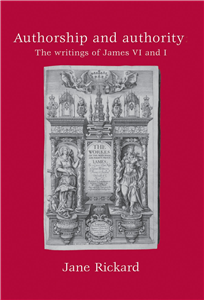
James VI of Scotland and I of England participated in the burgeoning literary culture of the Renaissance, not only as a monarch and patron, but as an author in his own right, publishing extensively in a number of different genres over four decades. As the first monograph devoted to James as an author, this book offers a fresh perspective on his reigns in Scotland and England, and also on the inter-relationship of authorship and authority, literature and politics in the Renaissance. Beginning with the poetry he wrote in Scotland in the 1580s, it moves through a wide range of his writings in other genres, including scriptural exegeses, political, social and theological treatises and printed speeches, concluding with his manuscript poetry of the early 1620s. The book combines extensive primary research into the preparation, material form and circulation of these varied writings, with theoretically informed consideration of the relationship between authors, texts and readers. The discussion thus explores James's responses to, and interventions in, a range of literary, political and religious debates, and reveals the development of his aims and concerns as an author. Rickard argues that, despite the King's best efforts to the contrary, his writings expose the tensions and contradictions between authorship and authority. This book will be of interest to scholars and students of the reign of James VI and I, the literary and political cultures of late sixteenth-century Scotland and early seventeenth-century England, the development of notions of authorship and the relationship between literature and politics. ;
Trusted Partner
Trusted Partner
 Trusted Partner
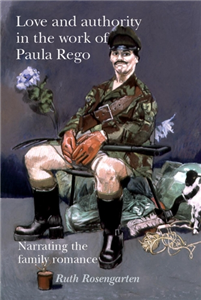
Rosengarten explores the narrative operations of Rego's work by mobilising both psychoanalytic theory and social history. She confronts, as case studies, three complex figure paintings from different moments in Rego's oeuvre: The Policeman's Daughter (1987), The Interrogator's Garden (2000), and The First Mass in Brazil (1993). The content of the three specimen paintings links them to the political context of the Estado Novo, the fascist-inspired regime that dominated Rego's childhood. Plotting links between the spheres of the political and the personal, Rosengarten throws light on the complex intertwining of state power and parental authority in Rego's work, focusing on the "labour of socialisation and resistance" that Rego's work evinces in relation to the Freudian model of the family romance. Rosengarten unveils the political context of Portugal under Salazar, and the workings of colonial fantasy, Catholic ideology and gender construction. In prodding the inalienable link between love and authority, this study offers a reading of Rego's work that interrogates, rather than subverts, the Oedipal model structuring the patriarchal family.
Trusted Partner
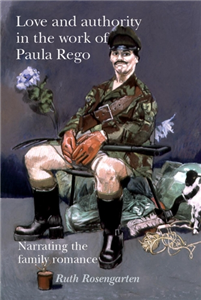
Rosengarten explores the narrative operations of Rego's work by mobilising both psychoanalytic theory and social history. She confronts, as case studies, three complex figure paintings from different moments in Rego's oeuvre: The Policeman's Daughter (1987), The Interrogator's Garden (2000), and The First Mass in Brazil (1993). The content of the three specimen paintings links them to the political context of the Estado Novo, the fascist-inspired regime that dominated Rego's childhood. Plotting links between the spheres of the political and the personal, Rosengarten throws light on the complex intertwining of state power and parental authority in Rego's work, focusing on the "labour of socialisation and resistance" that Rego's work evinces in relation to the Freudian model of the family romance. Rosengarten unveils the political context of Portugal under Salazar, and the workings of colonial fantasy, Catholic ideology and gender construction. In prodding the inalienable link between love and authority, this study offers a reading of Rego's work that interrogates, rather than subverts, the Oedipal model structuring the patriarchal family. ;
Trusted Partner

James VI of Scotland and I of England participated in the burgeoning literary culture of the Renaissance, not only as a monarch and patron, but as an author in his own right, publishing extensively in a number of different genres over four decades. As the first monograph devoted to James as an author, this book offers a fresh perspective on his reigns in Scotland and England, and also on the inter-relationship of authorship and authority, literature and politics in the Renaissance. Beginning with the poetry he wrote in Scotland in the 1580s, it moves through a wide range of his writings, including scriptural exegeses, political, social and theological treatises and printed speeches, concluding with his manuscript poetry of the early 1620s. The book combines extensive primary research into the preparation, material form and circulation of these varied writings, with theoretically informed consideration of the relationship between authors, texts and readers. The discussion thus explores James's responses to, and interventions in, a range of literary, political and religious debates, and reveals the development of his aims and concerns as an author.
Trusted Partner
 Trusted Partner
This book analyses the world of selective reproduction by a critical analysis of three modes of controlling birth, namely contraception, reproductive violence, and repro-genetic technologies. All population control policies target and vilify women (Black women in particular), and coerce them into subjecting their bodies to state and medical surveillance; Birth controlled argues that assisted reproductive technologies and repro-genetic technologies employ a similar and stratified burden of blame and responsibility based on gender, race, class and caste. The book draws on gender studies, sociology, medical anthropology, politics, science and technology studies, theology, public health and epidemiology to provides a critical, interdisciplinary and cutting-edge dialogue around the interconnected issues that shape reproductive politics in an ostensibly 'post-population control' era.
Trusted Partner
Rereading Chaucer and Spenser is a much-needed volume that brings together established and early career scholars to provide new critical approaches to the relationship between Geoffrey Chaucer and Edmund Spenser. By reading one of the greatest poets of the Middle Ages alongside one of the greatest poets of the English Renaissance, this collection poses questions about poetic authority, influence, and the nature of intertextual relations in a more wide-ranging manner than ever before. With its dual focus on authors from periods often conceived as radically separate, the collection also responds to current interests in periodisation. This approach will engage academics, researchers and students of Medieval and Early Modern culture.
Trusted Partner

Democratizing AI offers a powerful rethinking of how artificial intelligence should be governed. Challenging the dominance of tech elites in shaping AI's future, Zimmermann argues that AI deployment is a political act-one that must be subject to democratic control. She proposes a practical "playbook" for reclaiming agenda-setting power through civic participation, public ownership, and institutional reform. Engaging with leading critics, Zimmermann defends a risk-sensitive proceduralist approach while acknowledging the deeper structural challenges posed by capitalism, inequality, and democratic fatigue. This book is a call to action: to resist learned helplessness, confront techno-authoritarianism, and shape AI's trajectory in line with democratic values. Thoughtful, urgent, and visionary, the book is essential reading for anyone concerned with the future of technology and democracy.
Trusted Partner
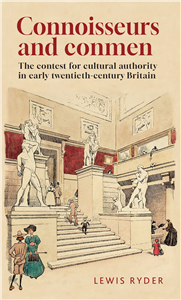
This book examines John Hilditch (1872-1930), a notorious collector of Chinese art who lied, hoaxed and manipulated in his struggle against museum experts to become a cultural authority. Previously overlooked as a pest with a dubious collection, this book uses Hilditch to interrogate how far the monumental social, cultural and political changes of the early twentieth century unsettled social and cultural hierarchies and how these hierarchies were remade. It shows how the cultural elites were forced to engage with the public and re-draw the boundaries of citizenship, expertise and high and low culture in response to unprecedented social mobility, the democratisation of culture and politics, as well as the effects of British imperialism which brought ordinary Britons access to antiquities as well as confidence to claim expertise over foreign cultures. The book will interest social and cultural historians of Modern Britain, museum scholars and art historians.
Trusted Partner
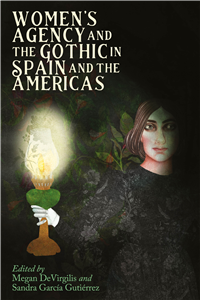
This volume has emerged to fulfill two main purposes: Primarily, to constitute the first collaborative work that traces the relationship between the Gothic and Women in Spain and the Americas, but also, to surpass the term 'Female Gothic,' coined by Ellen Moers, by transferring the focus towards women and their agency as writers, readers and characters. This volume functions as a manifesto per se to open new avenues into understanding how women have interacted with the Gothic between the nineteenth and twenty-first centuries in Spain and the Americas. The question, we determine, is not simply about identity, but rather about agency. We define women's agency as the total capacity of characters, authors and readers to act freely within a social framework in relation to gothic texts. In our exploration of authorship, we reject the claim that the Gothic is a simplistic literary genre, instead sustaining that the plasticity of the Gothic has enabled it to survive for centuries; by shifting from a genre to a mode, it has surpassed literary forms and invaded all kinds of media: from film to music and merchandise such as clothing and pop culture collectables, fostering an authentic goth fandom.
Trusted Partner

The towns of Italy in the later middle ages presents over one hundred fascinating documents, carefully selected and coordinated from the richest, most innovative and most documented society of the European Middle Ages. No other English language sourcebook has the same geographical or chronological range. This collection is carefully structured around the crisis of the fourteenth century and arranged in contrasting groups of texts. By connecting documents in translation to recent scholarship and debates, it addresses five key areas of medieval urban history: the physical environment, civic religion, economy, society and politics. Offers students well-translated and effectively contextualised documents along with some guidance to the secondary work of Italian scholars which is largely inaccessible to undergraduate students.
Trusted Partner
Since the mid-2000s, the harsh reality of call centre employment for a generation of young workers in Portugal has been impossible to ignore. With its endless rows of small cubicles, where human agents endure repetitive telephone conversations with abusive clients under invasive modes of technological surveillance, discipline and control, call centre work remains a striking symbol of labour precarity, a condition particularly associated with the neoliberal generational disenchantment that 'each generation does better than its predecessor'. This book describes the emergence of a regime of disciplined agency in the Portuguese call centre sector. Examining the ascendancy of call centres as icons of precarity in contemporary Portugal, this book argues that call centre labour constitutes a new form of commodification of the labouring subject. De Matos argues that call centres represent an advanced system of non-manual labour power exploitation, due to the underestimation of human creativity that lies at the centre of the regimented structures of call centre labour. Call centres can only guarantee profit maintenance, de Matos argues, through the commodification of the human agency arising from the operators' moral, relational and social embedded agentive linguistic interventions of creative improvisation, decision-making, problem-solving and ethical evaluation.


