Your Search Results

      • Fondo de Cultura Económica

        With 86 years publishing books covering a broad range of subject areas, Fondo de Cultura Económica is one of the leading publishing houses in Latin America. Over the course of the last twenty-nine years, the ten series of books for children and young adults published by our Children’s book division have included titles of the highest literary and visual quality, aimed at a critical and demanding readership. Our most innovative books have received important awards such as the New Horizons Award, and some of our titles have been listed in the White Ravens Catalogue and in the AIGA (American Institute of Graphic Arts) 50 Books/50 Covers. Several of our books for children and young adults have been translated into Chinese, Dutch, English, French, Galician, Czech, Slovenian, German, Hindi, Italian, Korean, Swedish, Romanian, Norwegian, Portuguese, Japanese, Arabic, Greek and Turkish.

        View Rights Portal
      • Agriculture & International Development

        Textbooks, research and professional titles in Agriculture and International Development

        View Rights Portal
      • Trusted Partner
        The Arts
        March 2026

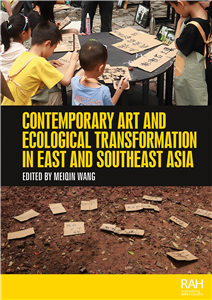
        Contemporary art and ecological transformation in East and Southeast Asia

        by Meiqin Wang

        This anthology, presenting new research from fourteen scholars, delves into the interplay between contemporary art and ecological concerns in East and Southeast Asia. Focused on the concept of artistic remediation, the book unravels the diverse capacities of art to combat systemic anthropogenic destruction to the environment and ecology. At its core, the book articulates the ongoing ecological transformation in art and art history that embraces a paradigm shift in human-nature relationships, emphasizing interconnectedness of all life forms of the Earth. Bridging art studies, activism, and environmental studies, the book examines how artistic practices in the region have engaged with ecocritical reflection, biodiversity advocacy, sustainable practices, and environmental justice, among others. Providing a platform for critical and timely analysis of artistic interventions in the face of existential crises, the book acknowledges diverse voices of scholars who have situated their scholarship in the cultural and artistic specificities of various societies, locales, and communities in the region.

      • Trusted Partner
        Humanities & Social Sciences
        June 2026

        The political ecology of colonial capitalism

        by Bikrum Gill

      • Trusted Partner
        November 2021

        The Metropolitan Age

        The decisive force in the Anthropocene

        by German Environmental Foundation (Ed.)

        Three quarters of the world’s population live in cities. One in eight people lives in a metropolitan area. Megacities swallow up land, energy and resources – and at the same time are particularly hard hit by the current climate crisis that they fuel. However, in the metropolises of the overcrowded world plenty of committed people have heard the warning signals and establish networks to use the potential of cities to reorganize the participative and social-ecological activity that is urgently needed. The contributions to this Yearbook for Ecology focus on the present and future of cities from wide-ranging viewpoints and highlight perspectives for their creative transformation towards liveable sustainability.

      • Trusted Partner
        Business, Economics & Law
        June 2025

        Foundations of social ecological economics

        The fight for revolutionary change in economic thought

        by Clive L Spash

        This book explores radical dissent from orthodox mainstream economics, and sets out a theoretically grounded vision for the emerging paradigm of social ecological economics. At the heart of this paradigmatic shift lies an acknowledgement of the inextricable embeddedness of economies in biophysical reality and social structure. The struggle for this transformative vision unfolds through a critical examination of mainstream environmental thought, followed by a nuanced evaluation of contributions from Marxists, socialists, critical institutionalists, feminists and Post-Keynesians grappling with the urgent environmental crisis. Synthesising insights from these diverse and heterodox schools, the book navigates the philosophical underpinnings of science, embracing a critical realist approach that challenges not only mainstream economic thought but also eclectic pluralism, relativism and strong constructionism. The question of what constitutes revolutionary science is explored in light of works by Kuhn, Schumpeter and Neurath, emphasising the pivotal role of values and ideology in works from Marx to Gramsci. Building on these radical and philosophical foundations, the book articulates a preanalytic vision of social ecological economics, dismantling entrenched notions of growth and efficiency in favour of a framework centered on social provisioning and needs embedded in ethics. In a thought-provoking conclusion, the book applies its analytical lens to the multiple crises of modernity within industrialised capital-accumulating economies. An agenda for social ecological transformation toward diverse alternative economies emerges, providing a compelling call to action in the face of contemporary challenges.

      • Trusted Partner
        Humanities & Social Sciences
        April 2016

        University engagement and environmental sustainability

        by Michael Osborne, Patricia Inman, Diana Robinson

        Universities have a key role to play in contributing to environmental development and combating climate change. The chapters within this volume detail the challenges faced by higher education institutions in considering environmental sustainability, and provide both a broad view of university engagement and a detailed examination of various projects. As part of this series in association with the Place and Social Capital and Learning (PASCAL) International Observatory, the three key PASCAL themes of place management, lifelong learning and the development of social capital are considered throughout the book. While universities have historically generated knowledge outside of specific local contexts, this book argues that it is particularly important for them to engage with the local community and to consider diverse perspectives and assets when looking at issues within an ecological context. The chapters in this volume provide new perspectives and frames of reference for transforming universities by engaging in the development of resilient communities.

      • Trusted Partner
        The Arts
        July 2025

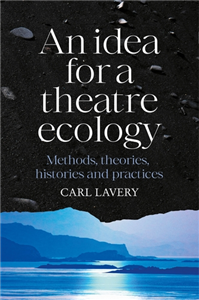
        An idea for a theatre ecology

        Methods, theories, histories and practices

        by Carl Lavery

        An Idea for a Theatre Ecology is the first book in the discipline of Theatre and Performance Studies to provide a rigorous and coherent theory of the ecology that is immanent to the theatrical medium. Over six clearly written chapters, the book provides a genealogy, outlines a method, provides a lexicon and demonstrates an alternative practice of ecoperformance analysis grounded in the figure of the archipelago. Focusing on Antonin Artaud's theatre of cruelty, the book argues that theatre has no need to provide ecological messages nor to transform itself into a platform for the narration of ecological stories. Instead, more is to be gained, environmentally and politically, by concentrating on the power of images, gestures and voices to create corporeal affects and sensations that implicate the spectators in a terrestrial event.

      • Trusted Partner
        September 2022

        The Great Deception

        How we put our future at risk and sleep through the necessary transformation

        by Deutsche Umweltstiftung (ed.)

        More and more companies are becoming sustainable. More and more products are being produced sustainably. But things that are called climate-neutral or sustainable today often are not. Then there are the catchy phrases like 'electric mobility belongs to the future' or 'there's enough food on the planet for everyone'. These statements are not true, and are referred to in science as 'frames'. This book provides a guide that enables us to free ourselves from these ecological frames, to see through them. Because only a policy that understands the connections is able to develop perspectives. Numerous experts uncover the biggest lies about the future in this book, refute them and explain what we need to change. Because we can lie to ourselves, but we cannot lie to nature.

      • Trusted Partner
        January 1996

        Was ist Sufismus

        Eine Einführung in die islamische Mystik

        by Abd-el-Qadir as-Sufi / Übersetzt von Quatmann, Christian

      • Trusted Partner
        Humanities & Social Sciences
        September 2025

        China as context

        Anthropology, post-globalisation and the neglect of China

        by Di Wu, Andrea E. Pia, Ed Pulford

        Decades-old calls to promote the significance of China for anthropological theory and the social sciences more generally ring more urgently today given China's importance to social, political and economic life globally. Yet Chinese-grounded ideas remain marginal to the discipline, and scholarly discussions retain a sense of China as an 'Other' apart from the 'real' world, and thus unsuitable or generating widely applicable theoretical ideas. Inspired by East Asian postcolonial scholarship, this volume tackles this unsettling situation head-on, arguing that without taking China seriously as a powerful agent, a locus of knowledge production, and a new discursive topos of an emerging post-global imaginary, anthropologists and other social scientists may fail to adequately analyse the global present and make sense of both the material and immaterial forces that animate it, wherever and however they work. Amid the end of Western globalisation and shifting anthropological understandings of relations between ethnography and theory, we show how 'China' must be understood as the ordinary 'context' for anthropological research practices worldwide.

      • Trusted Partner
        Humanities & Social Sciences
        September 2016

        Debt as Power

        by Richard H. Robbins, Tim Di Muzio, Gurminder K. Bhambra

      • Trusted Partner
      • Trusted Partner
        Business, Economics & Law
        February 2024

        Foundations of social ecological economics

        by Clive L Spash

      • Trusted Partner
        November 2021

        The Forest of the Future – A New Reality

        Understanding the ecosystem

        by Hans Jürgen Böhmer

        What happened with forest dieback? The predictions of the 1980s that forests would be in decline across Europe have not come true. Currently, attention again focuses on the doom scenarios of the loss of entire forests and cultural landscapes in an emotional and sometimes hysterical debate. Biogeographer Hans Jürgen Böhmer refers to updated case studies and his 30 years of research experience on global ecosystems to demonstrate extremely complex interrelations of the natural world that various actors monitor in contrasting ways and characterized by different times and ideologies. Böhmer advocates to embed the sustainability debate more strongly in the living environment, rather than relying exclusively on model calculations.

      • Trusted Partner
        October 2020

        The Eco-Balance on the Plate

        How What We Eat Can Protect the Climate

        by Dr. Malte Rubach

        How much CO₂ is emitted by one serving of spaghetti bolognese? About 1.5 kilograms! This example shows what the meat industry and food logistics mean for the eco-balance of our food. But is it enough to switch to meat-free and dairy-free alternatives or local specialities? Dr. Malte Rubach takes a closer look and reviews our food regime and its impact on our climate. We live in a society influenced by technology and the rising consumption of resources. Rubach argues for a sensible attitude to food and shows what we can still eat with a clear conscience.

      • Trusted Partner
      • Trusted Partner
      • Trusted Partner
        The Arts
        November 2018

        Art as worldmaking

        Critical essays on realism and naturalism

        by Malcolm Baker, Andrew Hemingway, Andrew Hemingway, Briony Fer, Joshua Shannon, Adrian Rifkin, Malcolm Baker, Martina Droth, Caroline Arscott, Anne Wagner, Martin Powers, Neil McWilliam, Celeste Brusati, T.J. Clark, Rebecca Zurier, Steve Edwards, Tamar Garb, Lisa Tickner, Alistair Rider, Thomas Crow, Gail Day

        Art as worldmaking is a response to Alex Potts's provocative 2013 book Experiments in modern realism. Twenty essays by leading scholars test Potts's recasting of realism through examinations of art produced in different media and periods, ranging from eighth-century Chinese garden aesthetics to video work by the contemporary Russian collective Radek Community. While the book does not neglect avatars of pictorial realism such as Menzel and Eakins, or the question of nineteenth-century realism's historical antecedents, it is contemporary in orientation in that many contributors are particularly concerned with the questions that sculpture, photography and non-traditional media pose for realism as an aesthetic norm. It will be essential reading for students of art history concerned with art's truth value or more broadly with conceptual problems of representation and the intersections of art and politics.

      • Trusted Partner
        Humanities & Social Sciences
        January 2025

        Europeanisation as violence

        Souths and Easts as method

        by Kolar Aparna, Daria Krivonos, Elisa Pascucci

        The book offers a novel lens to situate Europeanisation as violence - through institutions and technologies of development, cultural heritage, and borders, among others - by bringing South and East within a relational frame. Through four inter-related sections, it foregrounds Europeanisation as infrastructural violence and colonial asymmetries, slow violence and the construction of stratified subalternities, epistemic dispossession, and border epistemologies.

      Subscribe to our

      newsletter