Your Search Results

      • AlFulk Translation and Publishing

        AlFulk Translation & Publishing: An independent publishing house, launched in October 2015 and based in Abu Dhabi. It specialisation is translating children and young adult literature from different languages into Arabic. AlFulk aims for:1. To enrich the Arabic library with diverse cultural collections, in order to aware the readers of the intercultural communication importance. 2. To establish a reading habits base for children from 0-4.3. To increase the level of YA books -both Fantasy, fiction and non-fiction- in terms of their content and illustrations.As the majority in the publishing industry, we have been affected by COVID-19 epidemic. However, we have decided to participate at Frankfurter Buchmesse this year to look at what is new in the industry and to expand our network. We seek long term partnerships.

        View Rights Portal
      • Literature Translation Institute of Korea

        LTI Korea is a government-affiliated organization that aims to disseminate Korean culture and literature throughout the world in line with the government’s efforts to shape Korean literature in the world culture.  website: https://www.ltikorea.or.kr/en/main.do  Korean Literature Now(literary magazine): https://www.ltikorea.or.kr/en/board/kln_en/boardList.do

        View Rights Portal
      • Trusted Partner
        Humanities & Social Sciences
        March 2021

        African cities and collaborative futures

        Urban platforms and metropolitan logistics

        by Michael Keith, Andreza Aruska de Souza Santos, Susan Parnell

        This groundbreaking volume brings together scholars from across the globe to discuss the infrastructure, energy, housing, safety and sustainability of African cities, as seen through local narratives of residents. Drawing on a variety of fields and extensive first-hand research, the contributions offer a fresh perspective on some of the most pressing issues confronting urban Africa in the twenty-first century. At a time when the future of the region as a whole will be determined in large part by its cities, the implications of these developments are profound. With case studies from cities in Ethiopia, Kenya, Malawi, Niger, Nigeria, South Africa and Tanzania, this volume explores how the rapid growth of African cities is reconfiguring the relationship between urban social life and its built forms. While the most visible transformations in cities today can be seen as infrastructural, these manifestations are cultural as well as material, reflecting the different ways in which the city is rationalised, economised and governed. How can we 'see like a city' in twenty-first-century Africa, understanding the urban present to shape its future? This is the central question posed throughout this volume, with a practical focus on how academics, local decision makers and international practitioners can collaborate to meet the challenge of rapid growth, environmental pressures and resource gaps.

      • Trusted Partner
        Geography & the Environment
        October 2025

        Electric wind

        by Marianna Dudley

      • Trusted Partner
        June 2021

        Best of Lem

        by Stanisław Lem, Jan-Erik Strasser

        Stanisław Lem gilt vielen als der Science-Fiction-Autor schlechthin. Und doch ist hier noch ein ganzer literarischer Kosmos zu entdecken: Lem der Philosoph, der streitlustige Kritiker, Erfinder neuer Genres, Sprachkünstler und Romancier von Weltrang. Best of Lem versammelt Erzählungen und Kostproben sowohl der berühmten, vielfach verfilmten und millionenfach gelesenen und geliebten Bücher als auch unbekanntere, aber ebenso aufregende Glanzlichter aus den 50 Jahren Lem‘schen Schaffens. Nicht nur Fans von Philip K. Dick, Ursula K. Le Guin oder Cixin Liu kommen dabei voll auf ihre Kosten. Angesichts einer Gegenwart, die mehr und mehr von Künstlicher Intelligenz und menschlicher Dummheit geprägt zu sein scheint, ist der große Misanthrop und Utopist Lem zu seinem 100. Geburtstag unbedingt wieder neu zu lesen.

      • Trusted Partner
        Humanities & Social Sciences
        February 2022

        Transitional justice in process

        by Mariam Salehi, Simon Mabon

      • Trusted Partner
        Geography & the Environment
        October 2025

        Drifting north

        Finding the future at the top of the world

        by Dominic Hinde

        Scotland's past and future collide in this engaging journey through climate change, fossil capitalism and the struggle for a sustainable world. Scotland's history and future are entangled with climate change and the story of the modern world. This small country on the fringes of northern Europe pioneered fossil capitalism and played a key role in its spread across the planet. It is a living museum of the crisis of the west, of deindustrialisation, stagnation and the struggle to build a better future from the ashes. Journalist and sociologist Dominic Hinde travels from the treeless Highlands to the lowland cities, struggling to balance memories with aspiration. Through this journey he finds that his own sensory turmoil, shaped by recovery from a near fatal accident, mirrors the disarray of the fossil fuel transition - an uncertain passage between what was and what must be. Part memoir, part environmental history, part travelogue, this is a compelling narrative of connections - to place, energy and the possibility of renewal. Through the lens of one country, it asks a vital question: can the lessons of the past help us build a more sustainable future?

      • Trusted Partner
        Literature & Literary Studies
        September 2025

        Love and anti-Judaism in medieval English romance

        Typologies of violence and desire

        by Hope Doherty-Harrison

        Love and anti-Judaism is a new examination of medieval romance for the questions it poses of the most significant events in Christian history. Providing new readings of Sir Gawain and the Green Knight, Sir Orfeo, Sir Gowther and Sir Amadace, the book argues that romance explores depictions of love-and the sacrifices it may necessitate-in the Hebrew Bible, especially where they do not easily fit into interpretations asserting that this history must prefigure Christ and the crucifixion. An examination of anti-Judaism as a discourse of violence and desire that could be turned inwardly to expose the irresolution in Christianity, this book will provoke new investigations into the religious crises of medieval romance.

      • Trusted Partner
        Literature & Literary Studies
        June 2021

        Passing into the present

        Contemporary American fiction of racial and gender passing

        by Sinead Moynihan

        This book is the first full-length study of contemporary American fiction of passing. Its takes as its point of departure the return of racial and gender passing in the 1990s in order to make claims about wider trends in contemporary American fiction. The book accounts for the return of tropes of passing in fiction by Phillip Roth, Percival Everett, Louise Erdrich, Danzy Senna, Jeffrey Eugenides and Paul Beatty, by arguing meta-critical and meta-fictional tool. These writers are attracted to the trope of passing because passing narratives have always foregrounded the notion of textuality in relation to the (il)legibility of "black" subjects passing as white. The central argument of this book, then, is that contemporary narratives of passing are concerned with articulating and unpacking an analogy between passing and authorship. The title promises to inaugurate dialogue on the relationships between passing, postmodernism and authorship in contemporary American fiction.

      • Trusted Partner
        Business, Economics & Law
        May 2026

        Privatising humanity

        by Kate Bayliss

      • Trusted Partner
        Literature & Literary Studies
        June 2026

        Tainted tools

        New materialisms as a decolonial project

        by Angela Last

        Tainted Tools makes a provocative intervention into the fraught intersection between new materialist and decolonial approaches. Despite a common project of challenging European philosophical and social categories and hierarchies, the discourses are considered incompatible. Most prominently, new materialisms have been accused of harbouring a White vision of the human while disregarding the racist resonances of the 'nonhuman'. The book traces this conflict to an earlier meeting point of new materialist and decolonial projects, which came about through the experimental combination of Marx and Nietzsche. Used to fight fascism, Stalinism and colonialism, this politically contentious fusion gradually became depoliticised, leading to unaddressed tensions today. While the book does not argue for a revival of these early 'new materialisms', it brings their strategies into dialogue with today's new materialisms and decolonial approaches to develop greater theoretical solidarity in times of crisis.

      • Trusted Partner
        The Arts
        September 2024

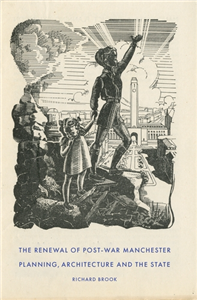
        The renewal of post-war Manchester

        Planning, architecture and the state

        by Richard Brook

        A compelling account of the project to transform post-war Manchester, revealing the clash between utopian vision and compromised reality. Urban renewal in Britain was thrilling in its vision, yet partial and incomplete in its implementation. For the first time, this deep study of a renewal city reveals the complex networks of actors behind physical change and stagnation in post-war Britain. Using the nested scales of region, city and case-study sites, the book explores the relationships between Whitehall legislation, its interpretation by local government planning officers and the on-the-ground impact through urban architectural projects. Each chapter highlights the connections between policy goals, global narratives and the design and construction of cities. The Cold War, decolonialisation, rising consumerism and the oil crisis all feature in a richly illustrated account of architecture and planning in post-war Manchester.

      • Trusted Partner
      • Trusted Partner
        Humanities & Social Sciences
        March 2017

        Sex, politics and empire

        A postcolonial geography

        by Richard Phillips

        Colonial governments, institutions and companies recognised that in many ways the effective operation of the Empire depended upon sexual arrangements. For example, nuclear families serving agricultural colonization, and prostitutes working for single men who powered armies and plantations, mines and bureaucracies. For this reason they devised elaborate systems of sexual governance, such as attending to marriage and the family. However, they also devoted disproportionate energy to marking and policing the sexual margins. In Sex, Politics and Empire, Richard Phillips investigates controversies surrounding prostitution, homosexuality and the age of consent in the British Empire, and revolutionises our notions about the importance of sex as a nexus of imperial power relations.

      • Trusted Partner
      • Trusted Partner
      • Trusted Partner
        Humanities & Social Sciences
        October 2021

        Higher education in a globalising world

        Community engagement and lifelong learning

        by Peter Mayo

        This book focuses on current policy discourse in Higher Education, with special reference to Europe. It discusses globalisation, Lifelong Learning, the EU's Higher Education discourse, this discourse's regional ramifications and alternative practices in Higher Education from both the minority and majority worlds with their different learning traditions and epistemologies. It argues that these alternative practices could well provide the germs for the shape of a public good oriented Higher Education for the future. It theoretically expounds on important elements to consider when engaging Higher Education and communities, discussing the nature of the term 'community' itself. Special reference is accorded to the difference that lies at the core of these ever-changing communities. It then provides an analysis of an 'on the ground project' in University community engagement, before suggesting signposts for further action at the level of policy and provision. This book is relevant to United Nations Sustainable Development Goal 4, Quality education

      • Trusted Partner
      • Trusted Partner
      • Trusted Partner
        Humanities & Social Sciences
        March 2017

        Unfit for heroes

        Reconstruction and soldier settlement in the empire between the wars

        by Kent Fedorowich

        Research on soldier settlement has to be set within the wider history of emigration and immigration. This book examines two parallel but complementary themes: the settlement of British soldiers in the overseas or 'white' dominions, Australia, Canada, New Zealand and South Africa, between 1915 and 1930. One must place soldier settlement within the larger context of imperial migration prior to 1914 in order to elicit the changes in attitude and policy which occurred after the armistice. The book discusses the changes to Anglo-dominion relations that were consequent upon the incorporation of British ex-service personnel into several overseas soldier settlement programmes, and unravels the responses of the dominion governments to such programmes. For instance, Canadians and Australians complained about the number of ex-imperials who arrived physically unfit and unable to undertake employment of any kind. The First World War made the British government to commit itself to a free passage scheme for its ex-service personnel between 1914 and 1922. The efforts of men such as L. S. Amery who attempted to establish a landed imperial yeomanry overseas is described. Anglicisation was revived in South Africa after the second Anglo-Boer War, and politicisation of the country's soldier settlement was an integral part of the larger debate on British immigration to South Africa. The Australian experience of resettling ex-servicemen on the land after World War I came at a great social and financial cost, and New Zealand's disappointing results demonstrated the nation's vulnerability to outside economic factors.

      Subscribe to our

      newsletter