
Water Environment Federation
Water Environment Federation (WEF)publishes a variety of technical publications, including newsletters,manuals of practice and other books, magazines, and journals.
View Rights Portal
Water Environment Federation (WEF)publishes a variety of technical publications, including newsletters,manuals of practice and other books, magazines, and journals.
View Rights Portal
Our passion is to show kids, how colourful and fascinating the world is. There is not only one way to live but so many. We love curious children and we do the books they need to explore the world. So we do travel books for kids and novels for the journey in a hammock.
View Rights Portal
Universities have a key role to play in contributing to environmental development and combating climate change. The chapters within this volume detail the challenges faced by higher education institutions in considering environmental sustainability, and provide both a broad view of university engagement and a detailed examination of various projects. As part of this series in association with the Place and Social Capital and Learning (PASCAL) International Observatory, the three key PASCAL themes of place management, lifelong learning and the development of social capital are considered throughout the book. While universities have historically generated knowledge outside of specific local contexts, this book argues that it is particularly important for them to engage with the local community and to consider diverse perspectives and assets when looking at issues within an ecological context. The chapters in this volume provide new perspectives and frames of reference for transforming universities by engaging in the development of resilient communities.

Universities have a key role to play in contributing to environmental development and combating climate change. The chapters within this volume detail the challenges faced by higher education institutions in considering environmental sustainability, and provide both a broad view of university engagement and a detailed examination of various projects. As part of this series in association with the Place and Social Capital and Learning (PASCAL) International Observatory, the three key PASCAL themes of place management, lifelong learning and the development of social capital are considered throughout the book. While universities have historically generated knowledge outside of specific local contexts, this book argues that it is particularly important for them to engage with the local community and to consider diverse perspectives and assets when looking at issues within an ecological context. The chapters in this volume provide new perspectives and frames of reference for transforming universities by engaging in the development of resilient communities. ;
 Trusted Partner
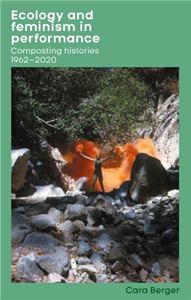
This book provides a vital new history of feminist performance through an ecological lens. It argues that from the 1960s to the present, artists have used performance to challenge the linked oppression of women and nature. Proposing 'composting' as a new method for writing feminist history, the study moves beyond linear narratives to trace regenerative connections between generations of practitioners. It provides sustained analysis of genres from land art to postdramatic theatre, re-evaluating the work of canonical figures while examining how contemporary artists continue to address these urgent themes. By placing ecofeminism in dialogue with feminist new materialism, queer ecology, and transecological thought, this study demonstrates how performance has been a crucial site for imagining more just and sustainable futures in an age of environmental crisis.
Trusted Partner
The Love of Books examines the affective bond between people and books in the UK. In the context of the unprecedented abundance of media offering information, storytelling and entertainment, it investigates the attachment to print and digital books amongst readers from a range of backgrounds who read for pleasure, wish to be surrounded by print copies of books, and have trouble discarding books. Unlike existing research, which focuses on prestige, social status, and cultural capital, this study centres on meaning, materiality and emotion. Drawing on interviews and archive material, it shows how attachment emerges from the practical fusion of three elements that have so far been examined separately: the material, surface properties of books, the act of reading, and books' symbolic power.
Trusted Partner


What makes children truly happy? The answer to that question is simple, but challenging: their social-emotional competences. Socially competent kids feel good and are more successful in different aspects of life. One of the most important tasks of a parent is therefore to support their children in developing social skills. This book shows parents how to encourage the social-emotional development of their children. It distinguishes eight skills: awareness of the self, social awareness, self-management, goal oriented behaviour, relational skills, personal responsibility, decision making, and positive thinking. After giving a clear introduction on social-emotional development, the author explains these skills in more detail in eight chapters. Each chapter contains a detailed real-life example, psychological background information, and practical interventions ready for use by parents, teachers and other caretakers. The interventions and examples are aimed at four to twelve year olds.
Trusted Partner

This book examines the ways in which ideas about children, childhood and Ireland changed together in Irish Protestant writing of the seventeenth and eighteenth centuries. It focuses on different varieties of the child found in the work of a range of Irish Protestant writers, theologians, philosophers, educationalists, politicians and parents from the early seventeenth century up to the outbreak of the 1798 Rebellion. The book is structured around a detailed examination of six 'versions' of the child: the evil child, the vulnerable/innocent child, the political child, the believing child, the enlightened child, and the freakish child. It traces these versions across a wide range of genres (fiction, sermons, political pamphlets, letters, educational treatises, histories, catechisms and children's bibles), showing how concepts of childhood related to debates about Irish nationality, politics and history across these two centuries.
Trusted Partner

Child, nation, race and empire is an innovative, inter-disciplinary, cross cultural study that contributes to understandings of both contemporary child welfare practices and the complex dynamics of empire. It analyses the construction and transmission of nineteenth-century British child rescue ideology. Locating the origins of contemporary practice in the publications of the prominent English Child rescuers, Dr Barnardo, Thomas Bowman Stephenson, Benjamin Waugh, Edward de Montjoie Rudolf and their colonial disciples and literature written for children, it shows how the vulnerable body of the child at risk came to be reconstituted as central to the survival of nation, race and empire. Yet, as the shocking testimony before the many official enquiries into the past treatment of children in out-of-home 'care' held in Britain, Ireland, Australia and Canada make clear, there was no guarantee that the rescued child would be protected from further harm.
Trusted Partner

This book applies social and political theory to the field of environmental politics in Ireland. It offers both a substantive contribution to understanding environmental politics in this country and a test case of the application of theory within the field of environmental scholarship more generally. The essays are integrated by a concern for analysing the relationship between culture, discourse and action in this political field, hence the emphasis on the communicative turn. The book is innovative in offering a sustained application of social and political theory within environmental scholarship as well as in combining theoretical and empirical approaches to advancing environmental scholarship in a particular case. This synergy of theory and substantive analysis is a key feature of the book and offers an important contribution to the environmental literature in the social sciences. The authors apply key developments in the modern social sciences and offer compelling evidence of their value for clarifying the cultural foundations of political action and for its evaluation and critique. Academics in the social sciences and in philosophy, postgraduate and advanced undergraduate, both in Ireland and beyond, will find this book highly rewarding for its multi-faceted application of social and political theories and associated methodologies to the environmental field. ;
Trusted Partner


Three quarters of the world’s population live in cities. One in eight people lives in a metropolitan area. Megacities swallow up land, energy and resources – and at the same time are particularly hard hit by the current climate crisis that they fuel. However, in the metropolises of the overcrowded world plenty of committed people have heard the warning signals and establish networks to use the potential of cities to reorganize the participative and social-ecological activity that is urgently needed. The contributions to this Yearbook for Ecology focus on the present and future of cities from wide-ranging viewpoints and highlight perspectives for their creative transformation towards liveable sustainability.
Trusted Partner
 Trusted Partner
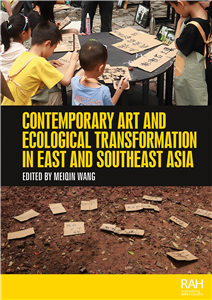
This anthology, presenting new research from fourteen scholars, delves into the interplay between contemporary art and ecological concerns in East and Southeast Asia. Focused on the concept of artistic remediation, the book unravels the diverse capacities of art to combat systemic anthropogenic destruction to the environment and ecology. At its core, the book articulates the ongoing ecological transformation in art and art history that embraces a paradigm shift in human-nature relationships, emphasizing interconnectedness of all life forms of the Earth. Bridging art studies, activism, and environmental studies, the book examines how artistic practices in the region have engaged with ecocritical reflection, biodiversity advocacy, sustainable practices, and environmental justice, among others. Providing a platform for critical and timely analysis of artistic interventions in the face of existential crises, the book acknowledges diverse voices of scholars who have situated their scholarship in the cultural and artistic specificities of various societies, locales, and communities in the region.
Trusted Partner

Environmental policy has become an increasingly important area of European Union (EU) policy-making and the source of political conflict between Britain and Germany. This book explains why national conflicts have arisen and how they are resolved at EU level by focusing on the Europeanisation of air and water pollution control in particular. Wurzel argues that Anglo-German divergences are best explained in terms of ecological vulnerability, economic cost and capacity, political salience and environmental regulatory styles. Focusing on two very important and media-exploitable issues - car emissions and bathing water regulation - this book challenges the conventional wisdom that Britain has shown a clear preference for environmental quality objectives while Germany championed uniform emission limits. Acceptance of the concept of ecological modernisation plays a vital role in the adoption of more progressive environmental standards. ;
Trusted Partner
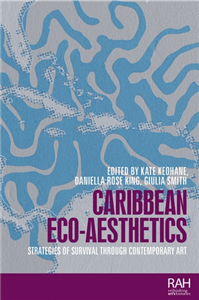
This edited volume reframes the Caribbean as a paradigm of ecological resilience and creativity by bringing together the voices of contemporary artists and scholars who are at the forefront of environmental activism in the region and across its diasporas. While dominant narratives percolating from the environmental sciences to the mainstream press present the Caribbean as a frontier of planetary disaster, the contributors to this volume show how the region offers radical models for overcoming the environmental challenges of the present. At the heart of this argument lies the history of the Caribbean as a centre for grassroots forms of anti-colonial and anti-capitalist resistance founded upon nature-centred cosmologies and practices. Caribbean Eco-Aesthetics shows how contemporary artists are mobilising this radical heritage in a bid to unlock alternative planetary futures.
Trusted Partner
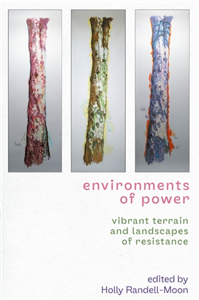
Environments of power provides unique case studies of environmental inclusion and exclusion across the Americas, Africa, Japan, India, and the South-Pacific. Using more-than-human and Indigenist approaches, chapters focus on Indigenous environmental resistance, marginalisation across social and physical environments, ecology as art, and how local communities are caught up in and resist development and infrastructure projects. The book demonstrates how environments influence which bodies and other matter belong (or not) in certain places.
Trusted Partner
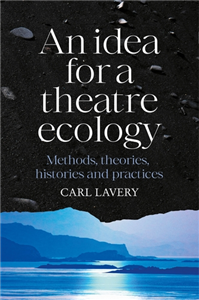
An Idea for a Theatre Ecology is the first book in the discipline of Theatre and Performance Studies to provide a rigorous and coherent theory of the ecology that is immanent to the theatrical medium. Over six clearly written chapters, the book provides a genealogy, outlines a method, provides a lexicon and demonstrates an alternative practice of ecoperformance analysis grounded in the figure of the archipelago. Focusing on Antonin Artaud's theatre of cruelty, the book argues that theatre has no need to provide ecological messages nor to transform itself into a platform for the narration of ecological stories. Instead, more is to be gained, environmentally and politically, by concentrating on the power of images, gestures and voices to create corporeal affects and sensations that implicate the spectators in a terrestrial event.
Trusted Partner


***Alle drei Bände der magischen Drachenfantasy im Bundle*** Entfache das Feuer in dir! Sophie hat mit Übergewicht zu kämpfen, wird in der Schule gemobbt und kann sich nicht einmal gegen ihren kleinen Bruder durchsetzen. Am liebsten zieht sie sich mit einem guten Buch von der Welt zurück und hofft, im besten Fall einfach übersehen zu werden. Doch all das ändert sich schlagartig, als sich ihre unterdrückte Wut eines Tages in einem markerschütternden Schrei entlädt, Feuer und Verwüstung um sich greifen und Sophie in bizarre Träume abgleitet: hoch in der Luft schwebend über dem Haus ihrer Eltern oder auf der Flucht vor schaurigen Vogelwesen. Selbst dem coolsten Mädchen der Klasse, Melissa, fallen die Veränderungen auf und sie beginnt Sophie auszuspionieren. Weder Melissa noch Sophie ahnen jedoch, wie groß und lebensbedrohlich das Geheimnis, dem sie auf der Spur sind, tatsächlich ist. Dieses Bundle enthält alle drei Teile der fantastisch-magischen Dragon Child Serie: - Dragon Child 1: Das Erwachen - Dragon Child 2: Die Rebellion - Dragon Child 3: Die Allianz
Trusted Partner

The seven children are completely cut off from civilisation, mobile phones don’t work anymore and there’s no sign of help. Strange things happen on the island. Plants and animals grow unnaturally fast, their supplies are raided ... And as other groups of school children emerge, a life and death race begins for Eddie, Milla and their classmates to be rescued from the island. The first instalment of the ‘Silver Flood’ duology: a dangerous adventure with exciting plot twists and scare-factor. For all readers of survival and adventure stories aged 10+. Fast-paced reading for boys and girls, for outdoor kids and all those on their way! The final volume 2, GONE MISSING ON RAY’S ROCK, will be published on 7th April 2020!
Trusted Partner

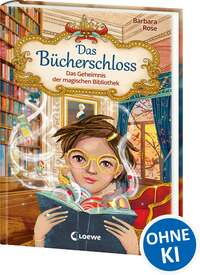
Enchanted Book Castle - The Secret of the Magic Library (Vol. 1)In a far-away castle, there is a huge library, full of magical and enchanted children's stories. From the floor all the way up to the celling! These books have desperately been waiting for a child to save them. Is Becky, who moves into this castle together with her father, the one of all kids to rescue the dusted stories? 9½-year-old Becky can´t believe this is going to happen: this castle simply is amazing. Because the best of it is that it has a huge library! A library of forgotten books. However, why should she be interested in reading? But soon, she discovers that the library is occupied... by magical creatures hidden in the books. These stories seem to be alive!And this secret shall never be released to grown-ups. Luckily, Hugo and his dog Watson are around, Becky makes friends with them. Together with chipmunk Lotti, they decided to save these books.


Paradise Lost is an epic poem in blank verse by the 17th-century English poet John Milton. The first version, published in 1667, consisted of ten books with over ten thousand lines of verse. A second edition followed in 1674, arranged into twelve books (in the manner of Virgil's Aeneid) with minor revisions throughout and a note on the versification. The poem concerns the biblical story of the Fall of Man: the temptation of Adam and Eve by the fallen angel Satan and their expulsion from the Garden of Eden. Milton's purpose, stated in Book I, is to "justify the ways of God to men".
Trusted Partner

In this, the first full-length treatment of the child in Spanish cinema, Sarah Wright explores the ways that the cinematic child comes to represent 'prosthetic memory'. The central theme of the child and the monster is used to examine the relationship of the self to the past, and to cinema. Concentrating on films from the 1950s to the present day, the book explores religious films, musicals, 'art-house horror', science-fiction, social realism and fantasy. It includes reference to Erice's The Spirit of The Beehive, del Toro's Pan's Labyrinth, Mañas's El Bola and the Marisol films. The book also draws on a century of filmmaking in Spain and intersects with recent revelations concerning the horrors of the Spanish past. The child is a potent motif for the loss of historical memory and for its recuperation through cinema. This book is suitable for scholars and undergraduates working in the areas of Spanish cinema, Spanish cultural studies and cinema studies.

