Your Search Results

      • Trusted Partner
        Literature & Literary Studies
        April 2009

        The female sublime from Milton to Swinburne

        Bearing blindness

        by Catherine Maxwell

        This innovative study of vision, gender and poetry traces Milton's mark on Shelley, Tennyson, Browning and Swinburne to show how the lyric male poet achieves vision at the cost of symbolic blindness and feminisation. Drawing together a wide range of concerns including the use of myth, the gender of the sublime, the lyric fragment, and the relation of pain to creativity, this book is a major re-evaluation of the male poet and the making of the English poetic tradition. The female sublime from Milton to Swinburne examines the feminisation of the post-Miltonic male poet, not through cultural history, but through a series of mythic or classical figures which include Philomela, Orpheus and Sappho. It recovers a disfiguring sublime imagined as an aggressive female force which feminises the male poet in an act that simultaneously deprives and energises him. This book will be required reading for anyone with a serious interest in the English poetic tradition and Victorian poetry. ;

      • Trusted Partner
        September 2025

        Liberated Pleasure. A workbook for Women

        by Julia Sparmann

        Far too often, everyday stress, pressure to perform or inner blockages spoil our enjoyment of the most beautiful thing in the world: our female sexuality. How can we free ourselves from firmly internalized taboos? What little tricks can we use to get our sex life back on track and keep the imagination in our head running successfully?Experienced sex therapist Julia Sparmann not only offers surprising solutions to typical problems such as loss of libido, communication difficulties or orgasm problems. She also encourages women to deal confidently with their sexuality and develop a positive body image.

      • Trusted Partner
        The Arts
        May 2024

        The Family of Love

        By Lording Barry

        by Sophie Tomlinson

        The Family of Love charts a successful love intrigue between the cash-strapped Gerardine, and Maria, the sequestered niece of the mercenary Doctor Glister. Their romance unfolds against the dissection of two citizen marriages, the Glisters' and the Purges'. Mistress Purge attends Familist meetings independently, arousing her husband's suspicions about her marital fidelity. Two libertines, Lipsalve and Gudgeon, go in search of sex and solubility (freedom from constipation), receiving more than they bargain for in respect of the latter. This scholarly edition of Family of Love marks the first occasion on which the comedy is attributed to Lording Barry in print. It brings together literary and historical discussion with a thorough analysis of the play's disputed authorship. Tomlinson highlights Barry's rich vein of burlesque humour in a comedy that combines magic, a trunk, and a mock-court session with vigorous colloquial language.

      • Trusted Partner
        The Arts
        January 2022

        The Family of Love

        By Lording Barry

        by Helen Ostovich, Sophie Tomlinson

        The Family of Love charts a successful love intrigue between the cash-strapped Gerardine, and Maria, the sequestered niece of the mercenary Doctor Glister. Their romance unfolds against the dissection of two citizen marriages, the Glisters' and the Purges'. Mistress Purge attends Familist meetings independently, arousing her husband's suspicions about her marital fidelity. Two libertines, Lipsalve and Gudgeon, go in search of sex and solubility (freedom from constipation), receiving more than they bargain for in respect of the latter. This scholarly edition of Family of Love marks the first occasion on which the comedy is attributed to Lording Barry in print. It brings together literary and historical discussion with a thorough analysis of the play's disputed authorship. Tomlinson highlights Barry's rich vein of burlesque humour in a comedy that combines magic, a trunk, and a mock-court session with vigorous colloquial language.

      • Trusted Partner
        September 2022

        Lust

        Fuckability, orgasm gap and #metoo

        by Henriette Hell

        Lust, a mortal sin? These times are over. In today's public perception, it is more likely for a boring sex life to be categorised as that. In statistical terms, people have never had as little sex with each other as they do today. And yet tips for a good sex life are to be found on every (digital) corner. Sex has mutated into a lifestyle product, and terms like 'fuckability' and 'MILF' trip lightly off our tongues. Henriette Hell takes a closer look at the thing about sex. She traces the history and genesis of 'sexual liberation', and sheds light on the 'cheating gene' and the #metoo debate. The author asks (and answers) the question of whether sex is becoming more and more antisocial and what actually still turns us on today. In doing so, she focuses on the former mortal sin of lust, which is inseparably linked to the systematic suppression of female lust (and its liberation).

      • Trusted Partner
        Humanities & Social Sciences
        December 2024

        Critical theory and Independent Living

        by Teodor Mladenov

        Critical theory and Independent Living explores intersections between contemporary critical theory and disabled people's struggle for self-determination. The book highlights the affinities between the Independent Living movement and studies of epistemic injustice, biopower, and psychopower. It discusses in depth the activists' critical engagement with welfare-state paternalism, neoliberal marketisation, and familialism. This helps develop a pioneering comparison between various welfare regimes grounded in Independent Living advocacy. The book draws on the activism of disabled people from the European Network on Independent Living (ENIL) by developing case studies of the ENIL's campaigning for deinstitutionalisation and personal assistance. It is argued that this work helps rethink independence as a form of interdependence, and that this reframing is pivotal for critical theorising in the twenty-first century.

      • Trusted Partner
        The Arts
        January 2019

        Hispanic and Lusophone women filmmakers

        Theory, practice and difference

        by Parvati Nair, Julian Gutierrez-Albilla

        This volume examines the films of Hispanic and Lusophone women filmmakers from the 1930s to the present day. It establishes productive connections between film practices across these geographical areas by identifying common areas of concern on the part of these female filmmakers. Focusing on aesthetic, theoretical and socio-historical analyses, it questions the manifest or latent gender and sexual politics that inform and structure the emerging cinematic productions by women filmmakers in Portugal, Spain, Latin America and the US. With a combination of scholars from the UK, the US, Spain and Latin America, the volume documents and interprets a fascinating corpus of films made by Hispanic and Lusophone women and proposes research strategies and methodologies that can expand our understanding of socio-cultural and psychic constructions of gender and sexual politics. An essential resource to rethink notions of gender identity and subjectivity, it is a unique contribution to Spanish and Latin American Film Studies and Film Studies.

      • Trusted Partner
      • Trusted Partner
        Nursing

        On Female Territory

        Portraits of Male Care Workers

        by Sabine Meisel / Edita Truninger

        The book portrays men between the ages of 23 and 65, who work in caring professions in different areas, such as nursing homes, acute care clinics, home care, outpatient care and psychiatry, providing readers with an insight into their biographies. The protagonists recount in a candid way what motivated their career choice. Did they become aware of it through their environment or through personal experience? Which barriers did they have to overcome in the process of choosing a career? What do they think of their role as an exotic species in female-dominated teams? At which point did they begin to question the prevailing norms of gender identities?And what did that do for their own idea of masculinity? These portraits are enriched by five personal essays written by representatives from the Swiss healthcare sector who have been in the caring profession for a long time.

      • Trusted Partner
        Humanities & Social Sciences
        March 2017

        Gender and imperialism

        by Clare Midgley

        This book marks an important new intervention into a vibrant area of scholarship, creating a dialogue between the histories of imperialism and of women and gender. By engaging critically with both traditional British imperial history and colonial discourse analysis, the essays demonstrate how feminist historians can play a central role in creating new histories of British imperialism. Chronologically, the focus is on the late eighteenth to early twentieth centuries, while geographically the essays range from the Caribbean to Australia and span India, Africa, Ireland and Britain itself. Topics explored include the question of female agency in imperial contexts, the relationships between feminism and nationalism, and questions of sexuality, masculinity and imperial power.

      • Trusted Partner
        Literature & Literary Studies
        March 2017

        Imperialism and juvenile literature

        by Jeffrey Richards

        Popular culture is invariably a vehicle for the dominant ideas of its age. Never was this truer than in the late-nineteenth and early twentieth centuries, when it reflected the nationalist and imperialist ideologies current throughout Europe. It both reflects popular attitudes, ideas and preconceptions and it generates support for selected views and opinions. This book examines the various media through which nationalist ideas were conveyed in late-Victorian and Edwardian times: in the theatre, "ethnic" shows, juvenile literature, education and the iconography of popular art. It seeks to examine in detail the articulation and diffusion of imperialism in the field of juvenile literature by stressing its pervasiveness across boundaries of class, nation and gender. It analyses the production, distribution and marketing of imperially-charged juvenile fiction, stressing the significance of the Victorians' discovery of adolescence, technological advance and educational reforms as the context of the great expansion of such literature. An overview of the phenomenon of Robinson Crusoe follows, tracing the process of its transformation into a classic text of imperialism and imperial masculinity for boys. The imperial commitment took to the air in the form of the heroic airmen of inter-war fiction. The book highlights that athleticism, imperialism and militarism become enmeshed at the public schools. It also explores the promotion of imperialism and imperialist role models in fiction for girls, particularly Girl Guide stories.

      • Trusted Partner
        Literature & Literary Studies
        September 2008

        Epicene, or The Silent Woman

        by Ben Jonson

        by Richard Dutton

        Epicene is now one of the most widely-studied of Johnson's plays. Brilliantly exploiting the Jacobean convention whereby boys played female roles, it satirises the newly fashionable and sexually ambiguous world of the West End of London, where courtly wit rubs shoulders with commercial values. This authoritative new edition, now in paperback, is based on a thorough re-examination of the earliest texts. The introduction analyses the play as originally written for the newly formed Children of the Queen's Revels, and performed at the little-known Whitefriars Theatre. Dutton discusses the composition of the play, which took place during a critical period in Jonson's life and career, when he was established as the principal writer of entertainments at the court. His relationships at this time, with ambitious wits such as John Donne, Sir Edward Herbert and the actor Nathan Field, are examined as models for the principal characters. This challengingly historicised text of Epicene will be essential reading for all serious students of early modern drama. ;

      • Trusted Partner
        Humanities & Social Sciences
        June 2021

        Independent Kashmir

        by Christopher Snedden

      • Trusted Partner
        Humanities & Social Sciences
        February 2025

        Pink-pilled

        Women and the far right

        by Lois Shearing

        A daring investigation that explores how women are targeted and recruited by the far right. As the far right has gained popularity and acceptance around the world, its ranks have swelled with an unlikely category of members: women. Women play significant roles in far-right movements, acting as propagandists, prizes to be won and mother-warriors of the nation. But up to now their activities have been largely overlooked. In Pink-pilled, Lois Shearing provides a cutting-edge account of how the far right has used the internet to recruit women, while shedding light on what life is like for women within these movements, including their experiences of misogyny and violence. Understanding how and why women join movements that explicitly aim to restrict their autonomy is essential if we want to fight back. Pink-pilled offers key insights for countering women's radicalisation and building communities resistant to far-right thought.

      • Trusted Partner
        Literature & Literary Studies
        May 2026

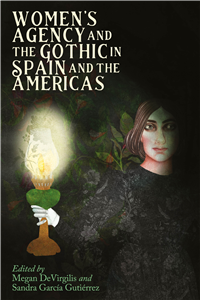
        Women’s Agency and the Gothic in Spain and the Americas

        by Megan DeVirgilis, Sandra García Gutiérrez

        This volume has emerged to fulfill two main purposes: Primarily, to constitute the first collaborative work that traces the relationship between the Gothic and Women in Spain and the Americas, but also, to surpass the term 'Female Gothic,' coined by Ellen Moers, by transferring the focus towards women and their agency as writers, readers and characters. This volume functions as a manifesto per se to open new avenues into understanding how women have interacted with the Gothic between the nineteenth and twenty-first centuries in Spain and the Americas. The question, we determine, is not simply about identity, but rather about agency. We define women's agency as the total capacity of characters, authors and readers to act freely within a social framework in relation to gothic texts. In our exploration of authorship, we reject the claim that the Gothic is a simplistic literary genre, instead sustaining that the plasticity of the Gothic has enabled it to survive for centuries; by shifting from a genre to a mode, it has surpassed literary forms and invaded all kinds of media: from film to music and merchandise such as clothing and pop culture collectables, fostering an authentic goth fandom.

      • Trusted Partner
        2021

        Self-medication in Pregnancy and Breast-feeding

        Counselling handbook

        by Dr. Annette Abhau

        Cough, hay fever or herpes are at least as troublesome during pregnancy and breast-feeding as under normal “conditions” - and yet everything is different. Physiological changes to the body in pregnancy and lactation, together with the vulnerability of the unborn baby or infant, set particular requirements when selecting the correct, safe medication. Especially in the area of self-medication, the needs of pregnant and breast-feeding women for information are great and call for competent advice! This comprehensive handbook is the key: General information about pharmacotherapy, supplementary measures, vaccinations, questions about diet and infections in pregnancy and lactation creates a broad knowledge base. The core feature of the book are the traffic light tables, with precise recommendations for medicinal products for all types of treatment. All the important indications for selfmedication in pregnancy and lactation are listed and the tables are supported by detailed explanations of the individual assessments. The sections “Advice from medical specialists” are particularly useful, with additional tips from gynaecologists and “Footnotes” with relevant information on the use of prescription- only medicines – and as the ultimate practical tool: the enclosed sales counter leaflets with all traffic light tables to enable quick reference for first-class advice!

      • Trusted Partner
        Humanities & Social Sciences
        March 2026

        The dilemma of Authority

        by Allyn Fives

        The moral problem of authority is the challenge of reconciling legitimate authority (the right to rule) with the demands of freedom and rationality. In this book, I argue that authority can have legitimacy, but when it does it generates a moral dilemma, where the obligation to obey comes at some cost to freedom and reason. Hence, not only do I depart from the views of those who insist that authority can never have legitimacy, but also those who maintain that insofar as authority is legitimate it simply satisfies the demands of freedom or rationality. My focus here will be on both what it is that justifies authority (in particular focusing on membership, and the goods of membership) as well what type of reason an authoritative directive is, how it can come into conflict with others reasons, and how those conflicts are resolved.

      • Trusted Partner
        Literature & Literary Studies
        April 2026

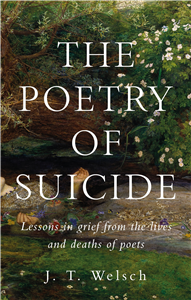
        The poetry of suicide

        Lessons in grief from the lives and deaths of poets

        by J. T. Welsch

        A profound exploration of the connection between poetry and suicide. 'Suicides have a special language,' Anne Sexton wrote in her 1964 poem 'Wanting to Die'. But is it a language we can learn to read? In The poetry of suicide, J. T. Welsch interweaves stories of poets who took their own lives with the long history of suicide in his own family, searching for a new way of understanding these difficult deaths. Beginning with Hamlet's 'To be or not to be?', he delves into the work of Dante, Sylvia Plath, Vladimir Mayakovsky and others, asking what it can teach us about suicide's messy reality. Suicide is more like poetry than we realise, Welsch argues. Both are filled with ambiguities, contradictions and unknowable intentions. Both demand and resist interpretation. Recovering the personal dimension often lost in our medicalised public discourse, Welsch finds practical ways of confronting suicide's poem-like difficulties.

      Subscribe to our

      newsletter