
Firefly Books
Livres Canada Books
View Rights Portal

A captivating non-fiction series for children aged 3 to 6, that awakens their interest in wonders of the physical, natural and human world. Transparent overlay pages reveal hidden surprises and facilitate understanding.
View Rights Portal Trusted Partner




This book is a result of the author's search for these facts and truths as a student and farmer and his endeavor as a teacher to present them in a simple manner to others. The object in presenting the book to the general public is the hope that it may be of assistance to farmers, students and teachers, in their search for the fundamental truths and principles of farming.
Trusted Partner

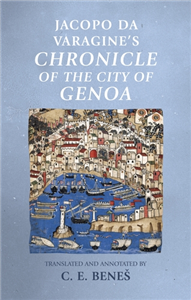
This book offers the first English translation of the Chronicle of the city of Genoa by the thirteenth-century Dominican Jacopo da Varagine, an author best known for his monumental book of saints' lives, the Golden legend. Jacopo's Chronicle presents a coherent vision of Genoa's place in history, the cosmos and Creation as written by the city's own archbishop - mixing eyewitness accounts with scholarly research about the city's origins and didactic reflections on the proper conduct of public and private life. Accompanied by an extensive introduction, this complete translation provides a unique perspective on a dynamic medieval city-state from one of its most important officials, broadening the available literature in English on medieval Italian urban life.
Trusted Partner

This book offers the first English translation of the Chronicle of the city of Genoa by the thirteenth-century Dominican Jacopo da Varagine, an author best known for his monumental book of saints' lives, the Golden legend. Jacopo's Chronicle presents a coherent vision of Genoa's place in history, the cosmos and Creation as written by the city's own archbishop - mixing eyewitness accounts with scholarly research about the city's origins and didactic reflections on the proper conduct of public and private life. Accompanied by an extensive introduction, this complete translation provides a unique perspective on a dynamic medieval city-state from one of its most important officials, broadening the available literature in English on medieval Italian urban life.
Trusted Partner

This volume is the first ever attempt to unite and translate some of the key texts which informed Johan Huizinga's famous study of the Burgundian court, The Waning of the Middle Ages, a work which has never gone out of print. It combines these texts with sources that Huizinga did not consider, those that illuminate the wider civic world that the Burgundian court inhabited and the dynamic interaction between court and city. Through these sources, and an introduction offering new perspectives on recent historiography, the book tests whether Huizinga's controversial vision of the period still stands. Covering subjects including ceremonial events, such as the spectacles and gargantuan banquets that made the Burgundian dukes the talk of Europe, the workings of the court, and jousting, archery and rhetoric competitions, the book will appeal to students of late medieval and early modern Europe and to those with wider interests in court culture, ritual and ceremony.
Trusted Partner
 Trusted Partner

The Island Book of Records brings the early years of this iconic record label to life. A fifteen-year labour of love, the volumes will fully document the analogue era of Island. Offering a comprehensive archive of album cover design and photography, together with the voices of the musicians, designers, photographers, producers, studio engineers and record company personnel that worked on each project, the volumes show in unique depth the workings of the label, covering every LP. Featuring material from recent interviews and from media interviews of the time, and each including a comprehensive discography of 45s, the books are lavishly illustrated with gig adverts (very many at venues which no longer exist), concert tickets, flyers, international LP variants, labels, LP and 45 adverts and other ephemera. These LP-sized editions are a collector's dream, offering a truly unparalleled resource for those interested in music history and a perfect gift for any music lover.
Trusted Partner
Trusted Partner
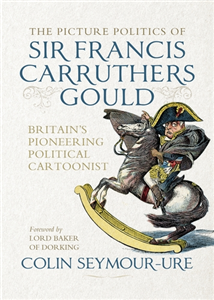
This is the first major study of Britain's pioneering graphic satirist, Sir Francis Carruthers Gould (1844-1925), the first staff political cartoonist on a daily newspaper in Britain, and the first of his kind to be knighted. Written by the distinguished media historian, Colin Seymour-Ure, it is essential reading for anyone interested in cartoons, caricature and illustration and will also be welcomed by students of history, politics and the media. It examines Gould's career in Fleet Street until his retirement after the First World War. It also discusses his illustrations for magazines and books and there is an analysis of his use of symbolism and literary allusion to lampoon such eminent politicians as Gladstone and Joseph Chamberlain. As Lord Baker says in his Foreword, this book is 'a major contribution to our knowledge of British cartooning.'
Trusted Partner
This is the first major study of Britain's pioneering graphic satirist, Sir Francis Carruthers Gould (1844-1925), the first staff political cartoonist on a daily newspaper in Britain, and the first of his kind to be knighted. Written by the distinguished media historian, Colin Seymour-Ure, it is essential reading for anyone interested in cartoons, caricature and illustration and will also be welcomed by students of history, politics and the media. It examines Gould's career in Fleet Street until his retirement after the First World War. It also discusses his illustrations for magazines and books and there is an analysis of his use of symbolism and literary allusion to lampoon such eminent politicians as Gladstone and Joseph Chamberlain. As Lord Baker says in his Foreword, this book is 'a major contribution to our knowledge of British cartooning.'
Trusted Partner
Trusted Partner
Trusted Partner
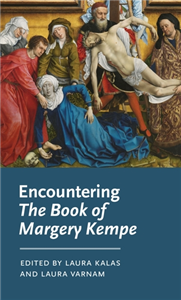
This innovative critical volume brings the study of Margery Kempe into the twenty-first century. Structured around four categories of 'encounter' - textual, internal, external and performative - the volume offers a capacious exploration of The Book of Margery Kempe, characterised by multiple complementary and dissonant approaches. It employs a multiplicity of scholarly and critical lenses, including the intertextual history of medieval women's literary culture, medical humanities, history of science, digital humanities, literary criticism, oral history, the global Middle Ages, archival research and creative re-imagining. Revealing several new discoveries about Margery Kempe and her Book in its global contexts, and offering multiple ways of reading the Book in the modern world, it will be an essential companion for years to come.
Trusted Partner
This innovative critical volume brings the study of Margery Kempe into the twenty-first century. Structured around four categories of 'encounter' - textual, internal, external and performative - the volume offers a capacious exploration of The Book of Margery Kempe, characterised by multiple complementary and dissonant approaches. It employs a multiplicity of scholarly and critical lenses, including the intertextual history of medieval women's literary culture, medical humanities, history of science, digital humanities, literary criticism, oral history, the global Middle Ages, archival research and creative re-imagining. Revealing several new discoveries about Margery Kempe and her Book in its global contexts, and offering multiple ways of reading the Book in the modern world, it will be an essential companion for years to come.
Trusted Partner
 Trusted Partner
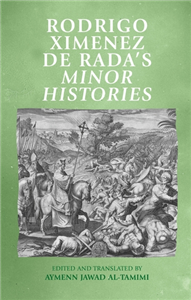
This work provides the first complete English translation of works by Toledan archbishop Rodrigo Ximénez de Rada (1170-1247 CE), whose 'Minor Histories' are sequels to his larger 'Gothic History' and thus round off his grand history of Spain project that he began at the request of King Ferdinand III. The 'Minor Histories' include Rodrigo's 'History of the Arabs' that can be considered the first surviving Western monograph focused on Arab and Islamic history and thus occupies a unique position in the medieval Latin corpus of writings. In addition to the translation, this book provides a thorough and accessible introduction to the life and works of Rodrigo, making sense of the context in which he wrote and his historical method. The translations are thoroughly annotated including cross-references to other Latin and Arabic sources for comparison.
Trusted Partner
Trusted Partner
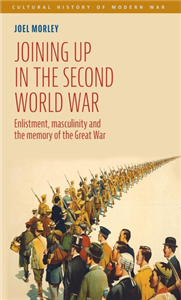
This book connects the First and Second World Wars. It uses oral histories and Mass Observation material to explore men's attitudes to Second World War enlistment and the relationship they perceived between military service and masculinity, and how these were influenced by understandings of the First World War. Locating the cultural legacy of First World War in the subjectivities of men who participated in the Second World War demonstrates the breadth of sources that informed men's understandings of the First World War in interwar Britain. Its cultural legacy was omnipresent and diverse, and informed young men's attitudes and service preferences, but it reinforced Edwardian conceptions of wartime masculinity as often as it undermined them. Two decades after the First World War ended, they remained resilient in the subjective understandings of men who grew up in the Great War's shadow.



