
Your Search Results


-
Promoted Content

 Business, Economics & LawJanuary 2026
International organisations, non-State actors, and the formation of customary international law
by Sufyan Droubi, Jean d'Aspremont
This volume offers new practical and theoretical perspectives on one of the most complex questions regarding the formation of international law, namely that actors other than states contribute to the making of customary international law. Notwithstanding the International Law Commission's valuable contribution, the making of customary international law remains riddled with acute practical and theoretical controversies that continue to be intensively debated. Making extensive reference to the case-law of international law courts and tribunals, as well as the most recent scholarly work on customary international law, this volume provides a comprehensive study of the contribution of international organisations and non-state actors to the formation of customary international law. With innovative tools and guidance for law students, legal scholars, and researchers in law, as well as legal practitioners, advisers, judges, arbitrators, and counsels, this collection is essential reading for those wishing to understand and address contemporary questions of international law-making.
-
Promoted Content
-
 Trusted Partner
 International lawAugust 2005
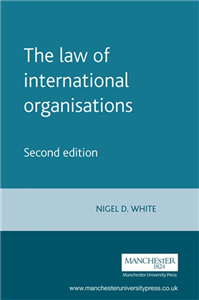
The law of international organisations
Second edition
by Nigel D. White
This new edition considers the unifying legal attributes that span vastly differing inter-governmental organisations, from the UN to the EU. A law of international organisations has become established in certain areas, such as legal personality, powers, membership, finance, and decision-making. In other, newer, areas - accountability, responsibility and democracy - politics is still much rawer, and has not yet been fully converted into legal concepts and principles. As with the first edition, there are plenty of examples of organisations given in the text. Individual organisations dealing with issues such as security, health, civil aviation, finance and trade are scrutinised by way of example, to illustrate how different they can be, but also to show how it is possible to debate a set of legal principles that transcend each institution. This new edition of an established text will appeal to students and academics as well as individuals seeking a legal and political insight into international organisations.
-
Trusted Partner
 Business, Economics & LawFebruary 2021
International organisations, non-state actors and the formation of customary international law
by Sufyan Droubi, Jean D'Aspremont
-
Trusted Partner
 Business, Economics & LawJune 2026
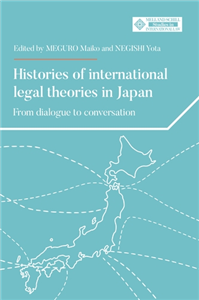
Histories of international legal theories in Japan
From dialogue to conversation
by Maiko Meguro, Yota Negishi
This volume presents the first systematic account of Japanese international legal theory; edited by Japanese scholars, the volume traces thirteen influential scholars and spans over a century. It examines how theorists positioned outside international law's Western centre developed sophisticated frameworks to address tensions between Western modernity and their own experiences. The book's central contribution proposes 'conversation'-continuous engagement that respects differences between legal traditions-as an alternative to 'dialogue', which often reproduces existing hierarchies by assuming all perspectives can be reconciled. Through detailed intellectual biographies across six historical periods, contributors reveal how Japanese scholars strategically employed legal positivism, articulated transcivilizational perspectives, and developed concepts of normative multilateralism. Addressed at scholars of international law, legal theory, and comparative legal traditions, this volume demonstrates that the discipline's future requires genuinely reciprocal exchange where diverse perspectives can coexist productively.
-
Trusted Partner
 Business, Economics & LawNovember 2016
The law of international organisations
Third edition
by Iain Scobbie, Jean D'Aspremont, Dominic McGoldrick, Nigel White
This book provides a concise account of the principles and norms of international law applicable to the main-type of international organisation - the inter-governmental organisation (IGO). That law consists of principles and rules found in the founding documents of IGOs along with applicable principles and rules of international law. The book also identifies and analyses the law produced by IGOs, applied by them and, occasionally, enforced by them. There is a concentration upon the United Nations, as the paradigmatic IGO, not only upon the UN organisation headquartered in New York, but on other IGOs in the UN system (the specialised agencies such as the World Health Organisation).
-
Trusted Partner
 Humanities & Social SciencesFebruary 2026
Diplomatic training
Histories, geographies, politics
by Ruth Craggs, Jonathan Harris, Fiona McConnell
Despite the essential role diplomatic training plays in the everyday workings of international relations, international law and in the various multilateral organisations, this practice has received little critical attention in the humanities, social and political sciences. Bringing together detailed accounts of the histories, development and contemporary practices of diplomatic training with insights from key practitioners, this edited collection places training centrally within our understanding of international relations. It argues that diplomatic training both reflects and reproduces hegemonic power relations, whilst at the same time offering opportunities to contest them, and imagine alternative futures. The book includes a substantive introduction, nine full-length chapters from a range of disciplinary and regional perspectives drawing on archival research, oral history, interviews, and ethnographic methods, and four 'interventions': reflection pieces from trainers and directors of training programmes. It offers a globe-spanning, interdisciplinary account of the politics of diplomatic training and appeals to both scholarly and practitioner audiences.
-
Trusted Partner
 Humanities & Social SciencesDecember 2022
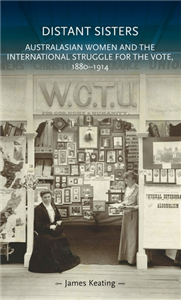
Distant sisters
Australasian women and the international struggle for the vote, 1880–1914
by James Keating
In the 1890s Australian and New Zealand women became the first in the world to win the vote. Buoyed by their victories, they promised to lead a global struggle for the expansion of women's electoral rights. Charting the common trajectory of the colonial suffrage campaigns, Distant Sisters uncovers the personal and material networks that transformed feminist organising. Considering intimate and institutional connections, well-connected elites and ordinary women, this book argues developments in Auckland, Sydney, and Adelaide-long considered the peripheries of the feminist world-cannot be separated from its glamourous metropoles. Focusing on Antipodean women, simultaneously insiders and outsiders in the emerging international women's movement, and documenting the failures of their expansive vision alongside its successes, this book reveals a more contingent history of international organising and challenges celebratory accounts of fin-de-siècle global connection.
-
Trusted Partner
 Humanities & Social SciencesNovember 2024
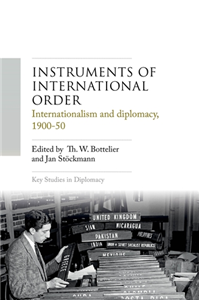
Instruments of international order
Internationalism and diplomacy, 1900-50
by Thomas W. Bottelier, Jan Stöckmann
During the first half of the twentieth century, world politics was reshaped in pursuit of a new international order. The ideological foundations of the 'new diplomacy' (and its fate during the interwar period) are well known. This book instead examines the practices of internationalism and diplomacy from the First Hague Conference of 1899 to the aftermath of the Second World War. By focusing on these practices, such as disarmament regimes or public diplomacy, and their use as instruments to build international order(s), it emphasises the constructed, contested, and experimental character of what subsequently became a standard repertoire of international politics. Essays from a range of interdisciplinary scholars address well-established principles such as self-determination, and also less prominent practices such as small arms control or parliamentary inquiry. The book makes a major contribution to the growing historiography on twentieth-century internationalism.
-
Trusted Partner
Humanities & Social SciencesJune 2026
Instruments of international order
Internationalism and diplomacy, 1900-50
by Th. W. Bottelier, Jan Stöckmann
During the first half of the twentieth century, world politics was reshaped in pursuit of a new international order. The ideological foundations of the 'new diplomacy' (and its fate during the interwar period) are well known. This book instead examines the practices of internationalism and diplomacy from the First Hague Conference of 1899 to the aftermath of the Second World War. By focusing on these practices, such as disarmament regimes or public diplomacy, and their use as instruments to build international order(s), it emphasises the constructed, contested, and experimental character of what subsequently became a standard repertoire of international politics. Essays from a range of interdisciplinary scholars address well-established principles such as self-determination, and also less prominent practices such as small arms control or parliamentary inquiry. The book makes a major contribution to the growing historiography on twentieth-century internationalism.
-
Trusted Partner
Business, Economics & LawJanuary 2026
Cinematic perspectives on international law
by Olivier Corten, Francois Dubuisson, Martyna Falkowska-Clarys
Why are constitutionalist ideals so prominent in science fiction? Does Independence Day depict self-defence as a legal concept with absolute limits? Is international law lost in space? This innovative interdisciplinary volume represents the first exploration of the relationship between international law and cinema. From Star Wars to Werner Herzog, The Godfather to The West Wing, this book uncovers a diverse range of representations of international law and its norms in film and television. Examining the wider links between international law, cinema, and ideology, the contributions not only examine visual representations of international law, but they offer an essential insight into the functions fulfilled by these cinematic representations. Providing an extraordinary introduction to a variety of perspectives on core international legal questions, Cinematic perspectives on international law extends a valuable methodology by which international lawyers can critique the depiction of international law in film.
-
Trusted Partner
Business, Economics & LawOctober 2024
The values of international organizations
by James D. Fry, Bryane Michael, Natasha Pushkarna
-
Trusted Partner
-
Trusted Partner
 Humanities & Social SciencesJuly 2014
Unpacking international organisations
by Jarle Trondal, Martin Marcussen, Torbjörn Larsson, Frode Veggeland
-
Trusted Partner
-
Trusted Partner
 Humanities & Social SciencesSeptember 2019
The genesis of international mass migration
by Eric Richards
-
Trusted Partner
Business, Economics & LawJanuary 2026
Latin America and international investment law
A mosaic of resistance
by Sufyan Droubi, Cecilia Juliana Flores Elizondo
Latin America has been a complex laboratory for the development of international investment law. While some governments and non-state actors have remained true to the Latin American tradition of resistance towards the international investment law regime, other governments and actors have sought to accommodate said regime in the region. Consequently, a profusion of theories and doctrines, too often embedded in clashing narratives, has emerged. In Latin America, the practice of international investment law is the vivid amalgamation of the practice of governments sometimes resisting and sometimes welcoming mainstream approaches; the practice of lawyers assisting foreign investors from outside and within the region; and the practice of civil society, indigenous peoples and other actors in their struggle for human rights and sustainable development. Latin America and international investment law describes the complex roles that governments have played vis-à-vis foreign investors and investments; the refreshing but clashing forces that international organizations, corporations, civil society, and indigenous peoples have brought to the field; and the contribution that Latin America has made to the development of the theory and practice of international investment law, notably in fields in which the Latin American experience has been traumatic: human rights and sustainable development. Latin American scholars have been contributing to the theory of international investment law for over a century; resting on the shoulders of true giants, this volume aims at pushing this contribution a little further.
-
Trusted Partner
Teaching, Language & ReferenceAugust 2024
Aid to Armenia
Humanitarianism and intervention from the 1890s to the present
by Joanne Laycock, Francesca Piana
Interventions on behalf of Armenia and Armenians have come to be identified by scholars and practitioners alike as defining moments in the history of humanitarianism. This book reassesses these claims, critically examining a range of interventions by governments, international and diasporic organizations, and individuals that aimed to 'save Armenians'. Drawing on multidisciplinary perspectives, it traces the evolution of these interventions from the late-nineteenth century to the present day, paying particular attention to the aftermaths of the genocide and the upheavals of the post-Soviet period. The contributions connect diverse places (the Caucasus, Russia, the Middle East, Europe, North America, South America, and Australia) to reveal shifting transnational networks of aid and intervention. Aid to Armenia explores this history, and engages critically with contemporary humanitarian questions facing Armenia, the South Caucasus region and the wider diaspora.
-
Trusted Partner
 Humanities & Social SciencesMarch 2026
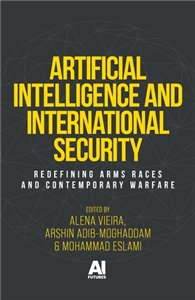
Artificial Intelligence and international security
Redefining arms races and contemporary warfare
by Arshin Adib-Moghaddam, Alena Vieira, Mohammad Eslami
As artificial intelligence continues to transform modern warfare, the rapid development of AI-driven weaponry presents profound ethical, legal, and security challenges. Artificial Intelligence and International Security: Redefining Arms Races and Contemporary Warfare offers a critical examination of this emerging arms race, exploring issues of arms control, international law, diplomacy, and long-term security. Bringing together expert perspectives, this volume assesses the risks and implications of autonomous weapon systems while proposing solutions to ensure ethical AI deployment. Through a comprehensive analysis of this urgent issue, it seeks to contribute to global debates and inform policies that foster peace, stability, and the responsible use of AI in warfare.
-
Trusted Partner
Humanities & Social SciencesSeptember 2023
International law in Europe, 700–1200
by Jenny Benham
Was there international law in the Middle Ages? Using treaties as its main source, this book examines the extent to which such a system of rules was known and followed in the period 700 to 1200. It considers how consistently international legal rules were obeyed, whether there was a reliance on justification of action and whether the system had the capacity to resolve disputed questions of fact and law. The book further sheds light on issues such as compliance, enforcement, deterrence, authority and jurisdiction, challenging traditional ideas over their role and function in the history of international law. International law in Europe, 700-1200 will appeal to students and scholars of medieval Europe, international law and its history, as well as those with a more general interest in warfare, diplomacy and international relations.



