Your Search Results

      • Rights People

        Rights People is a full service rights agency dedicated to selling books around the world. Established in January 2006, we are a small team with many years’ experience in the rights industry. Our approach is a personal one and we are the agency of choice for some of the best literary agencies and publishers from around the world. We provide a comprehensive service for all our clients based on their individual needs and we aim to find the best home for every book we represent. We sell directly to publishers in most markets, and are a one-stop shop for rights services.

        View Rights Portal
      • People's Literature Publishing House

        People’s Literature Publishing House Co., Ltd., currently a member of China Publishing Group Corporation, is the first and the largest professional national publishing institution in China. Founded in 1951, PLPH has published a vast number of quality literary works, from all time classics to the latest titles, by domestic writers and translated from other languages. PLPH enjoys a great amount of exclusive publishing resources, a high reputation among readers and was awarded many times with national literary and publishing prizes. Along with regular editing and production departments, it has a sub brand, Daylight Publishing, specializing in children’s book and five magazines and journals. We publish over a thousand titles each year, sharing outstanding literary works in a global platform. All-time classics such as the complete works of Shakespeare, Balzac, Tolstoy, Dostoevsky, Kafka, Hemingway, Sartre, and international bestsellers such as Harry Potter series are all introduced to Chinese readers by PLPH.

        View Rights Portal

      • Trusted Partner
        Humanities & Social Sciences
        July 2018

        Savage worlds

        German encounters abroad, 1798–1914

        by Matthew Fitzpatrick, Peter Monteath

        With an eye to recovering the experiences of those in frontier zones of contact, Savage Worlds maps a wide range of different encounters between Germans and non-European indigenous peoples in the age of high imperialism. Examining outbreaks of radical violence as well as instances of mutual co-operation, it examines the differing goals and experiences of German explorers, settlers, travellers, merchants, and academics, and how the variety of projects they undertook shaped their relationship with the indigenous peoples they encountered. Examining the multifaceted nature of German interactions with indigenous populations, this volume offers historians and anthropologists clear evidence of the complexity of the colonial frontier and frontier zone encounters. It poses the question of how far Germans were able to overcome their initial belief that, in leaving Europe, they were entering 'savage worlds'.

      • Trusted Partner
        Humanities & Social Sciences
        August 2025

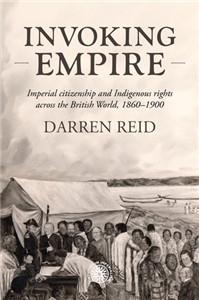
        Invoking Empire

        Imperial citizenship and Indigenous rights across the British World, 1860–1900

        by Darren Reid

        Invoking Empire examines the histories of Canada, South Africa, Australia, and New Zealand during the transitional decades between 1860-1900, when each gained some degree of self-government yet still remained within the sovereignty of the British Empire. It applies the conceptual framework of imperial citizenship to nine case studies of settlers and Indigenous peoples who lived through these decades to make two main arguments. It argues that colonial subjects adapted imperial citizenship to both support and challenge settler sovereignty, revealing the continuing importance of imperial authority in self-governing settler spaces. It also posits that imperial citizenship was rendered inoperable by a combination of factors in both Britian and the colonies, highlighting the contingency of settler colonialism on imperial governmental structures and challenging teleological assumptions that the rise of settler nation states was an inevitable result of settler self-government.

      • Trusted Partner
        International human rights law
        July 2013

        Indigenous peoples and human rights

        by Thornberry

      • Trusted Partner
        March 2026

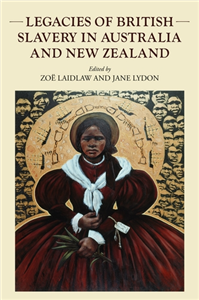
        Legacies of British slavery in Australia and New Zealand

        by Zoë Laidlaw, Jane Lydon

        This book investigates the legacies of British slavery beyond Britain, focusing upon the colonisation of Australia and New Zealand, and explores why this history has been overlooked. After August 1833, when the British Parliament abolished slavery in the British Caribbean, Mauritius and the Cape, the former slave-owners were paid compensation for the loss of their 'property'. New research has begun to show that many beneficiaries had ties to other parts of the British Empire, including the settler colonies of Australia, New Zealand, Canada and South Africa. Through a range of case studies, contributors to this collection trace the movement of people, goods, capital, and practices from the Caribbean to the new Australasian settler colonies. Chapters consider a range of places, people and themes to reveal the varied ways that slavery continued to shape imperial relationships, economic networks, and racial labour regimes after 1833.

      • Trusted Partner
        Humanities & Social Sciences
        September 2021

        Chosen peoples

        The Bible, race and empire in the long nineteenth century

        by Gareth Atkins, Shinjini Das, Brian Murray

        Chosen peoples demonstrates how biblical themes, ideas and metaphors shaped racial, national and imperial identities in the long nineteenth century. Even as radical new ideas challenged the historicity of the Bible, biblical notions of lineage, descent and inheritance continued to inform understandings of race, nation and empire. European settler movements portrayed 'new' territories across the seas as lands of Canaan, but if many colonised and conquered peoples resisted the imposition of biblical narratives, they also appropriated biblical tropes to their own ends. These innovative case-studies throw new light on familiar areas such as slavery, colonialism and the missionary project, while forging exciting cross-comparisons between race, identity and the politics of biblical translation and interpretation in South Africa, Egypt, Australia, America and Ireland.

      • Trusted Partner
        Humanities & Social Sciences
        February 2017

        Conquering nature in Spain and its empire, 1750–1850

        by Helen Cowie, Andrew Thompson, John M. MacKenzie

        This book examines the study of natural history in the Spanish empire in the years 1750-1850. During this period, Spain made strenuous efforts to survey, inventory and exploit the natural productions of her overseas possessions, orchestrating a serries of scientific expeditions and cultivating and displaying American fauna and flora in metropolitan gardens and museums. This book assesses the cultural significance of natural history, emphasising the figurative and utilitarian value with which eighteenth-century Spaniards invested natural objects, from globetrotting elephants to three-legged chickens. It considers how the creation, legitimisation and dissemination of scientific knowledge reflected broader questions of imperial power and national identity. This book will be of particular interest to scholars and students of Spanish and Latin American History, the History of Science and Imperial Culture

      • Trusted Partner
        Humanities & Social Sciences
        March 2017

        Air power and colonial control

        by David Omissi

        Air policing was used in many colonial possessions, but its most effective incidence occurred in the crescent of territory from north-eastern Africa, through South-West Arabia, to North West Frontier of India. This book talks about air policing and its role in offering a cheaper means of 'pacification' in the inter-war years. It illuminates the potentialities and limitations of the new aerial technology, and makes important contributions to the history of colonial resistance and its suppression. Air policing was employed in the campaign against Mohammed bin Abdulla Hassan and his Dervish following in Somaliland in early 1920. The book discusses the relationships between air control and the survival of Royal Air Force in Iraq and between air power and indirect imperialism in the Hashemite kingdoms. It discusses Hugh Trenchard's plans to substitute air for naval or coastal forces, and assesses the extent to which barriers of climate and geography continued to limit the exercise of air power. Indigenous responses include being terrified at the mere sight of aircraft to the successful adaptation to air power, which was hardly foreseen by either the opponents or the supporters of air policing. The book examines the ethical debates which were a continuous undercurrent to the stream of argument about repressive air power methods from a political and operational perspective. It compares air policing as practised by other European powers by highlighting the Rif war in Morocco, the Druze revolt in Syria, and Italy's war of reconquest in Libya.

      • Trusted Partner
        Humanities & Social Sciences
        February 2025

        Empire and subject peoples

        Herbert Adolphus Miller and the political sociology of domination

        by Jan Balon, John Holmwood

        The book outlines the sociological arguments and political activities of the US pragmatist sociologist, Herbert Adolphus Miller (1875-1951). Miller was part of the milieu of Chicago sociology and involved in its studies of race and immigration. He took a distinctly more radical approach and developed a novel political sociology of domination in which he set out a critique of empires, the plight of subject minorities and the risks associated with the inevitable nationalist responses. Where others have identified with the 'internationalisation' of nationalism, Miller sought to make the nation 'international'. He was actively involved in movements for racial justice, Czechoslovakian independence, the formation of the Mid-European Union of subject peoples, as well as support for Korean and Indian independence. He was dismissed by Ohio State University for his activism in 1932.

      • Trusted Partner
        Business, Economics & Law
        January 2026

        Latin America and international investment law

        A mosaic of resistance

        by Sufyan Droubi, Cecilia Juliana Flores Elizondo

        Latin America has been a complex laboratory for the development of international investment law. While some governments and non-state actors have remained true to the Latin American tradition of resistance towards the international investment law regime, other governments and actors have sought to accommodate said regime in the region. Consequently, a profusion of theories and doctrines, too often embedded in clashing narratives, has emerged. In Latin America, the practice of international investment law is the vivid amalgamation of the practice of governments sometimes resisting and sometimes welcoming mainstream approaches; the practice of lawyers assisting foreign investors from outside and within the region; and the practice of civil society, indigenous peoples and other actors in their struggle for human rights and sustainable development. Latin America and international investment law describes the complex roles that governments have played vis-à-vis foreign investors and investments; the refreshing but clashing forces that international organizations, corporations, civil society, and indigenous peoples have brought to the field; and the contribution that Latin America has made to the development of the theory and practice of international investment law, notably in fields in which the Latin American experience has been traumatic: human rights and sustainable development. Latin American scholars have been contributing to the theory of international investment law for over a century; resting on the shoulders of true giants, this volume aims at pushing this contribution a little further.

      • Trusted Partner
      • Trusted Partner
        Humanities & Social Sciences
        March 2020

        Knowledge, mediation and empire

        James Tod's journeys among the Rajputs

        by Florence D'Souza, Andrew Thompson, John M. MacKenzie

        This study of the British colonial administrator James Tod (1782-1835), who spent five years in north-western India (1818-22) collecting every conceivable type of material of historical or cultural interest on the Rajputs and the Gujaratis, gives special attention to his role as a mediator of knowledge about this little-known region of the British Empire in the early nineteenth century to British and European audiences. The book aims to illustrate that British officers did not spend all their time oppressing and inferiorising the indigenous peoples under their colonial authority, but also contributed to propagating cultural and scientific information about them, and that they did not react only negatively to the various types of human difference they encountered in the field.

      • Trusted Partner
        Humanities & Social Sciences
        February 2017

        Scottishness and Irishness in New Zealand since 1840

        by Angela McCarthy, Andrew Thompson, John M. MacKenzie

        This book examines the distinctive aspects that insiders and outsiders perceived as characteristic of Irish and Scottish ethnic identities in New Zealand. When, how, and why did Irish and Scots identify themselves and others in ethnic terms? What characteristics did the Irish and the Scots attribute to themselves and what traits did others assign to them? Did these traits change over time and if so how? Contemporary interest surrounding issues of ethnic identities is vibrant. In countries such as New Zealand, descendants of European settlers are seeking their ethnic origins, spurred on in part by factors such as an ongoing interest in indigenous genealogies, the burgeoning appeal of family history societies, and the booming financial benefits of marketing ethnicities abroad. This fascinating book will appeal to scholars and students of the history of empire and the construction of identity in settler communities, as well as those interested in the history of New Zealand.

      • Trusted Partner
        Humanities & Social Sciences
        February 2009

        Exploring the explorers

        Spaniards in Oceania, 1519–1794

        by Mercedes Camino

        Exploring the Explorers: Spaniards in Oceania 1519-1794 is the first study of cross-cultural engagements between the indigenous peoples of the Pacific and Spanish explorers during the early modern period. Bridging disciplines, the book sets out to analyse in detail eight main voyages and their aims and outcomes, looking at the different patterns of contact and the use of gift-giving and bartering as social cement. This fascinating and original study will broaden the investigation of world exploration and Pacific ethnography, as many of the sources from these voyages are scarcely known and have not been translated before. It will also expand an understanding of Spanish and world exploration, developing the history of the Spanish Pacific beyond the long-standing colony of the Philippines. The study will be of particular interest to scholars and students of Early Modern European history as well as anthropologists, ethnographers and those interested in stories of exploration and discovery throughout history. ;

      • Trusted Partner
        Teaching, Language & Reference
        April 2025

        Anti-colonial research praxis

        Methods for knowledge justice

        by Caroline Lenette

        How can anti-colonial research methodologies be transformative and achieve knowledge justice? This book brings together an eclectic group of leading scholars from around the world to share methodological knowledge grounded in First Nations and majority-world expertise and wisdom. The authors challenge western-centric and colonial approaches to knowledge production and redefine the possibilities of what we can achieve through social research. First Nations and majority-world perspectives are contextual and unique. They share a common aim of disrupting established beliefs on research methodologies and the unquestioned norms that dictate whose knowledge the academy values. The ten chapters in this edited collection describe how the authors draw on Indigenous knowledge systems, feminist frameworks, and creative methodologies as anti-colonial research praxis. The examples span several disciplines such as development studies, geography, education, sexual and reproductive health, humanitarian studies, and social work. Authors use a reflexive approach to discuss specific factors that shape how they engage in research ethically, to lead readers through a reflection on their own practices and values. The book reimagines social research using an anti-colonial lens and concludes with a collaboratively developed and co-written set of provocations for anti-colonial research praxis that situate this important work in the context of ongoing colonial violence and institutional constraints. This book is an essential guide for researchers and scholars within and beyond the academy on how anti-colonial research praxis can produce meaningful outcomes, especially in violent and troubled times. Cover art courtesy of Tawny Chatmon

      • Trusted Partner
        Humanities & Social Sciences
        March 2017

        New frontiers

        Imperialism's new communities in East Asia, 1842–1953

        by Robert Bickers, Christian Henriot

        In the new world order mapped out by Japanese and Western imperialism in East Asia after the mid-nineteenth century opium wars, communities of merchants and settlers took root in China and Korea. New identities were constructed, new modes of collaboration formed and new boundaries between the indigenous and foreign communities were literally and figuratively established. Newly available in paperback, this pioneering and comparative study of Western and Japanese imperialism examines European, American and Japanese communities in China and Korea, and challenges received notions of agency and collaboration by also looking at the roles in China of British and Japanese colonial subjects from Korea, Taiwan and India, and at Chinese Christians and White Russian refugees. This volume will be of interest to students and scholars of the history and anthropology of imperialism, colonialism's culture and East Asian history, as well as contemporary Asian affairs.

      • Trusted Partner
        Humanities & Social Sciences
        July 2016

        Mistress of everything

        Queen Victoria in Indigenous worlds

        by Andrew Thompson, John Mackenzie, Sarah Carter, Maria Nugent

        Mistress of everything examines how indigenous people across Britain's settler colonies engaged with Queen Victoria in their lives and predicaments, incorporated her into their political repertoires, and implicated her as they sought redress for the effects of imperial expansion during her long reign. It draws together empirically rich studies from Canada, Australia, New Zealand and Southern Africa, to provide scope for comparative and transnational analysis. The book includes chapters on a Maori visit to Queen Victoria in 1863, meetings between African leaders and the Queen's son Prince Alfred in 1860, gift-giving in the Queen's name on colonial frontiers in Canada and Australia, and Maori women's references to Queen Victoria in support of their own chiefly status and rights. The collection offers an innovative approach to interpreting and including indigenous perspectives within broader histories of British imperialism and settler colonialism. ;

      • Trusted Partner
      • Trusted Partner
        Humanities & Social Sciences
        February 2020

        Chosen peoples

        by Gareth Atkins, Shinjini Das, Brian Murray, Alan Lester

      Subscribe to our

      newsletter