
Polperro Heritage Press
Polperro Heritage Press is an independent British publisher, established in 1995. Recent titles from Polperro Press have included biographies, guides and a growing list of Cornish local history titles.
View Rights Portal
Polperro Heritage Press is an independent British publisher, established in 1995. Recent titles from Polperro Press have included biographies, guides and a growing list of Cornish local history titles.
View Rights Portal
Chemical Industry Press( hereinafter called “CIP”) was established in 1953, and is one of the most distinguished state-owned publishers in China. As one of “top 100 publishers in China”, CIP has been seen as a well-known and trusted brand in China. For years, CIP is one of the most impressive Chinese publisher with powerful overseas libraries’ collection influence. Key subjects: Chemistry, Materials, Environment, Energy, Engineering, Machine, Automotive, Electric & Electrical, Architecture, Biology, Pharmacy, Medicine, Healthcare, Business & Management, Humanities, Lifestyle, Photography, Self-help, Baby & Parenting, Language learning, Literature&Arts,etc.
View Rights Portal
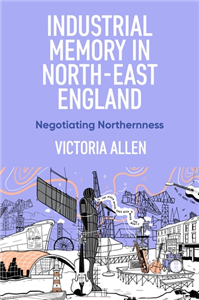
Industrial memory in North East England examines how the region's industrial myth and memory have been articulated in the renegotiation of northernness. The book offers a critical contextualisation of the concept of northernness and the English North, and an introduction to the concept of the PopCultural Portfolio, a mixed-methods approach to conjunctural analysis in cultural and memory studies. The book provides six richly illustrated case studies to demonstrate the practical application of cultural studies' expansive and inclusive understanding of texts, bringing together materials from North East football, folk, indie and exhibition culture to establish how the North East's industrial past continues to be remembered and functionalised as industrial memory. In turn, the conjunctural analysis demonstrates how industrial memory is articulated and mythologised as north(east)ernes in contemporary popular culture.

Written by an interdisciplinary team of scholars, this authoritative text explores how heritage is delivered and consumed in a global world, and the ever-increasing ways in which heritage is actively valued. New international case studies see heritage as social action, as performance, and as a vehicle for innovations in tourism, challenging the notion that only official heritage practices can successfully select and interpret our links with the past. Aimed primarily at students in heritage studies and professionals in heritage industries, this book is one of three in the Understanding Global Heritage series.
 Trusted Partner

Written by an interdisciplinary team of scholars, this authoritative text presents an engaging narrative of the way politics features in heritage conservation and management. New international case studies illustrate how notions of identity, social class and nationhood may be woven into the provision of official heritage, and how heritage may be seen to be less about upholding truth or authenticity and more about delivering political objectives. Aimed primarily at students in heritage studies and professionals in heritage industries, this book is one of three in the Understanding Global Heritage series.
Trusted Partner

Written by an interdisciplinary team of scholars, this authoritative text explores the emotive issues surrounding the commemoration of war and atrocity, and the profound challenges for conservators posed by 'virtual', 'intangible' and 'multicultural' heritage. New international case studies demonstrate that while interest in the memorialisation of the great national upheavals of the last century has never been more acute, many of the problems of conserving the past in diverse and disparate societies remain to be resolved. Aimed primarily at students in heritage studies and professionals in heritage industries, this book is one of three in the Understanding Global Heritage series.
Trusted Partner

Performing Heritage is the first book to bring together the range of voices, debates and practices that constitute the fields of museum theatre and live interpretation. Inspiring and challenging in its scope and level of debate, Performing Heritage crosses the disciplines of performance and museum/heritage studies and offers remarkable and timely insights into the processes, outcomes and potential of this rich and rapidly developing practice - and in a variety of international contexts. The book productively brings together academic research and professional practice, and will be essential reading for all those interested in, and concerned with the future of, 'heritage' and its interpretation. ;
Trusted Partner
Trusted Partner
Trusted Partner

This is the first book to provide a clear overview and innovative analysis of the multiple ways the European Union affects industrial relations. It frames the EU as the provider of both a new institutional framework and policy context for industrial relations. It first examines the European level institutional framework for industrial relations, namely the European social dialogue at cross-sectoral, sectoral and company level, as well as interactions between these and transnational developments. It then focuses on the EU's role as a driver for institutional change in industrial relations at the national level, and subsequently analyses how the EU's policy framework, such as the common market freedoms, economic governance and Agenda 2020, influences industrial relations. The book will be of great interest particularly to all those involved in industrial relations and EU studies and more generally to anyone interested in the EU's debated and contested role in socio-economic governance in the face of an economic crisis that puts into question existing national and transnational governance structures. ;
Trusted Partner
Trusted Partner

Contemporary French cinema is an essential introduction to popular French film of the last 35 years. It charts recent developments in all genres of French cinema with analyses of over 120 movies, from Les Valseuses to Caché. Reflecting the diversity of French film production since the New Wave, this clear and perceptive study includes chapters on the heritage film, the thriller and the war movie, alongside the 'cinéma du look', representations of sexuality, comedies, the work of women film makers and le jeune cinéma. Each chapter introduces the public reception and critical debates surrounding a given genre, interwoven with detailed accounts of relevant films. Confirmed as a major contribution to both Film Studies and French Studies, this book is a fascinating volume for students and fans of French film alike.
Trusted Partner

Contemporary French cinema is an essential introduction to popular French film of the last 35 years. It charts recent developments in all genres of French cinema with analyses of over 120 movies, from Les Valseuses to Caché. Reflecting the diversity of French film production since the New Wave, this clear and perceptive study includes chapters on the heritage film, the thriller and the war movie, alongside the 'cinéma du look', representations of sexuality, comedies, the work of women film makers and le jeune cinéma. Each chapter introduces the public reception and critical debates surrounding a given genre, interwoven with detailed accounts of relevant films. Confirmed as a major contribution to both Film Studies and French Studies, this book is a fascinating volume for students and fans of French film alike.
Trusted Partner
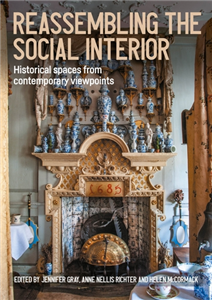
At the intersection of heritage, design history and contemporary art, this book offers new perspectives on the way historical interiors are encountered by, and viewed and presented for, present-day audiences. Many studies have highlighted the historical significance and meanings embedded in the landscape, architecture, decoration and objects to be found within houses and homes. But what about the social meanings of these spaces? Central to this book is the idea that in reflecting, remaking and reimagining historical interiors, the contributions of artists, designers and craftspeople should be foregrounded in constructing ideas of authenticity, transparency, and materiality in the making process. The chapters present a range of case studies that reflect upon on how historical interiors are remade and reimagined by looking in and out; at how a reassembling of spaces ought to avoid 'a shrinking definition of the social itself' (Latour, 2005). Surveying a range of interior 'types' from a number of historical periods, the book includes contributions from practitioners, scholars and makers. From digital reconstructions of a seventeenth-century Belgian constcamer to the interior and exterior worlds of specific historical figures, including Charles Rennie Mackintosh and Beatrix Potter, the book considers how these spaces have powerful significance for contemporary audiences, particularly in ways that are relatable to shared experiences of work, leisure, family, community, power and politics. This book will be of interest to scholars of the history of interiors and collections, museology, archaeology, architectural history, art, and design history, as well as curators and caretakers of historical sites, spaces and objects.
Trusted Partner
Trusted Partner

An electronic version of this book is also available under a Creative Commons (CC-BY-NC-ND) license, thanks to the support of the Wellcome Trust. The Industrial Revolution produced injury, illness and disablement on a large scale and nowhere was this more visible than in coalmining. Disability in the Industrial Revolution sheds new light on the human cost of industrialisation by examining the lives and experiences of those disabled in an industry that was vital to Britain's economic growth. Although it is commonly assumed that industrialisation led to increasing marginalisation of people with impairments from the workforce, disabled mineworkers were expected to return to work wherever possible, and new medical services developed to assist in this endeavour. This book explores the working lives of disabled miners and analyses the medical, welfare and community responses to disablement in the coalfields. It shows how disability affected industrial relations and shaped the class identity of mineworkers. The book will appeal to students and academics interested in disability, occupational health and social history.
Trusted Partner

This electronic version has been made available under a Creative Commons (BY-NC-ND) open access license. An electronic version of this book is also available under a Creative Commons (CC-BY-NC-ND) license, thanks to the support of the Wellcome Trust. Coalmining was a notoriously dangerous industry and many of its workers experienced injury and disease. However, the experiences of the many disabled people within Britain's most dangerous industry have gone largely unrecognised by historians. This book looks at British coal through the lens of disability, using an interdisciplinary approach to examine the lives of disabled miners and their families. A diverse range of sources are used to examine the economic, social, political and cultural impact of disability in the coal industry, looking beyond formal coal company and union records to include autobiographies, novels and existing oral testimony. It argues that, far from being excluded entirely from British industry, disability and disabled people were central to its development. The book will appeal to students and academics interested in disability history, disability studies, social and cultural history and representations of disability in literature.
Trusted Partner
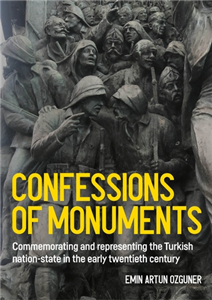
Following the dissolution of the Ottoman Empire in the early 1920s, an emerging nation state built a particular relationship with the Ottoman past. In its simultaneous disavowal and inheritance of it, this was the new Republic of Turkey, founded in 1923. Nation-states are areas of ideological contestation. However, they are equally visible and tangible. This is thanks to the making of a new world of artefacts in build or print that represent and commemorate them in many, often contradicting ways through design practices. This book offers a thorough account of this new Turkish material world through the trajectories of commemoration; from public monuments, print media, and festive illumination to temporary and permanent architecture from the onset of the 1908 Young Turk revolution to the demise of Turkey's founding single-party regime in the late 1950s. If objects are silent actors of history, their confessions await.
Trusted Partner

Charting a collaborative art-based project using carpet-making skills and the industrial heritage of the region, the book investigates how a cleaved ex-industrial community used arts methodologies as a cohesion strategy. Drawing on images from the company's archives, the book mines the history of Firths Carpets Limited, a firm that carpeted interiors across the globe from the mid-1800s. Women's labour and tastes were business critical to the production and sale of Firths carpets. Drawing on the author's personal connection to the village, an ethnographic sensibility and novel research techniques, ex-worker responses to a village radically altered by ruination are explored. Ex-workers felt nostalgia for the dignity of work and a sense of homesickness in a village ghosted by industrial spectres of the past. Threads of Labour argues that left-behind deindustrialised places require acts of social re-making if their communities are to survive.
Trusted Partner
 Trusted Partner
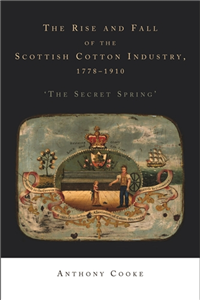
This is the first full-length history of the Scottish cotton industry, from its beginnings in the late eighteenth century to its premature decline in the years leading up to the First World War. The book examines the industry chronologically and through themes such as precursors, technology, capital and employers, markets, labour and work, placed within their broader economic and scoial contexts. Its account of the cotton industry is set within important historiographical debates such as proto-industrialisation, the speed of industrial change, the diffusion of technology, the labour process, paternalism, workplace control, entrepreneurship and theories of industrial decline. Cotton was Scotland's premier industry during the Industrial Revolution and this book will be wlecomed by specialists, students and interested readers alike. ;
Trusted Partner





