Your Search Results

      • SPCK The Society for Promoting Christian Knowledge/InterVarsity Press (IVP) UK

        SPCK is the UK’s leading independent Christian publisher. We are known for our history and theological tradition of supporting the church with works of practical and pastoral benefit. Today we are a recognised market-leader publishing in the areas of theology and Christian spirituality and are developing into other areas. We publish leading authors such as Tom Wright, Rowan Williams, Paula Gooder, Alister McGrath, Janet Morley and Catherine Fox.   Inter-Varsity Press (IVP) publishes Christian books that are true to the Bible and that communicate the gospel, develop discipleship and strengthen the church for its mission throughout the world. We publish evangelical Christian books for the church and the world, including for academic audiences under the imprint Apollos. As a British publisher, we aim to be at the centre of the UK evangelical church's conversation with itself and with the wider world. We also seek to have a global reach and impact through worldwide distribution, licensing and partnerships.

        View Rights Portal
      • Agriculture & International Development

        Textbooks, research and professional titles in Agriculture and International Development

        View Rights Portal
      • Trusted Partner
        Humanities & Social Sciences
        February 2025

        Empire and subject peoples

        Herbert Adolphus Miller and the political sociology of domination

        by Jan Balon, John Holmwood

        The book outlines the sociological arguments and political activities of the US pragmatist sociologist, Herbert Adolphus Miller (1875-1951). Miller was part of the milieu of Chicago sociology and involved in its studies of race and immigration. He took a distinctly more radical approach and developed a novel political sociology of domination in which he set out a critique of empires, the plight of subject minorities and the risks associated with the inevitable nationalist responses. Where others have identified with the 'internationalisation' of nationalism, Miller sought to make the nation 'international'. He was actively involved in movements for racial justice, Czechoslovakian independence, the formation of the Mid-European Union of subject peoples, as well as support for Korean and Indian independence. He was dismissed by Ohio State University for his activism in 1932.

      • Trusted Partner
        Business, Economics & Law
        January 2026

        Latin America and international investment law

        A mosaic of resistance

        by Sufyan Droubi, Cecilia Juliana Flores Elizondo

        Latin America has been a complex laboratory for the development of international investment law. While some governments and non-state actors have remained true to the Latin American tradition of resistance towards the international investment law regime, other governments and actors have sought to accommodate said regime in the region. Consequently, a profusion of theories and doctrines, too often embedded in clashing narratives, has emerged. In Latin America, the practice of international investment law is the vivid amalgamation of the practice of governments sometimes resisting and sometimes welcoming mainstream approaches; the practice of lawyers assisting foreign investors from outside and within the region; and the practice of civil society, indigenous peoples and other actors in their struggle for human rights and sustainable development. Latin America and international investment law describes the complex roles that governments have played vis-à-vis foreign investors and investments; the refreshing but clashing forces that international organizations, corporations, civil society, and indigenous peoples have brought to the field; and the contribution that Latin America has made to the development of the theory and practice of international investment law, notably in fields in which the Latin American experience has been traumatic: human rights and sustainable development. Latin American scholars have been contributing to the theory of international investment law for over a century; resting on the shoulders of true giants, this volume aims at pushing this contribution a little further.

      • Trusted Partner
        Humanities & Social Sciences
        January 2026

        A sociology of kindness as everyday enchantment

        On making the world go our way

        by Julie Brownlie

        This book asks us to consider how and why the notion of random acts of kindness and the idea of kindness more generally have come to take a hold in many contemporary English-speaking societies. By introducing and mapping the contours of an emergent kindness industry, marshalling empirical research on contemporary framings of everyday kindness and theoretical resources from cultural sociology to the sociology of emotions and relationships, Brownlie makes the case for a critical sociological engagement with the idea of kindness. In doing so, she argues for kindness to be seen as a form of everyday enchantment - one that, like all enchantments, is ultimately ambivalent.

      • Trusted Partner
        Humanities & Social Sciences
        March 2026

        Artificial Intelligence and international security

        Redefining arms races and contemporary warfare

        by Arshin Adib-Moghaddam, Alena Vieira, Mohammad Eslami

        As artificial intelligence continues to transform modern warfare, the rapid development of AI-driven weaponry presents profound ethical, legal, and security challenges. Artificial Intelligence and International Security: Redefining Arms Races and Contemporary Warfare offers a critical examination of this emerging arms race, exploring issues of arms control, international law, diplomacy, and long-term security. Bringing together expert perspectives, this volume assesses the risks and implications of autonomous weapon systems while proposing solutions to ensure ethical AI deployment. Through a comprehensive analysis of this urgent issue, it seeks to contribute to global debates and inform policies that foster peace, stability, and the responsible use of AI in warfare.

      • Trusted Partner
        Humanities & Social Sciences
        November 2024

        Instruments of international order

        Internationalism and diplomacy, 1900-50

        by Thomas W. Bottelier, Jan Stöckmann

        During the first half of the twentieth century, world politics was reshaped in pursuit of a new international order. The ideological foundations of the 'new diplomacy' (and its fate during the interwar period) are well known. This book instead examines the practices of internationalism and diplomacy from the First Hague Conference of 1899 to the aftermath of the Second World War. By focusing on these practices, such as disarmament regimes or public diplomacy, and their use as instruments to build international order(s), it emphasises the constructed, contested, and experimental character of what subsequently became a standard repertoire of international politics. Essays from a range of interdisciplinary scholars address well-established principles such as self-determination, and also less prominent practices such as small arms control or parliamentary inquiry. The book makes a major contribution to the growing historiography on twentieth-century internationalism.

      • Trusted Partner
        Humanities & Social Sciences
        June 2026

        Instruments of international order

        Internationalism and diplomacy, 1900-50

        by Th. W. Bottelier, Jan Stöckmann

        During the first half of the twentieth century, world politics was reshaped in pursuit of a new international order. The ideological foundations of the 'new diplomacy' (and its fate during the interwar period) are well known. This book instead examines the practices of internationalism and diplomacy from the First Hague Conference of 1899 to the aftermath of the Second World War. By focusing on these practices, such as disarmament regimes or public diplomacy, and their use as instruments to build international order(s), it emphasises the constructed, contested, and experimental character of what subsequently became a standard repertoire of international politics. Essays from a range of interdisciplinary scholars address well-established principles such as self-determination, and also less prominent practices such as small arms control or parliamentary inquiry. The book makes a major contribution to the growing historiography on twentieth-century internationalism.

      • Trusted Partner
        Business, Economics & Law
        January 2026

        Cinematic perspectives on international law

        by Olivier Corten, Francois Dubuisson, Martyna Falkowska-Clarys

        Why are constitutionalist ideals so prominent in science fiction? Does Independence Day depict self-defence as a legal concept with absolute limits? Is international law lost in space? This innovative interdisciplinary volume represents the first exploration of the relationship between international law and cinema. From Star Wars to Werner Herzog, The Godfather to The West Wing, this book uncovers a diverse range of representations of international law and its norms in film and television. Examining the wider links between international law, cinema, and ideology, the contributions not only examine visual representations of international law, but they offer an essential insight into the functions fulfilled by these cinematic representations. Providing an extraordinary introduction to a variety of perspectives on core international legal questions, Cinematic perspectives on international law extends a valuable methodology by which international lawyers can critique the depiction of international law in film.

      • Trusted Partner
        Sociology: work & labour
        July 2015

        The sociology of unemployment

        by Edited by Tom Boland and Ray Griffin

        The sociology of unemployment is an analysis of the experience and governance of unemployment. By considering unemployment as more than just the absence of work; the book explores unemployment as a distinctive experience created by the welfare state. Each chapter explores an aspect of the experience or governance of unemployment; beginning with how people talk about their experience of being unemployed individually and collectively, to the places of unemployment, and on to the processes, policies and forms of the social welfare system. Clear explanations of classic theories are explored and extended, all against the backdrop of new primary research. Chapter by chapter, The sociology of unemployment challenges the 'deprivation theory of unemployment' which dominates sociology, psychology and social policy, by focusing on how governmental power forms the experience of unemployment. As a result, the book is both an introductory text on the sociology of unemployment and a fresh, critical perspective.

      • Trusted Partner
        Humanities & Social Sciences
        July 2015

        The sociology of unemployment

        by Tom Boland, Ray Griffin

        The sociology of unemployment is an analysis of the experience and governance of unemployment. By considering unemployment as more than just the absence of work; the book explores unemployment as a distinctive experience created by the welfare state. Each chapter explores an aspect of the experience or governance of unemployment; beginning with how people talk about their experience of being unemployed individually and collectively, to the places of unemployment, and on to the processes, policies and forms of the social welfare system. Clear explanations of classic theories are explored and extended, all against the backdrop of new primary research. Chapter by chapter, The sociology of unemployment challenges the 'deprivation theory of unemployment' which dominates sociology, psychology and social policy, by focusing on how governmental power forms the experience of unemployment. As a result, the book is both an introductory text on the sociology of unemployment and a fresh, critical perspective. ;

      • Trusted Partner
        Humanities & Social Sciences
        January 2026

        The sociology of sovereignty

        by Terje Rasmussen

      • Trusted Partner
      • Trusted Partner
        Humanities & Social Sciences
        December 2025

        Criminality, political power and conflict

        Critical perspectives

        by José Antonio Gutiérrez Danton, Francisco Gutiérrez Sanín

        In the aftermath of the greed vs. grievance debate and the new wars paradigm, the focus of conflict studies shifted decisively to understanding "predatory" behaviours as the raison d'etre of contemporary conflict. Conflict was viewed as a continuum in which the more you engage in criminal behaviour, the less political you are.This approach has been robustly criticised over the past 15 years; however, in the process, we have been left with unsuitable concepts to handle the complex interactions between civil war, political power and criminality. The departure point here is the understanding of politics and criminality as two historically differentiated domains of human activity. Different, but interrelated, often co-constitutive and overlapping. Here, we empirically and theoretically explore their interactions, connections, and convergences, not focusing solely on irregular actors, thus bringing back the State and elites into this debate.

      • Trusted Partner
      • Trusted Partner
        Business, Economics & Law
        March 2026

        Humanitarianism in Civil War

        The Biafra crisis, 1967-1970

        by Marie-Luce Desgrandchamps

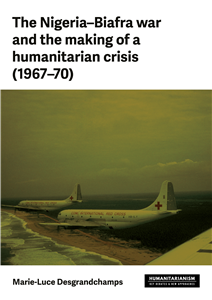
        May 1967, in Nigeria, the Republic of Biafra declared its independence. Soon, civil war and famine ravaged the region and gradually entered the European and American media. Photographs of the conflict arouse considerable emotion in the West. The secessionist enclave and the areas taken over by the Nigerian army then became the scene of major relief operations, developed and financed by multiple organizations and governments. Part of a historiography of humanitarianism in full renewal, this book tells the story of the war, its metamorphosis into an international crisis and the responses that were provided. Based on a large body of sources from French, British, Swiss, Nigerian and American archives, it offers an insight into the world of humanitarian work at the end of the 1960s. It shows the reconfigurations taking place there. in the postcolonial era by proposing complementary scales of observation - international, national and local. The work also revisits some of the controversies which developed around the conflict regarding the instrumentalization of aid, its links with politics, the reception of relief operations on the ground or even the birth of borderlessness and testimony. It thus returns to the place occupied by the Biafran crisis in the history of humanitarian aid.

      • Trusted Partner
        Humanities & Social Sciences
        May 2009

        Governance as social and political communication

        by Henrik Bang, Martin Hargreaves

        Governance is among the most used of new ideas in the social sciences, most notably in the fields of political science, public administration, sociology, social and political theory. As ever, debates within disciplines rarely transcend disciplinary boundaries. This volume, newly available in paperback, brings together authors from these fields to elaborate on the development of governance analysis in new conceptions of political and democratic communication. It not only seeks to identify, describe and evaluate the contribution of each discipline to a theory of communicative governance, but also lays the foundation of a multidisciplinary framework for studying the mediation in communicative governance of societal concerns for effectiveness, order and participation. The book is theoretical and comparative, drawing on authors and research in Britain, Denmark, France, Germany, the Netherlands and the US. It adopts an anti-foundational approach to deconstruct the essentialist discourses endemic in each discipline and the disciplinary traditions of each country. Notions such as steering and control in public administration, identities and domination in sociology, and the community and self in social and political theory are analysed in depth. The book will demonstrate clearly how the distinctive traditions of each discipline lead them to construct overlapping, loosely coupled, and sometimes incommensurable ideas about the institutions, politics and policies of governance. ;

      • Trusted Partner
        Care of the elderly
        December 2014

        The politics of old age

        Older people's interest organisations and collective action in Ireland

        by Martha Doyle

        The politics of old age in the twenty first century is contentious, encompassing ideological debates about the rights and welfare entitlements of individuals in later life. An important aspect is the manner in which older people and their representative groups are given the opportunity to articulate their interests in the policy-making process. Drawing upon key literature in political science, social gerontology and cultural sociology, The politics of old age explores the relationship between ageing, politics and representation. It reveals the complexity of older people's representation and how the power the organisations exercise, their legitimacy and existence remain highly contingent on government policy design, political opportunity structures and the prevailing cultural and socioeconomic milieu. This book is essential reading for policymakers and organisations interested in ageing, policy and the political process and for students of ageing, social policy and political sociology.

      • Trusted Partner
        Humanities & Social Sciences
        July 2016

        Romantic narratives in international politics

        by Alexander Spencer

      • Trusted Partner
        Humanities & Social Sciences
        December 2023

        Transitional justice in process

        Plans and politics in Tunisia

        by Mariam Salehi

        After the fall of the Ben Ali regime in 2011, Tunisia swiftly began dealing with its authoritarian past and initiated a comprehensive transitional justice process, with the Truth and Dignity Commission as its central institution. However, instead of bringing about peace and justice, transitional justice soon became an arena of contention. Through a process lens, the book explores why and how the process evolved, and explains how it relates to the country's political transition. Based on extensive field research in Tunisia and the US, and interviews with a broad range of international stakeholders and decision-makers, this is the first book to comprehensively study the Tunisian transitional justice process. It provides an in-depth analysis of a crucial period, examining the role of justice professionals in different stages, as well as the alliances and frictions between different actor groups that cut across the often-assumed local-international divide.

      Subscribe to our

      newsletter