Agriculture & International Development
Textbooks, research and professional titles in Agriculture and International Development
View Rights Portal
Textbooks, research and professional titles in Agriculture and International Development
View Rights Portal
Parkstone International is a cosmopolitan publishing house that specialises in fine art books.
View Rights Portal
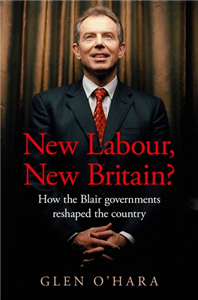
A bold and balanced re-appraisal of New Labour in power. Rewriting the story of New Labour, Glen O'Hara challenges the prevailing narrative to present a more balanced and positive assessment. New Labour, new Britain is the first book to examine both the intentions behind New Labour's domestic policies and their real-world effects, moving beyond the entrenched left-right debates that have dominated the party's legacy. The period from 1997 to 2007 marked a pivotal moment in modern British history, as New Labour sought to reshape Britain into a more cohesive and forward-thinking society. It saw the rise of socially liberal attitudes and flourishing public services under a government committed to rebuilding and investing in them. Yet New Labour's track record was far from flawless and its legacy remains complicated and contested. Through interviews with key players and rigorous archival research, O'Hara offers a new perspective on Tony Blair's years in power. Painting a fuller picture of New Labour's successes and challenges, he highlights its lasting impact on Britain and offers a thoughtful reassessment of its place in history.


23 Interviews, in denen einer der scharfsinnigsten und gefragtesten Intellektuellen unserer Zeit Stellung bezieht zu deutschen Verhältnissen, zur Erkundung des Kosmos, zu Zeitgeist und Fortschritt, zu Migration und europäischem Bürgerkrieg und, nicht zuletzt natürlich, zur Rolle der Literatur. Eine Bibliographie der Gespräche und Informationen, die für das Verständnis des jeweiligen Interviewkontextes wesentlich sind, ergänzt diese repräsentative Auswahl.
 Trusted Partner
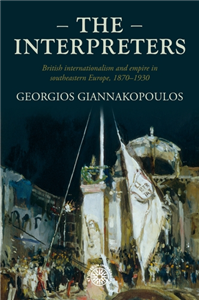
The book offers a new interpretation of the cultural and intellectual exchanges between Britain and southeastern Europe in an age of imperial transformation. It considers systematically the question of the management of ethnic difference in multinational imperial states as diverse as Britain, Austria-Hungary and the Ottoman Empire. It traces the regional experiences and impact of British scholars and public intellectuals steering through competing nationalisms and translating regional national questions to British and international audiences. The emphasis on past attempts to reconcile liberal democracy and nationalism with imperial rule continues to resonate in our day as intellectuals confront the challenges presented the rise of ethno-nationalist politics and shifting place of Britain in Europe.
Trusted Partner

Die Physiognomie von Städten, das Sammeln von Büchern und die Didaktik von Ausstellungen, der französische Faschismus und die Gaskriegsgefahr, Neuigkeiten aus dem kulturellen Leben, Evolutionstheorien und die eigenen Träume: Walter Benjamins seit 1925 für Zeitungen und Zeitschriften verfasste Texte, geschrieben in Paris, Moskau und Berlin, sind weit mehr als journalistische Brotarbeiten. Sie schlagen theoretische und sprachliche Funken aus einer Vielzahl von Themen, zeigen Benjamin als Meister der kleinen Form und als herausragenden Beobachter seiner Zeit. Der Band versammelt Essays und essayistische Miniaturen, kritische Berichte, illustrierte Artikel, Interviews, Repliken, Würdigungen, Glossen und Satiren sowie Beiträge für Anthologien. Durch die Präsentation aller überlieferten Entwürfe und Fassungen ermöglicht die Edition erstmals den genauen Nachvollzug von Benjamins Schreibarbeit, etwa an dem großen Moskau-Essay, dessen besonders dicht dokumentierte Textgenese fasziniert. Der Kommentarband liefert die nötigen Kontextualisierungen und bietet eine Fülle neuer Quellen. Dokumentiert werden zeitgenössische Übersetzungen von Texten Benjamins ebenso wie bislang unbekannte Reaktionen auf seine Arbeiten – darunter ein Plagiat von überraschender Seite.
Trusted Partner

Bertolt Brecht besaß, wie ein Zeitgenosse einmal bemerkte, die »seltene Gabe, ein Gespräch mit präzisen, drastischen Formulierungen bei den Fragen festzuhalten, auf die es heute ankommt«: Wie bekämpft man die Dummheit? Was setzt man dem Faschismus entgegen? Wie sieht eine neue Welt aus? Egal welche Fragen man an Brecht hat: In diesem Buch findet man seine überraschenden Antworten. In 91 hier erstmals versammelten, größtenteils unbekannten Interviews, die sich über 15 Länder und eine ganze Karriere erstrecken, zeigt sich der große Klassiker der Moderne als wortmächtiger Medienkünstler. Sie rücken sein Werk nicht nur in ein neues Licht ̶ sie bilden einen unkartierten Teil dieses Werkes selbst.
Trusted Partner
Naturwissenschaftliche Forschungen zu den Themen Leben, Intelligenz und Materie erzielen derzeit revolutionäre Ergebnisse, die unsere Auffassung von der Natur des menschlichen Körpers und Geistes herausfordern. Der Erfinder und Autor Ray Kurzweil leitet aus möglichen technologischen Anwendungen dieser Erkenntnisse die Vision einer nahen Zukunft ab, in der Künstliche Intelligenz die menschliche auf allen Gebieten übertrifft, in der der Mensch mit intelligenter Technologie verschmilzt, Krankheiten und Altern durch den Einsatz von Gentechnik und Nanomedizin bekämpft werden und schließlich niemand mehr eines natürlichen Todes sterben muß. Was an diesen Visionen ist Wissenschaft, was Heilsversprechen religiöser Art, was reine Science Fiction? Der Schriftsteller Tobias Hülswitt und der Physiker Roman Brinzanik haben Interviews mit herausragenden Wissenschaftlern geführt, darunter der Chemie-Nobelpreisträger Jean-Marie Lehn, der Stammzellforscher Hans R. Schöler und der Hirnforscher Wolf Singer, um herauszufinden, was der heutige Stand der Naturwissenschaften ist und wie seriöse Zukunftsszenarien aussehen. Daneben werden in Gesprächen mit dem Präsidenten der Max-Planck-Gesellschaft Peter Gruss, dem Demografen James W. Vaupel und dem Ethiker Bert Gordijn die sozialen Konsequenzen bevorstehender Technologien und einer möglichen radikalen Lebensverlängerung ausgelotet. Mit Pater Friedhelm Mennekes SJ, dem Schriftsteller Hans-Ulrich Treichel, dem Philosophen Aaron Ben-Ze’ev u. a. sprechen die Autoren über die Plastizität menschlicher Identität und das Verhältnis der Künste zu Technik, Melancholie und Vergänglichkeit. Zitat: »Könnten wir also den Tod überwinden? Jean-Marie Lehn: Wen? Den Tod. Jean-Marie Lehn: Bestimmte Aspekte davon wahrscheinlich schon. Es kommt darauf an, was Sie mit Tod meinen.« Jean-Marie Lehn, Chemie-Nobelpreis 1987
Trusted Partner


For 20 years, Drug Profiles has provided pharmacies with the best possible preparation,whether for the initial patient consultation when a drug is first prescribed or for providing advice on self-medication.■ more than 300 completely revised profiles on the most common active substances■ pictograms illustrating proper administration■ colour-coded patient information■ 31 new substance profilesEnabling pharmacists to provide their patients with expert advice on drug therapy.New: Important information and suggested wording for the “special information”column in the standardized medication plan required by German law since 2016.
Trusted Partner

Consultations with added value Successful advice that brings additional sales is fun, optimally supports patient therapy, and also contributes to the success of the pharmacy. This book shows how to identify customers’ individual needs, ask the right questions, make appropriate additional recommendations, and round off the discussion with helpful tips. The two authors explain the following in three chapters: • the well-managed customer consultation – step by step to success • practical examples for customer consultations concerning the most important acute indications – with key questions and appropriate additional recommendations • successful communication – as the basis for a good team, motivated employees, and satisfied customers This book provides a source of ideas for additional therapies and can also be used as a reference work or for targeted team training. The bonus of additional sales then comes naturally!
Trusted Partner

This book brings a new classroom approach for primary teachers to teach the explicit knowledge of scientific question-asking. This is an essential skill when children are involved in finding out about the world around them through science enquiry. Challenging the assumption that because children ask lots of questions in science, this automatically leads to meaningful learning of the enquiry curriculum, QuBuild is important for all children developing as scientific thinkers. It outlines an approach to explicitly plan for, practice and develop the craft of scientific question-asking. Unlock your children's science learning potential by exploring the QuBuild Process.
Trusted Partner

This fascinating collection looks at the career and films of Luc Besson, one of the most acclaimed figures in international cinema. Contributions have been assembled from all over the world, and their different approaches reflect this geographical diversity. Films covered range from Besson's first feature, La Dernier Combat, to the international blockbusters The Fifth Element and Joan of Arc. The essays range from looking at costume design to musical scores, and the final chapter offers a transcript of a previously unpublished interview with the man himself. He is the only French director to have crossed over successfully during the 1990s into the blockbuster spectacular we associate with Hollywood cinema and yet this is only the second book in English on this major international director. The films of Luc Besson will make fascinating reading for anyone interested in the career and films of the 'master of spectacle'.
Trusted Partner


‘We will not stop demonstrating,’ writes Franziska Wessel in a guest column in the Berliner Zeitung. Franziska is pursuing a goal. Decisive measures must finally be taken to protect the climate. While that is not happening she spends every Friday on the streets, gives interviews and puts pressure on politicians. But climate change isn’t the only thing threatening our future. There is so much suffering, injustice and destruction in the world. Something must be done about it. And as a climate activist, Franziska knows exactly how to be active. Together with her father, the journalist and author, Günther Wessel, she explains: How do I start a petition? How do I organise a campaign? How does lobbying work? So that everyone knows how they can make things happen.
Trusted Partner
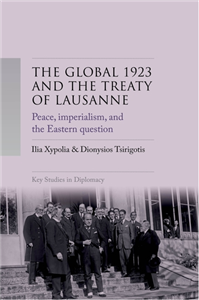
This book is a cutting-edge analysis of how the peace treaty was achieved in Lausanne by placing it in the global context. The Treaty of Lausanne reconsidered explores events from the long great war to the conclusion of the Treaty of Lausanne, examining imperialism and divergent - among and within states - motives, actions and constraints that shaped the peace settlement. It shows that peace can only last if it is a product of negotiation and not imposition. In doing so, the book addresses the silences and the absences that eventually formed controversial aspects of the settlement. It highlights the degree to which the Eastern Question discourse and the western powers' concerns in light of the emerging Turco-Soviet alliance, shaped the proceedings in Lausanne. The Treaty of Lausanne reconsidered reveals how the entanglement and the contestation at Lausanne continues to inform our contemporary politics today.
Trusted Partner

Where civil society is often seen as a driving force for equality, this book addresses a challenging topic: civil society elites. Drawing on a comprehensive study of Italy, Poland, Sweden, and the UK, this ground-breaking research investigates the often-overlooked power structures within civil society. By combining elite studies with civil society research, the book uncovers how a distinct civil society elite emerges and how it interacts with leaders in politics and business. The findings reveal a fascinating paradox. While this elite may be a powerful engine for social change, its integration into wider power circles risks reproducing the very inequalities it seeks to dismantle. By exploring how this elite can become disconnected from its grassroots, the book provides essential insights into the future of civil society and its democratic promise.
Trusted Partner
Trusted Partner
The second volume of this highly collectable series, covering the pivotal years of 1969-70. The Island Book of Records Volume II documents the years 1969-70, during which Island sought to build on its success with the Spencer Davis Group by seeking out new British rock talent. By the end of the period, Island was emerging as a major British label, one that could boast releases from Jethro Tull, Nick Drake, King Crimson, John and Beverley Martyn, Fairport Convention and Cat Stevens. Featuring material from recent interviews and from media interviews of the time, and including a comprehensive discography of 45s, The Island Book of Records Volume II is lavishly illustrated with gig adverts (very many at venues that no longer exist), concert tickets, flyers, international LP variants, labels, LP and 45 adverts and other ephemera collector's dream.
Trusted Partner

The Island Book of Records brings the early years of this iconic record label to life. A fifteen-year labour of love, the volumes will fully document the analogue era of Island. Offering a comprehensive archive of album cover design and photography, together with the voices of the musicians, designers, photographers, producers, studio engineers and record company personnel that worked on each project, the volumes show in unique depth the workings of the label, covering every LP. Featuring material from recent interviews and from media interviews of the time, and each including a comprehensive discography of 45s, the books are lavishly illustrated with gig adverts (very many at venues which no longer exist), concert tickets, flyers, international LP variants, labels, LP and 45 adverts and other ephemera. These LP-sized editions are a collector's dream, offering a truly unparalleled resource for those interested in music history and a perfect gift for any music lover.
Trusted Partner

As literary theory has grown more influential, interdisciplinary and sophisticated, it has come to concern itself with a much greater range of issues and objects than those traditionally considered literary. It now addresses philosophy, history, psychology, politics and the media. Addressing a central and fundamental, but relatively neglected, issue in literary theory, this title seeks to recontextualise how theory has changed our understanding of literature and its questions by relating literature to the institution of the university, to ethical judgements and values, new media and computer technology and the nature of representative democracy. ;
Trusted Partner
Trusted Partner


The long-term retention of top performers is of great economic relevance for companies. Unwanted staff turnover generates high costs in companies and is often accompanied by losses in terms of quality, customer satisfaction and productivity. In addition, it is becoming increasingly difficult to recruit good specialists and managers on the labor market. Based on the current state of research, this book describes guidelines for the systematic analysis of reasons for staff turnover and provides practical recommendations for how to retain top performers (e.g., conducting retention interviews, designing attractive career paths). It also explains how classic HR tools, such as employee surveys or team meetings, can help prevent unwanted turnover. The topics presented range from the initial training, through discussions to clarify expectations, to exit interviews and typical problems encountered when implementing turnover management. Special emphasis is placed on the question of what both immediate superiors (e.g. team leaders) and those responsible for personnel and organizational development as well as the management can do to prevent unwanted staff turnover. Case studies from various industries (e.g. production, retail, care) round off this book. For:• professionals in leadership positions• HR managers• personnel and organizational developers• business consultants, coaches, and supervisors• personnel psychologists• students and teachers of industrial, business andorganizational psychology as well as businessadministration
Trusted Partner

In A New Genre for Television?, filmmaker Justin Hardy argues the dramatised history documentaries broadcast by British public service channels in the 2000s constituted a distinct television genre. Offering a vital distinction between docudramas and drama documentaries, Hardy contributes to the field of television history through exclusive interviews with key figures from BBC and Channel 4 - many of whom have never been publicly interviewed before - and envisions a future model for the portrayal of national histories on screen.