Your Search Results

      • Regio Ltd.

        Regio has nearly 30 years of experience in the publication of maps and atlases of all kinds, which have been internationally recognised and awarded on numerous occasions. Regio has two main fields of activity: mapping and geospatial data. We design accurate, up-to-date maps at all scales and for all purposes. In addition to printed maps we provide maps for internet applications, GPS and mobile devices. We are flexible and will assist you in the planning, consultation anddevelopment of all cartographic products. In geospatial data area Regio owns and maintains the most detailed geospatial database of Estonia and the Baltic States, including buildings, address data, points of interest, land cover, road network and navigation datasets.

        View Rights Portal
      • University of Regina Press

        University of Regina Press is located on Treaty 4 Territory, the traditional lands of the Cree, Saulteaux, and Assiniboine, and the homelands of the Métis. A little house on the prairie with big ambitions, University of Regina Press (URP) publishes books that matter--in both academic and trade formats. Our non-fiction trade books tend towards the hard-hitting, while most of our scholarly titles are accessible to non-specialists. We endeavour to develop writers into public intellectuals, encourage debate, and inspire young people to study the humanities by publishing books that are both seen and relevant.  Since our launch in 2013, University of Regina Press has published seven national bestsellers:  After the War: Surviving PTSD and Changing Mental Health Culture by Stéphane Grenier, with Adam Montgomery (2018) Speaking in Cod Tongues: A Culinary Journey by Lenore Newman (2017) Firewater: How Alcohol Is Killing My People (And Yours) by Harold Johnson (2016) Otto & Daria: A Wartime Journey into No Man's Land by Eric Koch (2016) The Education of Augie Merasty: A Residential School Memoir by Joseph Auguste Merasty, with David Carpenter (2015) Children of the Broken Treaty by Charlie Angus (2015) Clearing the Plains by James Daschuk (2014)

        View Rights Portal
      • Trusted Partner
        Business, Economics & Law
        February 2022

        The labour movement in Lebanon

        by Lea Bou Khater, Simon Mabon

      • Trusted Partner
        Humanities & Social Sciences
        February 2026

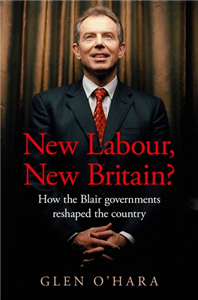
        New Labour, new Britain

        How the Blair governments reshaped the country

        by Glen O’Hara

        A bold and balanced re-appraisal of New Labour in power. Rewriting the story of New Labour, Glen O'Hara challenges the prevailing narrative to present a more balanced and positive assessment. New Labour, new Britain is the first book to examine both the intentions behind New Labour's domestic policies and their real-world effects, moving beyond the entrenched left-right debates that have dominated the party's legacy. The period from 1997 to 2007 marked a pivotal moment in modern British history, as New Labour sought to reshape Britain into a more cohesive and forward-thinking society. It saw the rise of socially liberal attitudes and flourishing public services under a government committed to rebuilding and investing in them. Yet New Labour's track record was far from flawless and its legacy remains complicated and contested. Through interviews with key players and rigorous archival research, O'Hara offers a new perspective on Tony Blair's years in power. Painting a fuller picture of New Labour's successes and challenges, he highlights its lasting impact on Britain and offers a thoughtful reassessment of its place in history.

      • Trusted Partner
        Humanities & Social Sciences
        April 2020

        European labour movements in crisis

        by Thomas Prosser

      • Trusted Partner
        March 2026

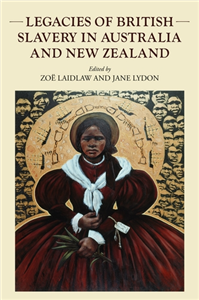
        Legacies of British slavery in Australia and New Zealand

        by Zoë Laidlaw, Jane Lydon

        This book investigates the legacies of British slavery beyond Britain, focusing upon the colonisation of Australia and New Zealand, and explores why this history has been overlooked. After August 1833, when the British Parliament abolished slavery in the British Caribbean, Mauritius and the Cape, the former slave-owners were paid compensation for the loss of their 'property'. New research has begun to show that many beneficiaries had ties to other parts of the British Empire, including the settler colonies of Australia, New Zealand, Canada and South Africa. Through a range of case studies, contributors to this collection trace the movement of people, goods, capital, and practices from the Caribbean to the new Australasian settler colonies. Chapters consider a range of places, people and themes to reveal the varied ways that slavery continued to shape imperial relationships, economic networks, and racial labour regimes after 1833.

      • Trusted Partner
      • Trusted Partner
        Business, Economics & Law
        December 2019

        The Great Labour Unrest

        by Lewis Mates

      • Trusted Partner
      • Trusted Partner
        Humanities & Social Sciences
        February 2017

        Labour and the politics of Empire

        Britain and Australia 1900 to the present

        by Neville Kirk, Andrew Thompson, John M. MacKenzie

        This is a pathbreaking comparative and trans-national study of the neglected influences of nation, empire and race upon the development and electoral fortunes of the Labour Party in Britain and the Australian Labor Party from their formative years of the 1900s to the elections of 2010. Based upon extensive primary and secondary source-based research in Britain and Australia over several years, it makes a new and original contribution to the fields of labour, imperial and 'British world' history. The book offers the challenging conclusion that the forces of nation, empire and race exerted much greater influence upon Labour politics in both countries than suggested by 'traditionalists' and 'revisionists' alike. The book will appeal to undergraduates, postgraduates, scholars in history and politics and all those interested in and concerned with the past, present and future of Labour politics in Britain, Australia and more generally.

      • Trusted Partner
        Humanities & Social Sciences
        September 2008

        The Labour governments 1964–1970 volume 3

        Economic policy

        by Jim Tomlinson

        Available in paperback for the first time, this book is the third in the three volume set The Labour governments 1964-1970 and concentrates on Britain's economic policy under the Labour governments in the 1960s. It assesses the origins, development and outcomes of the attempts made by the 1964-1970 Labourgovernments under Harold Wilson to modernise the British economy. This is the first comprehensive and archivally-based work to offer a detailed study of this modernisation project. The book places the project in the context of Labour's economic ideas as they had developed since the 1940s as well as the economic legacy they inherited from the previous thirteen years of Conservative rule. After outlining this context and providing a summary narrative of economic policy over this period, the international aspect of Labour's approach to the economy is analysed. The core of the book then goes on to look in detail at the policies directly concerned with modernisation. Following the agenda set by the national plan of 1965, policies on planning, investment and the firm, technical change, the labour market and the nationalised industries are all analysed. In addition, the productivity campaign of the late 1960s is shown to have encapsulated many of the underlying ideas but also many of the problems of Labour's approach to economic policy. The final section of the book asks how the pursuit of modernisation affected Labour's pursuit of "social justice", before offering an overall assessment of Labour's period of office. The book will be of special interest to contemporary historians, economic historians and those interested in the history of the Labour party. Together with the other books in the series, on domestic policy and international policy, it provides a complete picture of the development of Britain under the premiership of Harold Wilson. ;

      • Trusted Partner
        Humanities & Social Sciences
        January 2012

        The Second Labour Government

        A reappraisal

        by John Shepherd

        This new edited collection of essays focuses on the history of Labour's second period in office during the 1929-1931 global financial crisis. Contributions by leading historians and younger academics bring fresh perspectives to Labour's domestic problems, electoral and party matters, relations with the Soviet Union and ideological questions. An important range of new historical research provides a much-needed reappraisal of Ramsay MacDonald's second Labour government, which impressed few with its conventional policies for tackling mass unemployment. Oswald Mosley, John Maynard Keynes and Ernest Bevin's alternative economic strategies are critically studied in key essays. A more positive side of the government's policies is also adeptly revealed on consumerism and agriculture. Significant new light is adroitly shed on the 1929 general election, the first fought on a universal franchise. The intricate politics of the Parliamentary Labour Party and the disaffiliation of the Independent Labour Party are convincingly explored. The influence of the Soviet Union on Labour's thoughts and actions is analysed in valuable accounts of Labour's foreign policy and Labour's turn to socialism after 1931. An important fresh account of opposition politics breaks new ground on the reaction of Tory politicians, including Harold Macmillan, to MacDonald's government. The volume concludes with an absorbing analysis of the myths surrounding '1931' in Labour history. This timely volume makes accessible a major reassessment of existing knowledge and new scholarship that will appeal to students and teachers of British political and social history. It is essential reading for sixth form and university courses on twentieth-century history. ;

      • Trusted Partner
        Sociology & anthropology
        February 2017

        Environment, labour and capitalism at sea

        'Working the ground' in Scotland

        by Penny McCall Howard. Series edited by Alexander Smith

        This book explores how fishers make the sea productive through their labour, using technologies ranging from wooden boats to digital GPS plotters to create familiar places in a seemingly hostile environment. It shows how their lives are affected by capitalist forces in the markets they sell to, forces that shape even the relations between fishers on the same boat. Fishers frequently have to make impossible choices between safe seamanship and staying afloat economically, and the book describes the human impact of the high rate of deaths in the fishing industry. The book makes a unique contribution to understanding human-environment relations, examining the places fishers create and name at sea, as well as technologies and navigation practices. It combines phenomenology and political economy to offer new approaches for analyses of human-environment relations and technologies. It contributes to the social studies of fisheries through an analysis of how deeply fishing practices and social relations are shaped by political economy. It will be read in universities by social scientists and anthropologists and also by those with an interest in maritime Scotland.

      • Trusted Partner
      • Trusted Partner
        Humanities & Social Sciences
        September 2021

        Nostalgia and the post-war Labour Party

        by Richard Jobson

      • Trusted Partner
        Humanities & Social Sciences
        January 2019

        Labour united and divided from the 1830s to the present

        by Emmanuelle Avril, Yann Béliard

        Spanning a period which stretches from the 19th century to the present day, this book takes a novel look at the British labour movement by examining the interaction between trade unions, the Labour Party, other parties and groups of the Left, and the wider working class, to highlight the dialectic nature of these relationships, marked by consensus and dissention. It shows that, although perceived as a source of weakness, those inner conflicts have also been a source of creative tension, at times generating significant breakthroughs. The book brings together labour historians and political scientists who provide a range of case studies as well as more wide-ranging assessments of recent trends in labour organising. It will therefore be of interest to academics and students of history and politics, as well as to practitioners, in the British Isles and beyond.

      • Trusted Partner
        Humanities & Social Sciences
        June 2026

        The Conservative Party and the Constitution

        by Daniel Pitt

        The Conservative Party and the Constitution examines the profound influence on Britain's constitutional framework over nearly two centuries. Through rigorous analysis, it traces how Tory leaders navigated parliamentary reform, devolution, and Brexit, balancing tradition with pragmatic adaptation. Drawing on exclusive interviews, archival records, and historical sources, the book reveals the Party's statecraft and offers fresh insights into the Conservatives' role in shaping modern governance. Essential for historians, political scientists, and those engaged with British politics, this study illuminates the dynamic interplay of power, ideology, and constitutional change, making it a vital contribution to understanding Britain's constitutional history.

      • Trusted Partner
        Literature & Literary Studies
        June 2026

        The politics of Middle English parables

        Fiction, theology, and social practice

        by Mary Raschko

        The politics of Middle English parables examines the dynamic intersection of fiction, theology and social practice in late-medieval England. Parables occupy a prominent place in Middle English literature, appearing in dream visions and story collections as well as in lives of Christ and devotional treatises. While most scholarship approaches the translated stories as stable vehicles of Christian teaching, this book highlights the many variations and points of conflict across Middle English renditions of the same story. In parables related to labour, social inequality, charity and penance, the book locates a creative theological discourse through which writers attempted to re-construct Christian belief and practice. Analysis of these diverse retellings reveals not what a given parable meant in a definitive sense but rather how Middle English parables inscribe the ideologies, power structures and cultural debates of late-medieval Christianity.

      • Trusted Partner
        Humanities & Social Sciences
        January 2026

        Land and labour

        by Martin Crawford

      • Trusted Partner
        Humanities & Social Sciences
        April 2007

        Labour, the state, social movements and the challenge of neo-liberal globalisation

        by Andrew Gamble, Steven Fielding, Steve Ludlam, John Callaghan, Andrew Taylor, Steve Ludlam, Stephen Wood

        With the emergence of neo-liberalism in the 1980s as the dominant domestic and international political-economic orthodoxy, labour as both a social category and political movement tended to be written off or ignored by academics, politicians and commentators. However, at a time when the world's working class is growing faster than at any previous time in history and neo-liberalism is widely challenged, this orthodoxy is clearly inadequate. The spread of global production means that to ignore labour, its organisations, interests and politics, is to ignore one of the key components of that process. Labour organisations have not gone away and neither has the state: their relationship remains as significant as ever. The strategic relationship between trade unions and social movements, nationally and internationally, has also developed markedly, especially in the south. New patterns of resistance are emerging to challenge global capital and those who assert that globalisation is irresistible. ;

      Subscribe to our

      newsletter