
Christian Media Publishing (Pty) Ltd.
CMP specialises in the publication of Meta-text Bibles, Study Bibles and faith-based Children's Literature.
View Rights Portal
CMP specialises in the publication of Meta-text Bibles, Study Bibles and faith-based Children's Literature.
View Rights Portal
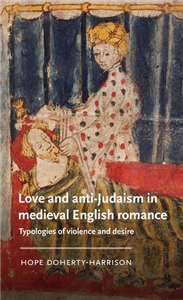
Love and anti-Judaism is a new examination of medieval romance for the questions it poses of the most significant events in Christian history. Providing new readings of Sir Gawain and the Green Knight, Sir Orfeo, Sir Gowther and Sir Amadace, the book argues that romance explores depictions of love-and the sacrifices it may necessitate-in the Hebrew Bible, especially where they do not easily fit into interpretations asserting that this history must prefigure Christ and the crucifixion. An examination of anti-Judaism as a discourse of violence and desire that could be turned inwardly to expose the irresolution in Christianity, this book will provoke new investigations into the religious crises of medieval romance.

The politics of Middle English parables examines the dynamic intersection of fiction, theology and social practice in late-medieval England. Parables occupy a prominent place in Middle English literature, appearing in dream visions and story collections as well as in lives of Christ and devotional treatises. While most scholarship approaches the translated stories as stable vehicles of Christian teaching, this book highlights the many variations and points of conflict across Middle English renditions of the same story. In parables related to labour, social inequality, charity and penance, the book locates a creative theological discourse through which writers attempted to re-construct Christian belief and practice. Analysis of these diverse retellings reveals not what a given parable meant in a definitive sense but rather how Middle English parables inscribe the ideologies, power structures and cultural debates of late-medieval Christianity.
 Trusted Partner
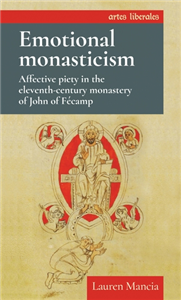
Medievalists have long taught that highly emotional Christian devotion, often called 'affective piety', appeared in Europe after the twelfth century and was primarily practiced by communities of mendicants, lay people and women. Emotional monasticism challenges this view. The first study of affective piety in an eleventh-century monastic context, it traces the early history of affective devotion through the life and works of the earliest known writer of emotional prayers, John of Fécamp, abbot of the Norman monastery of Fécamp from 1028-78. Exposing the early medieval monastic roots of later medieval affective piety, the book casts a new light on the devotional life of monks in Europe before the twelfth century and redefines how medievalists should teach the history of Christianity.
Trusted Partner
This volume on Norman Italy (southern Italy and Sicily, c. 1000-1200) honours and reflects the pioneering scholarship of Graham A. Loud. An international group of scholars reassesses and recasts the paradigm by which Norman Italy has been conventionally understood, addressing varied subjects across four key themes: historiographies, identities and communities, religion and Church, and conquest. The chapters revise and refine our understanding of Norman Italy in the eleventh and twelfth centuries, demonstrating that it was not just a parochial Norman or Mediterranean entity but also an integral player in the medieval mainstream.
Trusted Partner
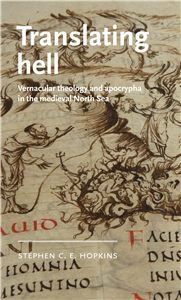
In the Middle Ages, hell was useful because it was vaguely defined. Canonical scriptures scarcely mention hell, leaving much to the imaginations of early Christians, who used it to sort out who belonged within the faith. This book explores how hell became a place for literary experiments with local challenges in theology and identity. Following the reception and transformations of two popular hell apocrypha, it argues that they served as this role because of their liminal textual authority. As noncanonical scriptures, apocrypha afforded medieval writers space to revise their hells (since they were not actually scripture), while also encouraging readers to revere those experiments as valid (since they seemed like scripture). The book brings together adaptations from early medieval England, Iceland, Ireland, and Wales, placing the early vernacular theologies of the North Sea in comparative conversation.
Trusted Partner
Trusted Partner

Medieval film explores theoretical questions about the ideological, artistic, emotional and financial investments inhering in cinematic renditions of the medieval period. What does it mean to create and watch a 'medieval film'? What is a medieval film and why are they successful? This is the first work that attempts to answer these questions, drawing, for instance, on film theory, postcolonial theory, cultural studies and the growing body of work on medievalism. Contributors investigate British, German, Italian, Australian, French, Swedish and American film, exploring topics such translation, temporality, film noir, framing and period film - and find the medieval lurking in inexpected corners. In addition it provides in-depth studies of individual films from different countries including The Birth of a Nation to Nosferatu, and Robin Hood: Prince of Thieves. Medieval Film will be of interest to medievalists working in disciplines including literature, history, to scholars working on film and in cultural studies. It will also be of interest to undergraduates, postgraduates and to an informed enthusiast in film or/and medieval culture.
Trusted Partner

Medieval film explores theoretical questions about the ideological, artistic, emotional and financial investments inhering in cinematic renditions of the medieval period. What does it mean to create and watch a 'medieval film'? What is a medieval film and why are they successful? This is the first work that attempts to answer these questions, drawing, for instance, on film theory, postcolonial theory, cultural studies and the growing body of work on medievalism. Contributors investigate British, German, Italian, Australian, French, Swedish and American film, exploring topics such translation, temporality, film noir, framing and period film - and find the medieval lurking in unexpected corners. In addition it provides in-depth studies of individual films from different countries including The Birth of a Nation to Nosferatu, and Robin Hood: Prince of Thieves. Medieval film will be of interest to medievalists working in disciplines including literature, history, art history, to scholars working on film and in cultural studies. It will also be of interest to undergraduates, postgraduates and to an informed enthusiast in film or/and medieval culture.
Trusted Partner
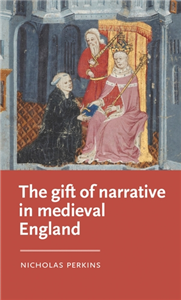
This invigorating study places medieval romance narrative in dialogue with theories and practices of gift and exchange, opening new approaches to questions of storytelling, agency, gender and materiality in some of the most engaging literature from the Middle Ages. It argues that the dynamics of the gift are powerfully at work in romances: through exchanges of objects and people; repeated patterns of love, loyalty and revenge; promises made or broken; and the complex effects that time works on such objects, exchanges and promises. Ranging from the twelfth century to the fifteenth, and including close discussions of poetry by Chaucer, the Gawain-Poet and romances in the Auchinleck Manuscript, this book will prompt new ideas and debate amongst students and scholars of medieval literature, as well as anyone curious about the pleasures that romance narratives bring.
Trusted Partner
This book provides a detailed analysis of women's involvement in litigation and other legal actions within their local communities in late-medieval England. It draws upon the rich records of three English towns - Nottingham, Chester and Winchester - and their courts to bring to life the experiences of hundreds of women within the systems of local justice. Through comparison of the records of three towns, and of women's roles in different types of legal action, the book reveals the complex ways in which individual women's legal status could vary according to their marital status, different types of plea and the town that they lived in. At this lowest level of medieval law, women's status was malleable, making each woman's experience of justice unique.
Trusted Partner
Serfdom was a coercive relationship between a landowner and peasant, which was widespread across medieval and early modern Europe. Itfeatures prominently in major historical debates, such as the origins of capitalism and the divergent pathways of western and eastern Europe to modernity. Scholars have paid particular attention to English serfdom, which is usually portrayed as highly oppressive and a major cause of the Peasants' Revolt in 1381. This comprehensive survey draws on a vast scholarship and new research to show how, in reality, English serfdom was weak, casting new light on the nature of its society and economy when the Black Death struck in 1348-9. The pandemicnow assumesa central role in the rapid decline of serfdom, as illustrated in a case study of the estate of one of England's harshest landowners, St Albans abbey.
Trusted Partner

The documents in this stimulating volume span from 1245 to 1424 but focus on the 'contagion of rebellion' from 1355 to 1382 that followed in the wake of the plague. They comprise a diversity of sources and cover a variety of forms of popular protest in different social, political and economic settings. Their authors range across a wide political and intellectual horizon and include revolutionaries, the artistocracy, merchants and representatives from the church. They tell gripping and often gruesome stories of personal and collective violence, anguish, anger, terror, bravery, and foolishness. Of over 200 documents presented here, most have been translated into English for the first time, providing students and scholars with a new opportunity to compare social movements across Europe over two centuries, allowing a re-evaluation of pre-industrial revolts, the Black Death and its consequences for political culture and action. This book will be essential reading for those seeking to better understand popular attitudes and protest in medieval Europe.
Trusted Partner

This sourcebook collects together for the first time in English the major documents relating to the life and contemporary reputation of Joan of Arc. Also known as La Pucelle, she led a French Army against the English in 1429, arguably turning the course of the war in favour of the French king Charles VII. The fact that she achieved all of this when just a seventeen-year-old peasant girl highlights the magnitude of her achievements and also opens up other ways of looking at her story. For many, Joan represents the voice of ordinary people in the fifteenth century; the victims of high politics and warfare that devastated France. Her story ended tragically in 1431 when she was put on trial for heresy and sorcery by an ecclesiastical court and was burned at the stake. This book shows how the trial, which was organised by her enemies, provides an important window into late medieval attitudes towards religion and gender, as Joan was effectively persecuted by the established Church for her supposedly non-conformist views on spirituality and the role of women. Presented within a contextual and critical framework, this book encourages scholars and students to rethink this remarkable story. It will be invaluable reading for those working in the fields of medieval society and heresy, as well as the Hundred Years' War.
Trusted Partner
A collection of essays which show how early drama traditions were transformed, recycled, re-used and reformed across time to form new relationships with their audiences. Medieval afterlives brings new insight to the ways in which peoples in the sixteenth century understood, manipulated and responded to the history of their performance spaces, stage technologies, characterisation and popular dramatic tropes. In doing so, this volume advocates for a new understanding of sixteenth-seventeenth century theatre makers as highly aware of the medieval traditions that formed their performance practices, and audiences who recognised and appreciated the recycling of these practices between plays.
Trusted Partner
 Trusted Partner

The towns of Italy in the later middle ages presents over one hundred fascinating documents, carefully selected and coordinated from the richest, most innovative and most documented society of the European Middle Ages. No other English language sourcebook has the same geographical or chronological range. This collection is carefully structured around the crisis of the fourteenth century and arranged in contrasting groups of texts. By connecting documents in translation to recent scholarship and debates, it addresses five key areas of medieval urban history: the physical environment, civic religion, economy, society and politics. Offers students well-translated and effectively contextualised documents along with some guidance to the secondary work of Italian scholars which is largely inaccessible to undergraduate students.
Trusted Partner
Capitalising on developments in the field over the past decade, Riddles at work provides an up-to-date microcosm of research on the early medieval riddle tradition. The book presents a wide range of traditional and experimental methodologies. The contributors treat the riddles both as individual poems and as parts of a tradition, but, most importantly, they address Latin and Old English riddles side-by-side, bringing together texts that originally developed in conversation with each other but have often been separated by scholarship. Together, the chapters reveal that there is no single, right way to read these texts but rather a multitude of productive paths. This book will appeal to students and scholars of early medieval studies. It contains new as well as established voices, including Jonathan Wilcox, Mercedes Salvador-Bello and Jennifer Neville.
Trusted Partner
Objects of affection recovers the emotional attraction of the medieval book through an engagement with a fifteenth-century literary collection known as Oxford, Bodleian Library Manuscript Ashmole 61. Exploring how the inhabitants of the book's pages - human and nonhuman, tangible and intangible - collaborate with its readers then and now, this book addresses the manuscript's material appeal in the ways it binds itself to different cultural, historical and material environments. In doing so it traces the affective literacy training that the manuscript provided its late-medieval English household, whose diverse inhabitants are incorporated into the ecology of the book itself as it fashions spiritually generous and socially mindful household members.
Trusted Partner

While there is increasing interest in the lives of medieval women, the documentary evidence for their activities remains little known. This book provides a collection of sources for an important and influential group of women in medieval England, and examines changes in their role and activities between 1066 and 1500. For most noble and gentry-women, early marriage led to responsibilities for family and household, and, in the absence of their husbands, for the family estates and retainers. Widowhood enabled them to take control of their affairs and to play an independent part in the local community and sometimes further afield. Although many women's lives followed a conventional pattern, great variety existed within family relationships, and individuality can also be seen in religious practices and patronage. Piety could take a number of different forms, whether a woman became a nun, a vowess or a noted philanthropist and benefactor to religious institutions. This volume provides a broad-ranging and accessible coverage of the role of noble women in medieval society. It highlights the significant role played by these women within their families, households, estates and communities.
Trusted Partner

For the first time, this volume explores the identities of leprosy sufferers and other people affected by the disease in medieval Europe. The chapters, including contributions by leading voices such as Luke Demaitre, Carole Rawcliffe and Charlotte Roberts, challenge the view that people with leprosy were uniformly excluded and stigmatised. Instead, they reveal the complexity of responses to this disease and the fine line between segregation and integration. Ranging across disciplines, from history to bioarchaeology, Leprosy and identity in the Middle Ages encompasses post-medieval perspectives as well as the attitudes and responses of contemporaries. Subjects include hospital care, diet, sanctity, miraculous healing, diagnosis, iconography and public health regulation. This richly illustrated collection presents previously unpublished archival and material sources from England to the Mediterranean.


