
Mutaboo
We have the rights of some books. Very important is for us the book of Gideon Gammana.
View Rights Portal
We have the rights of some books. Very important is for us the book of Gideon Gammana.
View Rights Portal
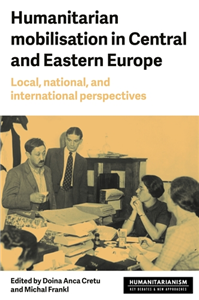
By focusing on aid Central and Eastern Europe, the volume adds to the existent scholarly explorations of modern humanitarianism, its actors and practices. In the twentieth century, aid workers assisted victims of war and earthquakes, delivered food, supported health care, provided childcare, or sheltered refugees. The contributors not only reconstruct these diverse histories and their protagonists, but also bring international, national, and local actors together: from grassroots activists to private associations to state-driven "socialist humanitarians" to large Western aid organizations. In doing so, they challenge the often unidirectional, from West-to-East, and asymmetrical perspective on donor-recipient relationships in humanitarian processes.
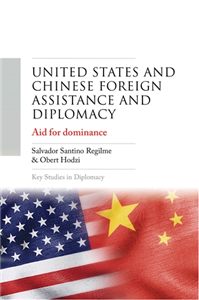
Aid for Dominance addresses the analytic weaknesses of mainstream analysis of foreign aid, which often focuses on its material dimensions. The book underscores the constitutive relationship between foreign aid as a material resource and the diplomatic discourses and practices that constitute complex bilateral relations between donor and recipient states. Written by two leading scholars of contemporary United States and Chinese foreign policies in the Global South, Aid for Dominance offers a pioneering, theoretically conscious, and empirically rich account of the two great powers' grand strategies in the global development sector. By deploying a multidisciplinary and comparative analysis, this book draws from a wide range of evidentiary materials from primary sources, including data from fieldwork interviews, government documents, local and international newspapers, speeches by high-ranking government officials and diplomats, and secondary data from scholarly publications and policy papers.
 Trusted Partner

Throughout the 1990s, Médecins Sans Frontières (MSF) was forced to face the challenges posed by the genocide of Rwandan Tutsis and a succession of outbreaks of political violence in Rwanda and its neighbouring countries. Humanitarian workers were confronted with the execution of almost one million people, tens of thousands of casualties pouring into health centres, the flight of millions of people who had sought refuge in camps and a series of deadly epidemics. Drawing on various hitherto unpublished private and public archives, this book recounts the experiences of the MSF teams working in the field. It is intended for humanitarian aid practitioners, students, journalists and researchers with an interest in genocide and humanitarian studies and the political sociology of international organisations.
Trusted Partner
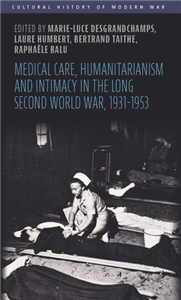
This book offers a micro-global history of humanitarianism and medical care during the 'long' Second World War, which challenges the traditional and Eurocentric chronological boundaries of 1939/1945. It takes as its starting point the Japanese invasion of Manchuria in 1931, which led to the progressive dislocation of the League of Nations, with the Japanese, German and Soviet departures in the 1930s. It ends with the termination of the Korean War in 1953, and the subsequent dismantlement of the first United Coalition and UN Peace enforcement operation. It considers the slow, messy and ambivalent transformation of humanitarian actors' relations to the suffering of distant others through a study of humanitarian encounters, practices, spaces and affects. Paying close attention to a variety of actors, such as French colonial doctors, Swiss ICRC delegates, Egyptian relief workers, Chinese-style physicians, Peruvian and Ecuadorian nurses or American member of the Unitarian Service Committee, the book provides a more holistic story of humanitarianism.
Trusted Partner


The assessment of nursing and care needs and the organisation and quality assurance of nursing care are key tasks performed by nursing staff. This also includes administering medication, something which requires sound organisation, control, implementation and documentation. Nurses observe whether medication is taken consistently, has the desired effect, and whether undesirable side effects occur. The drug product as a „special commodity“ – whether in inpatient long-term care, in outpatient care, or in hospital – requires special knowledge concerning - correct storage, - the pharmacological effect, and - appropriate application. This book is geared towards the diseases and symptoms of people requiring nursing or care. All the important facts concerning the use of medicines are presented here in an understandable manner, focusing on the essentials. Numerous illustrations and practical tips provide the link to everyday nursing care. It is the ideal textbook and reference work for nursing and care assistants as well as nursing professionals.
Trusted Partner


In emergency situations, a pharmacy assumes a special importance. Being an easily accessible point of contact, it is called upon to provide help in confused situations and also in those where there is a clear need for first aid. In such serious cases, it is essential to respond quickly and adequately. - How does one recognise an emergency? - How does one proceed? - What is one allowed to do, what must one do? The book provides clear answers to all these questions about emergency scenarios that can occur at a pharmacy. Whether it is an attack of asthma, a heart attack, burns or poisoning – in future, one will know what to do. In addition, the book provides information about the actions of the emergency physician and the common drugs used in emergencies.
Trusted Partner
Anti-capitalist activism has taken a wrong direction and social and political theoretical theorists have failed to realise this. The trend for building, what has become called, 'Alternative Societies', spaces such as mutual aid groups and workers' co-operatives, failed to grasp the true power of the capitalist totality. Drawing on the work of the early Frankfurt School, this book argues that such anti-capitalist strategies are deeply mistaken and must be urgently reconsidered.
Trusted Partner
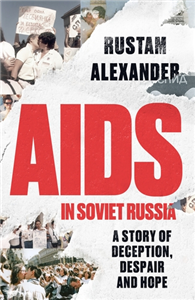
The first book to tell the shocking story of the AIDS crisis in Soviet Russia. Throughout the 1980s, as the world was grappling with the escalating crisis of AIDS, Soviet Russia continued to deny there was a problem. Arguing that the disease was limited to foreigners and 'immoral' groups, the government failed to take meaningful action, long past the point other countries had begun to recognise the full scale of the threat. In this ground-breaking book, Rustam Alexander tells the story of AIDS in Soviet Russia. Fixated on disinformation, censorship and the persecution of marginalised communities, the Soviet authorities wasted precious time, allowing the epidemic to strike at the very heart of the nation: its children. Yet, despite the government's failure, a number of brave journalists, doctors and nascent gay groups decided to take matters into their own hands and engage in full-fledged AIDS activism. Tracing the political and social response to AIDS in the final years of the Soviet era, Alexander sheds light on the devastating consequences of government inaction. He draws on personal stories, media reports and archival materials to provide a riveting account of the Russian people's fight against AIDS amid the tumultuous transformations of Gorbachev's perestroika.
Trusted Partner
Trusted Partner


Mit schönem Farbschnitt in der Erstauflage – Lieferung je nach Verfügbarkeit Dieser TikTok-Hit erobert sämtliche Herzen im Sturm: Ein New Adult Roman – smart, spicy, queer und einfach unwiderstehlich. Jetzt auch auf Deutsch. Delilah Green hat sich geschworen, nie wieder nach Bright Falls zurückzukehren. Mittlerweile lebt sie in New York, ihre Karriere als Fotografin nimmt langsam Fahrt auf, und ihr Bett ist niemals leer. Als ihre Stiefschwester Astrid sie mit einem dicken Scheck lockt, ihre Hochzeit zu fotografieren, wirft Delilah ihre Vorsätze über Bord und macht sich auf in das verfluchte Städtchen, das sie einst ihr Zuhause nannte. Bei den Hochzeitsvorbereitungen trifft sie auf Claire Sutherland, eine von Astrids hochnäsigen Freundinnen. Dabei stellt Delilah fest, dass doch nicht alles so unattraktiv ist in Bright Falls, wie zunächst gedacht… Das alles ist so herzerwärmend und witzig, dass wir sicher sind: Bright Falls lässt nicht nur Delilah, sondern auch dich nicht mehr los. Bright Falls 1. Delilah Green Doesn't Care: Von zweiten Chancen und diversen Formen der Liebe. Dein Must-Read mit über 5 Millionen Views auf TikTok in den USA. Die LGBTQI+ Rom-Com der amerikanischen Bestsellerautorin Ashley Herring Blake. So cool: Liebesgeschichte zwischen zwei Frauen mit viel Humor und noch mehr Spice. Freu dich auf New York und eine Kleinstadt, alte Freunde und ganz neue Gefühle. Young und New Adult Bücher ab 16 Jahren Welcome to Bright Falls! Der Reihen-Auftakt der queer-romantischen Komödie startete in den USA auf BookTok als absoluter Hit. Kein Wunder, so viel Romance und Diversity zugleich wirst auch du lieben. Band 1: Bright Falls 1. Delilah Green Doesn't Care Band 2: Bright Falls 2. Astrid Parker Doesn't Fail
Trusted Partner

Interventions on behalf of Armenia and Armenians have come to be identified by scholars and practitioners alike as defining moments in the history of humanitarianism. This book reassesses these claims, critically examining a range of interventions by governments, international and diasporic organizations, and individuals that aimed to 'save Armenians'. Drawing on multidisciplinary perspectives, it traces the evolution of these interventions from the late-nineteenth century to the present day, paying particular attention to the aftermaths of the genocide and the upheavals of the post-Soviet period. The contributions connect diverse places (the Caucasus, Russia, the Middle East, Europe, North America, South America, and Australia) to reveal shifting transnational networks of aid and intervention. Aid to Armenia explores this history, and engages critically with contemporary humanitarian questions facing Armenia, the South Caucasus region and the wider diaspora.
Trusted Partner


People with dementia experience their condition as a big change in which, for example, new events are not linked to existing experiences and wishes, thoughts, and actions can no longer be connected to each other. This kind of experience of the self, due to the intergative function of the brainbeing temporarily or permanently lost, is called dissociative self-experience. Based on this understanding of dementia, the author develops an approach to effectively understand and support people with dementia in everyday activities. Typical everyday situations and behaviours are presented and reflected on in a practical context.
Trusted Partner
Trusted Partner
Trusted Partner

This book examines Turkey's integration with Europe within structural dynamics of globalisation from a critical political economy perspective. Critical approaches have been sidelined within European Studies. Turkish enlargement is not an exemption. The analyses are based on original data generated by 109 interviews conducted in 2010, 2017 and 2023 with five categories of actors: representatives of capital and labour, political parties, state officials, and struggles around ecology, patriarchy and migration. It argues that the pro-membership was hegemonic in the 2000s which was contested by two rival class strategies, Ha-vet and neo-mercantilism. In the 2010s, pro-membership is no longer hegemonic within rising critical tone of social forces supporting rival class strategies. Unevenness of Turkey's trajectory of integration to Europe is likely to be consolidated through market integration and management of migration through transactional approach.
Trusted Partner

This book offers a new critical framework for understanding the processes of politicising and gendering care for older people and their manifestations in several European contexts. It interrogates how care for older adults varies across time and place while searching for an in-depth comprehension of how it becomes an arena of political struggle and the object of public policy in different countries and at various societal and political levels. It brings together multidisciplinary contributions that examine the issue of care for older people as a political concern from many angles, such as problematising care needs, long-term care policies, home care services, institutional services and family care. The contributions reveal the diversity of situations in which the processes of politicising and gendering care for older adults overlap, contradict or reinforce each other while leading to increased gender (in)equalities on different levels.
Trusted Partner
This highly original book constitutes one of the first attempts to examine the problem of distributive justice in the European Union in a systematic manner. João Labareda argues that the set of shared political institutions at EU level, including the European Parliament and the Court of Justice of the EU, generate democratic duties of redistribution among EU citizens. Furthermore, the economic structure of the EU, comprising a common market, a common currency and a free-movement area, triggers duties of reciprocity among member states. The responsibilities to fulfil these duties, Labareda argues, should be shared by the local, national and supranational levels of government. Not only should the EU act as a safety net to the national welfare systems, applying the principle of subsidiarity, but common market and Eurozone regulations should balance their efficiency targets with fair cooperation terms. The concrete policy proposals presented in this book include a threshold of basic goods for all EU citizens, an EU labour code, a minimum EU corporate tax rate and an EU fund for competitiveness. Labarada argues that his proposals match the political culture of the member states, are economically feasible, can be translated into functioning institutions and policies and are consistent with the limited degree of social solidarity in Europe. This book is a major contribution to the understanding of what a just Europe would look like and what it might take to get us there. This book is relevant to United Nations Sustainable Development Goal 10, Reduced inequalities
Trusted Partner

This book offers a fresh look at some of the most challenging dilemmas of European integration and proposes innovative solutions to them by building on perspectives and insights from twelve classical authors in the history of political thought. The book simultaneously offers an original introduction to critical debates in EU studies and makes key political thinkers more accessible to contemporary readers by presenting present-day policy applications of their doctrines. While each chapter discusses a specific challenge for the EU, five key themes appear recurrently throughout the book: (i) the prospects for peace in Europe; (ii) the conditions for an inclusive EU democracy; (iii) socioeconomic inequalities in the EU; (iv) strategies to promote political change in Europe; and (v) the requisites for a fully-fledged EU citizenship. The authors discussed are Plato, Aristotle, Augustine, Machiavelli, Hobbes, Rousseau, Kant, Wollstonecraft, Marx, Arendt, Rawls and hooks.
Trusted Partner
Trusted Partner



