
National Academies Press
The National Academies Press (NAP)publish the reports of the National Academies of Sciences, Engineering and Medicine. They published more than 200 books a year on a wide range of topics.
View Rights Portal
The National Academies Press (NAP)publish the reports of the National Academies of Sciences, Engineering and Medicine. They published more than 200 books a year on a wide range of topics.
View Rights Portal
In Yakutia, every winter day is a quest! Putting 10 layers of clothing on, before you go outside, says a lot. Well, that is the tip of the iceberg! The most difficult thing is to wait until a bus arrives when it is -50°C outdoors. Therefore, it is never boring here. Adults and children of the planet would be interested in such warm books from the Pole of Cold with funny facts about life in Yakutia, traditions, history, amazing people and their incredible adventures in the coldest place of the World. Every year, we publish more than 300 titles of various children’s, fiction, study and guidance, reference books, as well as digital and multimedia publications. Over the past 5 years, we won more than 20 international and Russian prizes wherein 14 are for children's book.
View Rights Portal


 Trusted Partner
Trusted Partner
Trusted Partner
 Trusted Partner


This important book provides new understandings of how the politics of memory impacts peace in societies transitioning from a violent past. It does so by developing a theoretical approach focusing on the intersection of sites, agency, narratives, and events in memory-making. Drawing on rich empirical studies of mnemonic formations in Cyprus, Bosnia and Herzegovina, Rwanda, South Africa and Cambodia, the book speaks to a broad audience. The in-depth, cross-case analysis shows that inclusivity, pluralism, and dignity in memory politics are key to the construction of a just peace. The book contributes crucial and timely knowledge about societies that grapple with the painful legacies of the past and advances the study of memory and peace.
Trusted Partner
This book analyses the international phenomenon of private peace entrepreneurs. These are private citizens with no official authority who initiate channels of communication with official representatives from the other side of a conflict in order to promote a conflict resolution process. It combines theoretical discussion with historical analysis, examining four cases from different conflicts: Norman Cousins and Suzanne Massie in the Cold War, Brendan Duddy in the Northern Ireland conflict and Uri Avnery in the Israeli-Palestinian conflict. The book defines the phenomenon, examines the resources and activities of private peace entrepreneurs and their impact on the official diplomacy, and examines the conditions under which they can play an effective role in peace-making processes. This book is relevant to United Nations Sustainable Development Goal 16, Peace, justice and strong institutions.
Trusted Partner


When you have autism, you probably have to cope with stress on a daily basis. Often, people with autism do not know how to recognize stress, what causes stress, and what they can do to reduce it. More peace, less stress offers a useful step-by-step plan. In seven steps, the reader learns what causes stress, how to recognise stress signals, and what they can do to feel more at ease. The book includes practical exercises so new knowledge can be applied right away. Being more at ease means to be able to: have better relationships with a partner, family, friends and colleagues, focus attention to get things done more easily, have a grip on life, instead of experiencing chaos, restlessness and insecurity and feel more powerful and have more self-esteem.
Trusted Partner
Trusted Partner
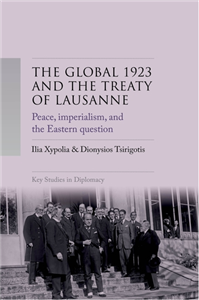
This book is a cutting-edge analysis of how the peace treaty was achieved in Lausanne by placing it in the global context. The Treaty of Lausanne reconsidered explores events from the long great war to the conclusion of the Treaty of Lausanne, examining imperialism and divergent - among and within states - motives, actions and constraints that shaped the peace settlement. It shows that peace can only last if it is a product of negotiation and not imposition. In doing so, the book addresses the silences and the absences that eventually formed controversial aspects of the settlement. It highlights the degree to which the Eastern Question discourse and the western powers' concerns in light of the emerging Turco-Soviet alliance, shaped the proceedings in Lausanne. The Treaty of Lausanne reconsidered reveals how the entanglement and the contestation at Lausanne continues to inform our contemporary politics today.
Trusted Partner
Trusted Partner

After three decades of violence, Northern Ireland has experienced unprecedented peace. This book examines the impact of the 1998 Agreement which halted the violence on those most affected by it - the Northern Irish people themselves. Using public opinion surveys conducted over half a century, this book covers changes in public opinion across all areas of society and politics, including elections, education, community relations and national identity. The surveys show that despite peace, Protestants and Catholics remain as deeply divided as ever. The vast majority marry co-religionists, attend religious schools and have few friends across the religious divide. The results have implications not just for peace-making in Northern Ireland, but for other societies emerging from conflict. The main lesson of peace-making in Northern Ireland is that political reform has to be accompanied by social change across the society as a whole. Peace after conflict needs social as well as political change. ;
Trusted Partner
 Trusted Partner
 Trusted Partner
Trusted Partner
Trusted Partner
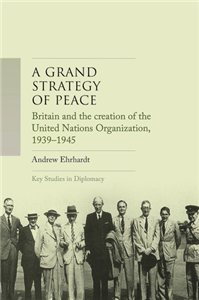
A grand strategy of peace is the first detailed account of Britain's role in the creation of the United Nations Organization during the Second World War. As a work of traditional diplomatic history that brings in elements of intellectual history, the book describes how British officials, diplomats, politicians, and writers - previously seen to be secondary actors to the United States in this period - thought about, planned for, and helped to establish a future international order. While in the present day, many scholars and analysts have returned to the origins of the post- 1945 international system, this book offers an exhaustive account of how the statesmen and more importantly, the officials working below the statesmen, actually conceived of and worked to establish a post-war world order.
Trusted Partner
Trusted Partner
Trusted Partner
Trusted Partner
Focusing on experiential life stories across a range of forms and practices, this book investigates subjectivity, culture and the cultural politics of representation as a neglected dimension of conflict transformation in the Northern Irish peace process. Interdisciplinary critical perspectives from historical cultural studies, oral history and popular-memory theory inform close interpretive engagement with life stories in their cultural, historical and geographical contexts. This enables exploration of the complex temporal dynamics of 'post-conflict' subjectivities in the lengthening 'afterlife' of the Troubles, where feelings attached to conflict experiences are not 'past' but haunt the present, and memory-work carries future-oriented desires for truth, justice and reconciliation. Through case studies responding to the evolving peace process through this prism of life-storytelling, Afterlives maps a contested history of legacy policy-making and approaches to 'dealing with the past', from devolution in 2005-7 through to the Legacy and Reconciliation Act of 2023.
Trusted Partner

This volume brings together insights which look at the intersection of governance, culture and conflict resolution in India and the European Union. Two very different but connected epistemic, cultural and institutional settings, which have been divided by distance, colonialism and culture; yet have recently been brought closer together by ideas and practices of what is known as liberal peace, neoliberal state and development projects. The differences are obvious in terms of geography, culture, the nature and shape of institutions, and historical forces: and yet the commonalities between the two are surprising. This is the first book to compare contemporary Indian and European Union approaches to peace and is based on strong case studies and rigorous analysis. Postgraduate students, peace and conflict researchers, policy-makers and practitioners will benefit immensely from insights provided in this book. ;


