
ZNN Network Literary and Illustrator Agency
- International Copyright, Licensing, and Literary Agency - International Illustrator Agency and Management Services - Creative Content Development Services
View Rights Portal
- International Copyright, Licensing, and Literary Agency - International Illustrator Agency and Management Services - Creative Content Development Services
View Rights Portal
Attentive to ethnic appeal and modeled on the diverse Brazilian identity, Solisluna, located in the State of Bahia, where Brazil began, started its operations in 1993. Since its inception it has been dedicated to publishing books focused on the artistic, cultural and historical expressions of Brazilian Identity. These publications deal with architectural and religious heritage, the environment, racial plurality and issues related to social and technological changes that have occurred in a modernizing society. Heavily influenced by the Brazilian, and more specifically Bahian, cultural context, the designs of Solisluna’s books creatively reproduce these unique themes. Solisluna has been known for publishing high-quality literature: prose and poetry, novels, essays and Afro-Brazilian studies, in addition to art and children’s books.
View Rights Portal

Transnational solidarity excavates the forgotten histories of solidarity that were vital to radical political imaginaries during the 'long' 1960s. It decentres the conventional Western focus of this critical historical moment by foregrounding transnational solidarity with, and across, anticolonial and anti-imperialist liberation struggles. The book traces the ways in which solidarity was conceived, imagined and enacted in the border crossings - of nation, race and class - made by grassroots activists. This diverse collection draws links between exiled revolutionaries in Uruguay, post-colonial immigrants in Britain, and Greek communist refugees in East Germany who campaigned for their respective causes from afar while identifying and linking up with wider liberation struggles. Meanwhile, Arab immigrants in France, Pakistani volunteers and Iraqi artists found myriad ways to express solidarity with the Palestinian cause. Neglected archives also reveal Tricontinental Cuban-based genealogies of artistic militancy, as well as transnational activist networks against Portuguese colonial rule in Africa. Bringing together original research with contributions from veteran activists and artists, this interdisciplinary volume explores how transnational solidarity was expressed in and carried through the itineraries of migrants and revolutionaries, film and print cultures, art and sport, political campaigns and armed struggle. It presents a novel perspective on radical politics of the global sixties which remains crucial to understanding anti-racist solidarity today. With a foreword by Vijay Prashad.
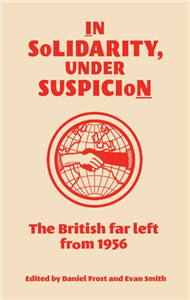
In solidarity, under suspicion is the successor volume to Against the grain (2014) and Waiting for the revolution (2017), complementing analysis of the far left in Britain from 1956 until the present. In addition to new scholarship on hitherto under-researched groups and movements, the volume explores recent findings from the Undercover Policing Inquiry and provides historical context for developments in the British left during and after 'Corbynism'. Chapters consider the far left's relationship to the state as well as to the Labour Party, and highlights attempts by far-left groups and activists both to intervene internationally and to transform themselves. With a range of different perspectives - activist and academic - In solidarity, under suspicion draws out the distinct ways that different far left groups and movements have responded to problems which remain salient today.
 Trusted Partner
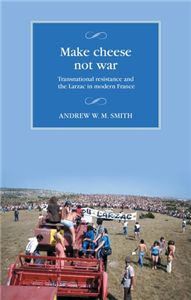
In 1971, the French government announced a massive extension of its military base on the Larzac plateau in southern France. Land was to be expropriated from 107 farms around the small town of La Cavalerie. Limited resistance was expected, but what happened next exceeded all expectations. Local sheep farmers set up protest camps and occupied the land. They soon attracted an astonishing level of support, pioneering a form of regional radicalism with global implications. Drawing out the international dimensions of the protest, Make cheese not war explores a transnational resistance movement in the 1970s that challenged dominant visions of modernity and became a wellspring of radical alternatives. Exploring previously unconsulted archives in France and elsewhere, the book offers an in-depth analysis of the decade-long peasant movement and its aftermath. Repositioning the Larzac struggle within a wider network of French and international solidarities, from the US to the UK, Germany, Burkina Faso, New Caledonia and Japan, the book retraces political networks of pacifist activism, as well as environmental movements and anti-nuclear protest. It shows how this French peasant campaign became both a platform and a model for popular engagement.
Trusted Partner
 Trusted Partner

This book provides a critical investigation of what has been termed the 'global justice movement'. Through a detailed study of a grassroots peasants' network in Asia (People's Global Action), an international trade union network (the International Federation of Chemical, Energy, Mining and General Workers) and the Social Forum process, it analyses some of the global justice movement's component parts, operational networks and their respective dynamics, strategies and practices. The authors argue that the emergence of new globally-connected forms of collective action against neoliberal globalisation are indicative of a range of place-specific forms of political agency that coalesce across geographic space at particular times, in specific places, and in a variety of ways. Rather than being indicative of a coherent 'movement', the authors argue that such forms of political agency contain many political and geographical fissures and fault-lines, and are best conceived of as 'global justice networks': overlapping, interacting, competing, and differentially-placed and resourced networks that articulate demands for social, economic and environmental justice. Such networks, and the social movements that comprise them, characterise emergent forms of trans-national political agency. The authors argue that the role of key geographical concepts of space, place and scale are crucial to an understanding of the operational dynamics of such networks. Such an analysis challenges key current assumptions in the literature about the emergence of a global civil society. ;
Trusted Partner
Trusted Partner
This highly original book constitutes one of the first attempts to examine the problem of distributive justice in the European Union in a systematic manner. João Labareda argues that the set of shared political institutions at EU level, including the European Parliament and the Court of Justice of the EU, generate democratic duties of redistribution among EU citizens. Furthermore, the economic structure of the EU, comprising a common market, a common currency and a free-movement area, triggers duties of reciprocity among member states. The responsibilities to fulfil these duties, Labareda argues, should be shared by the local, national and supranational levels of government. Not only should the EU act as a safety net to the national welfare systems, applying the principle of subsidiarity, but common market and Eurozone regulations should balance their efficiency targets with fair cooperation terms. The concrete policy proposals presented in this book include a threshold of basic goods for all EU citizens, an EU labour code, a minimum EU corporate tax rate and an EU fund for competitiveness. Labarada argues that his proposals match the political culture of the member states, are economically feasible, can be translated into functioning institutions and policies and are consistent with the limited degree of social solidarity in Europe. This book is a major contribution to the understanding of what a just Europe would look like and what it might take to get us there. This book is relevant to United Nations Sustainable Development Goal 10, Reduced inequalities
Trusted Partner
Unruly Subjects takes readers to the epicentre of Europe's intensifying border struggles-the Aegean islands in Greece, where thousands of 'undesirable' migrants have been warehoused and violently abandoned in EU-funded refugee camps. Drawing on nearly a decade of research, Ludek Stavinoha reveals the subterranean corners in which resistance brews and solidarity takes hold, tracing migrants' everyday struggles for dignity and their rights, alongside grassroots volunteers who have built vital infrastructures of support. At the heart of the book are the creative, if precarious and ambivalent, solidarities forged between volunteers and refugees, citizens and non-citizens, as they unsettle racialised boundaries and logics of control, in defiance of state-sanctioned violence, criminalisation, and neglect. Urgent and compelling, Unruly Subjects illuminates how people navigate and subvert Europe's increasingly hostile border regime, and the alternative imaginaries of more just futures their struggles embody.
Trusted Partner
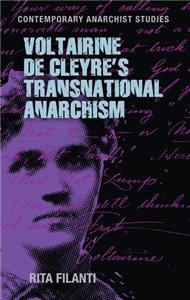
Despite a growing interest in her life and work, Voltairine de Cleyre's contribution to anarchist studies, women studies, and American literature is still mostly unacknowledged. Described by Emma Goldman as 'the most gifted and brilliant anarchist woman America ever produced', de Cleyre authored poems, prose sketches, lectures and translations which radiate with her vision of the world, meticulous use of language, and iconoclastic vigor. Drawing on her copious correspondence with family members, friends and comrades, this monograph provides novel insight into the most significant events of her life while investigating the aesthetic concern characterizing all of her writing. Constantly shifting across languages, she established cosmopolitan networks within immigrant communities at home and beyond the ocean, always believing, until her untimely death, in universal solidarity and the ultimate non-existence of national, ethnic and linguistic barriers.
Trusted Partner
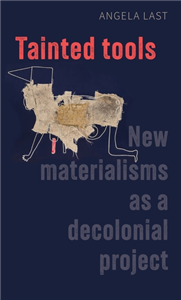
Tainted Tools makes a provocative intervention into the fraught intersection between new materialist and decolonial approaches. Despite a common project of challenging European philosophical and social categories and hierarchies, the discourses are considered incompatible. Most prominently, new materialisms have been accused of harbouring a White vision of the human while disregarding the racist resonances of the 'nonhuman'. The book traces this conflict to an earlier meeting point of new materialist and decolonial projects, which came about through the experimental combination of Marx and Nietzsche. Used to fight fascism, Stalinism and colonialism, this politically contentious fusion gradually became depoliticised, leading to unaddressed tensions today. While the book does not argue for a revival of these early 'new materialisms', it brings their strategies into dialogue with today's new materialisms and decolonial approaches to develop greater theoretical solidarity in times of crisis.
Trusted Partner
 Trusted Partner
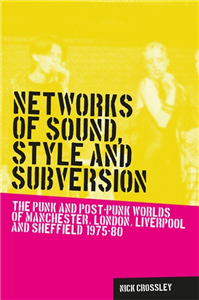
This book examines the birth of punk in the UK and its transformation, within a short period of time, into post-punk. Deploying innovative concepts of 'critical mass', 'social networks' and 'music worlds', and using sophisticated techniques of 'social network analysis', it teases out the events and mechanisms involved in punk's 'micro-mobilisation', its diffusion across the UK and its transformation in certain city-based strongholds into a variety of interlocking post-punk forms. Nick Crossley offers a detailed review of prior work in this area, a rich exploration of new empirical data and a highly innovative and robust approach to the study of 'music worlds'. Written in an accessible style, this book is essential reading for anybody with an interest in either UK punk and post-punk or the impact of social networks on cultural life and the potential of social network analysis to explore this impact. ;
Trusted Partner
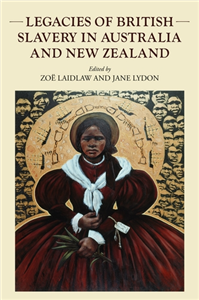
This book investigates the legacies of British slavery beyond Britain, focusing upon the colonisation of Australia and New Zealand, and explores why this history has been overlooked. After August 1833, when the British Parliament abolished slavery in the British Caribbean, Mauritius and the Cape, the former slave-owners were paid compensation for the loss of their 'property'. New research has begun to show that many beneficiaries had ties to other parts of the British Empire, including the settler colonies of Australia, New Zealand, Canada and South Africa. Through a range of case studies, contributors to this collection trace the movement of people, goods, capital, and practices from the Caribbean to the new Australasian settler colonies. Chapters consider a range of places, people and themes to reveal the varied ways that slavery continued to shape imperial relationships, economic networks, and racial labour regimes after 1833.
Trusted Partner


The situation in our society is precarious. The ecological shocks are omnipresent. The mere continuation of our lifestyles fixated on expansion and self-development has long since reached its limits. As if intoxicated by ourselves, we consume our world voraciously and without restraint. We need moderation and frugality that lead us out of the ecological and social dead ends and hold both the individual and Politics to account. We are by no means powerless and are perfectly capable of leading a life that offers prospects for a humane future. However, our idea of freedom needs urgent correction. For this endeavour to succeed, we need the courage to face reality and the willingness, in a spirit of solidarity, to say goodbye to a false life and join the alliance of renunciation and freedom. Then we will be free – differently and better.
Trusted Partner
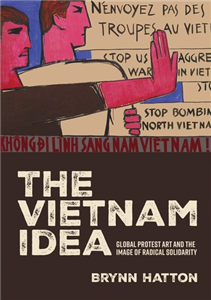
The Vietnam idea examines how Vietnam became a potent symbol for global movements fighting colonialism, racism, and imperialism during the American War and its aftermath. Rather than focusing on Vietnam as a place, Brynn Hatton explores how artists and activists around the world used the idea of 'Vietnam' to express political identification and solidarity through posters, films, protest actions, exhibitions, and conceptual art. Drawing on international archives, the book reveals how diverse visual works helped shape the political imagination of the global left, and continue to influence how we see identity, conflict, and solidarity today.
Trusted Partner
Trusted Partner
Trusted Partner

Since the end of the Cold War, and particularly in the post-9/11 international environment, neutrality has been conceptualised as a problematic subject. With the end of bipolarity, neutrality as a foreign and security policy lost much of its justification, and in the ongoing 'War on Terror', no state, according to the Bush Administration, can be neutral. However, much of this debate has gone unnoticed in IR literature. This book, newly available in paperback, examines the conceptualisation of neutrality from the Peloponnesian War to the present day, uncovering how neutrality has been a neglected and misunderstood subject in IR theory and politics. By rethinking neutrality through constructivism, this book argues that neutrality is intrinsically linked to identity. Using Sweden as a case study, it links identity, sovereignty, internationalism and solidarity to the debates about Swedish neutrality today and how neutrality has been central to Swedish identity and its world-view. ;
Trusted Partner

This book provides an analysis of neo-liberal political economics implemented in Ireland and the deleterious consequences of that model in terms of polarised social inequalities, impoverished public services and fiscal vulnerability as they appear in central social policy domains - health, housing and education in particular. Tracing the argument into the domains where the institutions are sustained and reproduced, this book examines the movement of modern economics away from its original concern with the household and anthropologically universal deep human needs to care for the vulnerable - the sick, children and the elderly - and to maintain inter-generational solidarity. The authors argue that the financialisation of social relations undermines the foundations of civilisation and opens up a marketised barbarism. Civic catastrophes of violent conflict and authoritarian liberalism are here illustrated as aspects of the 'rough beast' that slouches in when things are falling apart and people become prey to new forms of domination. ;
Trusted Partner



