
Your Search Results
-

-

Königshausen + Neumann GmbH
The publishing house Königshausen & Neumann was founded in 1979 by the students Johannes Königshausen and Thomas Neumann and has quickly developed into a well-known publishing house for the Humanities in a national and international context. Today we have a backlist of more than 7,000 available (!) titles, with a focus on philosophy, literature and cultural studies, history, psychology, music and art. Our aim is to accompany developments in science with publications and to make developments in science visible and accessible as such in the first place. We want to be an echo chamber not of one thought, but of a plurality of thoughts. Wittgenstein's followers, for example, are represented in our programme, as are his critics. Our authors include philosophers such as Gernot Böhme, Otto Friedrich Bollnow, Karen Gloy, Friedrich-Wilhelm von Herrmann, Vittorio Hösle and Peter Sloterdijk, and literary and linguistic scholars such as Dieter Borchmeyer, Karl Corino, Ulrich Gaier, Walter Hinderer and Volker Klotz, Wolfgang Müller-Funk, Wolfgang Riedel or Hans Rudolf Vaget, psychologists like Johannes Cremerius, Roland Kuhn or Josef Rattner, musicologists like Hermann Danuser, Frieder Reininghaus, Hans-Joachim Hinrichsen, Arnold Jacobshagen, Barbara Meier, Anno Mungen or Arne Stollberg. Many scientists have taken their first steps at K&N. Robert Habeck has published his master's and doctoral theses at K&N. Artists are represented in our programme, such as Diana Damrau, Anja Harteros or Jonas Kaufmann, Marco Goecke or Robert Tewsley. Artists are brought into conversation in a unique way: Richard Wagner or Francisco de Goya, for example. Elazar Benyoëtz entrusts us with his work, but also the young generation of writers, such as Manfred Kern, Markus Orths or Sophie Reyer, published by K&N.
View Rights Portal
-
Promoted Content

 Medicine
Psychological and Neuropsychological Assessment of Autism Spectrum Disorder
by Maria Cristina Triguero Veloz Teixeira / Cleonice Alves Bosa (Eds.)
This title discusses the psychological and neuropsychological background of autism spectrum disorder, as well as appropriate diagnostic tools. The assessments that this book introduces are sorted by development area (intellectual, adaptive, social, language, etc.). Additionally, this title provides professionals with a variety of case studies from clinical practice. Target Group: clinical psychologists, mental health professionals, psychiatrists, neurologists, pediatricians, speech therapists, students, teachers
-
Promoted Content
 Psychiatry
Compendium of Neuropsychological Tests: Attention, Executive Functions, and Memory
by Prof. Dr. Vitor Geraldi Haase / Annelise Júlio Costa (Eds.)
This Compendium describes the neuropsychometric basis, construction, and usage of a variety of widely used neuropsychological tests, covering the domains of attention, executive functions, and memory. This title provides a comprehensive overview over the essential aspects of neuropsychological assessment with test recommendations for certain patients or research objectives. It is a source for beginning and advanced neuropsychologists to make informed decisions when selecting tests. The tests presented in this title have been adapted in a wide range of countries and can be used very efficiently in neuropsychological diagnostics. Target Group: clinical psychologists, neuropsychologists, psychiatrists, teachers and students
-
 Trusted Partner

Negotiating with Confidence –Psychological Strategies and Methods
With 20 Exercises for Self-Learning
by T. Fritzsche
From a psychological perspective, there are many aspects to negotiating. Given the right knowledge of backgrounds and mechanisms, it is an art form possible to get to grips with and put into practice. In an entertaining and informative way, this book introduces the reader to the basics of communication and body language, cooperative negotiation, strategic negotiation, the different personalities of negotiators, and negotiating. Using practical exercises and valuable practical tips, this book takes the reader through the main psychological strategies and methods so he can negotiate in a flexible, goal-oriented, and successful manner. Target Group: For people who want to improve their negotiating skills.
-
Trusted Partner

 Humanities & Social SciencesFebruary 2022
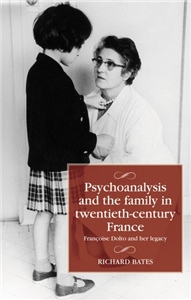
Psychoanalysis and the family in twentieth-century France
Françoise Dolto and her legacy
by Richard Bates, David Hopkin, Maire Cross, Jennifer Sessions
In the last quarter of the twentieth century, if French people had a parenting problem or dilemma there was one person they consulted above all: Françoise Dolto (1908-88). But who was Dolto? How did she achieve a position of such influence? What ideas did she communicate to the French public? This book connects the story of Dolto's rise to two broader histories: the dramatic growth of psychoanalysis in postwar France and the long-running debate over the family and the proper role of women in society. It shows that Dolto's continued reputation in France as a liberal and enlightened educational thinker is at best only partially deserved and that conservative and anti-feminist ideas often underpinned her prominent public interventions. While Dolto retains the status of a national treasure, her career has had far-reaching and sometimes harmful repercussions for French society, particularly in the treatment of autism.
-
Trusted Partner
 MedicineMarch 2024
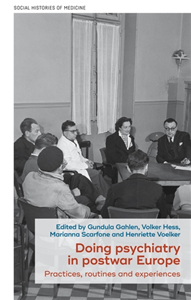
Doing psychiatry in postwar Europe
Practices, routines and experiences
by Gundula Gahlen, Henriette Voelker, Volker Hess, Marianna Scarfone
Doing psychiatry engages with the history of European psychiatry in the second half of the twentieth century through a close and fresh look at the practices that contributed to reshape the mental health field. Case studies from across Europe allow readers to appreciate how new 'ways of doing' contributed to transform the field, beyond the watchwords of deinstitutionalisation, the prescription of neuroleptics, centrality of patients and overcoming of asylum-era habits. Through a variety of sources and often adopting a small-scale perspective, the chapters take a close look at the way new practices emerged and at how they installed themselves, eventually facing resistance, injecting new purposes and contributing to enlarging psychiatry's fields of expertise, therefore blurring its once-more-defined boundaries.
-
Trusted Partner
 Humanities & Social SciencesFebruary 2022
Psychoanalysis and the family in twentieth-century France
by Richard Bates
-
Trusted Partner
 Health & Personal Development
Suggestion, Empathy and Evidence in Medicine
Take Opportunities, Recognize Limits
by Johannes Jörg
Depending on their personality, their social, cultural, and religious environ ment, and the nature of their illness, patients tend to have a waitandsee mood when they come into contact with a doctor, and usually an anxious mood in the case of emergencies. The situation is often accompanied not only by heightened expectations, but also by increased psychological as well as vegetative suggestibility. Suggestion and autosuggestion can, depending on the degree of psychovegetative infl enceability, activate the selfhealing powers through psychological and physiological changes. On the one hand, the author vividly describes how the conscious use of empathy and sug gestion in the context of medical prac tice can promote a close doctor patientrelationship and positively inflence the results of therapy. On the other hand, he illustrates the negative side of the latter, namely as an exag gerated form of overestimation or abuse.
-
Trusted Partner
 Humanities & Social Sciences
The Psychology of Meditation
Varieties, Effects, Theories, and Perspectives
by Peter Sedlmeier
All you need to know about the psychology of meditation: Written by an expert in the field Provides unique theories of meditation approaches Explores traditional and Western approaches Recommends how to improve future research Explores new topics, e.g., negative effects This volume provides state-of-the-art answers to questions about the psychology of meditation, including: what is meditation, how does it work, and how can it best be researched? The author succinctly summarizes the benefcial effects of meditation, explores recently emerging topics such as negative effects, provides theories of four main traditional meditation approaches, and gives a critical overview of Western approaches to explain the effects of meditation. In conclusion, recommendations are made on how to improve future meditation research.
-
Trusted Partner
 Psychology
Positive Psychology at the Movies
Using Films to Build Character Strengths and Well-Being
by Ryan M. Niemiec, Danny Wedding
This book uses movies as a medium for learning about the latest research and concepts, such as mindfulness, resilience, meaning, positive relationships, achievement, well-being, as well as the 24 character strengths laid out by the VIA Institute of Character. This book systematically discusses each of the 24 character strengths, balancing film discussion, related psychological research, and practical applications. Resources provided in this book include a suggested syllabus for a complete positive psychology course based on movies, a list of suitable movies for children, adolescents, and families as well as a list of questions for classroom and therapy discussions. Target Group: Psychologists, consultants, therapists and counselors, movie enthusiasts, and all those interested in positive psychology and improving life.
-
Trusted Partner
 Psychology
Positive Psychology Intervention for Health and Hospital Psychology
by Dora Gil, Claudia Hofheinz
Illness and hospitalization of children occur suddenly andunpredictably,generating high levels of stress and anxiety intheir families. Therefore, it is essential that health andhospitalpsychologists know how to interfere properly in thissituation. The book provides techniques, application instructionsand practical examples for a quick and effective simplepsychological intervention.
-
Trusted Partner
 MedicineSeptember 2022
Alcohol, psychiatry and society
by Waltraud Ernst, Thomas Müller, David Cantor
-
Trusted Partner
 August 2016
Nursing and psychology/psychiatry
by Klaus Kaufmann Mall
Why do people act and behave the way they do? What is going on inside of them? To answer these questions, which may be going through many nursing professionals’ minds, basic psychological knowledge is essential. This title will help all those confronted with these kinds of questions in their daily nursing practice. It provides an overview, using case studies, over the most common mental illnesses, outlining symptoms, causes, progression, and treatment options. This title highlights the mental illnesses as well as provides insight into challenges and opportunities the nursing profession provides for those working in the field. Target Group: Nursing practitioners, Nursing Students.
-
Trusted Partner

 October 2022
From Dream to Trauma: Mental abuse in partnerships
by Caroline Wenzel
The level of domestic abuse has been increasing for years, but often only cases of physical abuse hit the headlines. Hardly anyone talks about the mental, or psychological, abuse that usually precedes a physical or sexual assault. Those affected do not usually recognise the destructive dynamic in their relationship until far too late. In this book, three case histories illustrate the typical forms of mental abuse in relationships. In addition, experts explain the topic from psychological, therapeutic, political and legal perspectives, and the head of a counselling centre for male victims of mental abuse also has his say. An important and startling book.
-
Trusted Partner
-
Trusted Partner

Multiple Sclerosis
by Pearl B. Werfel, Ron E. Franco-Durán, Linda J. Trettin
This innovative book will help both mental health and medical professionals empower patients or clients to live well with multiple sclerosis (MS). It is a practical, evidence-based, culturally relevant guide to the most effective current medical, psychological, and neuropsychological diagnostic methods and interventions. The book describes a biopsychosocial, multidisciplinary, and integrative approach to treatment and provides information on psychological, mind-body, and complementary interventions for symptom management and to increase quality of life. Both seasoned practitioners and students will find this volume useful in helping clients cope with this complex, unpredictable, and chronic neurological disorder. Target Group: clinical psychologists, psychiatrists, psychotherapists, counselors, students.
-
Trusted Partner

 2023
2023Medication Analysis
Basic principles and case examples
by Pharm. D. Ina Richling
Several different pills prescribed by many different physicians: pharmacists encounter patients in this situation every day! What at first seems quite normal can, on closer inspection, be fraught with considerable risks of drug-related problems. Using this analysis as a core component of medication management, pharmacies have the key risk minimisation tool at their disposal. The authors guide their readers step by step through the discussions with the patient, the stages of the analysis, and the clear documentation. Case examples reflect on the content and illustrate implementation. The launch of pharmaceutical services enables an improvement in the safety and efficacy of customers‘ drug therapy in the pharmacy by means of the service „Extended medication counselling for polymedication“. Everything pharmacists need to know for the necessary medication analysis can be found in this book. This completely revised 2nd edition includes: - Important information on pharmaceutical services - Illustrative case examples on many indications - QR codes that lead to additional digital material Whether it is a detailed adjustment or a major change to medication: every patient benefits from the intervention.
-
Trusted Partner
 Self-help & personal development
The Body that I am
What to Learn from Our Body Awareness
by Adrian Mühlebach
Nothing is closer to us than our body and yet we are only l ittle or not at all aware of it! Our body often plays the decisive role in our life: as the basis of our existence, in the regulation of our wellbeing as well as in our behavior control. Nevertheless, we perceive it far too seldom attentively. Our body perception is a dynamic, circular, selfchanging process, because it is only through individually and collectively created ideas that we can turn body sensations into body perceptions. In this respect, our body perception is diffcult to grasp (scientifcally), since it is barely accessible via objective observation, but exists only in our subjective consciousness. In this book, body perception is therefore examined from the perspective of various disciplines such as philosophy, psychology, physiology, and history, in order to refect on its signifcance for our lives and to demonstrate its usefulness in view of the challenges of our time.
-
Trusted Partner
-
Trusted Partner

 2021
2021Nutritional Practice Elderly People
Concise advisory knowledge
by Prof. Dr. Martin Smollich (ed.)
The physiology and living conditions of people change as they grow old, whereas it is often more difficult to adapt eating habits to the new requirements. Psychological aspects come to the fore. The challenge for giving specific nutritional advice is therefore particularly great. This volume in the book series Nutritional Practice provides all the information needed for the competent care of elderly people. It deals with general aspects of nutrition in old age, as well as specific nutritional situations such as poor diet, dehydration, chewing and swallowing problems, dementia, mobility, oral and food hygiene or nutrition at the end of life. A further section is concerned with communal catering.
-
Trusted Partner
 October 2025
Mutschler’s Drug Actions
Pharmacology – clinical pharmacology – toxicology
by Gerd Geisslinger, Thomas Gudermann, Burkhard Hinz, Aimo Kannt, Peter Ruth, Ursula Storch
For over 50 years, the ‘Mutschler’ has served students and professionals as a well-founded standard in pharmacology, clinical pharmacology and toxicology. As customary, the 12th edition is clear, practical and evidence-based – featuring new active substances, biologics, drug classes and current guide- lines. The indication-based organisation, concise chapter structure and over 1,400 structural formulas furthermore enable a deep understanding of mechanisms of action at the cellular and molecular levels. The basics of anatomy, physiology, pathophysiology and drug effects are clearly explained within the relevant chapters. The critical evaluation of each substance’s therapeutic benefit and side-effect profile supports a well-informed and differen- tiated approach to the use of medicine. Didactically well-conceived and supported by numerous illustrations and tables, this work offers a reliable foundation for clinical practice, professional training and study – with comprehensive coverage of the examination material for the medical and pharmaceutical state examinations. The ‘Mutschler’ is for anyone who not only uses medicines, but also seeks to understand them. Target group: Students of medicine, pharmacy, dentistry, biology, biochemistry, chemistry, molecular medicine, medical computing and psychology as well as physicians, particularly in general practice and internal medicine, pharmacists, dentists, biologists, biochemists and chemists




